Table of Contents
- Short Answer: Commission the Circuit, Not Only the Crusher
- Why a Start-Up Checklist Needs Measurable Acceptance Criteria
- Pre-Commissioning: Close Installation and Safety Gaps First
- Establish the Feed Baseline Before Changing Crusher Settings
- Run the Plant in a Controlled Sequence
- Product Sampling: Prove the Material, Not Just the Machine
- What to Record for the Handover and Wear Baseline
- Common Buyer Mistakes During VSI Commissioning
- Buyer Checklist Before Requesting a Commissioning Plan
- FAQ
- What should be checked before starting a VSI crusher with material?
- How do you prove VSI crusher capacity during commissioning?
- Should rotor speed be changed during a commissioning test?
- Why does the screen matter when commissioning a VSI crusher?
- What samples should be taken during a VSI acceptance run?
- Can wet or clay-bearing feed be commissioned in the same way as dry rock?
- What should be included in a VSI crusher handover record?
- What information should I send before asking for a commissioning proposal?
- Request a VSI Commissioning and Acceptance Plan
A VSI crusher should be accepted only after the full plant is operating within the supplier-approved envelope and the buyer has measured evidence of the required product—not simply because the rotor turns. Before a performance run, verify the installed rotor and chamber arrangement, feed-size distribution, moisture and fines, guards and interlocks, motor/control configuration, screen decks, conveyors, and safe access. Then stabilize one representative feed condition and record fresh feed, product samples, screen return, power trend, vibration observations, and wear baseline together. This creates a traceable acceptance record and exposes whether a limitation comes from the VSI, upstream preparation, the screen, return load, or controls. Send the material, target product, capacity, layout, and site constraints before commissioning is planned.
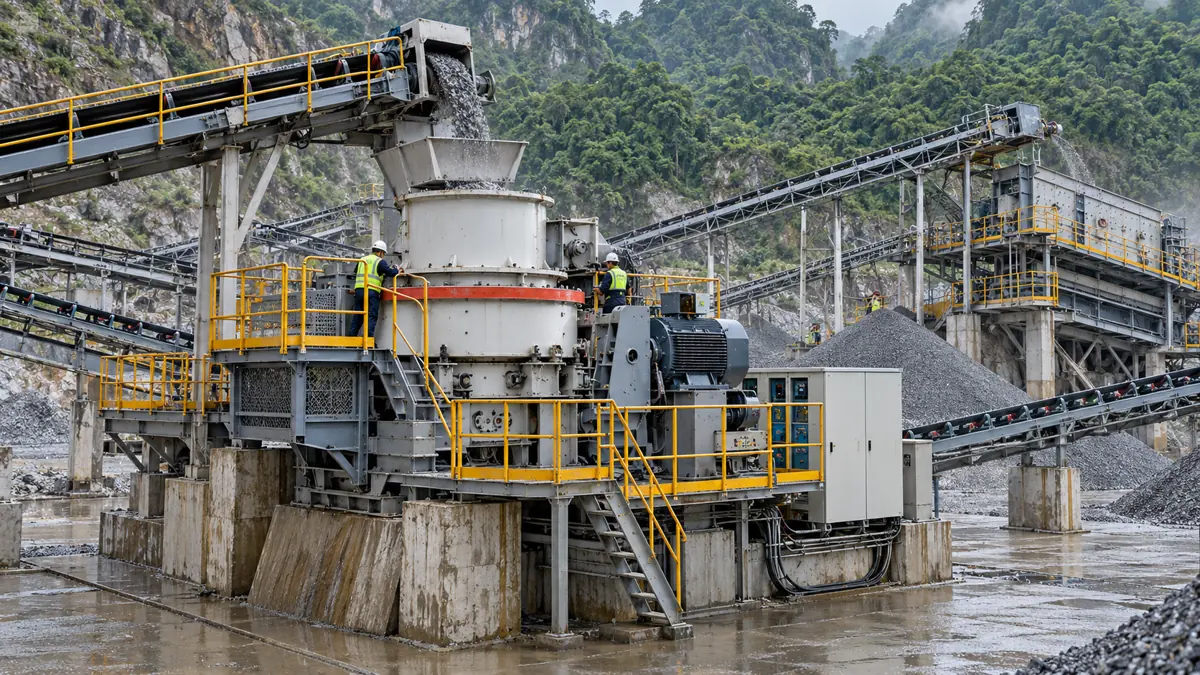
Short Answer: Commission the Circuit, Not Only the Crusher
A VSI commissioning run is successful when the material route, safety systems, equipment settings, and measured product all meet the agreed scope at the same time. The crusher cannot be evaluated fairly if feed preparation changes during the test, the screen is overloaded, return material is unmeasured, or an electrical and guarding item is still incomplete.
Start with the selected machine’s manual, approved drawings, electrical documents, and supplier commissioning procedure. This guide is a buyer-side checklist for organizing the data and acceptance discussion; it does not replace OEM instructions, site risk controls, or trained supervision.
Why a Start-Up Checklist Needs Measurable Acceptance Criteria
Many start-up lists stop at rotation direction, lubrication, and no-load operation. Those checks matter, but they do not answer the commercial question: can the completed circuit make the saleable material consistently and safely under the agreed feed condition?
The useful boundary is a combined record of the process and the machine:
| Acceptance area | What to verify | Why it belongs in the same record |
|---|---|---|
| Material condition | Rock type, representative feed-size distribution, maximum top size, moisture, clay and natural fines | A VSI result cannot be transferred from a different feed condition |
| Crusher configuration | Model, rotor, chamber/wear-part arrangement, approved speed range, lubrication and service status | Confirms the machine is being tested in the proposed configuration |
| Plant flow | Feeder setting, belt loading, screen decks, discharge routes, recirculating load and stockpile segregation | Finds a screen or conveyor limitation before it is blamed on the crusher |
| Electrical and controls | Motor and feeder trends, sequence and interlocks, emergency stops, alarms, sensors and operator visibility | Links performance to safe, controllable operation rather than a one-time manual adjustment |
| Product evidence | Representative sieve samples, target sizes, shape or grading criterion where specified, and sample time | Connects crusher operation to the material the buyer will actually sell or use |
Do not turn this into a universal capacity or power guarantee. The agreed test method, permitted feed, duration, instruments, product definition, and acceptance limits must be stated in the supply scope. For capacity planning before the visit, compare feed constraints and configuration options in the VSI crusher capacity guide.
Pre-Commissioning: Close Installation and Safety Gaps First
Before introducing material, verify that installation and safe access are complete according to the supplier and site requirements. A plant that needs temporary bypasses, open guards, improvised access, or untested emergency functions is not ready for a production acceptance run.
- Mechanical installation. Confirm foundations, supports, anchors, chutes, liners, belt tracking, drives, discharge clearances, and all fasteners are installed to the approved drawing and inspection process.
- Rotor and chamber identity. Record the actual rotor, tips, anvils or rock-on-rock arrangement, distributor, liners, and wear condition. Do not assume an installed rotor matches a quotation. Compare the intended mode with rock-on-rock and rock-on-iron VSI crushing.
- Lubrication and drive readiness. Follow the OEM’s approved lubricant, pre-start, cooling, filtration, rotation, belt/coupling, and inspection instructions. Record any alarms or conditions that require correction before loading.
- Safety and access. Test the supplier-approved emergency stops, sequence interlocks, guards, access platforms, lighting, communication, and lockout procedure. Keep unsafe changes out of the test plan.
- Controls and instruments. Confirm feeder, conveyor, screen, and crusher sequence; identify the operating values that can be logged; and verify that the operator can see material flow and alarms safely.
An early no-load check can reveal a direction, signal, or interlock problem, but it cannot prove product performance. Treat it as a gate before the controlled material trial—not as the acceptance trial itself.
Establish the Feed Baseline Before Changing Crusher Settings
The most common commissioning mistake is to change feed rate, rotor speed, screen setting, and chute position in the same hour. A later improvement or problem then has no clear cause. Establish one documented baseline with representative feed, then make only supplier-approved changes one at a time.
Record the feed source and timing, top size, full size distribution where practical, moisture observations, clay/natural fines, feeder setting, and fresh-feed measurement method. If scalping or pre-screening is fitted, include its screen condition and the routing of removed fines. Oversize and uncontrolled fines can invalidate a VSI comparison; see how to control feed size before a VSI.
For wet or clay-bearing material, do not use a short dry-weather run as a substitute for the operating condition the buyer expects. Drainage, scalping, washing, chute design, and stockpile management may be the real commissioning risk. Review when a VSI needs pre-screening, drainage, or washing before agreeing to a production target.
Run the Plant in a Controlled Sequence
Commissioning order must follow the approved site procedure. In a typical plant, establish downstream readiness before feeding the VSI, start at a controlled rate, and only increase load after the screen, conveyors, crusher, and controls are stable. The exact sequence differs by equipment and must come from the selected supplier.
During the material run, record trends and observations at defined intervals rather than relying on a single operator impression:
| Checkpoint | Record during the run | Decision it supports |
|---|---|---|
| Fresh feed | Rate, feeder setting, belt scale or verified alternate method, material source | Whether the requested capacity is being tested honestly |
| VSI condition | Approved speed/setting, motor trend, lubricant or temperature indications where supplied, noise and vibration observations | Whether the machine is operating within its prescribed range |
| Screen and return | Deck sizes, screen loading, overflow observations, return-belt condition and recirculating route | Whether final grading and total load are limited by the closed circuit |
| Product samples | Sample location, time, product stream, sieve result or agreed quality test, moisture condition | Whether the delivered aggregate/sand meets the actual use requirement |
| Plant condition | Spillage, dust, material buildup, belt tracking, chute flow, housekeeping and safe access | Whether the result is repeatable rather than a short unstable run |
Avoid raising the feed rate only to obtain a peak number. A useful trial shows stable material flow and a traceable product at an agreed condition. If the plant is closed circuit, the screen and return load are part of the result; closed-circuit versus open-circuit VSI operation explains why fresh-feed TPH alone is insufficient.
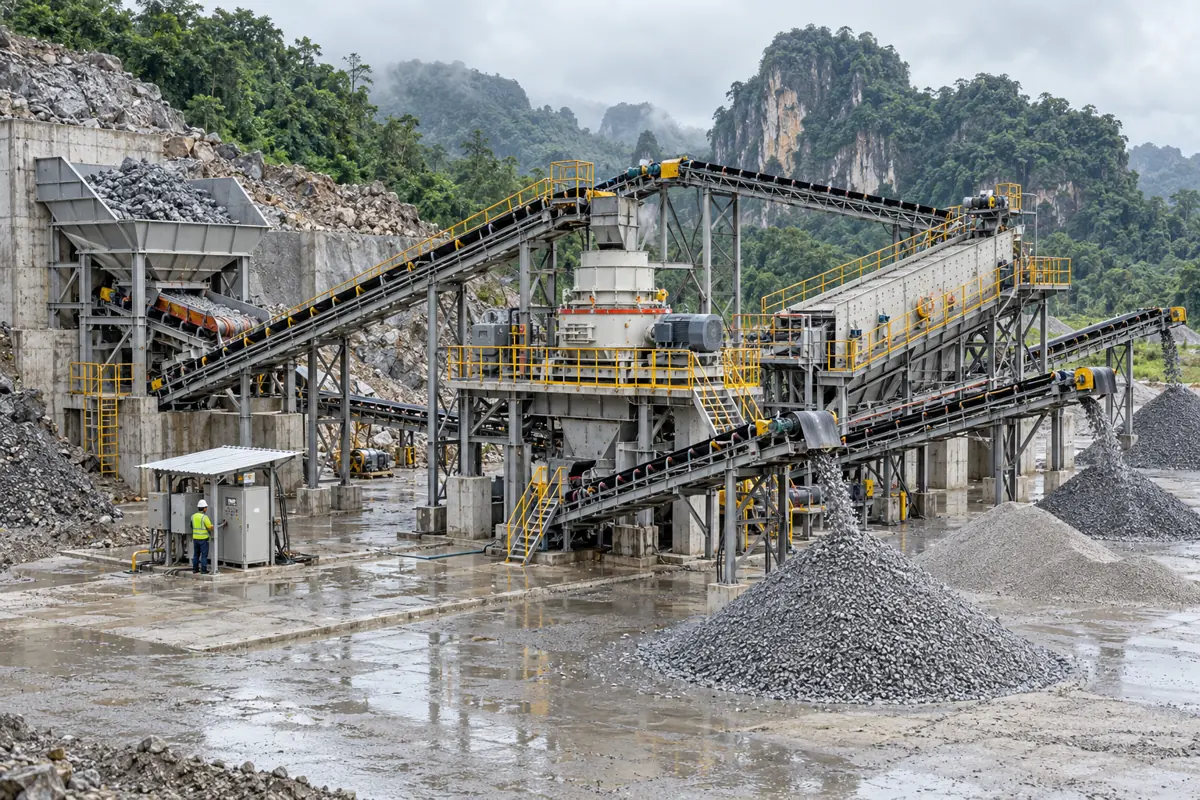
Product Sampling: Prove the Material, Not Just the Machine
Set the sample locations and method before the run. A bucket taken from one moment of a changing belt or stockpile is not reliable evidence of normal grading. Use the buyer’s product specification and the agreed test method to decide sampling frequency, sample preparation, sieve sizes, shape assessment, and who receives the record.
For manufactured sand, record the agreed grading and fine fraction rather than only a visual judgement. For aggregate, keep the size range and any shape requirement connected to the correct product stream. If the plant has multiple discharge belts, label the physical location and time of every sample so the screen, return conveyor, and stockpile route can be traced.
If a sample is outside the desired result, do not immediately change the rotor. First check feed gradation, screen condition, return load, chute flow, and whether the sampling location represents the saleable product. The article on sand grading, fines, and fineness modulus provides a framework for distinguishing product grading from a simple crusher output figure.
What to Record for the Handover and Wear Baseline
The first controlled run is also the baseline for later troubleshooting. Photograph the installation, rotor/chamber condition, key chute and screen zones, and the normal material path safely. Record the installed wear-part part numbers or configuration where provided, operating hours, any initial clearance or inspection values specified by the OEM, and a list of consumables and recommended spares.
This is especially important for high-abrasion rock. Wear should be reviewed by pattern and condition, not by a generic replacement interval. The relationship between tips, anvils, liners, and the material path is covered in VSI crusher wear-parts maintenance.
The final handover file should identify open items clearly: for example, missing instruments, pending training, a product test requiring another material condition, or a control adjustment that can only be completed after normal operation. Do not bury those items inside an informal message if they affect safe operation or the scope of the acceptance test.
Common Buyer Mistakes During VSI Commissioning
- Calling a short no-load check a production acceptance test.
- Testing a different feed source, top size, moisture condition, or fines level from the stated basis without recording the change.
- Changing rotor speed, feeder rate, screen condition, and cascade/feed routing together, so no result can be traced to one cause.
- Measuring fresh feed but not screen return, product samples, or saleable product separation.
- Running with incomplete guards, untested interlocks, poor access, or unclear operator authority.
- Accepting a peak throughput observation without a stable run, product result, operating trend, and documented configuration.
- Leaving rotor/chamber condition, initial wear observations, spare-parts scope, and unresolved handover actions out of the record.
Buyer Checklist Before Requesting a Commissioning Plan
- Representative raw material samples, rock type, abrasiveness, moisture range, clay/natural-fines observations, and full feed size distribution including maximum top size.
- Required output size ranges, grading or shape target, product use, sampling/test method, and target capacity.
- Site layout, process flow, current or proposed feeder, screen, return-conveyor, stockpile, dust-control, power, and control details.
- VSI model if known, intended rotor/chamber configuration, speed range, installed wear parts, service access, and photos of the proposed installation.
- Available instrumentation, measurement method for fresh feed and return load, commissioning window, local safety rules, operator/training needs, site photos, and budget range.

FAQ
What should be checked before starting a VSI crusher with material?
Follow the OEM and site procedure first. Confirm mechanical installation, approved rotor/chamber configuration, lubrication and drive readiness, guards, emergency stops, interlocks, access, controls, screen and conveyor readiness, and a documented representative feed condition before the material trial.
How do you prove VSI crusher capacity during commissioning?
Measure a stable, representative fresh feed using the agreed method, and record product samples, screen performance, return load, motor/control trend, and material flow at the same time. A short peak value without product and circuit data is not a complete acceptance result.
Should rotor speed be changed during a commissioning test?
Only within the selected supplier’s approved operating range and one controlled variable at a time. Record the prior setting, feed condition, product sample, and plant response so the effect can be distinguished from a feed or screen change.
Why does the screen matter when commissioning a VSI crusher?
In a closed circuit, screen efficiency, deck condition, product routing, and return load affect both final grading and the material returning to the VSI. A crusher test without these records can misidentify the process limitation.
What samples should be taken during a VSI acceptance run?
Use the agreed product specification and method. At minimum, identify the product stream, sampling time, feed condition, and test result; use representative sampling rather than a single convenient grab sample from a changing stockpile.
Can wet or clay-bearing feed be commissioned in the same way as dry rock?
No. Moisture, clay, drainage, scalping, washing, chute flow, and stockpile handling may change the stable operating condition. Define those conditions in the trial plan instead of assuming a dry-feed result applies.
What should be included in a VSI crusher handover record?
Include as-built configuration, safety and control checks, feed/test basis, process observations, product results, equipment and wear baseline, unresolved items, training/maintenance scope, and the records needed for future troubleshooting.
What information should I send before asking for a commissioning proposal?
Send raw material and samples, feed size and moisture, target output, capacity, product standard, layout, equipment list, power/control scope, site photos, safety or access constraints, required support, and budget range.
Request a VSI Commissioning and Acceptance Plan
Send MVSI your raw material details and samples, full feed size distribution, moisture and fines observations, required output size and product standard, target capacity, equipment list, screen and return-conveyor layout, electrical/control scope, site photos, commissioning date constraints, safety/access requirements, and budget range. We can help define a practical proposal that connects equipment configuration, start-up checks, product sampling, handover records, and the whole-plant acceptance boundary.