Table of Contents
- The Short Answer: Start With the Feed Distribution, Not a Catalog Maximum
- Why VSI Feed Size Matters
- A stable feed lets the rotor do its intended job
- Top-size control protects the chamber
- Feed grading changes the product balance
- What a Good VSI Feed Looks Like
- A Practical Screening Layout Before a VSI Crusher
- 1. Remove oversize before the rotor
- 2. Decide which fines should bypass the VSI
- 3. Make the return load visible
- Three Common Feed-Control Configurations
- Configuration A: Cone, screen, VSI, and final screen
- Configuration B: Pre-screen, VSI, classifier or wash plant
- Configuration C: Selective shaping with a bypass
- Operating Signals That Need a Circuit Check
- What to Send for a Reliable VSI Proposal
- Buying Mistakes to Avoid
- Choosing a VSI from one maximum feed-size line
- Sending every fraction through the VSI
- Quoting a crusher without the upstream screen
- Ignoring wet-season feed conditions
- FAQ
- What is the maximum feed size for a VSI crusher?
- Does a VSI crusher need a screen before it?
- Should fines bypass a VSI crusher?
- Can a VSI crusher take feed directly from a jaw crusher?
- Why does VSI product grading change during the day?
- How does moisture affect VSI feed control?
- Is a narrow VSI feed range always better?
- What information is needed to size a VSI feed screen?
- Get a VSI Feed-Control Plan Built Around Your Sand Specification
For a VSI crusher, the right feed is a screened, stable size band that stays inside the selected machine’s stated limits—not simply the largest rock that can enter the rotor. Control the top size with a screen, remove or bypass material that is already saleable where the circuit allows it, and size return conveyors for the real recirculating load. This protects the rotor and chamber, makes shaping more predictable, and prevents the VSI from carrying unnecessary reduction duty. The exact feed range depends on the crusher model, rotor configuration, rock characteristics, moisture, and product specification, so buyers should send a complete feed-size distribution rather than one maximum feed number.
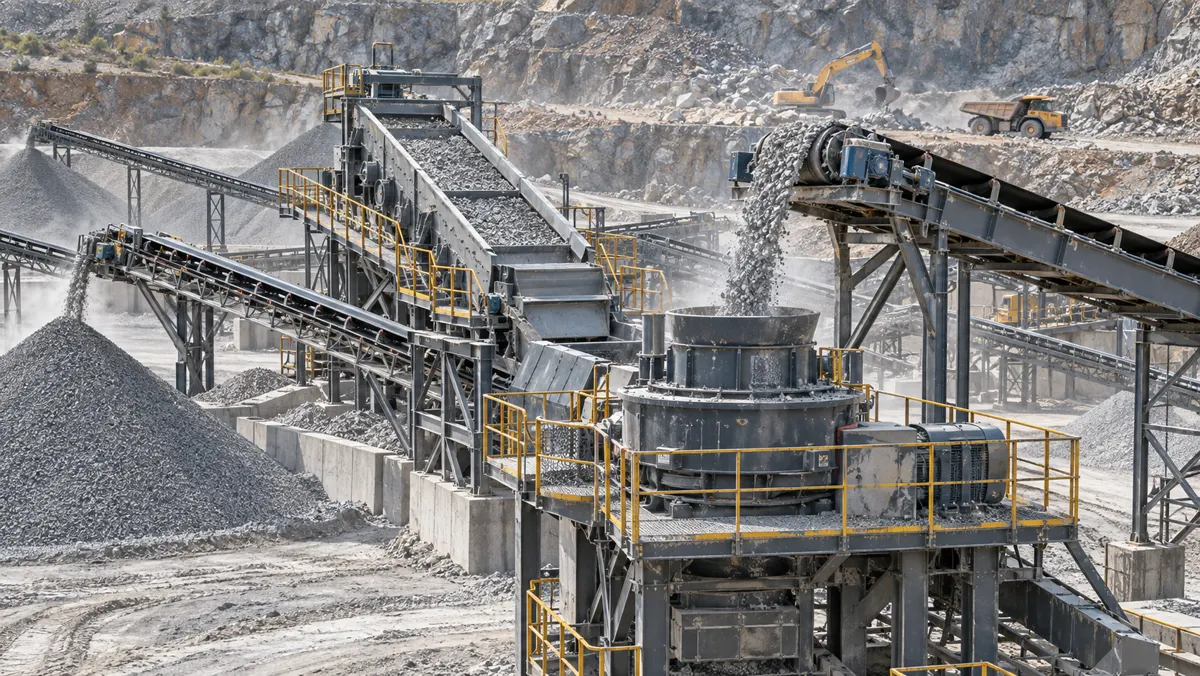
The Short Answer: Start With the Feed Distribution, Not a Catalog Maximum
A VSI crusher accelerates material through a high-speed rotor and breaks it by impact against a rock bed, anvil surfaces, or both, depending on the configuration. It performs most consistently when its feed is controlled. A statement such as “maximum feed is 45 mm” is not enough to design the circuit: a feed containing mostly 5–10 mm particles will behave differently from one with the same maximum size but a high percentage of 25–45 mm material, excess dust, or wet sticky fines.
Ask the supplier for the permitted top size and preferred feed grading for the exact VSI model. Then design the upstream screen, feeder, conveyors, bypasses, and return path around that range. If feed varies, the product gradation, particle shape, wear pattern, power draw, and circulating load may also vary. For the wider machine-selection decision, see our guide to choosing a VSI sand making machine for granite, basalt, and limestone.
Why VSI Feed Size Matters
A stable feed lets the rotor do its intended job
In a sand-making circuit, the VSI is commonly selected to shape a controlled crushed fraction and generate a useful 0–5 mm product. When it receives too much oversize, it is asked to perform heavy reduction as well as shaping. When it receives too many fines, the material bed, product split, and dust-control duty can change. The useful question is not only the maximum size: it is what material reaches the VSI during normal operation and how much of each size fraction it contains.
Top-size control protects the chamber
Material above the selected machine’s permissible feed size can create unstable impacts, choke the feed arrangement, and increase demand on the rotor, feed tube, distributor, cavity liners, and conveyor transfer points. It can also make the operator reduce the feed rate. The maximum allowable top size is model-specific, so do not copy a limit from a different rotor diameter, chamber, or brand. Confirm it with the chosen supplier and include the percentage of near-top-size material.
Feed grading changes the product balance
VSI crushers can improve cubicality and produce fine aggregate, but the result depends on the input. If the sales plan includes both 5–10 mm aggregate and manufactured sand, use the screen and bypass arrangement to send only the fraction that benefits from additional shaping through the VSI. This avoids turning already-saleable material into excess fines. Our VSI crusher capacity guide explains why a nameplate feed rate differs from saleable sand output.
What a Good VSI Feed Looks Like
| Feed characteristic | What to check | Why it matters |
|---|---|---|
| Top size | Screen cut and proportion near the maximum allowed size | Limits overload and keeps material inside the selected chamber’s design range. |
| Size distribution | Percentage in each practical sieve band | Determines how the rotor, rock bed, screen, and returns work together. |
| Fine content | Natural fines, crusher fines, and material already below the target sand cut | Affects product balance, dust, moisture sensitivity, and whether a bypass is useful. |
| Moisture and clay | Moisture level, clay contamination, and screen blinding risk | Wet sticky feed can reduce screen efficiency and destabilize the real VSI feed. |
| Feed-rate stability | Belt loading, surge capacity, and feeder control | Prevents starvation and sudden surges that change product and wear conditions. |
| Foreign material | Tramp metal, wood, wire, and uncrushable debris | Protects the rotor and reduces damage risk. |
A good feed is not necessarily narrow or dry; it is known, repeatable, and matched to the proposal assumptions. A quarry with variable blasted rock may need robust upstream reduction and screening before the shaping stage. A plant processing clean pre-crushed aggregate may need a simpler controlled feed system. The equipment choice follows the material and product plan.
A Practical Screening Layout Before a VSI Crusher
1. Remove oversize before the rotor
Use an upstream screen to separate material above the selected VSI feed limit. Send oversize to the appropriate reduction stage, often a cone crusher or a return circuit, rather than relying on the VSI to accept it. Set the screen cut only after confirming the supplier’s preferred and maximum feed range. Where the material is hard and abrasive, a cone crusher commonly prepares the feed before the VSI; our cone crusher versus VSI crusher guide for final-stage crushing shows how the machines can share reduction and shaping duties.
2. Decide which fines should bypass the VSI
If a fraction is already inside the final product specification, it may be more efficient to bypass it around the VSI and blend it later. The correct bypass depends on required grading, particle shape, permitted fines, washing or air-classification plan, and measured results on the actual rock. Do not add a bypass just because it looks efficient on a flow sheet; it must still deliver the final specification.
3. Make the return load visible
In a closed circuit, oversize from the final screen returns for further reduction. The return conveyor, chute design, screen area, and surge capacity must handle expected circulating load, including normal feed variation. Require a supplier flow sheet that identifies each conveyor stream, design feed rate, maximum expected return, screen deck cuts, and material bypass. Our aggregate crushing plant design guide is a useful circuit checklist.
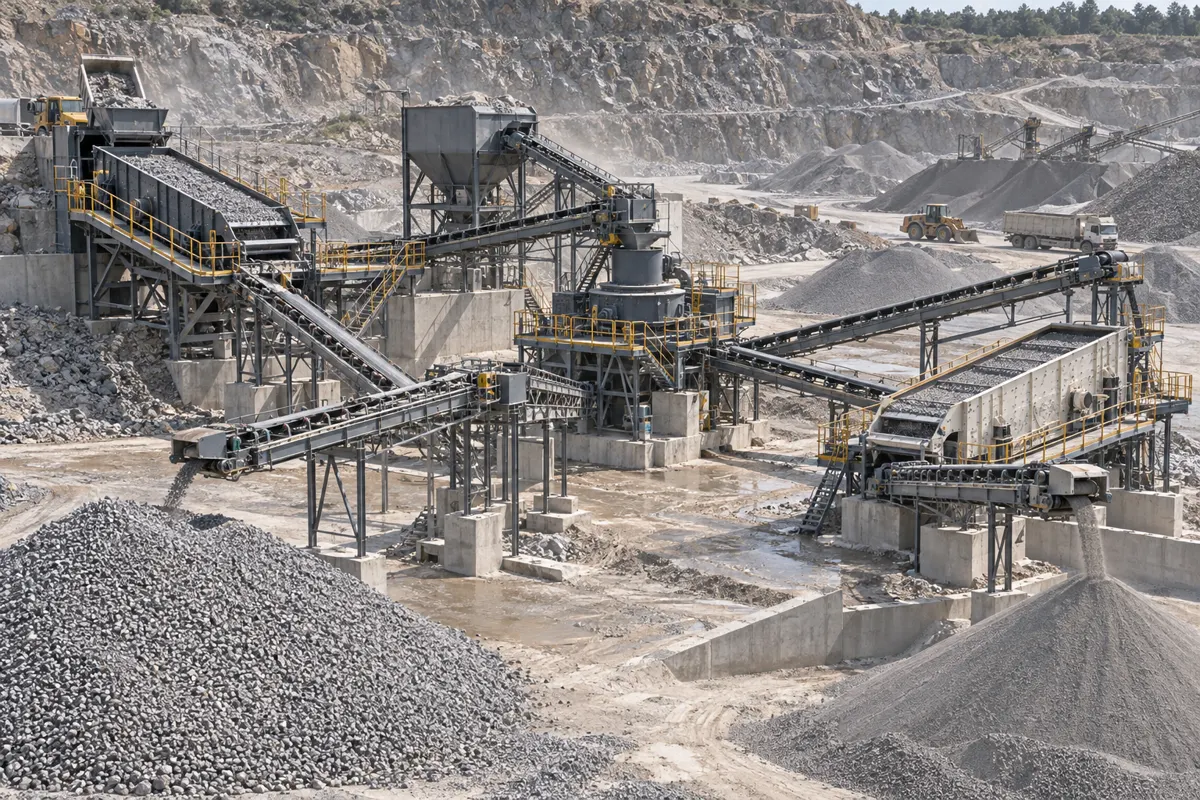
Three Common Feed-Control Configurations
Configuration A: Cone, screen, VSI, and final screen
Use a cone crusher to reduce hard material, then screen the cone product. Direct the suitable band to the VSI, return oversize to the reduction stage, and send VSI discharge to the final screen. This separates heavy reduction from shaping and gives the operator clearer control of each duty. It suits quarries that sell several aggregate sizes as well as manufactured sand.
Configuration B: Pre-screen, VSI, classifier or wash plant
Use a pre-screen to regulate a controlled fine aggregate feed to the VSI, followed by a classifier, wash plant, or dry separation system when the sand specification requires it. This arrangement is considered when 0–5 mm manufactured sand is the main product. Confirm the expected fines balance and water or air requirements before selecting downstream equipment.
Configuration C: Selective shaping with a bypass
Screen the upstream product, send only the fraction that needs shape correction to the VSI, and blend saleable bypass material after final screening where appropriate. This can reduce unnecessary rotor duty, but the final grading and shape mix must be tested.
Operating Signals That Need a Circuit Check
| Signal | Likely circuit question | First check |
|---|---|---|
| Variable product gradation | Is the upstream screen separating consistently? | Inspect screen media, deck loading, moisture, and feed distribution. |
| High unwanted fines | Is too much saleable fine material entering the VSI? | Compare feed gradation with the product plan and review bypass options. |
| High current or feed surges | Is belt loading steady and is oversize entering? | Check feeder control, transfer chutes, screen cut, and surge capacity. |
| Uneven rotor or cavity wear | Is material distributed centrally and consistently? | Inspect feed tube, distributor, feed arrangement, and rock condition. |
| Return conveyor overload | Is final screening creating more recirculation than planned? | Measure screen performance and calculate actual return load. |
These signals do not prove a single fault. Inspect safely under the supplier’s lockout procedure, then compare operating conditions with the original circuit assumptions. Never adjust rotor speed, clear blockages, or enter equipment outside the manufacturer’s safety instructions.
What to Send for a Reliable VSI Proposal
- Raw material type and source, plus hardness and abrasiveness information where available.
- Largest feed size and a representative sieve analysis of the proposed VSI feed.
- Moisture condition, clay content, and variation by season or blast area.
- Required final products, including the 0–5 mm sand grading and particle-shape or fines limits.
- Target capacity, operating hours, and expected product split.
- Existing or proposed crushers, screens, conveyors, bins, and classification equipment.
- Site photos, layout restrictions, available power, dust-control requirements, and budget range.
Ask the supplier to separate confirmed assumptions from information that still needs testing. The proposal should state VSI feed range, nominal and maximum feed rates, screen deck arrangement, conveyor design basis, wear-part scope, commissioning support, and parts availability. Review our VSI crusher wear-parts guide for maintenance information to request with the process proposal.
Buying Mistakes to Avoid
Choosing a VSI from one maximum feed-size line
The stated maximum top size is a boundary, not proof that the crusher will make the required sand at the desired rate. Compare the proposed feed distribution with the preferred operating range, then check the screen and return system.
Sending every fraction through the VSI
Processing material that already meets the product specification can increase wear and fines without increasing value. Test a controlled bypass or selective shaping arrangement at circuit level.
Quoting a crusher without the upstream screen
A VSI capacity claim is incomplete if it does not identify how oversize is removed, how feed is distributed, and how final-screen oversize returns. Buy a working circuit rather than an isolated machine.
Ignoring wet-season feed conditions
A screen that works in dry material may blind or pass a different distribution when moisture and clay increase. Discuss wet-season samples, drainage, screen media, chute access, and cleaning arrangements during design.

FAQ
What is the maximum feed size for a VSI crusher?
It depends on the selected VSI model, rotor, chamber, and material. Use the supplier’s specified maximum and preferred feed range for that exact machine, and provide the full feed-size distribution.
Does a VSI crusher need a screen before it?
Usually, a screen is needed to control oversize and create a stable feed band. The exact layout depends on the material, desired products, and whether the VSI is used for shaping or sand production.
Should fines bypass a VSI crusher?
Possibly. A bypass can avoid re-crushing material that already meets the final product plan, but it must be verified against final grading, particle shape, and permitted fines content.
Can a VSI crusher take feed directly from a jaw crusher?
It is generally better to use intermediate reduction and screening first, especially for hard rock or variable feed. Confirm the proposed circuit with the VSI supplier.
Why does VSI product grading change during the day?
The upstream feed may be changing in size, moisture, fine content, or rate. Check screen performance, feeder stability, material source, and recirculating load.
How does moisture affect VSI feed control?
Moisture and clay can reduce screen efficiency, cause material buildup, and change the actual feed distribution reaching the rotor.
Is a narrow VSI feed range always better?
Not automatically, but a known controlled feed range usually makes results more predictable. The suitable range depends on the selected machine, product target, and rock characteristics.
What information is needed to size a VSI feed screen?
Provide raw material, feed-size analysis, target capacity, final product sizes, moisture and clay condition, expected return load, available layout, and the supplier’s permitted feed range.
Get a VSI Feed-Control Plan Built Around Your Sand Specification
Send MVSI Crusher your raw material, a representative VSI feed-size analysis and largest feed, required output sizes and sand grading, target capacity, moisture and clay condition, current plant layout, site photos, available power, and budget range. We can help define the screen cuts, crusher and VSI sequence, bypasses, return conveyors, and downstream classification needed for a practical manufactured-sand circuit.