Table of Contents
- The Short Answer: The Screen Defines the Product; the VSI Conditions the Feed
- Start With the Product Specification, Not a Rotor Setting
- What Controls Sand Grading in a VSI Circuit
- 1. Feed-size distribution and natural fines
- 2. Rotor speed and crushing duty
- 3. Screen aperture, deck layout, and loading
- 4. Return load and bypass control
- 5. Classification, washing, and blending
- A Practical Control Plan for 0-5 mm Manufactured Sand
- What to Require in a Supplier Proposal
- Cost and Operating Factors Often Missed
- Common Buyer Mistakes
- Treating fineness modulus as the complete product specification
- Adjusting rotor speed before checking the screen
- Comparing fresh-feed capacity with saleable-sand capacity
- Sampling only from the top of a stockpile
- FAQ
- Can a VSI crusher control fineness modulus by itself?
- What causes manufactured sand to become too fine?
- Is 0-5 mm enough information to select a VSI sand plant?
- Should all material return to the VSI if it is oversize?
- How often should a VSI sand plant sample product grading?
- Can washing improve VSI sand grading?
- What information should I send for a manufactured-sand quotation?
- How should I compare two VSI sand plant proposals?
- Request a Sand-Grading Review
VSI Crusher Sand Grading: How to Control 0-5 mm Fines and Fineness Modulus
A VSI crusher can improve particle shape and make useful manufactured sand, but it cannot by itself guarantee a saleable 0-5 mm grading or a target fineness modulus. Stable sand comes from a controlled feed, repeatable rotor duty, correctly sized screens, disciplined return load, and representative sampling. If the sand is too coarse, too fine, or varies from shift to shift, start by separating those causes instead of only changing rotor speed. Define the required grading envelope, the permitted fraction below the relevant fine sieve, the sampling method, and the intended concrete or asphalt use. Then size the VSI circuit around those boundaries and ask the supplier to state its assumptions.
The Short Answer: The Screen Defines the Product; the VSI Conditions the Feed
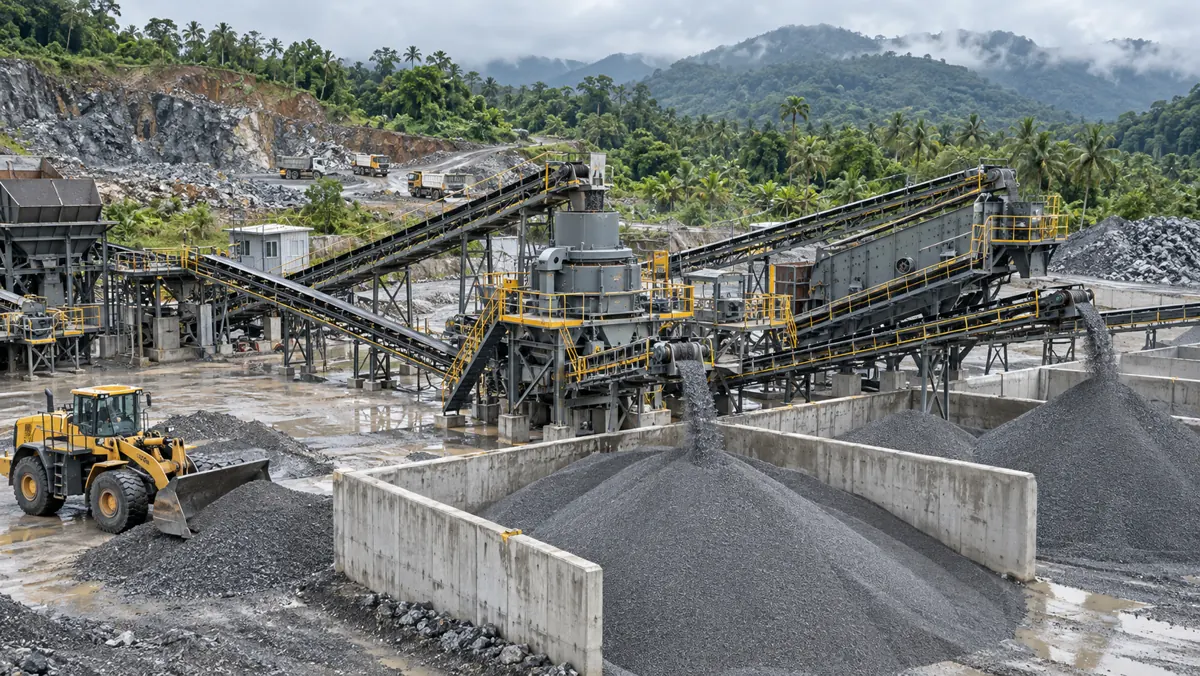
A VSI changes the particle population it receives: it breaks weak edges, creates fines, and can improve shape when the feed is within the machine’s approved size range. The screen and return circuit decide which material becomes product, which material returns for another pass, and which fraction is removed or blended. A nominal VSI capacity therefore cannot be used as a promised 0-5 mm saleable-sand rate.
Fineness modulus (FM) summarizes the coarseness or fineness of a sand grading using cumulative retained material on a stated sieve series. It is useful, but it does not replace the complete sieve analysis. Sand with a similar FM can still fail an application-specific grading envelope or carry too much very fine material. Confirm the sieve set, test standard, moisture condition, sampling method, and product acceptance limit with the buyer.
| If the production sample shows | Check first | Typical circuit response |
|---|---|---|
| Sand is consistently too coarse | Final screen cuts, bypasses, and feed size to the VSI | Confirm the screen aperture and whether the shape stage receives the intended fraction. |
| Sand is consistently too fine | Rotor duty, feed fines, recirculation, and screen efficiency | Reduce unnecessary re-crushing only after feed and screen performance are verified. |
| Grading changes by shift | Feed grading, bin segregation, belt loading, and screen condition | Stabilize feed and inspect screen media, blinding, and material distribution. |
| FM looks acceptable but the fine fraction is high | Full sieve curve and classification route | Review the lower-size cut, natural fines, and any classifier or washing boundary. |
| Product rate is below expectation | Return load, screen throughput, and stockpile handling | Calculate saleable product separately from new feed and recirculating tonnes. |
For upstream discipline, read our VSI feed-size and screening guide. For return-path decisions, compare closed-circuit and open-circuit VSI sand plants.
Start With the Product Specification, Not a Rotor Setting
Concrete sand, asphalt sand, mortar sand, and general quarry fines can have different grading ranges and fine-material limits. A supplier cannot select a meaningful screen arrangement from the phrase “0-5 mm” alone. Confirm the product sizes, sieve series, grading envelope, acceptable fine-material limit, intended end use, required capacity, operating hours, stockpile method, and whether the sand will be washed, air-classified, blended, or sold dry.
Make the test method and product boundary part of the RFQ. Otherwise, each bidder can assume a different definition of sand capacity, and the proposed systems cannot be compared fairly.
What Controls Sand Grading in a VSI Circuit
1. Feed-size distribution and natural fines
The VSI should receive a known, reasonably even feed band within its approved maximum size. If one shift contains more small material or natural quarry fines than another, the final product can change even when crusher settings are untouched. Obtain a feed sample after upstream preparation, not only a maximum rock size.
Excess natural fines can pass through the circuit without the same shaping duty as the stone, occupy screen capacity, and raise the finished-sand fine fraction. Where material behavior requires it, use scalping, pre-screening, washing, or a separate fines route. Our guide to wet feed, clay, and VSI pre-screening explains why this decision starts upstream.
2. Rotor speed and crushing duty
Rotor speed influences impact energy, reduction, shape, fines generation, and wear. Set it inside the supplier’s approved operating range and evaluate measured product samples. Raising speed may reduce a coarser fraction, but it can also create excess fine material and increase wear or power demand. Make one controlled change at a time and log feed analysis, throughput boundary, power draw, screen condition, and sieve curve. See how to compare VSI power consumption per tonne for the related cost boundary.
3. Screen aperture, deck layout, and loading
The final screen is the product gate. Aperture selection, deck layout, screen media, vibration settings, moisture, feed distribution, and tonnes per hour all affect what passes or returns. A screen can be correctly specified on paper but deliver unstable cuts if material lands on one side, media is blinded, or the screen is overloaded.
4. Return load and bypass control
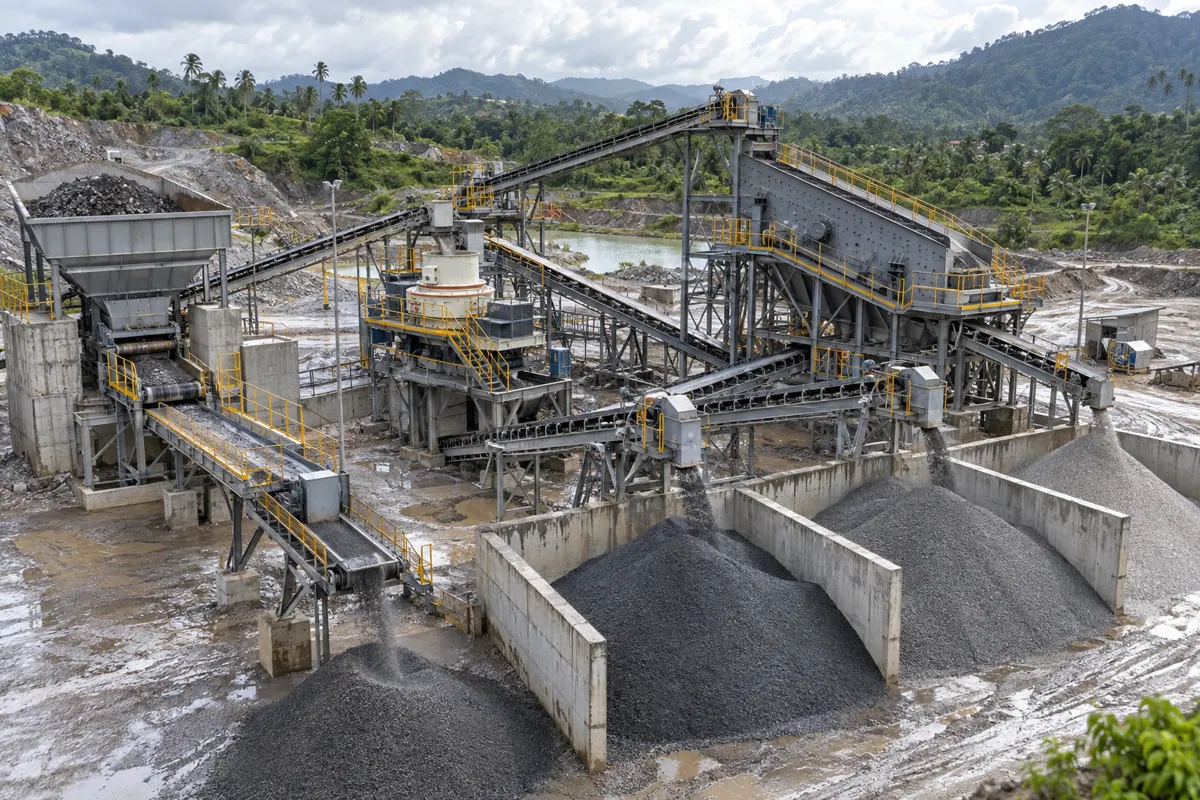
In a closed circuit, oversize returns to the VSI. This can make a controlled product but raises internal flow. Track new feed, VSI feed, screen feed, return load, and each finished product separately. A plant rated only on fresh feed can overload its screen or return conveyor when recirculation rises.
Bypasses matter too. Material that already meets the specification may bypass the VSI, while a selected coarse fraction receives shaping duty. Sending every fraction through the rotor simply to maximise utilisation can make too many fines and increase wear without improving saleable output.
5. Classification, washing, and blending
Some products need more control than a dry screen can provide. Air classification, washing, dewatering, or carefully controlled blending may be appropriate when fine-material limits are tight or natural fines are variable. These systems bring water, pumping, recovery, dewatering, storage, and fines-handling scope that must be defined in the proposal. For a concrete-sand example, see VSI crushing for river-stone sand.
A Practical Control Plan for 0-5 mm Manufactured Sand
- Set the product definition: record the sieve series, grading envelope, FM target or range if applicable, fine-material limit, and test method.
- Characterize normal feed: sample material after upstream preparation and record size distribution, moisture, natural fines, and visible contamination.
- Establish the circuit baseline: document feeder setting, belt loading, rotor duty, screen media, deck arrangement, product routes, and return load.
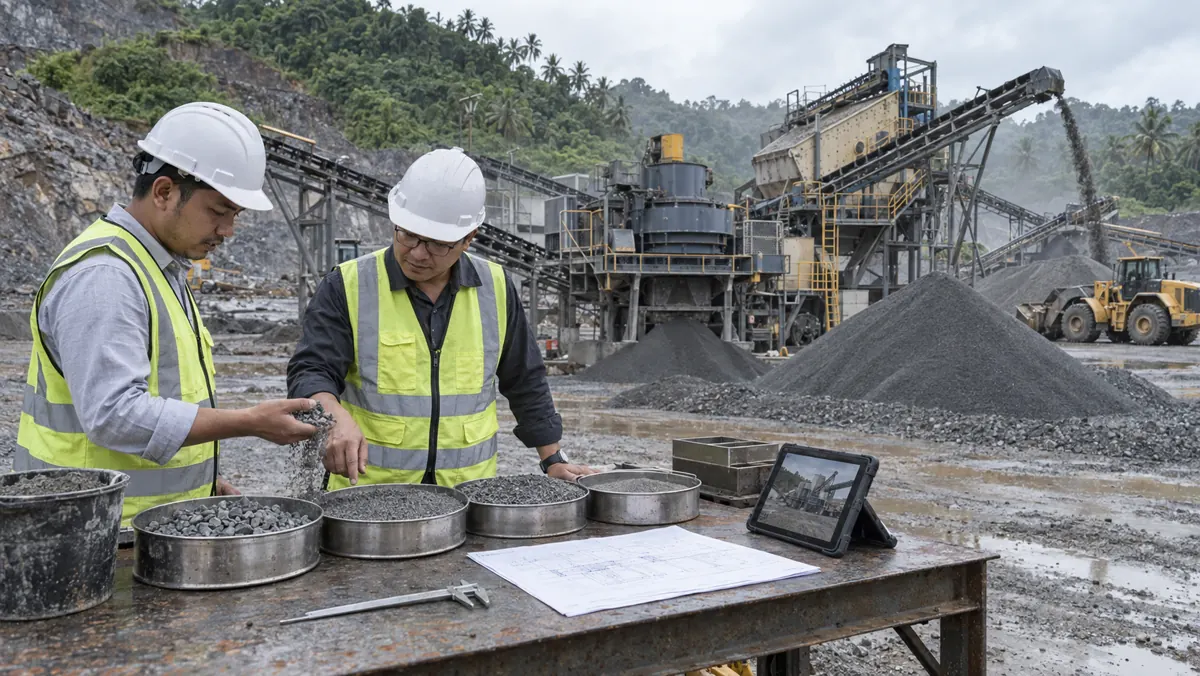
- Take representative samples: sample across a stable production interval instead of relying on surface material from a segregated pile.
- Compare the full sieve curve: review each sieve result alongside FM, product yield, power, and return tonnes.
- Change one variable: allow the circuit to stabilise before re-sampling.
- Control stockpiles: keep products separate and use loading and reclaim practices that limit segregation.
What to Require in a Supplier Proposal
| Proposal item | Why it matters |
|---|---|
| Stated raw-material basis | Rock type, abrasion, moisture, feed distribution, and natural fines determine the duty behind product claims. |
| Product balance by stream | Separates new feed, discharge, returns, saleable 0-5 mm product, other products, and removed fines. |
| Screen and conveyor schedule | Shows deck areas, apertures, media, design loads, return capacity, and transfer points. |
| Grading assumption | Names the sieve series, product envelope, fine-material boundary, and whether FM is a target or report-only value. |
| Control and sampling plan | Explains where to sample and which operating data should be logged. |
| Scope and test boundary | Clarifies classification, washing, utilities, structural scope, commissioning, spares, service, and acceptance method. |
Cost and Operating Factors Often Missed
The lowest crusher quotation may not make the lowest-cost compliant sand. Compare the saleable material after final quality control, not only tonnes entering the crusher. Include screen media, return-conveyor power, classification or washing scope, dust handling, water and fines management, wear parts, testing, stockpile handling, and operator time.
Wear and energy should use a clear tonne boundary. Rotor-part cost per tonne of fresh feed and per tonne of saleable sand answer different questions when return load is high. Use the same definition across suppliers and trials.
Common Buyer Mistakes
Treating fineness modulus as the complete product specification
FM is useful but it is only a summary number. Review the full sieve curve, fine-material limit, cleanliness requirement, and the buyer’s standard.
Adjusting rotor speed before checking the screen
Screen blinding, worn media, uneven distribution, excessive loading, or a bypass error can cause grading drift. Confirm the product gate before changing crusher duty.
Comparing fresh-feed capacity with saleable-sand capacity
Closed circuits carry internal return tonnes. Require each supplier to distinguish fresh feed, circulating load, product yield, and final saleable output under stated conditions.
Sampling only from the top of a stockpile
Segregation can make surface samples misleading. Use a representative sampling procedure and record the circuit conditions when the sample was taken.
FAQ
Can a VSI crusher control fineness modulus by itself?
No. A VSI influences its feed, but final grading and FM depend on feed distribution, rotor duty, screens, return load, classification, blending, and sampling. Use FM with a full sieve analysis.
What causes manufactured sand to become too fine?
Possible causes include excess natural fines, unnecessary re-crushing, rotor duty, excessive return load, a screen problem, or an unsuitable classification route. Test the complete circuit rather than assuming one cause.
Is 0-5 mm enough information to select a VSI sand plant?
No. It does not define the sieve envelope, fine-material limit, intended use, feed grading, rock properties, capacity, moisture condition, or testing method needed to select the circuit.
Should all material return to the VSI if it is oversize?
Not automatically. A controlled return is common, but its route must match the product plan and allowable screen and conveyor loading.
How often should a VSI sand plant sample product grading?
Follow the project quality plan, material variability, and customer requirement. Increase sampling during commissioning, feed changes, rainfall-related variation, or after setting changes.
Can washing improve VSI sand grading?
Washing or classification can help manage certain fine-material and cleanliness requirements, but it must be designed with water recovery, dewatering, and fines handling. It does not replace stable feed and screen control.
What information should I send for a manufactured-sand quotation?
Send raw material details or samples, feed-size analysis, moisture and natural-fines observations, target output and sieve limits, capacity, site photos, utilities, layout limits, test results, and budget range.
How should I compare two VSI sand plant proposals?
Compare the same raw-material basis, sieve requirement, product boundary, fresh feed, return load, saleable output, performance-test method, supply scope, utilities, wear parts, and service support.
Request a Sand-Grading Review
Send MVSI your raw material details and sample data, maximum and normal feed size, target output size and full sieve requirement, required fine-material limit, planned capacity, current product test results, site photos, available power and water, and budget range. We can help outline a VSI, screen, return, classification, and stockpile-control route that matches the product you need to sell. Final equipment selection should be confirmed against representative material and the agreed acceptance method.