Table of Contents
- What Are VSI Crusher Wear Parts?
- Main VSI Wear Parts and Their Functions
- Rotor Tips
- Anvils and Impact Blocks
- Chamber Liners
- Feed Tube and Distributor Plate
- How Often Should VSI Wear Parts Be Replaced?
- Wear Factors for Granite, Basalt, and Limestone
- Maintenance Checklist for VSI Wear Parts
- Daily Checks
- Weekly Checks
- Common Signs That Wear Parts Need Attention
- How to Reduce VSI Wear Cost
- Spare Parts Planning Before Buying a VSI Crusher
- Common Buyer Mistakes
- What Information Should You Send for Wear Parts Recommendation?
- Internal Reading
- Conclusion
- FAQ
- What are the main wear parts of a VSI crusher?
- How often should VSI rotor tips be replaced?
- Why do VSI wear parts wear out quickly?
- Are granite and basalt hard on VSI wear parts?
- Can better wear parts reduce downtime?
- What should I inspect during VSI maintenance?
- Should I keep VSI spare parts on site?
- What information should I provide before buying VSI wear parts?
VSI crusher wear parts include rotor tips, anvils, liners, feed tubes, distributor plates, upper and lower wear plates, bolts, and other protective components inside the crushing chamber. These parts protect the rotor and chamber while the machine accelerates rock at high speed to make manufactured sand or shaped aggregate. Wear condition directly affects sand quality, vibration, power consumption, downtime, and cost per ton. For granite, basalt, river stone, limestone, and other materials, the correct wear parts and maintenance schedule should be selected based on hardness, abrasiveness, feed size, rotor speed, and operating hours.
This guide explains the main VSI wear parts, how they fail, and how buyers can plan maintenance before ordering a sand making machine.
What Are VSI Crusher Wear Parts?
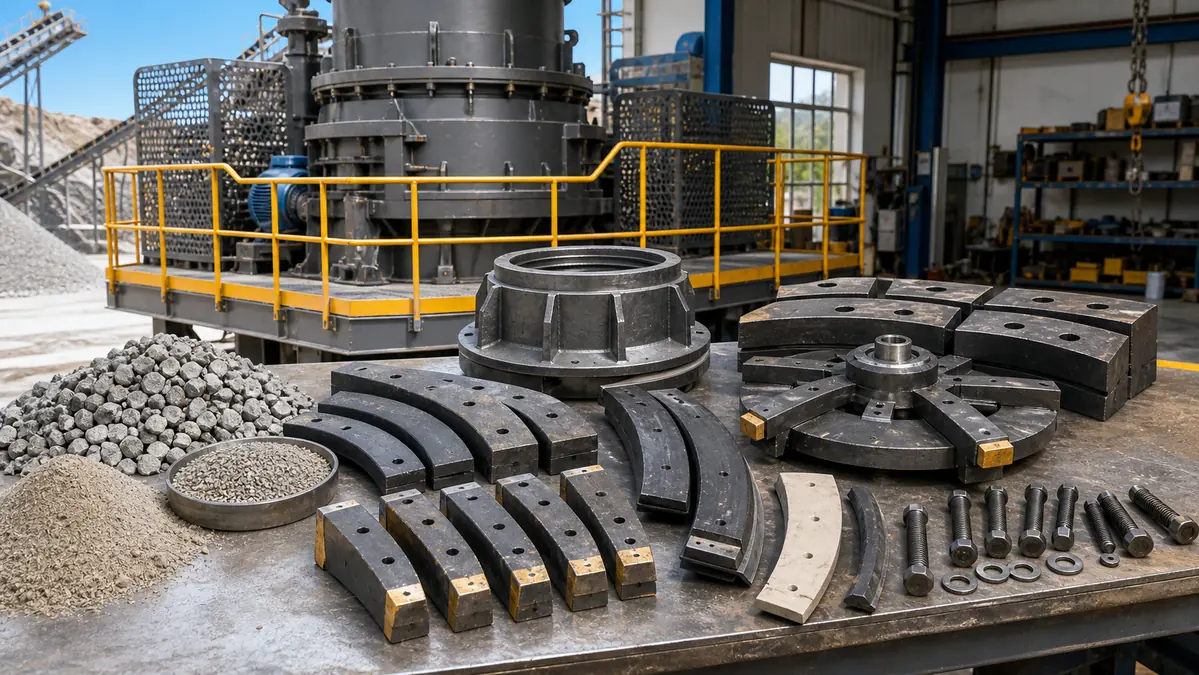
A VSI crusher works by feeding material into a high-speed rotor. The rotor throws the material outward into a rock bed or metal anvils. Because the rock moves at high speed, the contact areas inside the machine experience strong impact and abrasion.
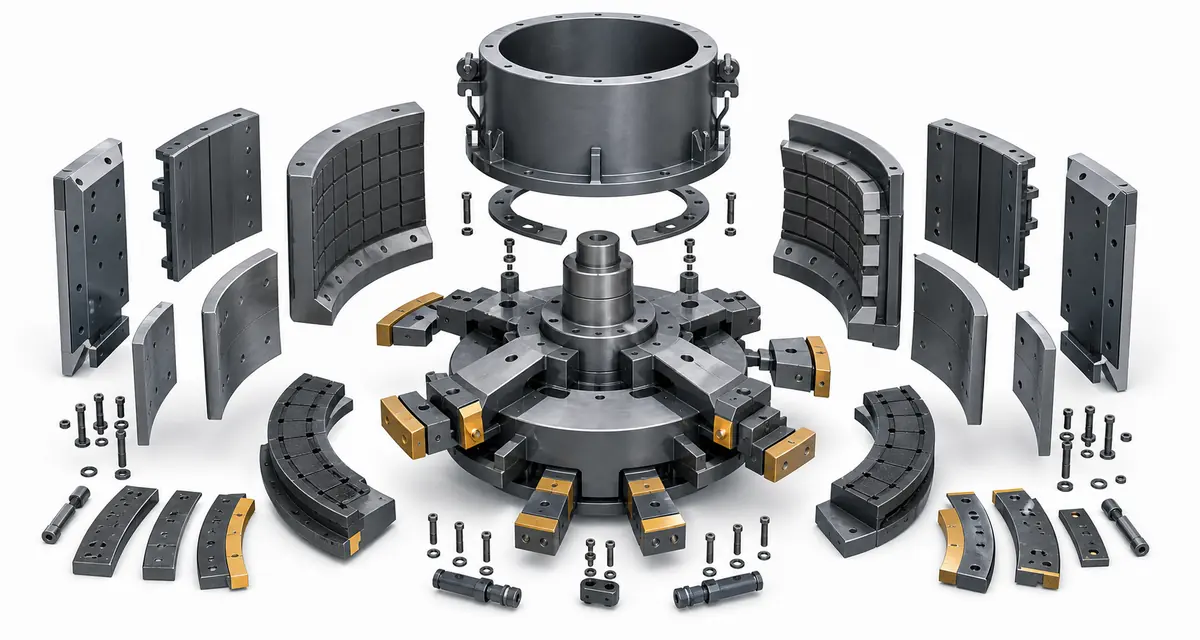
The most common VSI wear parts include rotor tips, backup tips, tip carrier plates, anvils or impact blocks, chamber liners, feed tube, distributor plate, upper and lower wear plates, cavity wear plates, bolts, washers, and retaining parts.
Main VSI Wear Parts and Their Functions
Rotor Tips
Rotor tips protect the rotor exit points where rock leaves the rotor at high speed. If rotor tips wear too far, the rotor body may be exposed to direct abrasion. For hard and abrasive materials such as granite and basalt, rotor tip quality has a major effect on cost per ton.
Anvils and Impact Blocks
Anvils are used in rock-on-iron VSI chambers. Material from the rotor impacts the anvils directly. This can provide strong crushing force, but the anvils may wear quickly when processing abrasive rock.
Chamber Liners
Chamber liners protect the inside of the crushing chamber. Worn liners can change the crushing path, increase vibration, and reduce product quality.
Feed Tube and Distributor Plate
The feed tube guides material into the center of the rotor, while the distributor plate helps distribute incoming material into the rotor. Uneven wear can increase rotor imbalance and reduce crushing efficiency.
How Often Should VSI Wear Parts Be Replaced?
There is no fixed replacement interval that fits every VSI crusher. Wear life depends on material, feed size, rotor speed, chamber design, and operating conditions. Inspect key wear parts daily during early operation, record wear condition, and build a replacement schedule after the first few weeks of production.
Wear Factors for Granite, Basalt, and Limestone
| Material | Wear Risk | Maintenance Focus |
|---|---|---|
| Granite | High | Rotor tips, liners, feed size control, spare parts stock |
| Basalt | High | Rotor balance, tips, liners, screening, dust control |
| River Stone | Medium to high | Feed size control, rotor tips, chamber build-up |
| Limestone | Low to medium | Anvils, powder control, moisture, screen condition |
| Quartz | High | Rotor tips, liners, wear cost per ton |
Maintenance Checklist for VSI Wear Parts
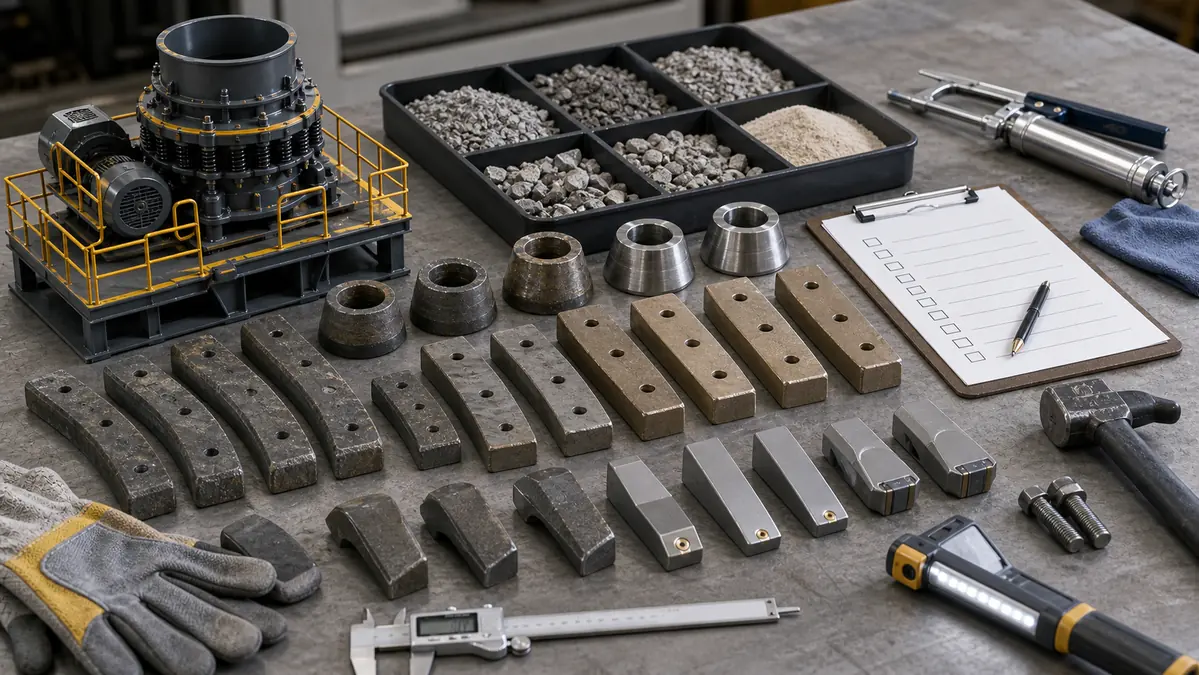
Daily Checks
- Check abnormal vibration.
- Listen for unusual noise.
- Check feed rate stability.
- Inspect product grading changes.
- Check whether sand output suddenly drops.
- Confirm lubrication and motor condition.
Weekly Checks
- Inspect rotor tips.
- Inspect feed tube and distributor plate.
- Check anvils or liners.
- Check bolts and retaining parts.
- Check screen mesh condition.
- Review wear records and operating hours.
Common Signs That Wear Parts Need Attention
Warning signs include abnormal vibration, sudden change in sand grading, lower capacity, higher power consumption, unusual metal noise, uneven product shape, increased dust or fines, rotor imbalance after replacement, and visible wear through protective plates.
How to Reduce VSI Wear Cost
Wear cost can be reduced by controlling maximum feed size, avoiding oversized stone, keeping feed rate stable, using the correct rotor speed, matching chamber design to the material, using quality wear parts, and training operators to record wear patterns.
Spare Parts Planning Before Buying a VSI Crusher
Before purchasing a VSI crusher, ask the supplier for a recommended spare parts package. The first package may include rotor tips, backup tips, feed tube, distributor plate, wear plates, anvils or liners, bolts and washers, lubrication parts, and screen mesh if supplied with the plant.
Common Buyer Mistakes
- Buying a VSI crusher without asking about wear parts cost
- Comparing only machine price, not cost per ton
- Using low-quality rotor tips for abrasive rock
- Feeding oversized material into the VSI
- Replacing only one side of a balanced wear set
- Ignoring vibration after part replacement
- Not keeping spare parts before startup
What Information Should You Send for Wear Parts Recommendation?
Send the VSI crusher model, raw material, material hardness and abrasiveness if known, maximum feed size, required output size, capacity, rotor speed or motor power, rock-on-rock or rock-on-iron chamber design, operating hours per day, and photos of worn parts if replacing existing parts.
Internal Reading
If you are still choosing the chamber type, read Rock-on-Rock vs Rock-on-Iron VSI Crusher: Key Differences.
If you are selecting a full VSI machine, read How to Choose a VSI Sand Making Machine for Granite, Basalt, and Limestone.
Conclusion
VSI crusher wear parts are critical to sand quality, operating cost, and machine reliability. Rotor tips, anvils, liners, feed tubes, distributor plates, and wear plates should be inspected regularly and replaced before they cause rotor or chamber damage. For abrasive rock such as granite, basalt, river stone, and quartz, wear parts planning is especially important.
If you are planning a VSI sand making plant or need replacement wear parts, send your material, feed size, output size, capacity, chamber type, site photos, and budget range. MVSI can help recommend suitable VSI wear parts and maintenance support for your project.
FAQ
What are the main wear parts of a VSI crusher?
The main VSI wear parts include rotor tips, backup tips, anvils, chamber liners, feed tube, distributor plate, upper and lower wear plates, bolts, and retaining parts.
How often should VSI rotor tips be replaced?
Replacement time depends on material abrasiveness, feed size, rotor speed, feed stability, and operating hours. Inspect rotor tips regularly and replace them before the rotor body is exposed.
Why do VSI wear parts wear out quickly?
Fast wear is often caused by abrasive rock, oversized feed, high rotor speed, unstable feeding, poor chamber selection, low-quality wear parts, or excessive recirculation load.
Are granite and basalt hard on VSI wear parts?
Yes. Granite and basalt are hard and abrasive, so they usually require stronger wear parts, controlled feed size, and careful maintenance planning.
Can better wear parts reduce downtime?
Yes. Quality wear parts and planned replacement can reduce unexpected shutdowns, protect the rotor, and stabilize production cost per ton.
What should I inspect during VSI maintenance?
Inspect rotor tips, feed tube, distributor plate, anvils, liners, bolts, rotor balance, lubrication, screen condition, and signs of abnormal vibration.
Should I keep VSI spare parts on site?
Yes. Quarry and mining sites should keep critical spare parts on site, especially rotor tips, liners, feed tube, bolts, and anvils or wear plates.
What information should I provide before buying VSI wear parts?
Send the VSI model, raw material, feed size, output size, capacity, chamber type, operating hours, and photos of worn parts if available.