Table of Contents
- What Does VSI Crusher Capacity Mean?
- Typical VSI Capacity Ranges
- Capacity Is Not Only About the VSI Model
- Main Factors That Affect VSI Crusher Capacity
- Feed Size
- Material Hardness and Abrasiveness
- Final Product Size
- Rotor Speed
- Chamber Type
- Closed-Circuit Return Load
- Example Configurations from 50 TPH to 500 TPH
- 50-100 TPH VSI Sand Production
- 100-200 TPH VSI Sand Production
- 200-350 TPH VSI Sand Production
- 350-500 TPH VSI Sand Production
- How to Estimate Net Sand Output
- Capacity Planning Table for Buyers
- Common Mistakes When Choosing VSI Capacity
- What Information Should You Send for Capacity Selection?
- Internal Reading
- Conclusion
- FAQ
- What capacity VSI crusher do I need?
- Can one VSI crusher produce 500 TPH?
- Why is final sand output lower than VSI feed capacity?
- What affects VSI crusher capacity the most?
- Is a higher rotor speed always better for capacity?
- What equipment is needed for a 100-200 TPH VSI sand plant?
- Should I choose mobile or stationary VSI for high capacity?
- What information should I provide before asking for a VSI quotation?
VSI crusher capacity normally ranges from about 50 TPH to 500 TPH depending on the machine model, feed size, rock hardness, rotor speed, chamber type, motor power, and closed-circuit screening load. A small VSI sand line may use one compact crusher for 50-100 TPH production, while a large quarry may need a high-power VSI, larger screen, stronger conveyors, and enough return capacity for 300-500 TPH. Buyers should not choose a VSI crusher by nameplate capacity only. The real output depends on the complete plant design and the required final sand grading.
This guide explains how to estimate VSI crusher capacity and what information buyers should prepare before requesting a quotation.
What Does VSI Crusher Capacity Mean?
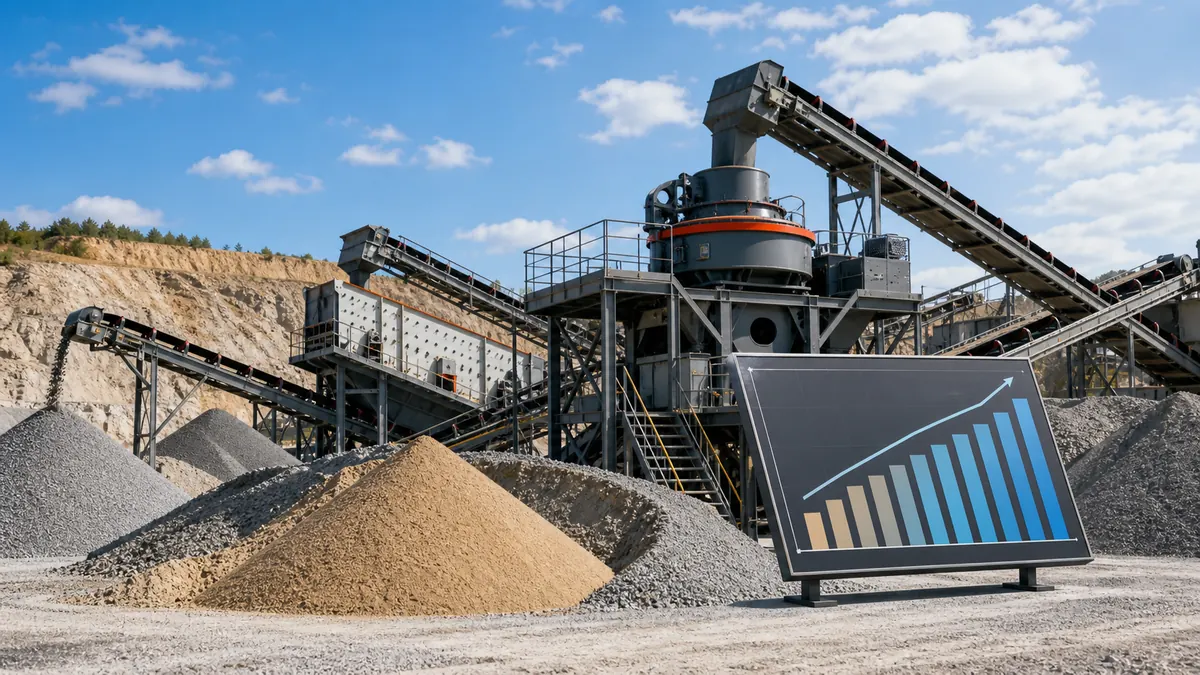
VSI crusher capacity means the amount of material the machine can process per hour under a specific working condition. In sand making, this does not always equal final saleable sand output. Some material may return to the VSI through a screen, some may become different aggregate sizes, and some may become filler or powder.
For example, a VSI crusher processing 200 TPH feed may not produce 200 TPH of 0-5 mm sand. The final sand output depends on feed grading, crushing ratio, screen mesh, return load, and whether the plant also produces 5-10 mm or 10-20 mm aggregate.
When comparing VSI models, ask for capacity under your material and product target, not only a broad catalog range.
Typical VSI Capacity Ranges
The table below gives practical planning ranges. Actual capacity must be confirmed by material test, process design, and manufacturer selection.
| Target Plant Size | Typical VSI Feed Capacity | Common Application | Plant Notes |
|---|---|---|---|
| Small sand line | 50-100 TPH | Small quarry, concrete block plant, local road aggregate | Compact VSI, one screen, simple return conveyor |
| Medium sand line | 100-200 TPH | Commercial sand plant, asphalt aggregate, concrete sand | Stronger feeder, closed circuit screen, dust or washing option |
| Large quarry line | 200-350 TPH | Hard rock manufactured sand and shaped aggregate | Larger VSI, high-power motor, heavy screen and conveyors |
| High-capacity line | 350-500 TPH | Major quarry or infrastructure aggregate supply | Large VSI or parallel machines, high screening capacity, careful stockpile design |
These ranges are useful for early planning, but the final selection must consider material hardness, abrasiveness, feed size, and final product grading.
Capacity Is Not Only About the VSI Model
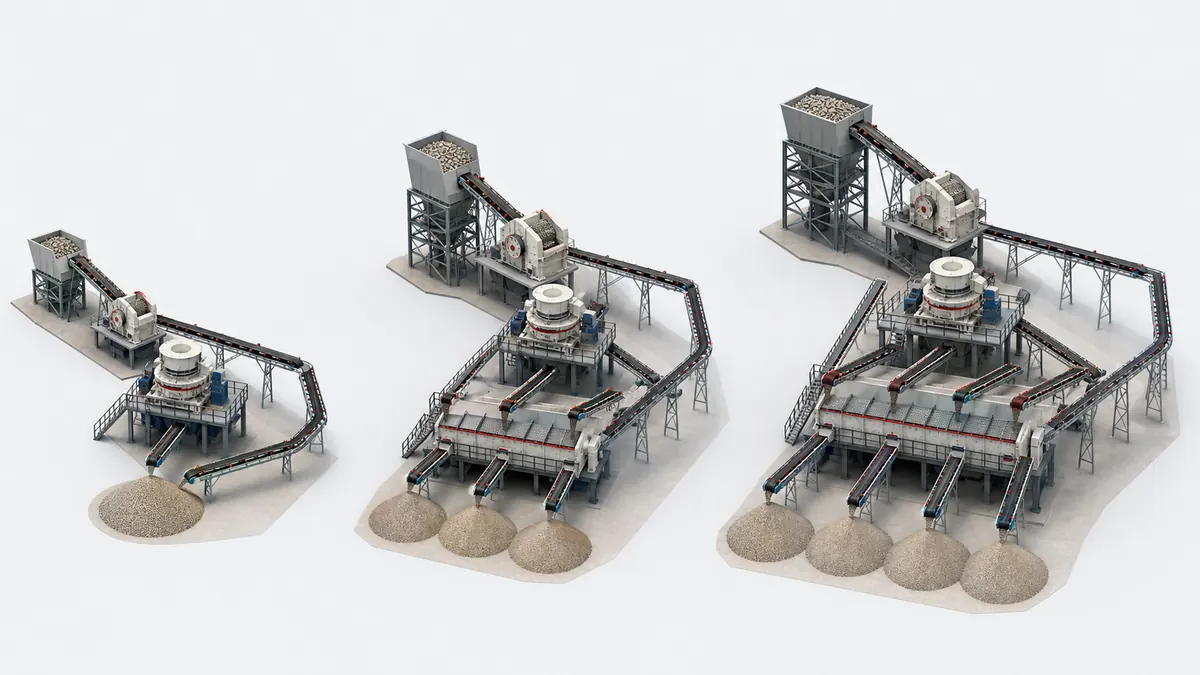
Many buyers ask, “How many tons per hour can this VSI crusher produce?” The better question is, “How many tons per hour can the complete VSI circuit produce under my product specification?”
Capacity is limited by the weakest part of the system, including upstream crusher output, VSI feed size control, rotor motor power, screen area, screen mesh, return conveyor capacity, product conveyor capacity, stockpile space, and dust removal or washing systems.
If the VSI crusher is large but the screen is too small, the plant will still lose capacity. If conveyors are undersized, material will spill or block. If the feed is too coarse, the VSI may vibrate or wear quickly before reaching the expected output.
Main Factors That Affect VSI Crusher Capacity
Feed Size
Feed size is one of the most important factors. Smaller, well-graded feed usually allows higher and more stable VSI capacity. Oversized feed increases impact load, wear, vibration risk, and power consumption.
For hard rock sand making, many plants use jaw and cone crushers before the VSI. The cone crusher prepares a controlled feed size, and the VSI handles final shaping and sand production.
Material Hardness and Abrasiveness
Granite, basalt, river stone, and quartz-rich rock usually reduce effective capacity compared with softer limestone. Hard and abrasive material needs more energy, stronger wear parts, and careful rotor balance.
Limestone may allow higher capacity, but it can create more fines if rotor speed is too high. This means the “best” capacity is not always the maximum capacity.
Final Product Size
Producing 0-5 mm manufactured sand usually creates a different capacity result than producing shaped 5-10 mm or 10-20 mm aggregate. Finer product requirements increase crushing work and screening load.
If the plant must produce strict concrete sand grading, the system may need washing, air classification, or more recirculation. These steps can affect final saleable output.
Rotor Speed
Higher rotor speed increases impact energy. It can improve crushing and shaping, but it can also increase wear cost, filler content, and power demand. Lower speed may increase capacity but reduce shaping performance.
Rotor speed should be selected according to the final product target, not simply pushed to the highest setting.
Chamber Type
Rock-on-rock and rock-on-iron chambers can produce different capacity and wear results. Rock-on-rock is often used for abrasive hard rock and cubical aggregate shaping. Rock-on-iron can give stronger impact but may increase wear.
For more details, read Rock-on-Rock vs Rock-on-Iron VSI Crusher: Key Differences.
Closed-Circuit Return Load
Closed circuit screening improves product control, but it also increases the load on the VSI circuit. If too much material returns to the crusher, the net final output may be lower than expected.
Return load is affected by feed grading, screen mesh, screen efficiency, rotor speed, and product specification.
Example Configurations from 50 TPH to 500 TPH
50-100 TPH VSI Sand Production
A small VSI line is suitable for local concrete sand, road base shaping, and small quarry projects. Common equipment includes a vibrating feeder, jaw crusher or existing primary crusher, cone crusher or impact crusher if needed, small VSI crusher, vibrating screen, return conveyor, and final sand conveyor.
This setup is simple and easier to install. It is suitable when raw material size is already controlled and the buyer does not need many final product sizes.
100-200 TPH VSI Sand Production
A medium line is common for commercial aggregate suppliers. It usually needs better screening and a stable return circuit. Common equipment includes primary jaw crusher, secondary cone crusher, VSI crusher, multi-deck vibrating screen, return conveyor, product conveyors, and optional washing or dust control.
This capacity range is often used for concrete sand, asphalt aggregate, and shaped road aggregate.
200-350 TPH VSI Sand Production
A large quarry line needs careful matching between the VSI, screen, conveyors, and stockpiles. Common equipment includes heavy-duty feeder, jaw crusher, cone crusher, high-capacity VSI crusher, large vibrating screen, strong return conveyor, product conveyors by size, and dust control or washing system.
At this level, plant layout becomes very important. Conveyor length, transfer points, stockpile space, and maintenance access all affect daily operation.
350-500 TPH VSI Sand Production
High-capacity production may require a large VSI model, parallel VSI crushers, or a carefully designed full crushing and screening circuit. The design should focus on upstream crushing capacity, stable VSI feed, large screen area, high-capacity return conveyors, motor power, wear parts inventory, and enough space for final products.
For 500 TPH planning, the plant should be designed from the process flow sheet, not from one crusher model alone.
How to Estimate Net Sand Output
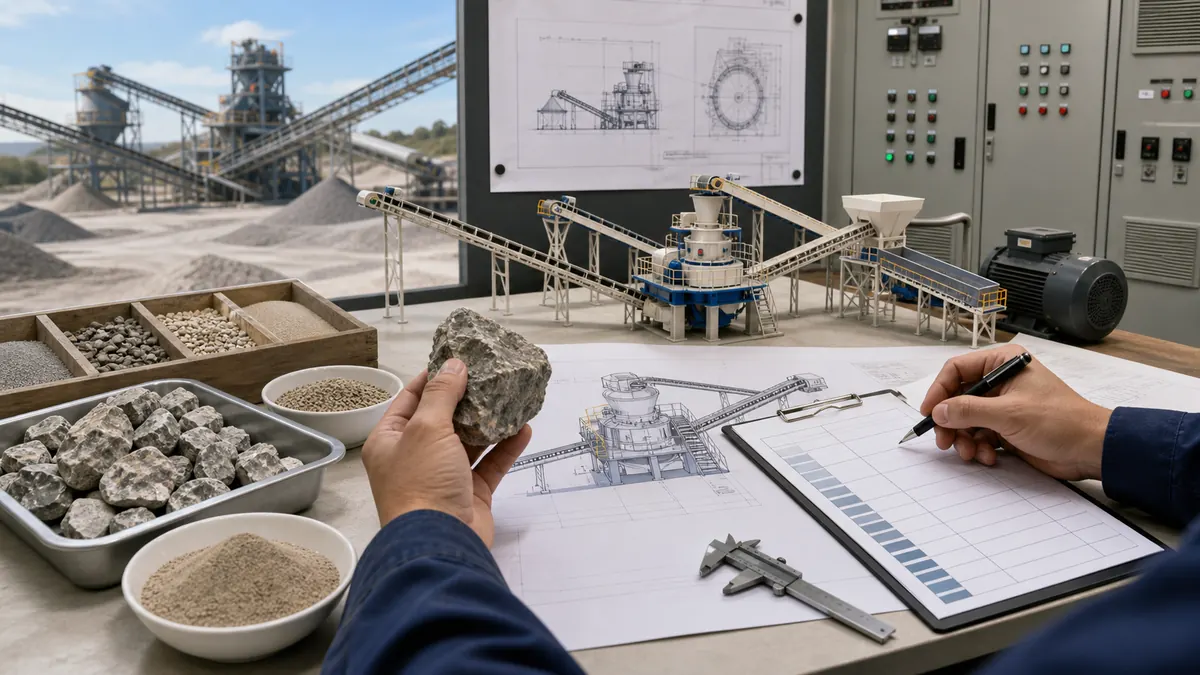
To estimate final sand output, start with these questions: how much feed enters the VSI per hour, what percentage becomes target 0-5 mm sand after one pass, what percentage returns through the screen, what percentage becomes coarse aggregate product, what percentage becomes filler or waste, and whether washing or air classification is required.
For example, if 200 TPH enters the VSI and only 45 percent becomes qualified sand after screening, the net sand output may be about 90 TPH before considering washing losses. The rest may be returned, sold as coarse aggregate, or separated as fines.
This is why buyers should define both feed capacity and final product capacity.
Capacity Planning Table for Buyers
| Buyer Goal | Practical Capacity Question | Why It Matters |
|---|---|---|
| Make concrete sand | How many TPH of qualified 0-5 mm sand? | Final sand output may be lower than VSI feed capacity. |
| Shape coarse aggregate | How many TPH of 5-10 mm or 10-20 mm product? | Shaping may need less fine crushing and different rotor speed. |
| Process granite or basalt | What is the wear cost per ton? | Hard rock may reduce capacity and increase parts consumption. |
| Use closed circuit screening | What is the return load percentage? | High return load reduces net output and increases wear. |
| Add sand washing | What is the clean final sand capacity? | Washing may remove fines and reduce final tonnage. |
| Build a mobile plant | What are transport and power limits? | Mobile layouts have size, weight, and conveyor limits. |
Common Mistakes When Choosing VSI Capacity
- Comparing catalog capacity without material details
- Asking only for maximum TPH, not final product TPH
- Ignoring screen capacity
- Ignoring return conveyor capacity
- Feeding oversized material into the VSI
- Choosing low motor power for hard rock
- Forgetting wear parts cost
- Planning too little stockpile space
- Not considering dust, washing, or powder control
- Buying a plant before confirming final product sizes
A VSI crusher is a high-speed shaping machine. It performs best when the whole circuit is designed around the target product.
What Information Should You Send for Capacity Selection?
To recommend a suitable VSI crusher and sand production line, send raw material name and photos, hardness and abrasiveness if known, maximum feed size into the plant, feed size into the VSI, required final product sizes, required final sand output in TPH, total plant capacity target, moisture and clay content, current crushing equipment if replacing or upgrading, site layout photos or drawings, power supply condition, budget range, and delivery timeline.
With this information, MVSI can estimate the suitable VSI model, screen size, conveyor capacity, motor power, chamber type, and wear parts plan.
Internal Reading
If you are still choosing the correct VSI model for hard rock, read How to Choose a VSI Sand Making Machine for Granite, Basalt, and Limestone.
If your main concern is final particle shape, read How to Improve Cubical Shape in Manufactured Sand with a VSI Crusher.
Conclusion
VSI crusher capacity from 50 TPH to 500 TPH depends on more than the machine model. Feed size, rock hardness, rotor speed, chamber type, screen return load, motor power, and final product specification all affect the real output.
If you need a VSI sand production line, send your raw material, feed size, output size, capacity target, site photos, power condition, and budget range. MVSI can help recommend a practical VSI crusher capacity and complete sand making plant configuration.
FAQ
What capacity VSI crusher do I need?
The right VSI capacity depends on your final product output, not only feed capacity. Send raw material, feed size, final size, required TPH, and site conditions for proper selection.
Can one VSI crusher produce 500 TPH?
Some large VSI circuits can process high feed capacity, but 500 TPH production often requires careful matching of screen area, conveyors, motor power, return load, and sometimes parallel equipment.
Why is final sand output lower than VSI feed capacity?
Because not all feed becomes qualified sand after one pass. Some material returns through the screen, some becomes coarse aggregate, and some becomes filler or waste.
What affects VSI crusher capacity the most?
Feed size, material hardness, abrasiveness, rotor speed, chamber type, screen efficiency, return load, and motor power are the main factors.
Is a higher rotor speed always better for capacity?
No. Higher speed may improve crushing and shape, but it can increase wear, power use, and fines. The best speed depends on the product target.
What equipment is needed for a 100-200 TPH VSI sand plant?
A typical line may include feeder, jaw crusher, cone crusher, VSI crusher, vibrating screen, return conveyor, product conveyors, and optional washing or dust control.
Should I choose mobile or stationary VSI for high capacity?
Stationary plants are usually easier for high-capacity, multi-product production. Mobile VSI plants are useful when relocation, fast installation, or temporary projects are more important.
What information should I provide before asking for a VSI quotation?
Send raw material, feed size, final output sizes, required capacity, moisture, site photos, power supply, budget range, and any existing equipment information.