Table of Contents
- Why Cost Per Ton Matters More Than Machine Price
- The Basic Formula
- Step 1: Define the Real Production Assumptions
- Step 2: Estimate Fuel or Electric Power Cost
- Step 3: Calculate Wear Parts and Consumables
- Step 4: Include Loader, Truck, and Site Support Cost
- Step 5: Add Maintenance, Downtime, and Spare Parts Planning
- Step 6: Compare Configuration Options
- Example Cost-Per-Ton Worksheet
- Common Buyer Mistakes
- How to Reduce Mobile Crusher Operating Cost
- What to Send Before Asking for an Operating Cost Estimate
- Conclusion
- FAQ
- What is included in mobile crusher operating cost?
- How do you calculate mobile crusher cost per ton?
- Does fuel cost or wear parts cost more for a mobile crusher?
- Is an electric mobile crusher cheaper to operate than a diesel mobile crusher?
- Why is saleable tonnage more important than rated capacity?
- How can I reduce mobile crusher operating cost per ton?
- Should relocation cost be included in operating cost?
- What information should I provide before requesting a quotation?
How to Calculate the Operating Cost of a Mobile Crusher Plant
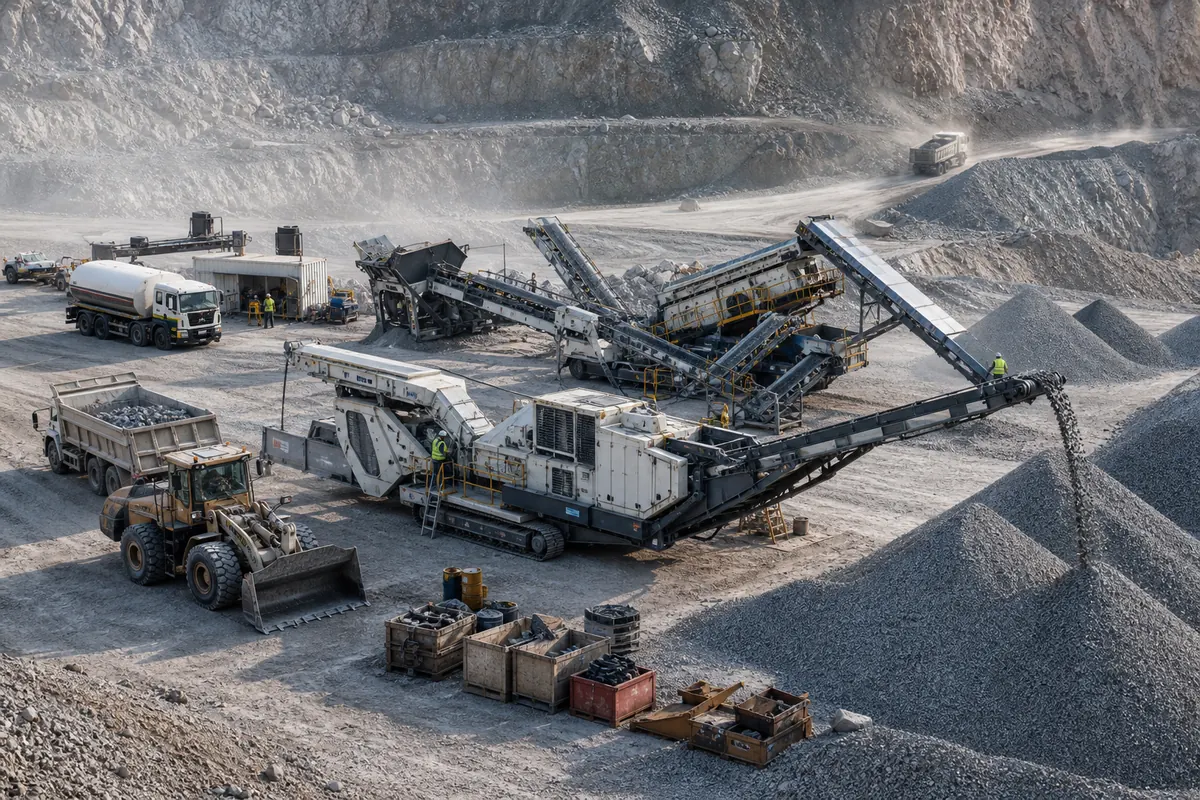
To calculate the operating cost of a mobile crusher plant, estimate the cost per ton from fuel or electricity, wear parts, labor, maintenance, transport, setup, loader and truck support, screen media, dust control, and expected downtime. The formula is simple: total daily operating cost divided by saleable tons per day. The difficult part is using realistic production data, because a plant rated at 200 TPH may not produce 200 saleable tons every hour after clay, oversize return load, screen limits, relocation, and maintenance stops. Buyers should calculate both cash operating cost and total cost per ton before comparing quotations.
Why Cost Per Ton Matters More Than Machine Price
Many buyers start with the purchase price of a mobile crusher plant, but the real business result comes from cost per ton. A cheaper machine can become expensive if it consumes more fuel, wears liners faster, needs more loader support, produces too much unsaleable material, or stops often during peak production.
For quarry owners, the operating cost must be compared with aggregate selling price, working days, and local demand. For road contractors, it must be compared with project schedule, relocation cost, and the cost of buying aggregate from an outside supplier. For mining operators, the question is often whether mobile crushing can reduce truck haulage enough to justify the equipment.
If you are still choosing the plant type, start with the Mobile Crushing Plant Buying Guide for Quarry and Mining Projects. If your project is around 100-200 TPH, also compare the examples in 100 TPH Mobile Crushing Plant: Configuration, Cost, and Applications and 200 TPH Mobile Crusher Plant for Road Construction Aggregates.
The Basic Formula
The simplest formula is:
Operating cost per ton = total operating cost during a period / saleable tons produced during the same period
Use the same time period for both sides. For example, calculate daily cost divided by daily saleable output, or monthly cost divided by monthly saleable output. Do not divide daily cost by theoretical hourly capacity unless the plant truly runs at that capacity all day.
Common cost groups include:
| Cost Group | What to Include | Why It Changes |
|---|---|---|
| Energy | diesel, generator fuel, grid electricity | plant size, motor power, load rate, idle time |
| Wear parts | jaw plates, cone liners, impact bars, VSI parts, screen media | rock hardness, abrasiveness, crusher setting |
| Labor | operators, loader drivers, maintenance workers, site supervisor | automation level, shift length, local wage level |
| Loading and hauling | loader fuel, truck support, internal haul distance | site layout, stockpile position, feed method |
| Maintenance | oil, filters, hydraulic parts, bearings, belts, inspections | working hours, dust, vibration, maintenance discipline |
| Relocation and setup | transport, permits, crane, support legs, commissioning | chassis type, site distance, move frequency |
| Downtime | lost output during breakdowns, waiting for parts, weather stops | spare parts plan, operator skill, site access |
For commercial comparison, also calculate depreciation or finance cost if you want total ownership cost per ton. For cash flow planning, some buyers separate purchase finance from daily operating cost.
Step 1: Define the Real Production Assumptions
Start with production assumptions before estimating cost. A mobile crusher plant cannot be costed accurately without feed size, final output sizes, working hours, and saleable product split.
Prepare these inputs:
- Raw material name and hardness, such as limestone, granite, basalt, river stone, concrete waste, or ore.
- Maximum feed size and typical feed gradation.
- Required output sizes, such as 0-5 mm, 5-10 mm, 10-20 mm, 20-30 mm, or road base.
- Target capacity in tons per hour.
- Working hours per shift and production days per month.
- Percentage of saleable products versus fines, oversize, or rejected material.
- Moisture, clay content, rainy-season conditions, and dust control requirements.
The most important number is saleable tons, not total tons through the crusher. If a plant processes 1,600 tons in a day but only 1,300 tons are saleable products, cost per saleable ton must be based on 1,300 tons.
Step 2: Estimate Fuel or Electric Power Cost
Energy is usually one of the largest operating cost items. Diesel mobile crushers may use engine power for the crusher, hydraulic system, conveyors, screen, tracks, and auxiliary systems. Electric or hybrid plants may reduce energy cost if grid power is stable and available at the site.
Use this simple method:
- Estimate hourly fuel consumption or electric power demand for each plant module.
- Multiply by expected working hours per day.
- Multiply by local diesel price or electricity price.
- Divide by saleable tons per day.
For example, if a mobile crushing line uses 55 liters of diesel per hour, works 8 productive hours per day, and diesel costs 1.10 USD per liter, the daily fuel cost is 484 USD. If the line produces 1,200 saleable tons that day, fuel cost is about 0.40 USD per ton. This is only an example. Real numbers depend on crusher load, engine size, idle time, material, and site logistics.
Idle time matters. A plant that waits for feed, trucks, or excavator support still burns fuel. Good site planning can reduce idle energy cost without changing the crusher model.
Step 3: Calculate Wear Parts and Consumables
Wear cost depends heavily on material hardness, abrasiveness, feed size, moisture, crusher setting, and the selected crusher type. Limestone normally has lower wear cost than basalt, granite, quartzite, and many hard ores. Concrete recycling can be economical, but rebar, tramp steel, and mixed demolition waste can increase downtime and damage risk.
Common wear and consumable items include:
- Jaw plates, cheek plates, and toggle parts for mobile jaw crushers.
- Cone liners, mantle, concave, and backing material for mobile cone crushers.
- Blow bars, impact plates, and liners for mobile impact crushers.
- Rotor tips, anvils, liners, and feed tube parts for mobile VSI crushers.
- Screen mesh, rubber panels, conveyor belts, skirting, rollers, oil, filters, and grease.
For a practical estimate, ask the supplier for expected service life under your material conditions, then convert the replacement cost into cost per ton. If a liner set costs 8,000 USD and is expected to process 80,000 tons, the basic wear cost is 0.10 USD per ton before labor and downtime.
For final-stage shaping and manufactured sand, wear cost can become more important. If your plant includes VSI crushing, compare the maintenance logic in VSI Crusher Wear Parts: Rotor Tips, Anvils, Liners, and Maintenance.
Step 4: Include Loader, Truck, and Site Support Cost
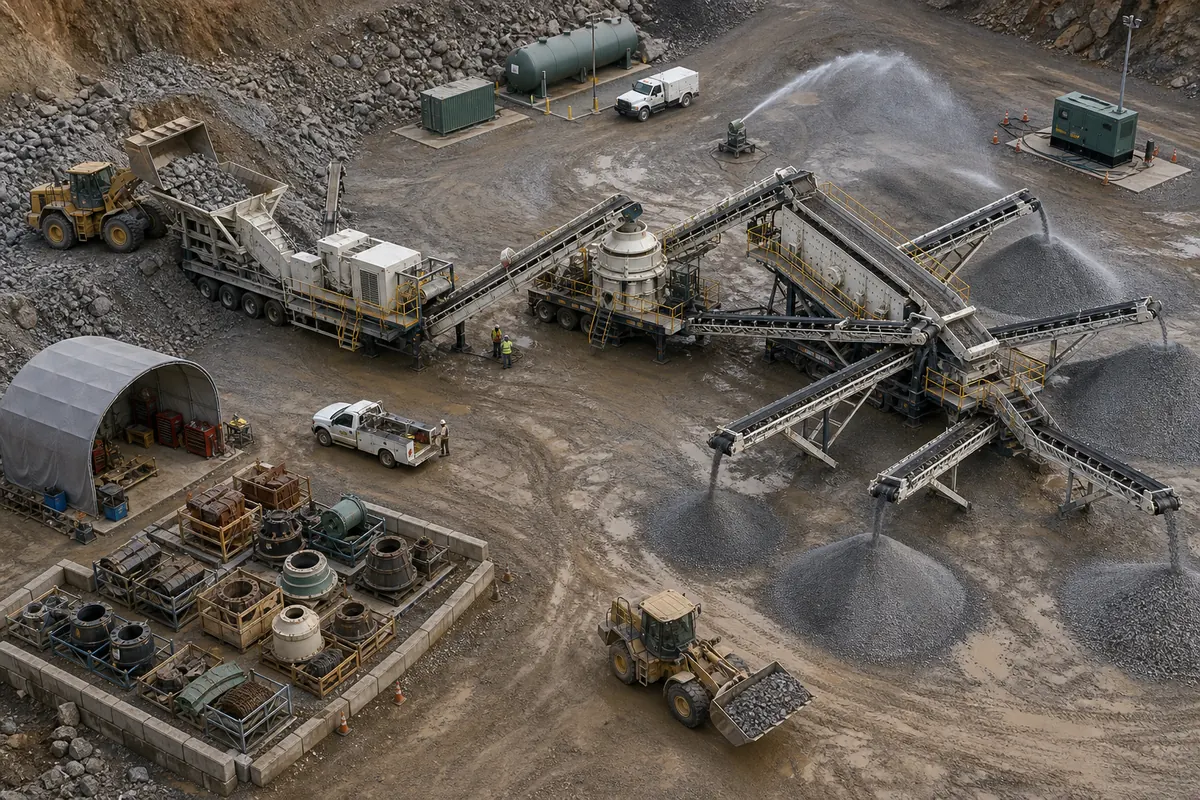
The mobile crusher is only one part of the production system. Feed loading, internal hauling, stockpile management, and finished material loading can change cost per ton significantly.
Check these site support items:
- Excavator or wheel loader feeding the hopper.
- Haul truck distance from quarry face to crusher.
- Loader work needed to manage finished stockpiles.
- Truck loading time for sold aggregate.
- Access road maintenance, water truck, dust suppression, and drainage.
- Lighting, site security, operator room, and temporary power support.
Mobile crushing plants often reduce civil foundation cost and can move closer to the feed source. However, if the plant is placed too far from the working face or finished stockpile area, loader and truck cost may erase that advantage.
This is especially important when comparing crawler and wheel-mounted plants. For chassis selection, see Track-Mounted vs Tire-Mounted Mobile Crusher: Pros and Cons.
Step 5: Add Maintenance, Downtime, and Spare Parts Planning
Maintenance cost is not only the price of oil and filters. It includes inspections, shutdown time, labor, parts availability, cleaning, belt alignment, bearing checks, screen condition, crusher chamber adjustment, hydraulic system care, and electrical troubleshooting.
Practical maintenance planning should include:
- Daily inspection time before startup.
- Lubrication, hydraulic oil, filters, and cooling system checks.
- Belt, roller, scraper, and screen mesh inspection.
- Crusher chamber checks and wear-part replacement schedule.
- Critical spare parts kept on site.
- Supplier response time and remote support.
- Operator training and safety procedures.
Downtime should be converted into cost. If a plant normally sells 1,200 tons per day and stops for one day during a busy project, the lost revenue can be larger than the part that failed. For buyers in remote areas, a spare parts package is often a cost-control tool, not only an optional accessory.
Step 6: Compare Configuration Options
Different mobile plant configurations create different cost structures. A jaw plus impact plant may be economical for limestone and recycling. A jaw plus cone plus screen plant may be better for granite, basalt, and hard river stone. A jaw plus cone plus VSI plus screen line may improve manufactured sand and aggregate shape, but it adds energy, wear parts, and process control requirements.
| Project Type | Typical Configuration | Main Cost Watch Point |
|---|---|---|
| Limestone road base | mobile jaw or impact crusher with screen | blow bar wear, dust, screen capacity |
| Granite or basalt aggregate | mobile jaw crusher, cone crusher, screen | liner wear, recirculating load, fuel use |
| Concrete recycling | mobile impact crusher and screen | rebar control, tramp metal, downtime |
| Manufactured sand | jaw, cone, VSI, fine screen | VSI wear parts, moisture, fines control |
| Temporary road project | wheel-mounted or track-mounted plant | transport, setup, relocation frequency |
| Quarry face crushing | track-mounted jaw and screen or cone | internal haulage savings, undercarriage maintenance |
For hard granite circuits, see Mobile Crusher Plant for Granite: Jaw, Cone, VSI, and Screen Combination. For crusher type selection, read Mobile Jaw Crusher vs Mobile Impact Crusher: Which One Should You Choose?.
Example Cost-Per-Ton Worksheet
The following worksheet structure helps buyers compare quotations. Replace the example fields with local prices and project data.
| Input | Example Question to Answer |
|---|---|
| Saleable tons per day | How many tons of finished product will be sold or used? |
| Fuel or electricity per day | What is the hourly energy use at real load? |
| Wear parts per ton | How long do liners, blow bars, tips, and screen media last? |
| Labor per day | How many operators, loader drivers, and maintenance workers are needed? |
| Loader and truck support | How far is the feed source from the crusher and stockpile? |
| Maintenance allowance | What daily or monthly budget covers service parts and oil? |
| Relocation cost | How often will the plant move, and what transport is needed? |
| Downtime allowance | What percentage of planned time should be reserved for stops? |
After filling these inputs, calculate:
- Daily cash operating cost.
- Saleable tons per day.
- Cash operating cost per ton.
- Monthly operating cost.
- Total ownership cost per ton if depreciation, finance, and major rebuilds are included.
This approach prevents a common mistake: comparing two mobile crusher quotations by machine price alone while ignoring operating cost differences.
Common Buyer Mistakes
The first mistake is using rated capacity as daily production. Rated capacity is useful for machine sizing, but real production depends on feed grading, screen efficiency, product split, crusher setting, clay content, moisture, operator skill, and truck logistics.
The second mistake is ignoring unsaleable fines or oversize. If the plant produces a product that local customers do not buy, that tonnage should not be treated as revenue.
The third mistake is underestimating wear cost for abrasive rock. Basalt, granite, quartz-rich river stone, and hard ore can make the lowest purchase-price option more expensive over time.
The fourth mistake is forgetting relocation and setup cost. Mobile plants save time compared with many stationary plants, but transport, permits, low-bed trailers, cranes, support legs, and commissioning still need budget.
The fifth mistake is buying without a spare parts plan. A low-cost plant can become expensive if a small part stops production for several days.
How to Reduce Mobile Crusher Operating Cost
Cost reduction usually comes from stable feeding, correct crusher selection, good screening, planned maintenance, and efficient site layout.
Useful actions include:
- Keep the feed size within the design range.
- Remove clay, soil, and tramp metal when practical.
- Match crusher type to material hardness and abrasiveness.
- Keep screen media clean and correctly sized.
- Reduce idle time by coordinating loader and truck movement.
- Use stockpile conveyors to reduce loader rehandling.
- Train operators to monitor vibration, noise, amperage, and belt tracking.
- Keep critical wear parts and service parts available before failure.
- Track fuel, wear parts, output, and downtime every shift.
For broader plant-budget thinking, compare the related guide on Stone Crusher Plant Cost: What Determines the Final Price?.
What to Send Before Asking for an Operating Cost Estimate
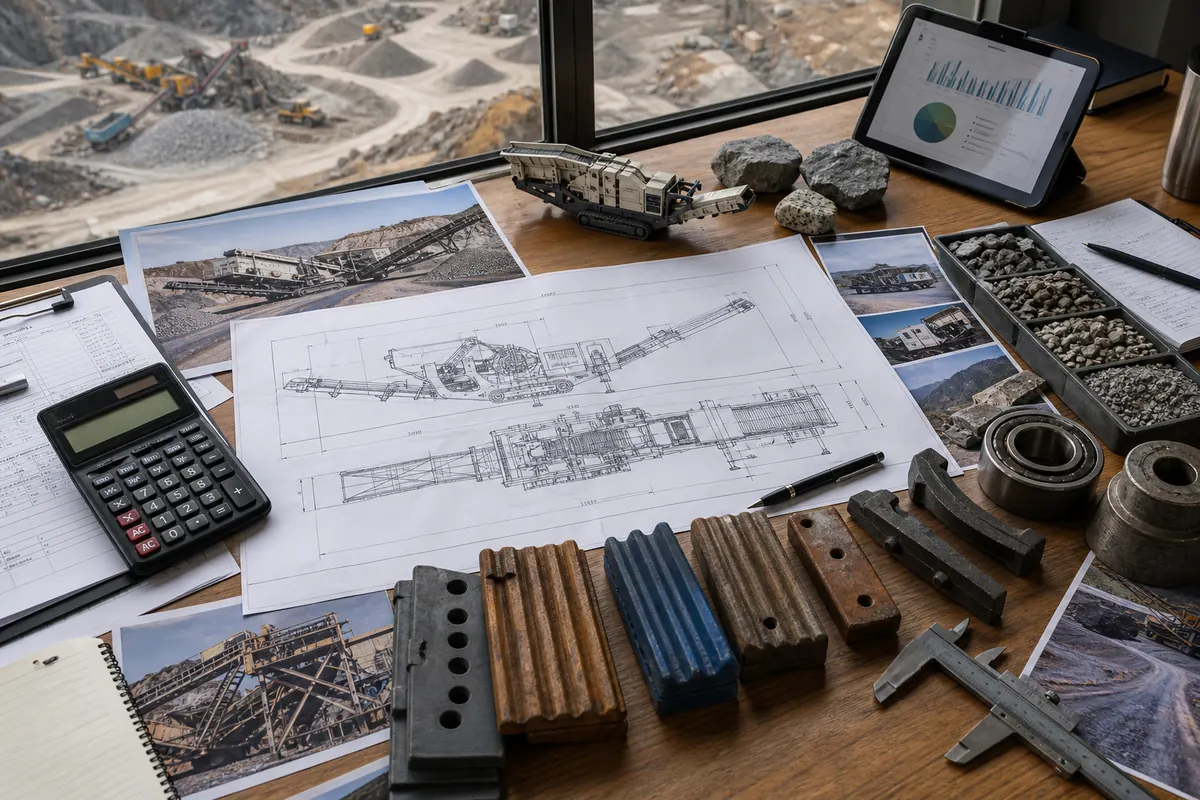
To prepare a useful mobile crusher operating cost estimate, send the supplier enough information to model the actual working conditions.
Prepare these details:
- Raw material name, photos, hardness, abrasiveness, moisture, and clay content.
- Maximum feed size and typical feed size distribution.
- Required output size or output sizes, such as 0-5 mm, 5-10 mm, 10-20 mm, or road base.
- Target capacity in tons per hour and planned working hours per day.
- Site photos showing quarry face, access roads, working pad, stockpile area, and loading route.
- Local diesel price, electricity price, labor cost, and expected production days per month.
- Relocation frequency, transport distance, road limits, and crane or low-bed trailer availability.
- Dust control needs, spare parts preference, budget range, and delivery timeline.
With these details, MVSI can recommend a practical mobile jaw crusher, cone crusher, impact crusher, VSI crusher, screen, conveyor, and support-equipment layout, then help estimate cost per ton more realistically.
Conclusion
Mobile crusher operating cost should be calculated from real saleable output, not only rated machine capacity. The main cost drivers are fuel or electricity, wear parts, labor, loader and truck support, maintenance, relocation, setup, downtime, and product quality. The best plant is not always the cheapest machine; it is the configuration that produces the required aggregate at the lowest reliable cost per ton.
If you are planning a mobile crushing plant, send MVSI your raw material, feed size, output size, capacity, site photos, local energy cost, relocation plan, and budget range. We can help review the application and suggest a practical crushing and screening configuration with a clearer operating cost estimate.
FAQ
What is included in mobile crusher operating cost?
Mobile crusher operating cost includes fuel or electricity, wear parts, labor, loader and truck support, maintenance, screen media, conveyors, relocation, setup, dust control, downtime, and sometimes depreciation or finance cost.
How do you calculate mobile crusher cost per ton?
Add all operating costs for the selected period, then divide by saleable tons produced during the same period. Use real saleable output instead of theoretical rated capacity.
Does fuel cost or wear parts cost more for a mobile crusher?
It depends on material and plant configuration. Fuel or power cost can be high in diesel plants, while wear parts can dominate when crushing hard abrasive rock such as basalt, granite, quartzite, or ore.
Is an electric mobile crusher cheaper to operate than a diesel mobile crusher?
It can be cheaper if the site has stable grid power at a low electricity price. Diesel may still be better for remote sites, temporary projects, or locations where power connection is difficult.
Why is saleable tonnage more important than rated capacity?
Saleable tonnage reflects the finished products that can be sold or used. Rated capacity does not include screen limits, return load, fines, oversize, downtime, moisture, or site logistics.
How can I reduce mobile crusher operating cost per ton?
Use the right crusher type, keep feed size stable, reduce idle time, improve screen efficiency, plan stockpiles well, maintain wear parts on schedule, and keep critical spare parts available.
Should relocation cost be included in operating cost?
Yes, especially for contractors and temporary projects. Transport, permits, setup, support legs, cranes, commissioning, and lost production during movement can change the real cost per ton.
What information should I provide before requesting a quotation?
Provide raw material, feed size, output size, capacity, site photos, local energy cost, working hours, relocation frequency, dust control needs, spare parts preference, budget range, and delivery timeline.