Table of Contents
- What Is a 100 TPH Mobile Crushing Plant?
- Typical 100 TPH Mobile Crushing Plant Configurations
- Option 1: Mobile Jaw Crusher + Mobile Screen
- Option 2: Mobile Jaw Crusher + Mobile Cone Crusher + Mobile Screen
- Option 3: Mobile Impact Crusher + Mobile Screen
- Option 4: Add a Mobile VSI for Sand Making or Shaping
- What Materials Can a 100 TPH Mobile Crusher Process?
- Cost Factors for a 100 TPH Mobile Crushing Plant
- Common Applications
- Small and Medium Quarry Production
- Road Construction Aggregates
- Mining Pre-Crushing
- Concrete and Demolition Recycling
- Site and Power Requirements
- Common Buyer Mistakes
- What Information Should You Send for a Quotation?
- Conclusion
- FAQ
- What equipment is needed for a 100 TPH mobile crushing plant?
- Can one mobile crusher produce 100 TPH?
- Is 100 TPH enough for a quarry?
- What material can a 100 TPH mobile crusher process?
- Should I choose a mobile jaw crusher or mobile impact crusher for 100 TPH?
- How much does a 100 TPH mobile crushing plant cost?
- Can a 100 TPH mobile plant make manufactured sand?
- What information should I provide before asking for a quotation?
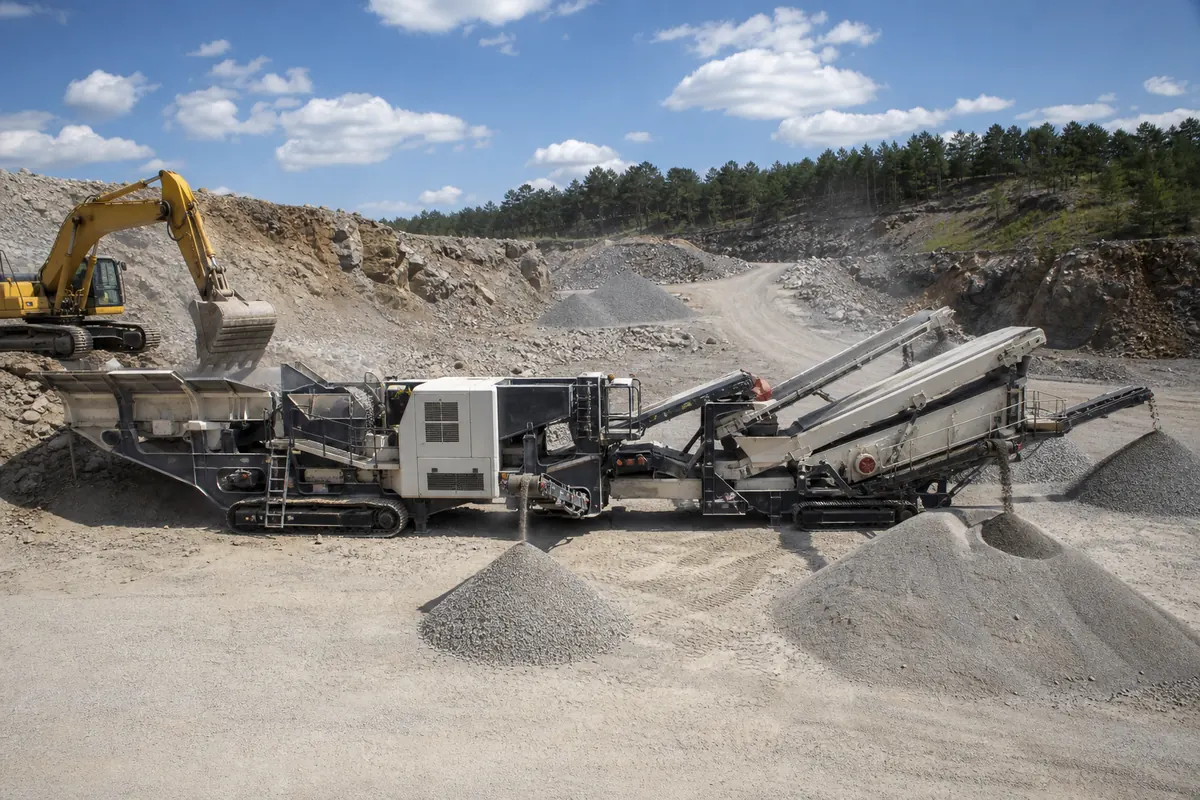
A 100 TPH mobile crushing plant is a compact crushing and screening solution designed to process about 100 tons per hour under suitable feed and material conditions. It is often used for small and medium quarries, road construction aggregate, mining pre-crushing, limestone projects, concrete recycling, and temporary contract crushing. A typical configuration may include a mobile jaw crusher, mobile cone or impact crusher, mobile screen, conveyors, and optional VSI shaping depending on final product demand. Real output depends on feed size, hardness, moisture, screen efficiency, and required aggregate sizes.
What Is a 100 TPH Mobile Crushing Plant?
A 100 TPH mobile crushing plant is a movable crushing production line built on track-mounted or tire-mounted chassis. Instead of installing a fixed crushing workshop with concrete foundations, the main equipment can be delivered to the site, commissioned faster, and moved between quarry faces or project locations.
For many buyers, 100 TPH is a practical middle range. It is large enough for commercial aggregate sales, road base supply, and mining preparation, but still compact enough for projects with limited site space, seasonal production, or changing working locations.
If you are still comparing overall mobile plant types, you may also read the Mobile Crushing Plant Buying Guide for Quarry and Mining Projects.
Typical 100 TPH Mobile Crushing Plant Configurations
There is no single universal 100 TPH layout. The right configuration depends on raw material, maximum feed size, final product sizes, required shape, dust limits, mobility, and budget.

Option 1: Mobile Jaw Crusher + Mobile Screen
This is the simplest 100 TPH configuration. It is suitable when the feed is large but the final product requirement is not very strict.
- Best for: quarry pre-crushing, road base, mining primary crushing, larger aggregate products.
- Typical equipment: vibrating feeder, mobile jaw crusher, belt conveyor, mobile screen.
- Strength: simple layout, lower investment, easy maintenance.
- Limitation: final particle shape is usually not as good as a multi-stage plant.
Option 2: Mobile Jaw Crusher + Mobile Cone Crusher + Mobile Screen
For granite, basalt, hard river stone, and abrasive ore, a jaw plus cone configuration is usually more stable. The jaw crusher handles primary size reduction, while the cone crusher controls secondary crushing and product size.
- Best for: hard rock aggregate, quarry production, mining projects.
- Typical equipment: mobile jaw crusher, mobile cone crusher, mobile vibrating screen, return conveyor.
- Strength: good crushing ratio and better wear economy for hard stone.
- Limitation: higher investment than a single-stage mobile crusher.
Option 3: Mobile Impact Crusher + Mobile Screen
A mobile impact crusher can be efficient for limestone, construction waste, soft rock, and recycled concrete. It can produce a more cubical particle shape than a jaw-only plant.
- Best for: limestone, concrete recycling, demolition waste, medium-hard stone.
- Typical equipment: mobile impact crusher, screen, magnetic separator for recycling applications.
- Strength: compact layout and good product shape.
- Limitation: blow bars may wear faster on hard and abrasive stone.
Option 4: Add a Mobile VSI for Sand Making or Shaping
If the buyer needs manufactured sand or a more cubical final aggregate, a mobile VSI crusher can be added after cone crushing or screening. This is common when 0-5 mm sand quality or aggregate shape matters more than simply reducing stone size.
For capacity planning, see the VSI Crusher Capacity Guide: 50 TPH to 500 TPH Sand Production. If you are comparing mobile and fixed sand making, see Is a Mobile VSI Crusher Better Than a Stationary Sand Making Plant?.
What Materials Can a 100 TPH Mobile Crusher Process?
The plant can process many materials, but the crusher type should match the material behavior.
| Material | Recommended Main Crusher | Notes |
|---|---|---|
| Granite | Jaw + cone + screen | Hard and abrasive; cone crusher is usually preferred for secondary crushing. |
| Basalt | Jaw + cone + screen | Requires strong wear parts and stable screening. |
| Limestone | Impact crusher or jaw + impact | Easier crushing, good for road aggregate and concrete stone. |
| River stone | Jaw + cone or jaw + VSI | Rounded and hard; VSI may improve sand shape. |
| Concrete waste | Impact crusher + screen | Magnetic separator may be needed for rebar removal. |
| Ore mining feed | Jaw + cone + screen | Often used before grinding or beneficiation. |
Cost Factors for a 100 TPH Mobile Crushing Plant
The price of a 100 TPH mobile crushing plant is not determined only by capacity. Two plants with the same nominal output may have very different costs because the material, final size, automation, chassis type, and auxiliary equipment are different.
Important cost factors include:
- Crusher combination: single-stage impact plants usually cost less than jaw + cone + screen systems.
- Chassis type: track-mounted plants are more flexible on rough sites; tire-mounted plants can be cost-effective for road transport.
- Feed size and hardness: larger and harder feed requires stronger machines and more wear-resistant parts.
- Final product sizes: more product grades require more screen area, conveyors, and return circuits.
- Power system: diesel-hydraulic, electric drive, or hybrid drive changes both purchase cost and operating cost.
- Dust control and environmental requirements: water spray, covers, and sealing may be needed.
- Shipping, installation, spare parts, and local service requirements.
For a serious quotation, it is better to compare the total crushing solution rather than only the lowest machine price.
Common Applications
A 100 TPH mobile crushing plant is often chosen for projects where flexibility matters as much as capacity.

Small and Medium Quarry Production
For quarry owners, a 100 TPH plant can produce common aggregate sizes such as 0-5 mm, 5-10 mm, 10-20 mm, and 20-30 mm, depending on screen configuration. It is suitable for local aggregate supply where demand is steady but not large enough for a full fixed plant.
Road Construction Aggregates
Road contractors often use mobile plants to produce sub-base, base course, and asphalt or concrete aggregate near the construction site. Moving the plant closer to the work area can reduce hauling distance and improve project response speed.
Mining Pre-Crushing
In small mining projects, a mobile jaw and cone plant can reduce ore size before grinding, heap leaching, or beneficiation. The final design should be matched with downstream mill feed size and processing requirements.
Concrete and Demolition Recycling
For recycled concrete, a mobile impact crusher with screen and magnetic separator can turn waste material into reusable aggregate. This setup is common for urban demolition and temporary recycling projects.
Site and Power Requirements
Before buying a 100 TPH mobile plant, buyers should check more than the crusher model. Site conditions can decide whether the plant runs smoothly.
Check these points before final selection:
- Maximum feed size and whether oversize rocks need pre-breaking.
- Space for feeding, crusher positioning, screen discharge, stockpiles, and loader movement.
- Ground bearing capacity and whether the site is level enough for mobile equipment.
- Water supply for dust suppression if required.
- Power availability: grid power, generator set, diesel drive, or hybrid drive.
- Road access for transport vehicles and equipment delivery.
- Local regulations for dust, noise, and working hours.
Common Buyer Mistakes
One common mistake is asking only for “100 TPH” without defining final product sizes. A plant making one 0-40 mm road base product is very different from a plant making four clean aggregate sizes.
Another mistake is ignoring material abrasiveness. A low-cost impact crusher may look attractive, but on hard granite or basalt, wear cost can become the real problem. For hard rock, a jaw and cone layout is often more economical over time.
Buyers also sometimes forget stockpile and return conveyor design. Even when the crusher can reach 100 TPH, poor screening or material recirculation can reduce the real site output.
What Information Should You Send for a Quotation?
To receive a practical 100 TPH mobile crushing plant proposal, send the following information:
- Raw material name and hardness, such as granite, limestone, basalt, river stone, concrete waste, or ore.
- Maximum feed size and typical feed size distribution.
- Required output sizes and how many finished products you need.
- Target capacity in tons per hour and daily working hours.
- Site photos, layout limitations, transport limits, and whether the plant must move often.
- Power preference: diesel, electric, generator, or hybrid.
- Budget range and whether you need installation, spare parts, or operator training.
With these details, MVSI can recommend a more accurate equipment configuration, layout, and quotation instead of giving a rough machine-only price.
Conclusion
A 100 TPH mobile crushing plant can be a smart choice for quarry, road construction, mining, and recycling projects when the configuration is matched to the material and final product. For simple road base, a jaw crusher and screen may be enough. For hard rock aggregate, jaw + cone + screen is usually more reliable. For limestone and recycling, impact crushing may be more compact. For manufactured sand or better aggregate shape, adding a VSI stage can improve final quality.
FAQ
What equipment is needed for a 100 TPH mobile crushing plant?
A typical 100 TPH mobile crushing plant may include a vibrating feeder, mobile jaw crusher, mobile cone or impact crusher, mobile screen, conveyors, return conveyor, dust control system, and optional magnetic separator or VSI crusher.
Can one mobile crusher produce 100 TPH?
Yes, one mobile crusher may produce 100 TPH in simple applications, especially with medium-soft material and larger final output size. However, strict aggregate grading usually needs a screen, and hard rock may need two crushing stages.
Is 100 TPH enough for a quarry?
For small and medium local quarries, 100 TPH is often enough for commercial aggregate production. Larger quarry operations or continuous concrete/asphalt supply may require 200 TPH, 300 TPH, or higher capacity.
What material can a 100 TPH mobile crusher process?
It can process limestone, granite, basalt, river stone, construction waste, concrete, and some ore materials. The crusher type should be selected according to hardness, abrasiveness, feed size, and final product requirements.
Should I choose a mobile jaw crusher or mobile impact crusher for 100 TPH?
Choose a mobile jaw crusher for large feed size, hard stone, and primary crushing. Choose a mobile impact crusher for limestone, concrete recycling, and applications where cubical shape is important and the material is not highly abrasive.
How much does a 100 TPH mobile crushing plant cost?
The cost depends on crusher stages, chassis type, power system, screen size, conveyors, wear parts, automation, shipping, and service requirements. A complete jaw + cone + screen plant usually costs more than a single mobile impact crusher.
Can a 100 TPH mobile plant make manufactured sand?
Yes, but it usually needs a VSI crusher or shaping stage after primary and secondary crushing. Screening and dust control are also important when producing 0-5 mm manufactured sand.
What information should I provide before asking for a quotation?
Send raw material, maximum feed size, required output sizes, target capacity, working hours, site photos, power conditions, mobility requirements, and budget range. These details help the manufacturer design a plant that fits the real project.