Table of Contents
- Quick Answer: Jaw or Impact for a Mobile Plant?
- How a Mobile Jaw Crusher Works
- How a Mobile Impact Crusher Works
- Side-by-Side Technical Comparison
- Which Crusher Is Better for Hard Rock?
- Which Crusher Is Better for Limestone?
- Which Crusher Is Better for Concrete Recycling?
- Feed Size and Output Size Matter
- Wear Cost and Maintenance
- Product Shape and Aggregate Quality
- Recommended Configurations
- Simple Hard Rock Mobile Line
- Limestone or Road Aggregate Line
- Concrete Recycling Line
- Oversize Concrete or Mixed Demolition Waste
- Common Buyer Mistakes
- What Information Should You Send for a Quotation?
- Conclusion
- FAQ
- Is a mobile jaw crusher better than a mobile impact crusher?
- Which crusher should I choose for granite or basalt?
- Which crusher is better for limestone?
- Can a mobile impact crusher recycle concrete?
- Can one mobile jaw crusher make finished aggregate?
- Which machine has lower wear cost?
- What capacity can mobile jaw and impact crushers produce?
- What information should I provide before asking for a quotation?
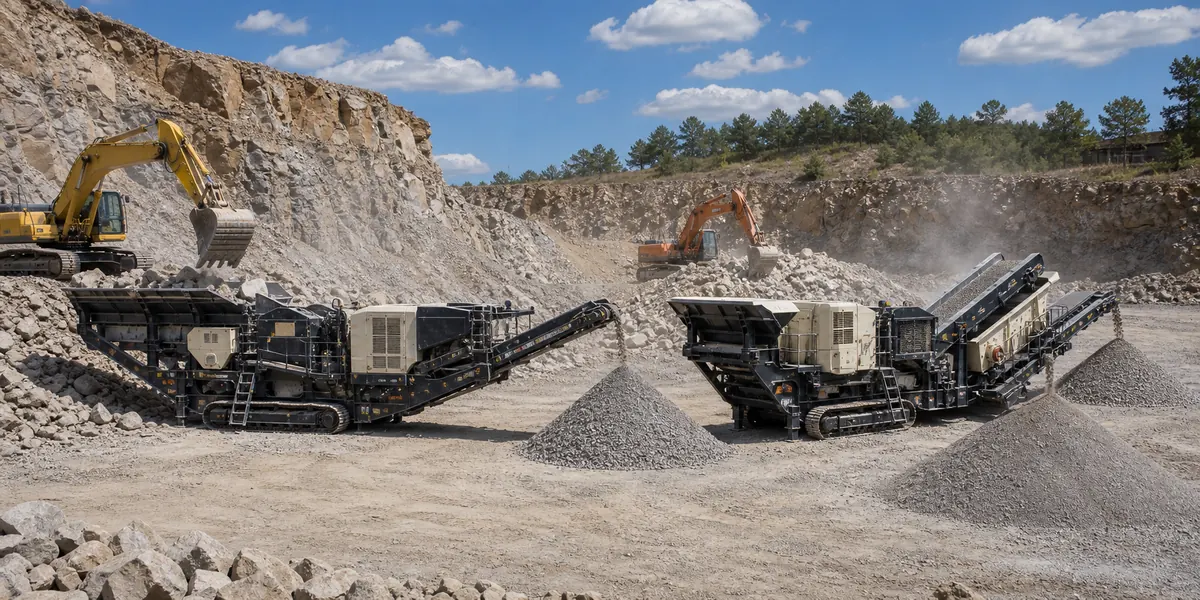
A mobile jaw crusher is usually the better choice for large feed size, hard rock, abrasive stone, and primary crushing, while a mobile impact crusher is usually better for limestone, recycled concrete, demolition waste, and projects that need more cubical aggregate shape in a compact layout. The right choice depends on raw material hardness, abrasiveness, maximum feed size, required output size, final product shape, wear cost, capacity, and whether the machine will work alone or as part of a mobile crushing and screening plant. In many quarry projects, jaw crushing starts the process; in softer rock or recycling, impact crushing may finish the job in one stage.
Quick Answer: Jaw or Impact for a Mobile Plant?
Choose a mobile jaw crusher when the feed material is hard, large, or abrasive. It is strong at breaking blasted rock, granite, basalt, river stone, and ore feed into a smaller size for secondary crushing or screening.
Choose a mobile impact crusher when the material is medium-soft, less abrasive, or already manageable in size. It is often used for limestone, recycled concrete, asphalt, construction waste, and road aggregate projects where product shape matters.
If you are still comparing full mobile plant layouts, see the Mobile Crushing Plant Buying Guide for Quarry and Mining Projects.
How a Mobile Jaw Crusher Works
A mobile jaw crusher uses compressive force. The moving jaw plate pushes material against the fixed jaw plate, breaking large stone into smaller pieces. This simple and strong crushing action makes it the standard primary crusher for many quarry and mining jobs.
Mobile jaw crushers are often equipped with a vibrating feeder, grizzly section, jaw crusher, main conveyor, magnetic separator option, hydraulic setting adjustment, and track or tire chassis.
Typical advantages include:
- Handles large feed size.
- Works well with hard and abrasive stone.
- Simple crushing chamber and durable structure.
- Good primary crushing capacity.
- Lower wear cost than impact crushing on very hard materials.
Typical limitations include:
- Product shape is not as cubical as impact or VSI crushing.
- Usually needs secondary crushing for smaller final aggregate sizes.
- Not ideal as the only crusher when strict shape and grading are required.
How a Mobile Impact Crusher Works
A mobile impact crusher uses high-speed impact force. Material enters the crushing chamber and is hit by a rotor with blow bars, then thrown against impact plates or aprons. This action breaks material along natural fractures and can produce more cubical aggregate.
Mobile impact crushers are commonly used with a feeder, impact crusher, discharge conveyor, optional pre-screen, recirculating screen, magnetic separator, and dust control system.
Typical advantages include:
- Good cubical product shape.
- Often produces finished aggregate in one machine for limestone or recycling.
- Strong for concrete, asphalt, and demolition waste.
- Compact layout for road construction and temporary projects.
- Can reduce the need for a separate secondary crusher in soft rock.
Typical limitations include:
- Blow bars and liners may wear quickly on hard abrasive stone.
- Maximum feed size is usually lower than a jaw crusher of similar capacity.
- Not the best first choice for granite, basalt, or highly abrasive ore.
Side-by-Side Technical Comparison
The machines may look similar on a mobile chassis, but their best use cases are different.

| Factor | Mobile Jaw Crusher | Mobile Impact Crusher |
|---|---|---|
| Crushing principle | Compression | High-speed impact |
| Best role | Primary crushing | Primary or secondary crushing for softer material |
| Feed size | Better for large feed | Better for controlled feed |
| Hard rock | Strong choice | Higher wear risk |
| Limestone | Good as primary stage | Often very efficient |
| Concrete recycling | Can pre-crush large slabs | Often better with magnet and screen |
| Product shape | More flaky or angular | More cubical |
| Wear parts | Jaw plates | Blow bars, impact plates, liners |
| Final product | Often needs screen or secondary crusher | May produce finished aggregate directly |
| Typical buyer goal | Reduce big rock reliably | Make shaped aggregate from softer material |
Which Crusher Is Better for Hard Rock?
For granite, basalt, hard river stone, and abrasive ore, a mobile jaw crusher is usually the safer first choice. Hard rock puts heavy stress on the crushing chamber, and jaw crushers are designed for this duty.
A mobile impact crusher can crush some hard stone, but wear cost may rise quickly. If the project needs hard rock aggregate with better shape, a common solution is mobile jaw crusher first, then mobile cone crusher or VSI crusher for secondary crushing and shaping.
Which Crusher Is Better for Limestone?
For limestone, a mobile impact crusher is often the better choice if the feed size is suitable. Limestone is usually less abrasive than granite or basalt, so impact crushing can produce good shape with reasonable wear cost.
If the limestone feed is very large, a mobile jaw crusher can be used as the primary stage before impact crushing. For many road construction and quarry projects, however, a mobile impact crusher with screen can be a compact and efficient solution.
Which Crusher Is Better for Concrete Recycling?
For concrete recycling, mobile impact crushers are widely used because they can break concrete and produce reusable aggregate with good shape. A magnetic separator can remove rebar, and a screen can control final product size.
A mobile jaw crusher may be useful when the concrete pieces are very large or heavily reinforced. In that case, the jaw crusher can reduce the slab size before impact crushing or screening.
Feed Size and Output Size Matter
Feed size is one of the most important selection factors. A jaw crusher can accept larger blasted rock and irregular stone. An impact crusher usually needs more controlled feed size to avoid overload, high wear, or blockage.
Output size also matters. If the target is 0-40 mm road base from limestone, a mobile impact crusher may do the job in one compact circuit. If the target is multiple clean aggregate sizes from hard granite, a jaw crusher alone will not be enough; it should be combined with cone crusher, screen, and possibly VSI shaping.
For capacity planning in a mobile line, see 100 TPH Mobile Crushing Plant: Configuration, Cost, and Applications.
Wear Cost and Maintenance
Wear cost can decide the real operating cost per ton. Jaw crusher wear parts are mainly fixed jaw plate, movable jaw plate, cheek plates, and toggle-related parts. Impact crusher wear parts include blow bars, impact plates, liners, and rotor protection parts.
For abrasive hard rock, jaw plates usually last longer than blow bars. For limestone and recycled concrete, impact crusher wear may be acceptable and the improved product shape can justify the cost.
Maintenance comparison:
- Jaw crusher: focus on jaw plate wear, discharge setting, toggle system, bearings, and feeder condition.
- Impact crusher: focus on blow bar wear, rotor balance, apron setting, liner wear, and tramp metal protection.
- Both machines: inspect belts, rollers, hydraulic system, electrical system, dust control, and track or tire chassis.
Product Shape and Aggregate Quality
If product shape is the priority, a mobile impact crusher has an advantage over a jaw crusher. Impact crushing tends to create more cubical particles, which can be valuable for concrete aggregate, asphalt aggregate, and some road base specifications.
Jaw crushers are strong at size reduction but may produce more elongated or flaky material. When high-quality shape is required from hard rock, jaw crushing is usually followed by cone crushing, VSI crushing, or shaping.
For final-stage shaping, compare with Is a Mobile VSI Crusher Better Than a Stationary Sand Making Plant?.
Recommended Configurations
Simple Hard Rock Mobile Line
Use mobile jaw crusher + mobile cone crusher + mobile screen.
This layout is suitable for granite, basalt, river stone, and hard ore. The jaw crusher handles large feed, the cone crusher controls secondary reduction, and the screen separates final products.
Limestone or Road Aggregate Line
Use mobile impact crusher + screen.
This layout is suitable when feed size is controlled and the buyer wants good shape with fewer machines. It can be efficient for road base, concrete aggregate, and local quarry supply.
Concrete Recycling Line
Use mobile impact crusher + magnetic separator + screen.
This layout is suitable for demolition waste and recycled concrete. The magnet removes steel, the screen separates reusable aggregate, and oversize material can return for further crushing.
Oversize Concrete or Mixed Demolition Waste
Use mobile jaw crusher first, then mobile impact crusher or screen.
This layout is useful when incoming material is too large, irregular, or heavily reinforced for direct impact crushing.
Common Buyer Mistakes
One common mistake is choosing a mobile impact crusher only because it can produce better shape, even though the material is granite or basalt. The machine may work, but wear cost can become painful.
Another mistake is choosing a mobile jaw crusher as a one-machine solution for finished aggregate without checking shape and grading requirements. It may reduce size, but it may not produce the final product the market wants.
Buyers also sometimes ignore the screen. Without enough screening area, neither jaw nor impact crusher will deliver stable final product sizes.
What Information Should You Send for a Quotation?
Before asking for a mobile jaw crusher or mobile impact crusher quotation, prepare the project details that decide the machine selection.

Send the following information:
- Raw material, such as granite, basalt, limestone, river stone, concrete waste, asphalt, or ore.
- Maximum feed size and typical feed size distribution.
- Required output size or finished aggregate sizes.
- Target capacity in tons per hour and working hours per day.
- Whether product shape is important for concrete, asphalt, or road specifications.
- Material moisture, clay content, and whether screening is difficult.
- Site photos, mobility requirements, transport limits, and power conditions.
- Budget range and whether you need screen, magnet, conveyors, spare parts, or installation support.
With these details, MVSI can recommend whether a mobile jaw crusher, mobile impact crusher, or combined mobile plant is the better option.
Conclusion
Choose a mobile jaw crusher for large feed size, hard rock, abrasive stone, and primary crushing. Choose a mobile impact crusher for limestone, concrete recycling, asphalt, softer rock, and projects where cubical product shape matters. If the material is hard but the final product needs good shape, the best solution may not be jaw or impact alone; it may be a combined mobile crushing and screening plant with jaw, cone, screen, and optional VSI shaping.
FAQ
Is a mobile jaw crusher better than a mobile impact crusher?
It depends on the material and product target. A mobile jaw crusher is better for large feed, hard rock, and abrasive stone. A mobile impact crusher is better for limestone, recycling, and cubical aggregate shape.
Which crusher should I choose for granite or basalt?
For granite or basalt, choose a mobile jaw crusher as the primary crusher. For smaller final aggregate, add a mobile cone crusher, screen, and possibly VSI shaping.
Which crusher is better for limestone?
A mobile impact crusher is often better for limestone if the feed size is suitable. It can produce good aggregate shape and may reduce the need for a separate secondary crusher.
Can a mobile impact crusher recycle concrete?
Yes. A mobile impact crusher is commonly used for concrete recycling. A magnetic separator and screen are recommended to remove rebar and control final aggregate size.
Can one mobile jaw crusher make finished aggregate?
Sometimes, but usually only for simple road base or coarse products. For clean aggregate sizes or better shape, a screen and secondary crusher may be needed.
Which machine has lower wear cost?
For hard and abrasive rock, a mobile jaw crusher usually has lower wear cost. For limestone or concrete recycling, a mobile impact crusher can be economical and may produce better shape.
What capacity can mobile jaw and impact crushers produce?
Capacity depends on model size, feed size, material hardness, moisture, discharge setting, and screen efficiency. Common mobile plants may range from below 100 TPH to several hundred TPH.
What information should I provide before asking for a quotation?
Send raw material, feed size, output size, target capacity, site photos, product shape requirements, moisture condition, power supply, mobility requirements, and budget range.