Table of Contents
- Why Buyers Consider Mobile Crushers from China
- Mistake 1: Choosing Only by the Lowest Machine Price
- Mistake 2: Sending Incomplete Material and Product Information
- Mistake 3: Selecting the Wrong Crusher Type
- Mistake 4: Ignoring the Screen, Conveyor, and Return Circuit
- Mistake 5: Accepting Capacity Claims Without Conditions
- Mistake 6: Forgetting Transport Size, Site Access, and Local Rules
- Mistake 7: Weak Spare Parts and Service Planning
- Mistake 8: Skipping Factory Inspection and Documentation Review
- How to Compare Chinese Mobile Crusher Suppliers
- Contract and Payment Details Buyers Should Check
- What to Send Before Asking MVSI for a Quote
- Conclusion
- FAQ
- Are Chinese mobile crushers reliable?
- What is the biggest mistake when buying a mobile crusher from China?
- How do I compare two Chinese mobile crusher quotations?
- What information should I send before requesting a mobile crusher quote?
- Which mobile crusher should I choose for granite or basalt?
- Is a mobile impact crusher good for concrete recycling?
- Why is the mobile screen plant important?
- How can I reduce risk before shipment?
Common Mistakes When Buying a Mobile Crusher from China
Buying a mobile crusher from China can be reliable and cost-effective, but only when the buyer verifies the application, configuration, quotation scope, factory capability, spare parts plan, shipping details, and after-sales support before payment. The biggest mistakes are choosing the lowest price, sending incomplete material data, accepting a vague capacity promise, ignoring screen and conveyor sizing, and comparing quotes that include different equipment. A good Chinese mobile crusher supplier should ask for raw material, feed size, output sizes, target capacity, site photos, relocation frequency, power preference, and budget range, then provide a complete technical and commercial proposal.
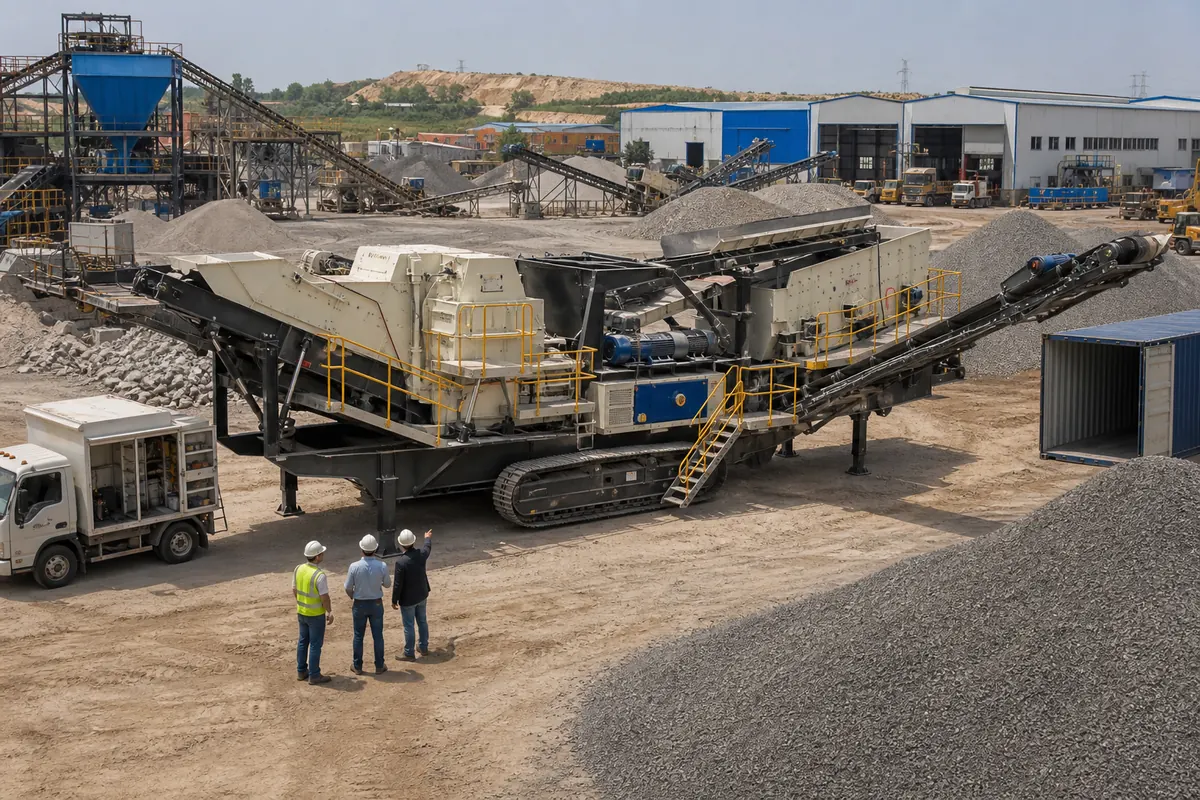
Why Buyers Consider Mobile Crushers from China
Many quarry owners, road contractors, mining operators, and recycling companies compare Chinese mobile crushers because they need practical capacity at a controlled investment cost. China has a large crushing equipment supply chain, flexible fabrication capability, and experience exporting complete mobile crushing and screening plants to Asia, the Middle East, Africa, South America, and other markets.
The opportunity is real, but so is the need for careful procurement. A mobile crusher is not a simple commodity item. The same phrase “mobile crusher” can refer to a compact mobile jaw crusher, a mobile impact crusher for limestone, a crawler cone crusher for hard rock, a mobile VSI crusher for shaping, or a mobile screen plant. Each option has different feed limits, power demand, wear cost, transport size, and site requirements.
If you are still selecting the overall plant type, start with the mobile crushing plant buying guide and the comparison of mobile jaw crusher vs mobile impact crusher. This article focuses on the procurement mistakes that often appear after the buyer has decided to source equipment from China.
Mistake 1: Choosing Only by the Lowest Machine Price
The lowest price is rarely the lowest project cost. A quote may look attractive because it excludes feeder size, screen module, return conveyor, dust suppression, electrical control cabinet, hydraulic folding conveyors, spare parts, commissioning support, or shipping preparation. Another quote may include a more complete scope and therefore appear more expensive at first.
Before comparing suppliers, list the required scope line by line:
- Crusher model and chamber type.
- Feeder type, hopper volume, and grizzly or prescreen function.
- Screen size, deck number, and screen media.
- Main conveyor, side conveyors, return conveyor, and stockpile height.
- Diesel-hydraulic, diesel-electric, or external power design.
- Dust suppression, magnet, remote control, and safety guards if needed.
- Wear parts, spare parts, tools, manuals, and training.
- Export packing, container loading, inland transport, and documents.
- Installation guidance, commissioning support, and warranty terms.
If two quotes do not include the same scope, the price comparison is not meaningful. Ask each supplier to provide a clear bill of supply, not only a model name and a total price.
Mistake 2: Sending Incomplete Material and Product Information
Some buyers ask, “How much is a mobile crusher?” without explaining the material, feed size, final products, or capacity target. In that situation, the supplier can only guess. The quote may change later, or the selected machine may not fit the site.
At minimum, prepare:
- Raw material name, such as granite, basalt, limestone, river stone, concrete waste, iron ore, or gold ore.
- Maximum feed size before crushing.
- Required final output sizes, such as 0-5 mm, 5-10 mm, 10-20 mm, or 20-30 mm.
- Target production capacity in tons per hour.
- Material hardness, abrasiveness, moisture, clay content, and soil content if known.
- Site photos, available stockpile area, access road condition, and relocation frequency.
- Local power supply, fuel price, emissions rules, and transport limits.
- Budget range and expected delivery schedule.
This information lets the supplier recommend a real configuration instead of a generic machine. It also helps avoid under-sized feeders, overloaded screens, excessive wear parts cost, and transport problems.
Mistake 3: Selecting the Wrong Crusher Type
Chinese suppliers can offer many mobile crusher types, but the correct machine depends on the material and final product. A mobile jaw crusher is strong for primary crushing. A mobile cone crusher is better for hard and abrasive secondary crushing. A mobile impact crusher is useful for limestone and concrete recycling. A mobile VSI crusher is used for final shaping and manufactured sand. A mobile screen plant separates final products and controls recirculation.
| Project Condition | Better Direction | Risk If Chosen Incorrectly |
|---|---|---|
| Large granite, basalt, river stone, or hard ore feed | Mobile jaw crusher for primary crushing | Small inlet or light-duty crusher may block or wear quickly |
| Hard rock aggregate with several final sizes | Mobile jaw plus cone plus screen | Impact crusher wear cost may become too high |
| Limestone or medium-hard rock | Mobile impact crusher plus screen | Jaw-only plant may produce poor shape and too much oversize |
| Concrete or asphalt recycling | Mobile impact crusher, magnet, and screen | Missing metal removal can damage conveyors and crusher parts |
| Manufactured sand or better cubical shape | Cone crushing before mobile VSI and screen | Skipping shaping may leave flaky aggregate or poor sand grading |
| Strict road aggregate sizes | Mobile crusher plus properly sized screen | Crusher capacity may be wasted by screen bottleneck |
For hard rock choices, also read the mobile crusher plant for granite guide. For capacity planning, compare with the 100 TPH mobile crushing plant configuration and the 200 TPH mobile crusher plant for road construction aggregates.
Mistake 4: Ignoring the Screen, Conveyor, and Return Circuit
A mobile crusher is only one part of the production line. The screen and conveyors decide whether the crushed material becomes saleable products. Many problems start when the buyer focuses on the crusher opening and motor power but ignores the screen area, deck number, mesh size, conveyor width, discharge height, and return circuit.
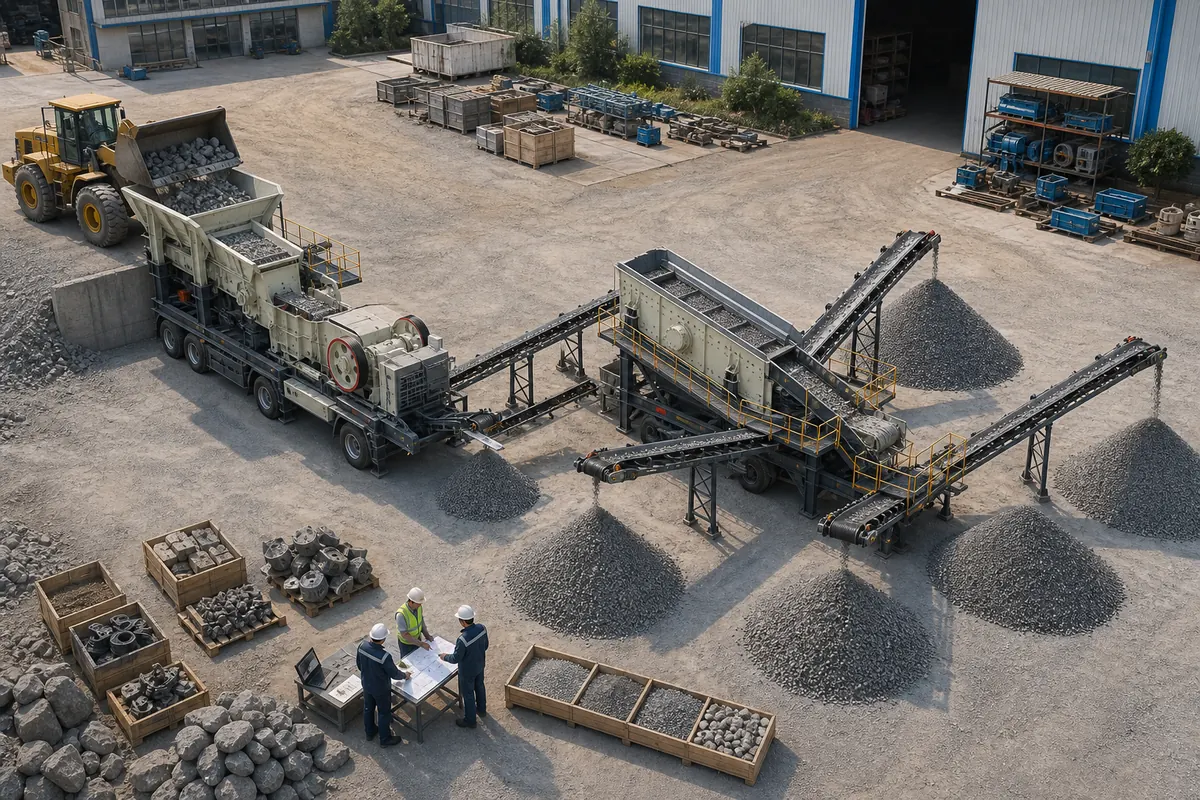
If the plant must produce 0-5 mm, 5-10 mm, and 10-20 mm aggregate, the screen must have enough deck area and discharge conveyors for each product. If oversize must return to the crusher, the return conveyor and crusher setting must be designed together. If the plant works with wet limestone, clay, or recycled concrete fines, the supplier should check screen media and anti-clogging options.
For screening-specific decisions, review the article on how to choose the right mobile screen size and decks. A good Chinese mobile crusher supplier should explain how the whole material flow works, not only quote the main crusher module.
Mistake 5: Accepting Capacity Claims Without Conditions
Capacity claims need conditions. A machine may be advertised as 100-250 TPH, but that range can depend on soft rock, small feed, open circuit operation, and a coarse final product. The same machine may produce less when crushing hard granite, wet material, recycled concrete with rebar, or fine aggregate in a closed circuit.
Ask the supplier to state capacity together with:
- Raw material and hardness assumption.
- Maximum feed size and crusher discharge setting.
- Final product sizes.
- Open circuit or closed circuit operation.
- Screen model and deck configuration.
- Moisture and clay assumptions.
- Engine or motor power.
- Expected wear parts condition.
If possible, request a reference project with similar material and output sizes. A short factory test or video can help, but it should be interpreted carefully because test feed may be cleaner and more uniform than real quarry feed.
Mistake 6: Forgetting Transport Size, Site Access, and Local Rules
Mobile crushing plants are heavy machines. Transport width, length, height, axle load, track system, removable parts, hydraulic folding conveyors, and container loading plan can affect the delivered cost and commissioning schedule. A plant that looks economical at the factory may become difficult to ship or move locally if transport dimensions are not checked early.
Before order confirmation, ask for:
- General arrangement drawing.
- Transport dimensions and operating dimensions.
- Weight and center-of-gravity notes if available.
- Container loading or flat rack plan.
- Parts that must be removed for transport.
- Road transport limits in the destination country.
- Foundation or ground bearing requirements.
- Access road slope and turning space requirements.
For buyers who move between projects often, crawler-mounted and tire-mounted designs should be compared carefully. The article on track-mounted vs tire-mounted mobile crusher pros and cons can help frame that decision.
Mistake 7: Weak Spare Parts and Service Planning
Spare parts are not an afterthought. A mobile crusher that is cheap to buy but difficult to maintain can lose more money in downtime than it saved in purchase price. Buyers should ask for the recommended startup spare parts package, expected wear life ranges, critical bearing and hydraulic component list, screen mesh package, conveyor belt specification, and normal maintenance intervals.
For international projects, clarify how spare parts will be ordered after commissioning. Check whether the supplier can provide part numbers, drawings, packing lists, courier options, sea freight options, and remote troubleshooting support. If the machine uses common motors, bearings, hydraulic components, and electrical parts, local maintenance may be easier.
Service planning should include installation guidance, commissioning checklists, operator training, remote support channel, warranty limits, and response time expectations. These details should be discussed before deposit payment, not after the plant arrives.
Mistake 8: Skipping Factory Inspection and Documentation Review
Not every buyer can visit China before shipment, but every buyer can request documentation. Factory inspection can be done through an in-person visit, a third-party inspection company, or a structured video inspection. The goal is to verify the machine configuration, fabrication quality, major components, safety guards, hydraulic system, electrical cabinet, spare parts package, and shipping preparation.
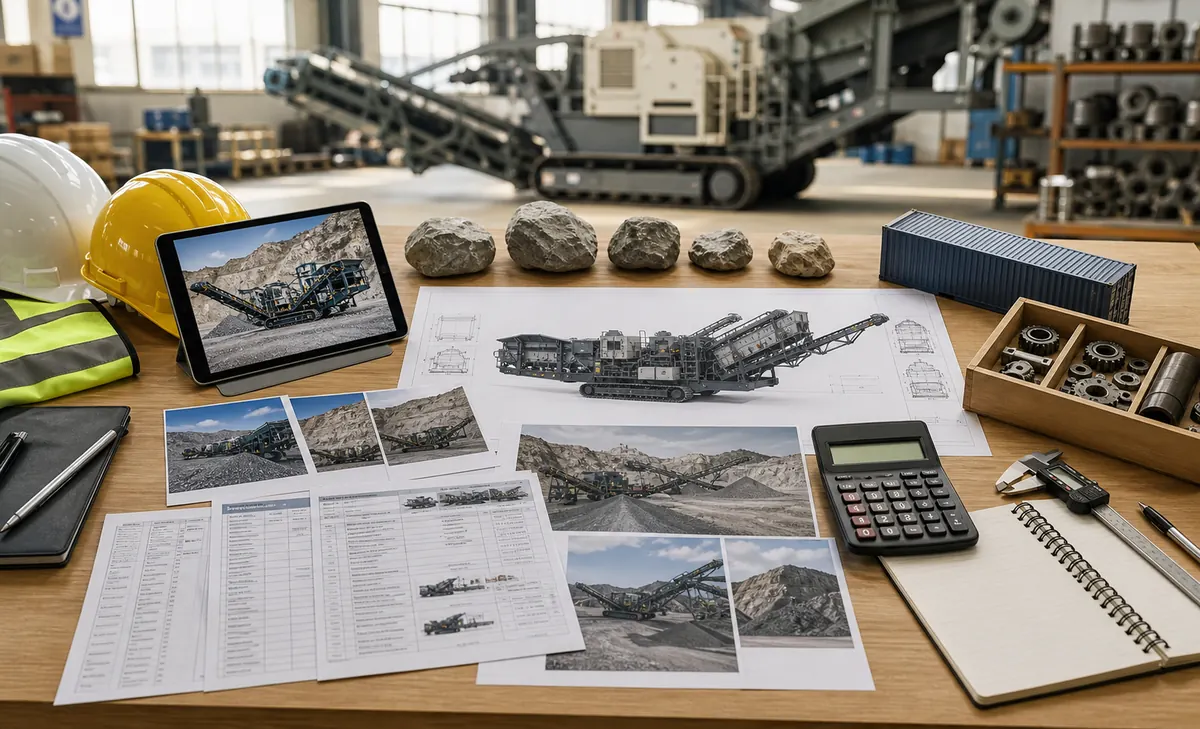
Useful documents include:
- Signed technical agreement.
- Equipment layout and process flow.
- Main component list.
- Motor or engine specification.
- Electrical drawing and control description.
- Hydraulic schematic if available.
- Wearing parts and spare parts list.
- Operation and maintenance manual.
- Packing list and shipping documents.
- Warranty and after-sales service terms.
Pictures and videos should show the exact equipment being prepared, not only a generic machine from another project. Ask for serial numbers or unique inspection references when practical.
How to Compare Chinese Mobile Crusher Suppliers
A reliable supplier should behave like an application engineer, not only a salesperson. The supplier should ask questions, explain tradeoffs, and adjust the configuration when your material or product sizes change. Be careful if the supplier promises every capacity, every material, and every final product with one standard machine.
Compare suppliers by these points:
- Application understanding: does the supplier ask about material, feed size, output sizes, capacity, site photos, and budget range?
- Technical clarity: does the proposal include process flow, equipment list, power, dimensions, and limits?
- Quote scope: are screen, conveyors, spare parts, shipping preparation, and service included or excluded clearly?
- Manufacturing evidence: are there workshop photos, test videos, export records, and inspection documents?
- Parts support: are wear parts and critical parts named clearly?
- Communication: does the team respond with specific answers instead of generic claims?
- Risk control: can the supplier explain what may reduce capacity, increase wear, or delay commissioning?
This does not mean the most expensive supplier is always the best. It means the best value usually comes from the supplier who defines the real project requirements and controls the risks before shipment.
Contract and Payment Details Buyers Should Check
The commercial contract should match the technical proposal. Many disputes happen because the buyer and supplier assume different equipment scope or different performance conditions. Before signing, make sure the contract or proforma invoice includes the exact model, quantity, main configuration, included accessories, spare parts, delivery term, payment schedule, production lead time, packing method, warranty terms, and dispute process.
If performance acceptance is important, define it in practical language. For example, capacity should be tied to material type, feed size, final output size, moisture condition, and operating method. Do not rely on a loose sentence such as “high capacity mobile crusher”.
Also check which documents are needed for import customs, tax, inspection, and local registration. These may include commercial invoice, packing list, bill of lading, certificate of origin, motor or engine information, and machine photos.
What to Send Before Asking MVSI for a Quote
To receive a practical mobile crusher recommendation, send the following information:
- Raw material name and photos.
- Maximum feed size before crushing.
- Required output sizes and product use, such as road base, concrete aggregate, asphalt aggregate, recycling base, or manufactured sand.
- Target capacity in tons per hour and working hours per day.
- Material moisture, clay content, hardness, and abrasiveness if known.
- Site photos, available stockpile area, access road condition, and relocation frequency.
- Power preference, local voltage, fuel condition, dust control requirement, and transport limits.
- Budget range, expected delivery date, destination port, and whether you need installation guidance.
With these details, MVSI can review whether a mobile jaw crusher, mobile impact crusher, mobile cone crusher, mobile VSI crusher, mobile screen plant, or complete mobile crushing train is the better solution.
Conclusion
Buying a mobile crusher from China is not risky by default. The risk comes from vague requirements, incomplete quotations, unrealistic capacity expectations, poor spare parts planning, and weak pre-shipment verification. Buyers who define material, feed size, output size, capacity, mobility, power, site conditions, and service needs before payment can usually make a better procurement decision.
If you are planning to buy a mobile crusher from China, send MVSI your raw material, feed size, output size, capacity, site photos, relocation needs, power condition, destination port, and budget range. We can help compare the configuration, quote scope, spare parts package, and shipping plan before you commit to a machine.
FAQ
Are Chinese mobile crushers reliable?
Chinese mobile crushers can be reliable when the supplier understands the application, uses suitable components, provides a complete configuration, and supports spare parts and commissioning. Reliability depends more on correct selection and supplier discipline than on country alone.
What is the biggest mistake when buying a mobile crusher from China?
The biggest mistake is choosing by the lowest quoted price without checking the full scope. A low quote may exclude screen, conveyors, spare parts, transport preparation, dust control, installation guidance, or important safety features.
How do I compare two Chinese mobile crusher quotations?
Compare the same scope line by line: crusher model, feeder, screen, conveyors, power system, spare parts, transport dimensions, shipping preparation, warranty, and service support. Also check whether capacity is stated under the same material and output conditions.
What information should I send before requesting a mobile crusher quote?
Send raw material, maximum feed size, final output sizes, target capacity, site photos, moisture or clay condition, relocation frequency, power preference, transport limits, destination port, budget range, and delivery schedule.
Which mobile crusher should I choose for granite or basalt?
For granite, basalt, and other hard abrasive rock, a mobile jaw crusher plus mobile cone crusher and screen is often more stable than relying on impact crushing. A mobile VSI crusher can be added when better shape or manufactured sand is required.
Is a mobile impact crusher good for concrete recycling?
Yes. A mobile impact crusher is commonly used for concrete and asphalt recycling, especially when paired with a magnet, screen, and proper wear parts. The supplier should check rebar content, feed size, and final product requirements.
Why is the mobile screen plant important?
The screen plant controls final aggregate sizes and can become the bottleneck if it is too small. Screen area, deck number, mesh type, conveyor discharge, and return circuit design should match the crusher capacity and product targets.
How can I reduce risk before shipment?
Use a signed technical agreement, inspect the machine by visit or video, confirm component lists, review spare parts, check transport dimensions, verify packing, and make sure the supplier provides manuals, drawings, commissioning guidance, and after-sales contact details.