Table of Contents
- What a Mobile Screen Plant Does
- Start with the Final Aggregate Sizes
- How Many Screen Decks Do You Need?
- Screen Size: Why Area Matters More Than Model Name
- Match the Screen to Feed Size and Crusher Discharge
- Common Screen Media Options
- Capacity Factors Buyers Often Miss
- Open Circuit or Closed Circuit Screening
- Stationary Screen vs Mobile Screen Plant
- Dust, Water, and Sticky Material
- Cost Factors in a Mobile Screen Plant Quote
- What to Send Before Asking for a Quote
- Common Buyer Mistakes
- Conclusion
- FAQ
- How many decks should a mobile screen plant have?
- What screen size is suitable for a 100 TPH mobile crusher plant?
- Can one mobile screen plant produce 0-5 mm, 5-10 mm, and 10-20 mm aggregate?
- Is a mobile screen plant better than a stationary vibrating screen?
- What causes low capacity in a mobile screen plant?
- What screen media should I use for abrasive aggregate?
- Do I need a closed circuit return conveyor?
- What information should I provide before requesting a mobile screen plant quotation?
Mobile Screen Plant: How to Choose the Right Screen Size and Decks
A mobile screen plant should be chosen according to feed gradation, required output sizes, moisture, clay content, target capacity, oversize return, and how often the site must move. The screen box size controls screening area and practical throughput. The deck number controls how many products can be separated in one pass. A two-deck screen can usually make three product streams, while a three-deck screen can make four. For quarry aggregate, road base, recycled concrete, and manufactured sand circuits, buyers should compare the complete screening workflow, not only the screen model or engine power.
What a Mobile Screen Plant Does
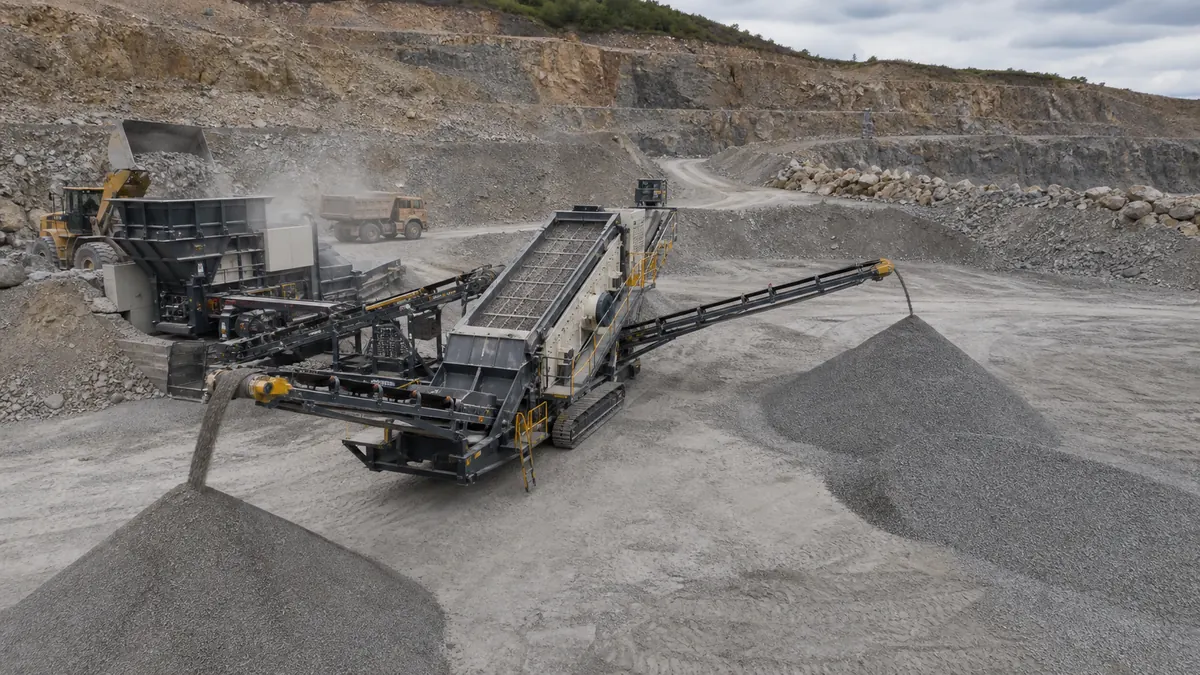
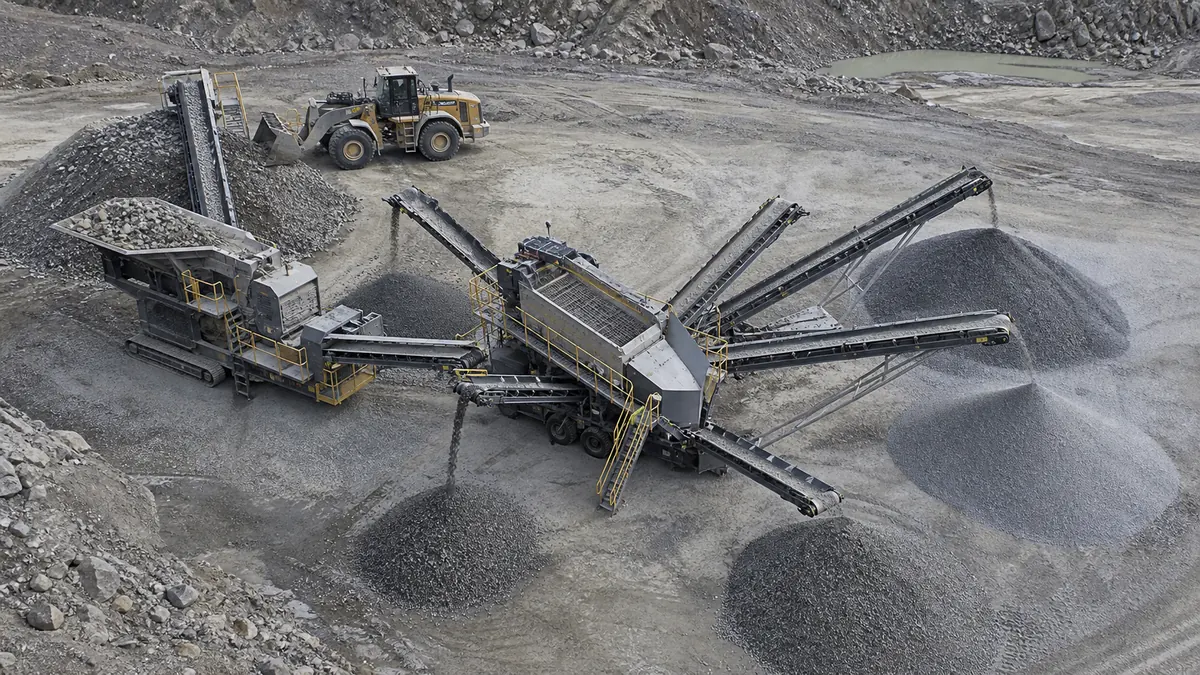
A mobile screen plant separates crushed or natural material into finished product sizes. It normally includes a feed hopper, belt feeder or apron feeder, vibrating screen box, screen media, side conveyors, tail conveyor, tracks or tires, hydraulic folding conveyors, power unit, dust suppression points, and control system.
In a quarry or road aggregate project, the mobile screen may work after a mobile jaw crusher, cone crusher, impact crusher, or VSI crusher. It can also screen natural gravel, recycled concrete, asphalt millings, limestone, basalt, granite, and sand. The goal is to deliver usable fractions such as 0-5 mm, 5-10 mm, 10-20 mm, 20-30 mm, or road base material with stable gradation.
If you are still selecting the upstream crushing equipment, read the mobile crushing plant buying guide and the guide to jaw, cone, impact, and VSI crusher selection.
Start with the Final Aggregate Sizes
The easiest way to choose a mobile screen plant is to start from the products you need to sell or use. A road contractor may need 0-5 mm fines, 5-10 mm chips, 10-20 mm asphalt aggregate, and 20-30 mm base aggregate. A concrete producer may care more about clean sand, 5-10 mm, and 10-20 mm products. A recycling contractor may need a single screened base product plus oversize return.
Each product size needs a cut point. For example, if the target products are 0-5 mm, 5-10 mm, 10-20 mm, and plus 20 mm oversize, a three-deck screen is usually needed. If the target products are 0-10 mm, 10-30 mm, and plus 30 mm oversize, a two-deck screen may be enough.
How Many Screen Decks Do You Need?
The deck count decides how many separations the machine can make in one pass. More decks create more products, but they also increase weight, height, cost, maintenance, and the chance of blinding when the feed contains sticky fines.
| Required Output | Typical Screen Deck Choice | Practical Notes |
|---|---|---|
| One finished product plus oversize | Single-deck screen | Simple scalping or sizing duty |
| Two finished products plus oversize | Two-deck screen | Common for road base and coarse aggregate |
| Three finished products plus oversize | Three-deck screen | Common for quarry sales and concrete aggregate |
| Four or more finished products | Multi-screen circuit | May need two screens, split feed, or recirculation |
A three-deck screen is attractive because it can make more saleable products, but it is not automatically better. If your material is wet, clay-rich, or very fine, the bottom deck can become the bottleneck. In that case, a larger two-deck screen, prescreening, washing, or a separate fine screen may work better than forcing all products through one machine.
Screen Size: Why Area Matters More Than Model Name
Screen size is usually described by width and length, such as 1.5 x 4.8 m, 1.8 x 5.5 m, or 2.0 x 6.0 m. The larger the screen area, the more chance particles have to pass through the mesh. Wider screens handle more feed volume. Longer screens improve separation efficiency because the material has more travel time across the deck.
However, screen size should be matched to real material behavior. Dry, well-graded crushed stone can pass efficiently. Wet limestone fines, clay-contaminated basalt, recycled concrete with light impurities, and high sand content can reduce actual capacity. A supplier should ask about material moisture, fines percentage, and feed gradation before promising output.
For a full crushing and screening layout, see the article on how to design a crushing plant for 0-5 mm, 5-10 mm, and 10-20 mm aggregates.
Match the Screen to Feed Size and Crusher Discharge
The screen must handle the maximum feed size from the upstream crusher. If the crusher discharge contains large slabs or long flat stones, the feed hopper, feeder, screen top deck, and transfer points must be strong enough to avoid blockages.
For mobile crushing circuits, a common arrangement is:
- Mobile jaw crusher for primary reduction.
- Mobile cone or impact crusher for secondary crushing.
- Mobile screen plant for final sizing.
- Return conveyor for oversize material if a closed circuit is required.
- Stockpile conveyors for each finished aggregate size.
In a 100 TPH project, a compact two-deck or three-deck mobile screen may be enough. In a 200 TPH or higher road aggregate project, screen area, conveyor width, and stockpile capacity become more important. Compare this with the 100 TPH mobile crushing plant configuration and the 200 TPH mobile crusher plant for road construction aggregates.
Common Screen Media Options
Screen media affects product accuracy, wear life, plugging risk, and maintenance time. The right media depends on material size, abrasiveness, moisture, and required precision.
| Screen Media | Best Use | Buyer Concern |
|---|---|---|
| Woven wire mesh | Dry aggregate, accurate sizing, smaller openings | Can wear faster with abrasive rock |
| Punch plate | Heavy top-deck scalping, large feed, impact resistance | Less open area than wire mesh |
| Polyurethane panels | Wet or abrasive material, longer wear life | Higher initial cost, check opening accuracy |
| Rubber panels | Impact zones, noise reduction, coarse material | May reduce open area on fine cuts |
| Harp or anti-clogging mesh | Damp fines and sticky material | Needs correct tension and application review |
Many mobile screen plants use heavier media on the top deck and more accurate media on lower decks. For example, a punch plate or heavy wire top deck can protect the machine from large feed, while finer wire or polyurethane panels can control 5 mm or 10 mm cuts.
Capacity Factors Buyers Often Miss
Screen capacity is not only a nameplate number. The real output depends on feed gradation, percentage of near-size particles, moisture, clay, crusher discharge shape, deck angle, stroke, mesh opening, open area, and conveyor discharge design.
Near-size particles are especially important. If many particles are close to the mesh opening, they need more time to pass or reject. This reduces capacity even when the machine looks large enough. A plant screening 10-20 mm aggregate from clean granite may perform very differently from a plant trying to remove 0-5 mm wet limestone fines.
Stockpile space also matters. If side conveyors are too short or the site is too narrow, loaders must clear stockpiles too often. This can stop the plant even when the screen itself has enough capacity.
Open Circuit or Closed Circuit Screening
An open circuit mobile screen separates products and sends oversize to a stockpile. This is simple and suitable when oversize can be used as road base, drainage stone, or feed for another process.
A closed circuit returns oversize to the crusher for further reduction. This improves final product control but requires a return conveyor, correct crusher setting, and enough screen area to avoid overloading the circuit. Closed circuit design is common when the plant must produce strict 0-5 mm, 5-10 mm, and 10-20 mm products.
For projects that need better particle shape or manufactured sand, a VSI crusher can be added before final screening. The VSI crusher capacity guide can help estimate whether shaping capacity matches the screen.
Stationary Screen vs Mobile Screen Plant
A stationary screen is often better for a fixed quarry with permanent conveyors, high capacity, and enough civil foundation. It can support larger screen boxes, taller structures, and bigger stockpiles.
A mobile screen plant is better when the project changes location, the site needs fast commissioning, or the buyer wants a flexible plant that can work with different crushers. It reduces foundation work and can be moved between quarry benches, road projects, recycling sites, and temporary aggregate jobs.
The tradeoff is that mobile equipment has transport limits. Screen width, conveyor length, feed hopper volume, and stockpile height may be smaller than a full stationary installation.
Dust, Water, and Sticky Material
Screening creates dust when dry crushed stone falls through decks and discharges from conveyors. Dust suppression points should be considered at the feed hopper, transfer points, screen discharge, and stockpile conveyors. Water spray can help, but too much water can create sticky fines and reduce screening efficiency.
If the feed contains clay, soil, or high moisture, ask the supplier about feeder design, prescreening, deck angle, anti-clogging media, and whether washing or a separate sand process is needed. A mobile screen plant can handle difficult material, but the configuration must be chosen for that duty from the beginning.
Cost Factors in a Mobile Screen Plant Quote
The final price depends on more than the screen box. Compare the full scope before choosing a supplier.
- Screen size and number of decks.
- Feed hopper capacity and feeder type.
- Track-mounted or tire-mounted chassis.
- Diesel-hydraulic, diesel-electric, or grid power design.
- Side conveyor length, folding design, and stockpile height.
- Screen media type and spare mesh package.
- Dust suppression, remote control, magnets, or metal removal if needed.
- Shipping dimensions, container loading, local transport, and commissioning support.
- Spare parts, operator training, and after-sales service.
Two quotations may both say “mobile screen plant”, but one may include only standard mesh and short conveyors while another includes anti-clogging media, longer conveyors, return conveyor, dust suppression, and installation guidance.
What to Send Before Asking for a Quote
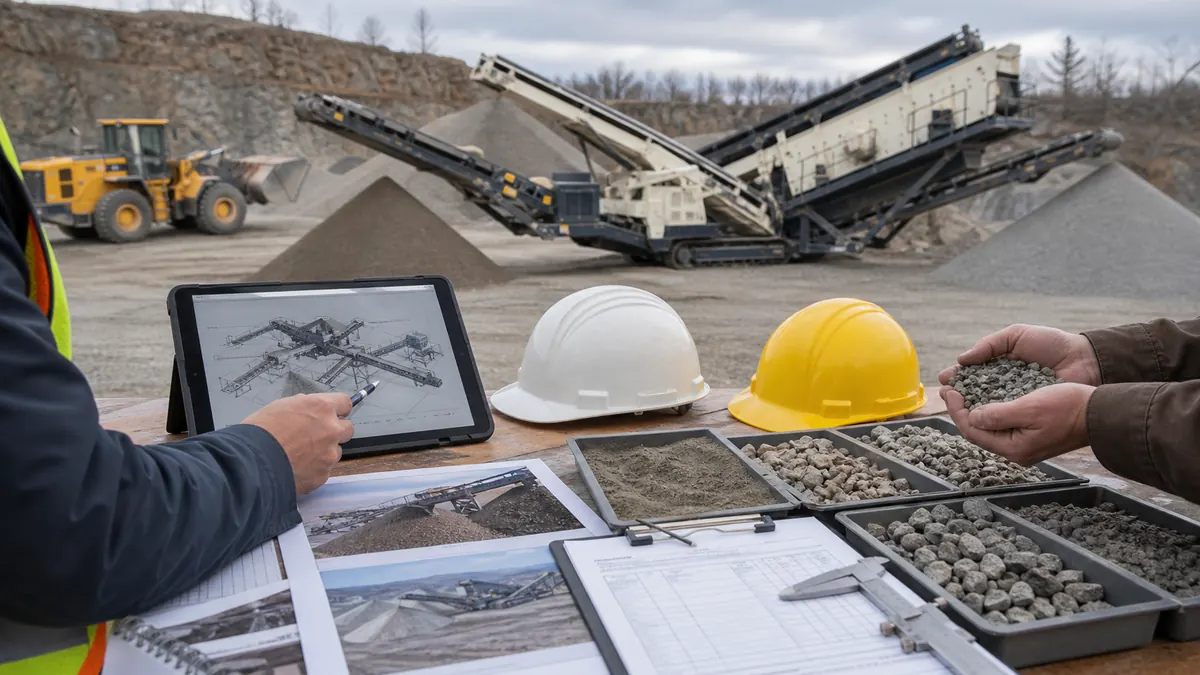
To receive a useful mobile screen plant recommendation, prepare the following information:
- Raw material name, such as limestone, basalt, granite, river stone, recycled concrete, or asphalt.
- Maximum feed size entering the screen.
- Crusher discharge setting and upstream crusher type if the screen follows a crusher.
- Required final output sizes and how many products you need.
- Target capacity in tons per hour.
- Material moisture, clay content, and fines percentage if known.
- Site photos, available stockpile area, and whether the machine must move often.
- Power preference, local fuel condition, budget range, and delivery schedule.
With these details, MVSI can review the screen size, deck number, conveyor arrangement, return conveyor requirement, screen media, and matching crusher configuration.
Common Buyer Mistakes
The first mistake is choosing a mobile screen only by capacity. A 200 TPH rating does not mean the plant will make every product size at 200 TPH, especially when the feed has many fines or near-size particles.
The second mistake is ordering too many decks without checking material condition. More decks can make more products, but wet fines and clay may overload the lower deck.
The third mistake is ignoring stockpile management. Short conveyors, narrow sites, and poor loader access can reduce daily production even when the screen box is correctly sized.
The fourth mistake is forgetting spare screen media. Mesh openings and media type may need adjustment after commissioning, so buyers should order a practical starter package.
Conclusion
A mobile screen plant should be selected from the required final products backward. Decide the product sizes, number of cuts, feed gradation, moisture condition, target capacity, and whether oversize must return to the crusher. Then match screen area, deck number, screen media, conveyor layout, mobility type, and power system to the real site.
If you are planning a mobile crushing and screening project, send MVSI your raw material, feed size, output size, capacity, site photos, and budget range. We can help check whether a two-deck, three-deck, open circuit, or closed circuit mobile screen plant is the better fit.
FAQ
How many decks should a mobile screen plant have?
Choose the deck number based on how many product cuts you need. A single-deck screen can make one finished product plus oversize. A two-deck screen can usually make two finished products plus oversize. A three-deck screen can usually make three finished products plus oversize.
What screen size is suitable for a 100 TPH mobile crusher plant?
For many 100 TPH aggregate projects, a compact two-deck or three-deck screen can work, but the final choice depends on feed gradation, moisture, product sizes, and crusher discharge. Wet or fine material may need more screen area than dry coarse aggregate.
Can one mobile screen plant produce 0-5 mm, 5-10 mm, and 10-20 mm aggregate?
Yes. A three-deck mobile screen can often separate 0-5 mm, 5-10 mm, 10-20 mm, and oversize in one pass, provided the screen area, media openings, feed rate, and material condition are suitable.
Is a mobile screen plant better than a stationary vibrating screen?
A mobile screen plant is better for temporary sites, road projects, recycling jobs, and quarry benches that need relocation. A stationary vibrating screen is usually better for permanent high-capacity plants with fixed conveyors and large stockpile areas.
What causes low capacity in a mobile screen plant?
Low capacity can come from wet fines, clay, too many near-size particles, wrong mesh opening, limited open area, poor feed distribution, overloaded conveyors, or insufficient stockpile space. The screen and the whole material handling layout should be checked together.
What screen media should I use for abrasive aggregate?
For abrasive aggregate, polyurethane panels or heavy-duty wire mesh are common options. The top deck may need punch plate or heavy media for impact resistance, while lower decks may use more accurate media for final sizing.
Do I need a closed circuit return conveyor?
Use a closed circuit return conveyor when oversize must be crushed again to meet final product specifications. If oversize can be sold or used directly, an open circuit layout may be simpler and more economical.
What information should I provide before requesting a mobile screen plant quotation?
Provide raw material, maximum feed size, crusher discharge, final output sizes, target capacity, moisture or clay condition, site photos, mobility requirement, power preference, and budget range. These details make the recommendation and price more accurate.