Table of Contents
- Information Gain: Compare a Purchase Route, Not a Sales Description
- Start With a River-Stone and Site Record Before Looking for Sellers
- Compare Direct, Channel, and Project-Supply Routes on the Same Scope
- Ask Every Route to Quote the Same Mobile River-Stone Circuit
- Align Delivery, Installation, and Commissioning Before Comparing Price
- Buyer Checklist for a Bangladesh River-Stone Mobile Plant
- Send a Defined Purchase Brief Before Asking Where to Buy
- Frequently Asked Questions
- Where should I buy a mobile crushing and screening plant for river stone in Bangladesh?
- Is a direct manufacturer always cheaper than buying through a local dealer?
- Can I assume a local dealer will provide commissioning and spare parts?
- What material information is needed for a river-stone mobile crusher quotation?
- Do I need a mobile jaw crusher, cone crusher, and screen for river stone?
- What delivery details should be included in the purchase comparison?
- What should commissioning include for a mobile crushing plant?
- How do I compare mobile crusher quotations fairly?
Where to Buy Mobile Crushing and Screening Plants for River Stone in Bangladesh
For a Bangladesh river-stone project, the right place to buy a mobile crushing and screening plant is the route that can document the same material record, complete circuit, delivery boundary, commissioning work, spares path, and acceptance conditions that the project needs. A direct manufacturer, a local commercial channel, and an EPC or project supplier can each be viable, but their quotations are not comparable until those responsibilities are aligned. Start with representative rounded-stone samples, feed sizes, product schedule, capacity basis, site access, and relocation need. Then require each bidder to show the proposed feeder, crusher, screen, conveyors, power or fuel arrangement, transport scope, and named post-handover responsibilities in writing.
Information Gain: Compare a Purchase Route, Not a Sales Description
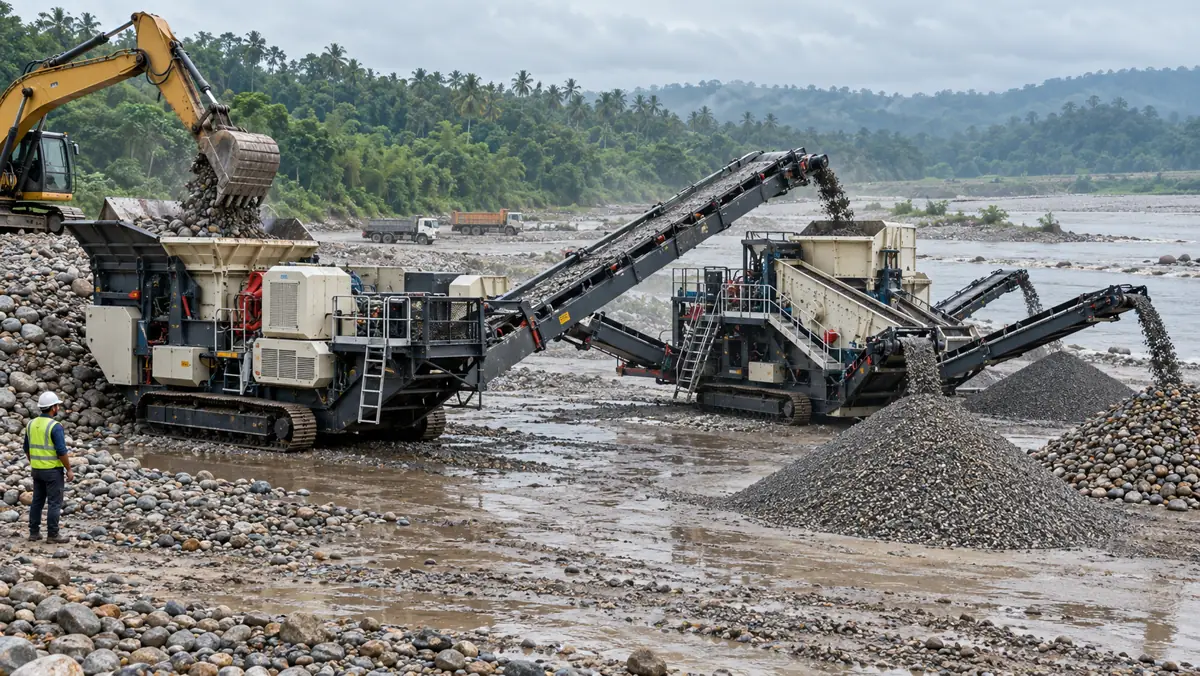
Many mobile-crusher pages answer only which machine family can process river stone. That is not enough for a buyer deciding where to buy. A machine-only price, a delivered machine, and a plant that includes planning, assembly, commissioning, and a defined parts process can describe very different purchases.
The useful boundary is a like-for-like responsibility map. Send every candidate supplier the same river-stone record and ask each to mark what it supplies, what it assumes, and what remains with the buyer or another contractor. The mobile crushing plant buying guide can help define modules; this article focuses on comparing the commercial route that will supply and support those modules.
Start With a River-Stone and Site Record Before Looking for Sellers
River stone is a description of origin and shape, not a complete crushing duty. Rounded cobbles can differ in size range, hardness, abrasiveness, weathering, moisture, fines, clay, and contamination. A World Bank road-project ESIA for the Sylhet–Charkhai–Sheola corridor identifies several distinct aggregate-source areas and calls for defined aggregate supply and testing. That public context does not select a machine for a particular buyer. It is a useful reminder to send a source-specific material record rather than ask suppliers to infer a plant from the words “Bangladesh river stone.”
| Project input | What to send | Why it matters before comparing routes |
|---|---|---|
| Material source and samples | Source location, recent representative sample, photos of the stockpile or river material, and available test results | Keeps proposals tied to the intended stone and makes any material limitation visible |
| Feed condition | Maximum and typical size, size distribution, moisture, fines, clay, oversize, and contamination risk | Defines feeder, scalping, jaw duty, protection, and whether a screen needs washing-related interfaces |
| Product schedule | Required aggregate sizes, permitted fines, shape expectation, and end use such as road base or concrete | Determines screen decks, apertures, return flow, stockpiles, and any final-shaping requirement |
| Operating basis | Target capacity, operating hours, seasonal plan, shifts, and allowable downtime | Prevents a catalogue throughput from being treated as a project commitment |
| Mobility and site record | Site photos, access roads, working pad, relocation frequency, lifting access, drainage, and space | Determines crawler or wheel chassis, transport plan, setup work, and safe maintenance access |
| Utilities and interfaces | Fuel or power basis, water and dust-control responsibilities, existing conveyors, loader, civil work, and controls | Reveals scope that can be omitted from a machine quotation |
Use the feeder, crusher, screen, and conveyor selection guide to record the physical interfaces. If the feed source is variable, state that uncertainty; do not accept a fixed production, wear-life, or product result that has no written material basis.
Compare Direct, Channel, and Project-Supply Routes on the Same Scope
There is no universal best route. Direct purchase can make factory clarification easier when the buyer has a clear technical team and freight/installation plan. A local commercial channel can be useful when it genuinely documents the equipment, contract, parts, and commissioning responsibilities it carries. An EPC or project supplier can coordinate interfaces when that integration is actually included. The route name alone proves none of these points.
| Purchase route to compare | It can suit a project when | Evidence to request before treating it as comparable | Boundary that often gets missed |
|---|---|---|---|
| Direct manufacturer contract | The buyer can manage technical reviews and has a clear delivery, installation, and local-work plan | Named manufacturer and contracting party, equipment schedule, drawings, inclusion/exclusion list, packing and handover documents, and a written technical-question path | Who is responsible for inland movement, assembly, utilities, commissioning prerequisites, and later parts ordering |
| Local dealer or distributor contract | A documented local party takes responsibility for the specified equipment and support tasks | The legal contracting party, its authorization or supply basis where relevant, included services, named personnel or process for technical questions, parts scope, and escalation path | Calling a sales contact “local support” when no actual commissioning, parts, or warranty responsibility is contracted |
| EPC, contractor, or project supplier | The plant must connect with civil work, utilities, stockpiles, dust control, or other contractors | A responsibility matrix that identifies plant design, supply, installation, interfaces, testing, training, and defects roles | An EPC label that leaves the crusher circuit, controls, or performance acceptance undefined |
| Used-equipment or broker route | The project accepts condition uncertainty and has inspection and parts capability | Serial and configuration records, inspection access, condition evidence, wear/spares list, missing-item list, title and delivery terms | Assuming a mobile unit has the required screen, return conveyor, controls, guards, or current documentation |
Do not assume a local dealer exists in Bangladesh merely because a website uses that term. Equally, do not assume direct buying means a complete project package. Compare named legal parties and their actual written responsibilities. The track-mounted versus tire-mounted mobile crusher guide is helpful when mobility, transport, and prepared-pad requirements affect the chosen route.
Ask Every Route to Quote the Same Mobile River-Stone Circuit
A river-stone plant may be a mobile jaw and screen arrangement, or it may need more stages depending on the actual feed and products. A mobile cone or another reduction/shaping stage may be appropriate under some conditions. The buyer’s job is not to prescribe a universal flowsheet; it is to make every proposal show the full material path and every included module.
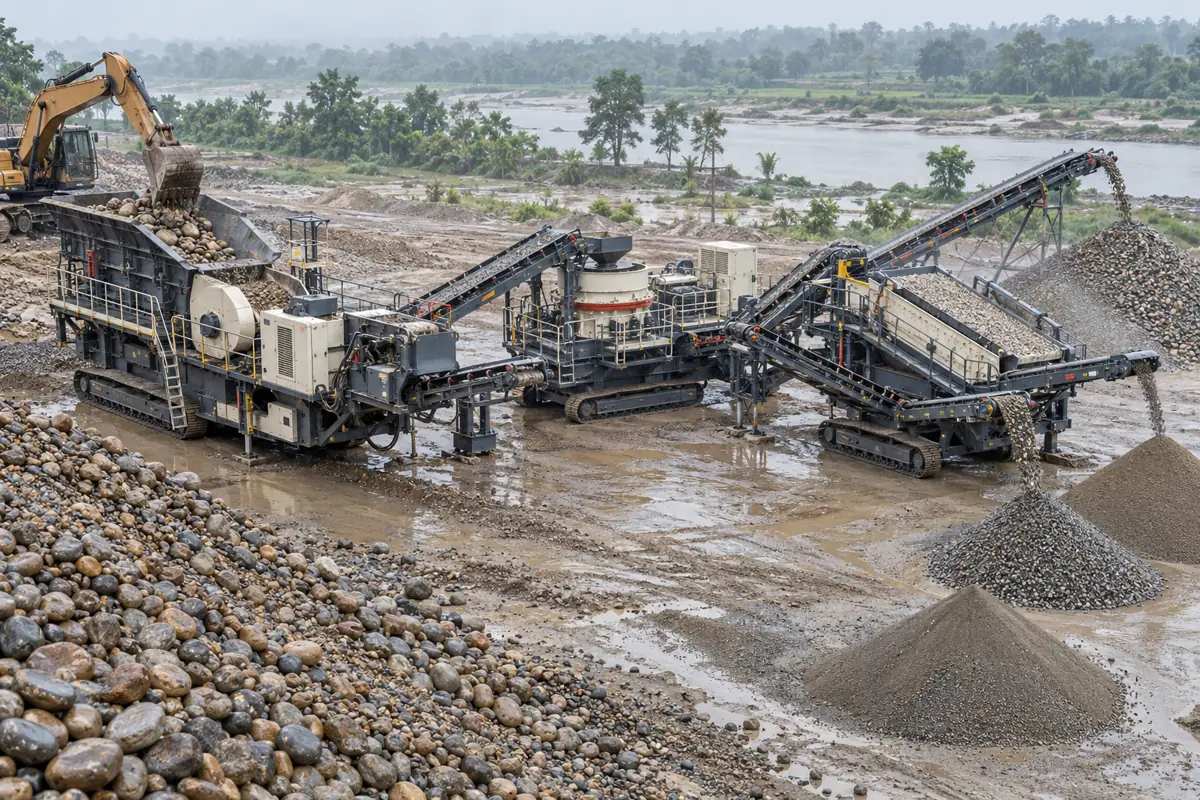
| Circuit line | Question every quote should answer | Evidence that makes the answer usable |
|---|---|---|
| Feed and scalping | What maximum, typical, wet, fines-bearing, or contaminated feed does the proposal assume? | Process description and layout marking feeder, grizzly or scalper, bypasses, and protection devices |
| Primary reduction | Which primary crusher receives the feed, and within what stated limits? | Equipment schedule, proposed feed opening, discharge arrangement, and exclusions |
| Secondary or final reduction | Is a further crusher or shaping stage proposed, and why for the submitted material/product record? | A material-path drawing with product targets and conditions—not a generic promise |
| Screening and return | Which decks, apertures, product conveyors, stockpile paths, and return flow are included? | General arrangement showing every stream, transfer point, and return conveyor |
| Chassis and relocation | Is the unit crawler, wheel-mounted, or another arrangement; how is it transported and set up? | Transport dimensions/weights, pad and access assumptions, and stated assembly scope |
| Controls, power, and dust | Which drives, panels, interlocks, fuel or power interfaces, suppression, and cables are included? | Interface schedule assigning each item to supplier, buyer, or a third party |
The mobile screen plant selection guide explains why screen deck count and aperture choices must follow the actual product schedule. The river-stone crushing flow-sheet guide provides a related process-selection framework; neither replaces a submitted material record or the supplier’s written proposal.
Align Delivery, Installation, and Commissioning Before Comparing Price
An ex-works machine figure, a delivered-to-port figure, and a plant price that includes assembly and supervised commissioning are different commercial scopes. Price should be compared only after the technical scope and delivery point have been normalized.
| Commercial line | Confirm in writing | Risk if it is vague |
|---|---|---|
| Delivery and handover | Incoterm, named delivery point, packing, shipment documents, insurance boundary, unloading party, and damage-report process | The plant reaches the chosen point but no party owns onward transport, unloading, or shortages |
| Site preparation | Working pad, drainage, access, lifting equipment, fuel/power connection, water, dust control, and local civil work | A mobile unit arrives before the project is ready to operate it safely |
| Assembly and tie-ins | Tasks, duration assumptions, tools, personnel, crane or telehandler responsibility, and existing-equipment connections | “Installation support” becomes a disputed phrase when work starts |
| Commissioning and training | Preconditions, test material, checks, operator attendance, tasks, records, training, and acceptance procedure | Commissioning is promised without a shared definition of a completed and safe plant |
| Spares and technical path | Initial wear parts, recommended critical spares, parts identification, warranty start point, exclusions, and technical-contact process | First maintenance or a missing component becomes a long commercial clarification |
The mobile crusher operating-cost guide is a useful companion after scope alignment. It should not be used to turn another project’s fuel, wear, labour, or availability assumptions into a promise for this river-stone site.
Buyer Checklist for a Bangladesh River-Stone Mobile Plant
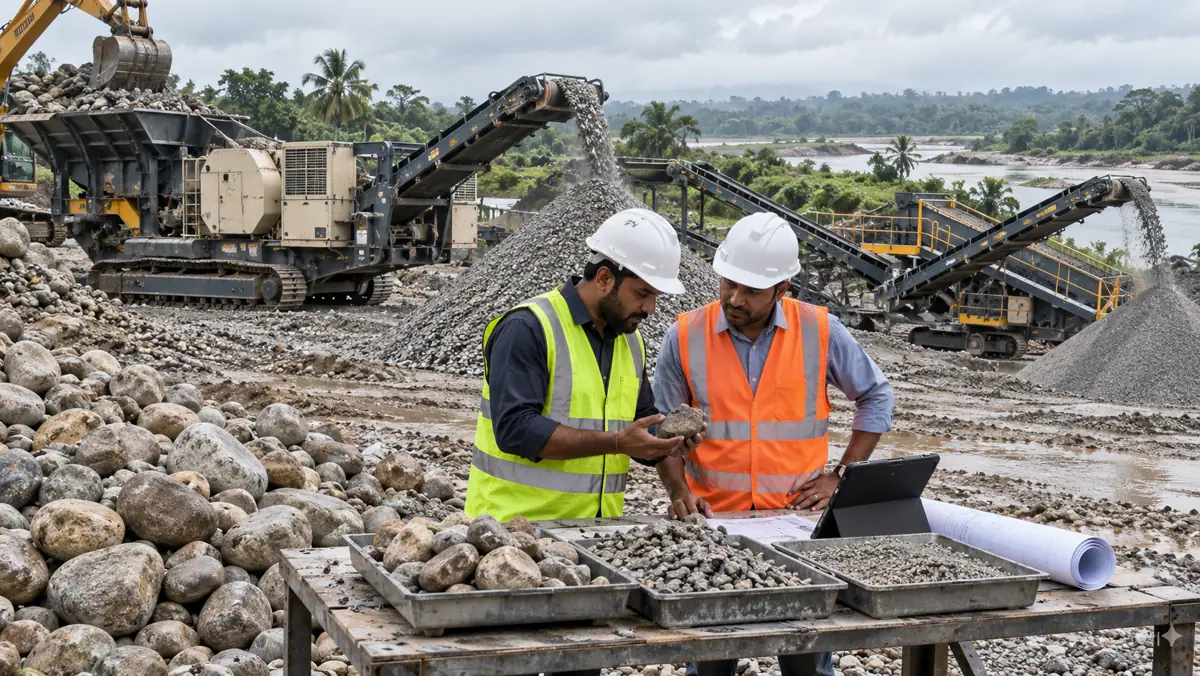
- Identify the intended river-stone source, send a representative sample or test record, and disclose feed variability.
- Issue one product schedule, capacity and operating basis, site-photo package, relocation need, and utility/interface list to every bidder.
- Request a complete material path from receiving feed to every product stockpile, including screens, return conveyors, and excluded modules.
- Compare the named contracting party, legal offer, equipment schedule, included options, exclusions, and document deliverables.
- Mark delivery point, packing, shipping documents, insurance, unloading, inland movement, and site-preparation responsibilities.
- Define assembly, commissioning, training, acceptance, warranty, spares, and technical-question responsibilities before comparing prices.
- Check that any local dealer/distributor or project-service claim is backed by written, contracted scope rather than marketing wording.
- Preserve proposals, drawings, clarifications, exceptions, and revisions in one evaluation file.
Send a Defined Purchase Brief Before Asking Where to Buy
MVSI can review the project inputs needed for a like-for-like mobile crushing and screening comparison. Send the raw material description and representative sample information, maximum and typical feed size, required output sizes, target capacity and operating hours, site photos and access constraints, desired relocation pattern, power or fuel basis, existing interfaces, requested delivery and commissioning boundary, and budget range. Those inputs expose technical and commercial assumptions before the buyer chooses a route.
Frequently Asked Questions
Where should I buy a mobile crushing and screening plant for river stone in Bangladesh?
Buy through the route that can document the same required mobile circuit, delivery point, site work, commissioning tasks, spares process, and acceptance responsibilities. Direct, channel, and project-supply routes can all be viable if the written scope matches the project.
Is a direct manufacturer always cheaper than buying through a local dealer?
Not necessarily. A direct equipment price and a local or project-supply price can include different freight, site work, documentation, spares, commissioning, and responsibility boundaries. Align the scope before comparing numbers.
Can I assume a local dealer will provide commissioning and spare parts?
No. Ask the contracting party to state the exact commissioning, training, warranty, parts-identification, stock, and escalation responsibilities that it accepts. A local sales contact is not automatically a defined support scope.
What material information is needed for a river-stone mobile crusher quotation?
Provide a representative sample or available test record, maximum and typical feed size, size distribution, moisture, fines or clay, contamination risk, required products, target capacity, operating hours, and site photos.
Do I need a mobile jaw crusher, cone crusher, and screen for river stone?
The configuration depends on the submitted feed, reduction duty, required aggregate sizes, permitted fines, product shape, mobility need, and operating conditions. Ask each bidder to show the full material path and its stated assumptions.
What delivery details should be included in the purchase comparison?
Compare the named delivery point, Incoterm, packing, shipment documents, insurance boundary, unloading, inland transport, site access, and who is responsible for any local preparation or assembly work.
What should commissioning include for a mobile crushing plant?
Commissioning should define installation prerequisites, safety and control checks, test material, operating checks, operator training, records, acceptance basis, exceptions, and the responsibility of each party.
How do I compare mobile crusher quotations fairly?
Issue every bidder the same material and site brief, then use one matrix covering equipment, process flow, product schedule, delivery, site interfaces, commissioning, spares, warranty, documents, exclusions, and acceptance. Do not compare a bare-machine figure with an integrated plant scope.