Table of Contents
- Information Gain: Make the Quotation Assumptions Visible
- Send a Representative Material Package, Not Just the Rock Name
- Describe the Circuit Around the VSI
- Define the Product Requirement Before Asking for a Machine Size
- Provide the Site Interfaces That Can Limit the Arrangement
- Ask the Supplier to State Assumptions, Exclusions, and Validation Steps
- Common Buyer Mistakes Before VSI Sizing
- Buyer Checklist Before You Request a VSI Crusher Proposal
- Send a Complete Enquiry Package to MVSI Crusher
- FAQ
- What sample should I send for VSI crusher selection?
- Is the rock name enough to quote a VSI crusher?
- Do I need laboratory tests before asking for a quote?
- Why does feed gradation matter for a VSI crusher?
- Should I include moisture and clay information?
- What capacity should I put in a VSI enquiry?
- Can a supplier guarantee the final sand grading from a sample?
- What site information is most important before a VSI purchase?
VSI Crusher Selection: What Material Samples and Process Data to Send
A VSI crusher quotation is only as reliable as the material and process information behind it. Before a supplier selects a machine, send a representative raw material sample or agreed test material, actual feed-size distribution, moisture and clay observations, rock variability, target output sizes and shape, required capacity, circuit layout, and site constraints. A rock name and a single tons-per-hour figure are not enough to define a duty. Ask the supplier to show which inputs were used, what remains to be verified, and which changes in feed, screening, moisture, power, or recirculation could change the proposal. This gives buyers a decision record rather than an unexplained machine size.
Information Gain: Make the Quotation Assumptions Visible
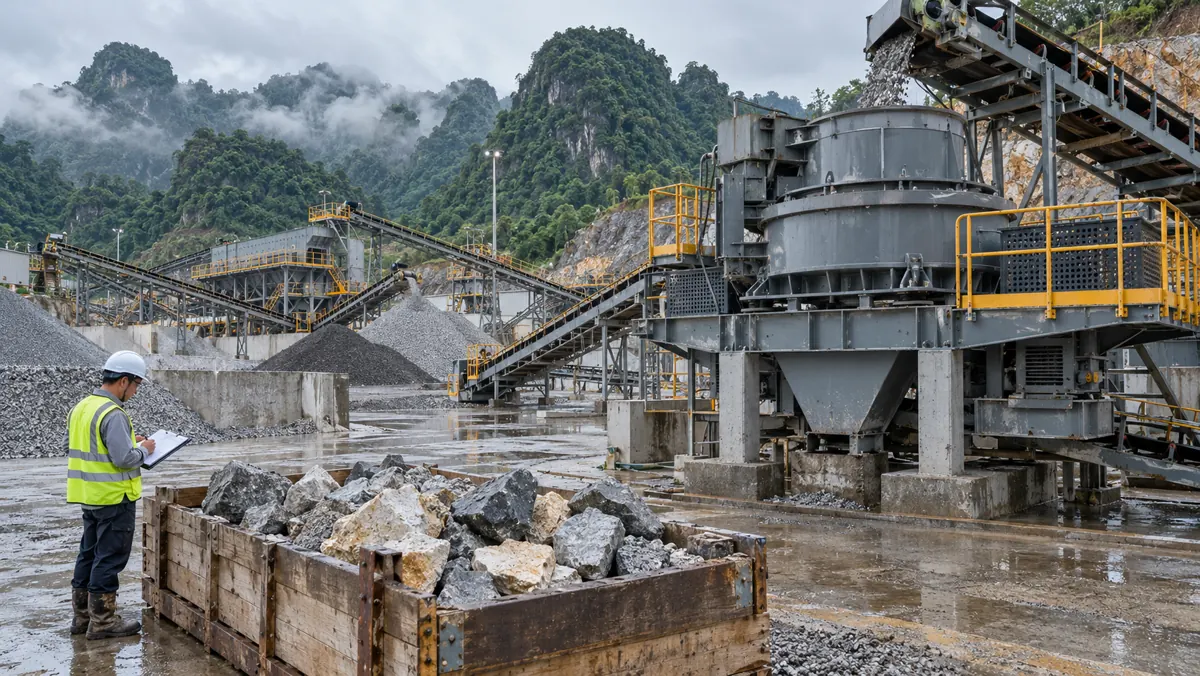
Many enquiry forms stop at material and capacity. That can hide the variables that decide whether a VSI is being considered for shaping, final reduction, manufactured sand, or a closed circuit with a screen. The useful handoff is a joined-up material-and-process package: the sample represents the intended operating feed; the gradation describes what reaches the rotor; the product request describes what must leave the circuit; and the site information identifies the interfaces that the machine alone cannot solve.
This does not make a generic quotation a guaranteed outcome. It gives both buyer and supplier a controlled starting point and makes the remaining assumptions reviewable before an order, sample trial, or detailed layout is released.
Send a Representative Material Package, Not Just the Rock Name
The supplier needs to know what the VSI will actually receive, not merely the geology written on a quarry permit. If the feed includes several benches, stockpiles, recycled material, weathered zones, or a blend from another crusher stage, say so. A single hand-picked rock can be misleading if it does not represent the normal feed or the range of material expected in operation.
| Information to provide | Why it changes the selection discussion | Practical buyer action |
|---|---|---|
| Material identity and source | A material name may cover different rock conditions, weathering, and contaminants | Identify quarry/bench/stockpile source and whether the feed is a blend |
| Representative sample or agreed test material | Gives the supplier a basis to discuss test scope or sampling limits | Agree sample amount, packaging, labeling, transport, and chain of information before sending material |
| Feed gradation and maximum particle size | Connects the proposed VSI to the actual upstream crusher and screen duty | Share recent sieve data when available, plus observed oversize and its source |
| Moisture, clay, fines, and contamination | These conditions can affect transfer, screening, feed stability, and circuit choices | Describe dry/wet-season conditions, sticky fractions, and any wood, metal, or demolition contamination |
| Material variability | Prevents a best-case sample being treated as the whole operating range | State whether material changes by bench, shift, season, stockpile, or blend ratio |
| Existing test records | Lets the supplier see what has already been characterized without inventing values | Provide relevant reports with test method, date, sample source, and known limits |
A sample should travel with context. Label the source, date, intended feed location, and whether it represents a typical blend, a difficult case, or a proposed new material. If physical material is impractical, provide the best available photos, gradation data, and documented observations first, then agree whether a later sample or controlled trial is required.
Describe the Circuit Around the VSI
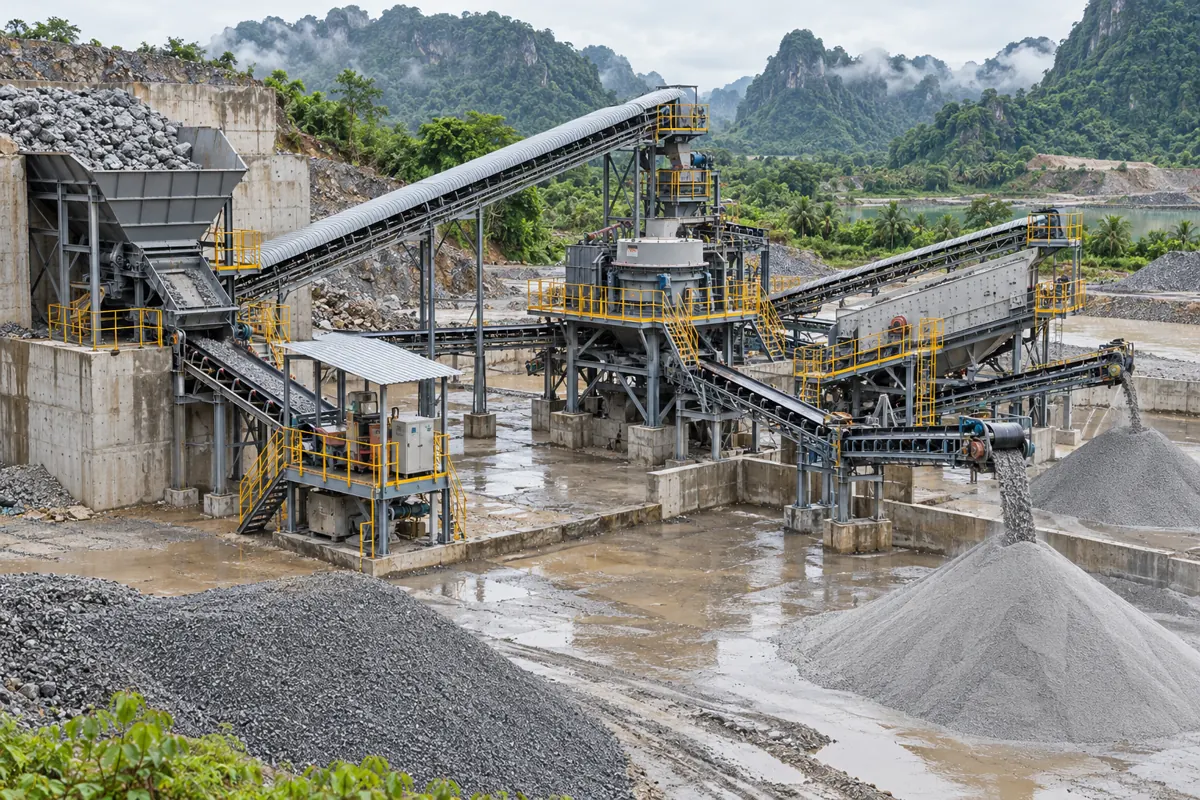
A VSI is selected as part of a circuit. The upstream crusher, feed bin, feeder, belt arrangement, pre-screening, dust control, screen, return conveyor, and finished-product stockpiles all affect the duty the machine sees. A proposal for a stand-alone machine cannot answer every interface question.
Start with a simple current or proposed flow sketch. It should show where material enters, where fines are removed or retained, where oversize returns, and where product is taken. Include photographs that show chute congestion, moisture buildup, access limitations, and whether a mobile or fixed arrangement is intended.
The VSI crusher feed-size guide explains why the incoming top size and distribution must be controlled before material reaches the rotor. The closed-circuit versus open-circuit guide is also useful when deciding whether a screen and return path are part of the product-control strategy.
Define the Product Requirement Before Asking for a Machine Size
Capacity only has meaning when paired with the feed and product definition. Tell the supplier which output sizes are needed, whether the priority is shaped aggregate, manufactured sand, a controlled fines fraction, or a blend of products, and how the product will be checked. If there are specification limits, share the applicable standard or project requirement instead of assuming that a product label such as 0–5 mm defines everything.
- Required throughput. State whether the number is a design target, a minimum sustained rate, a peak condition, or a planned average; identify expected operating hours and availability assumptions separately.
- Product splits. List target product sizes, permitted recirculation, and how much material is intended for sand, aggregate, or another downstream process.
- Quality checks. Explain the relevant shape, grading, fines, cleanliness, or downstream concrete/asphalt requirement, with the test method or specification where available.
- Seasonal and commercial changes. Say if the plant will alternate materials or product specifications; a proposal based on one duty may need re-checking for another.
The VSI sand-grading guide describes why screen settings, recirculation, feed condition, and product sampling need to be considered together. Do not ask a supplier to promise a final grading or shape solely from a rock name without an agreed operating basis.
Provide the Site Interfaces That Can Limit the Arrangement
The selected VSI has to fit the actual site. Space, elevations, foundations, transport route, electrical supply, water and dust-control approach, maintenance access, lifting route, climate, and installation responsibilities can change the practical configuration even when the material duty is unchanged.
Share a general layout, site photos, elevation or contour information where relevant, and the project’s electrical and civil interfaces. Identify whether the unit will connect to existing equipment and which party owns each connection. The VSI foundation and installation checklist helps buyers identify the civil, access, drainage, and interface details that must be confirmed with current model-specific documents.
| Site question | What the supplier needs to understand | Buyer risk if it is missing |
|---|---|---|
| Is the plant fixed, skid-mounted, or mobile? | Transport, steelwork, feed/discharge interfaces, and installation constraints | A suitable machine may still be impractical to move, support, or integrate |
| What power and controls are available? | Voltage/frequency, control boundary, cable route, isolation, and responsibility | Electrical scope can be omitted or based on the wrong interface |
| How will material be fed and removed? | Hopper, feeder, belt elevations, chutes, screen, return path, and stockpiling | The machine may be quoted without a workable circuit around it |
| What access and lifting route exist? | Maintenance platform, guard removal, rotor access, lifting, and safe inspection route | Planned service tasks can become inaccessible after installation |
| What are the water, dust, and drainage conditions? | Moisture controls, housekeeping, collection interfaces, and weather exposure | Wet or dusty operating conditions can be ignored until commissioning |
Ask the Supplier to State Assumptions, Exclusions, and Validation Steps
The right response to incomplete data is not an unsupported performance claim. Ask the supplier to identify the assumed feed range, moisture condition, circuit role, product target, capacity basis, motor and electrical boundary, wear-parts scope, installation boundary, and documents still needed. If a sample test, layout review, or site survey is proposed, ask what decision it is intended to inform and what it cannot confirm.
This makes quotations easier to compare. A lower-priced offer may exclude a feeder, screen, return conveyor, electrical package, access steel, spares, or commissioning support that another offer includes. Compare the complete duty and scope—not only the headline machine model.
The VSI power-consumption guide is relevant here: energy comparisons require a defined feed and circuit basis. The spare-parts inventory guide explains why the final parts list must be tied to the confirmed machine and rotor configuration, not a preliminary enquiry alone.
Common Buyer Mistakes Before VSI Sizing
- Sending only a material name, without the intended feed-size distribution, moisture condition, or variability.
- Using a clean hand sample to represent a wet, blended, fines-rich, or contaminated operating feed.
- Asking for a nominal capacity without defining product sizes, screen duty, recirculation, and operating basis.
- Treating a simple flow sketch as a final layout and omitting elevations, access, electrical, drainage, or maintenance interfaces.
- Comparing quotations by machine price while ignoring feeder, screen, conveyor, motor/control, access, spares, and commissioning exclusions.
- Treating a sample, calculation, or preliminary proposal as a guarantee rather than asking which on-site conditions still need verification.
Buyer Checklist Before You Request a VSI Crusher Proposal
- Identify the raw material source, normal blend, expected variability, and operating feed point for the VSI.
- Provide a representative sample or agree the next best evidence package, sample handling method, and any test scope.
- Send feed-size data, maximum observed feed, moisture/clay/fines conditions, and known contaminants.
- Define output sizes, required product quality, screen/return arrangement, capacity basis, and expected hours of operation.
- Share a flow sketch, site photos, layout constraints, electrical interface, transport/access limits, and whether the plant is mobile or fixed.
- Request written assumptions, exclusions, configuration scope, validation steps, documents, and responsibilities from each supplier.
Send a Complete Enquiry Package to MVSI Crusher
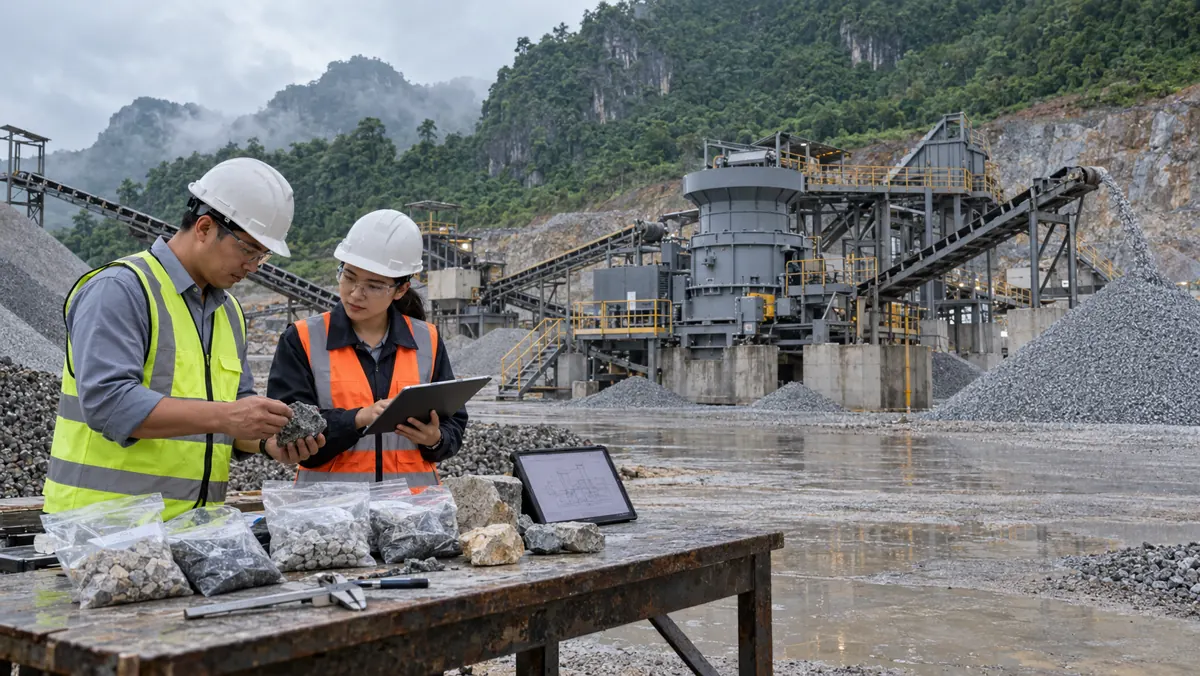
For a useful VSI crusher selection discussion, send your raw material information, representative sample details if available, feed size and observed variability, output sizes and quality requirement, required capacity and operating basis, circuit sketch, site photos, available power, layout constraints, and budget range. MVSI Crusher can then identify the missing inputs, discuss a suitable configuration boundary, and explain what would need confirmation before a final proposal.
FAQ
What sample should I send for VSI crusher selection?
Send a representative sample or agree an alternative evidence package that reflects the material expected at the VSI feed point. Include its source, whether it is typical or difficult material, and the feed-size, moisture, fines, clay, contamination, and variability information that gives the sample context.
Is the rock name enough to quote a VSI crusher?
No. A rock name is a starting description, not a full duty definition. The supplier also needs actual feed gradation, operating condition, desired output, capacity basis, circuit arrangement, and site interfaces to state a meaningful proposal.
Do I need laboratory tests before asking for a quote?
Not always. Begin with the best available samples, photos, feed data, and process information, then agree whether a specific test or trial is needed. The supplier should explain what a proposed test is intended to clarify and what remains site-dependent.
Why does feed gradation matter for a VSI crusher?
Feed gradation describes what reaches the rotor, including the top size and distribution. It helps define the intended circuit role and whether upstream crushing or screening needs review; use the selected machine’s current supplier documentation for the allowable feed envelope.
Should I include moisture and clay information?
Yes. Moisture, clay, fines, and contamination can affect handling, screening, transfer, and feed stability. State dry- and wet-season observations instead of describing only the cleanest material condition.
What capacity should I put in a VSI enquiry?
State whether the requested capacity is a design target, minimum sustained rate, peak condition, or planned average. Pair it with feed and product definitions, operating hours, recirculation, and product splits so the supplier can show the basis used.
Can a supplier guarantee the final sand grading from a sample?
Do not treat a sample alone as a guarantee. Final grading depends on the material, feed, selected machine, rotor arrangement, screen and return circuit, operating settings, and sampling method. Ask the supplier to define the conditions and validation process behind any proposal.
What site information is most important before a VSI purchase?
Send a flow sketch, site photos, layout and elevation constraints, transport route, power/control interface, access and lifting route, drainage or dust conditions, and the equipment or contractor interfaces. These details determine whether the proposed machine can work as part of the complete plant.