Table of Contents
- What Is a VSI Sand Making Machine?
- Match the VSI Machine to the Rock Type
- Granite
- Basalt
- Limestone
- Check Feed Size Before Choosing the VSI
- Decide the Required Sand Size and Grading
- Choose the Right Plant Configuration
- Configuration for Granite and Basalt
- Configuration for Limestone
- Configuration for Existing Plant Upgrade
- Capacity Selection: 50 TPH to 500 TPH
- Rock-on-Rock or Rock-on-Iron?
- Cost and Wear Factors
- Common Mistakes When Buying a VSI Sand Making Machine
- What Information Should You Send for a VSI Quotation?
- Internal Reading
- Conclusion
- FAQ
- Which VSI sand making machine is best for granite?
- Can a VSI crusher process basalt?
- Is limestone easier for VSI sand making?
- What feed size is suitable for a VSI sand making machine?
- How many tons per hour can a VSI machine produce?
- Do I need a cone crusher before a VSI crusher?
- Should I use sand washing after VSI crushing?
- What information should I provide before asking for a quotation?
To choose a VSI sand making machine for granite, basalt, limestone, or river stone, start with the raw material hardness, abrasiveness, feed size, required sand size, and target capacity. Granite and basalt are hard and abrasive, so they need stronger wear parts, controlled feed size, and often jaw crusher plus cone crusher before the VSI stage. Limestone is usually softer, so the VSI can focus more on shaping and sand grading. The best VSI machine is not selected by motor power alone. It must match the whole crushing and screening plant.
For quarry owners, concrete producers, and road contractors, a correct VSI selection can improve particle shape, increase manufactured sand output, and reduce long-term cost per ton.
What Is a VSI Sand Making Machine?
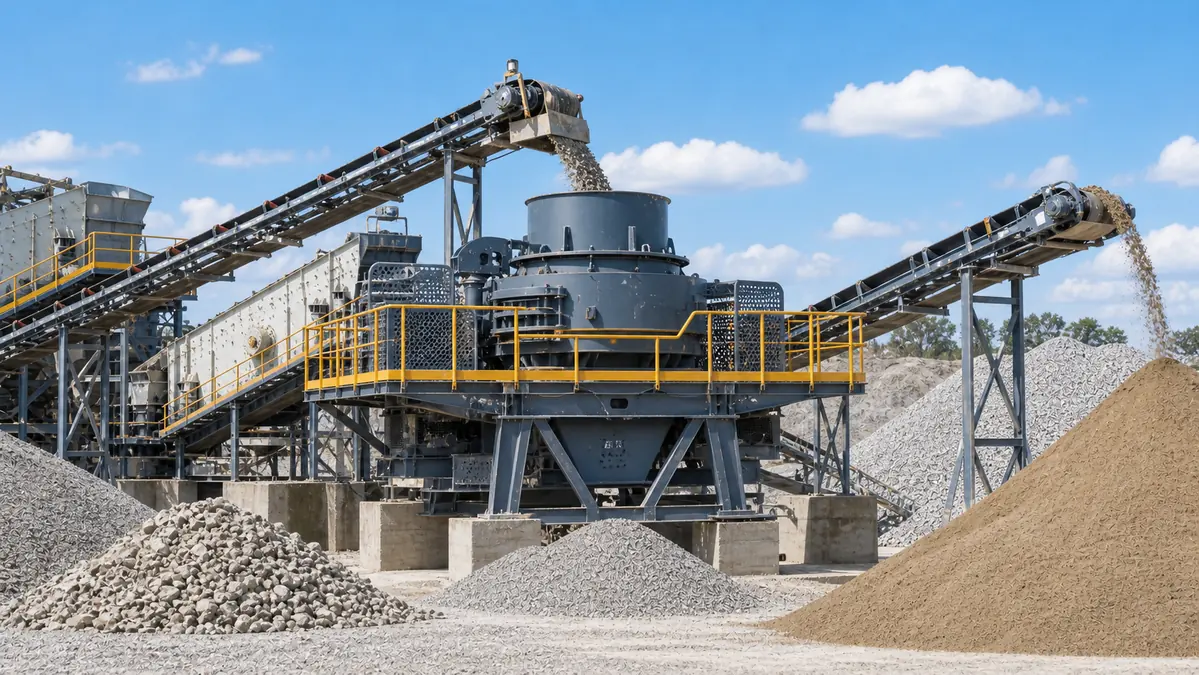
A VSI sand making machine is a vertical shaft impact crusher used for final-stage crushing, aggregate shaping, and manufactured sand production. Rock enters the rotor, accelerates at high speed, and impacts either a rock-lined chamber or metal anvils. This impact breaks weak edges and helps produce more cubical particles.
VSI machines are commonly used for 0-5 mm manufactured sand, shaping 5-10 mm and 10-20 mm aggregate, reducing flaky particles, and improving aggregate quality for concrete and asphalt.
Match the VSI Machine to the Rock Type
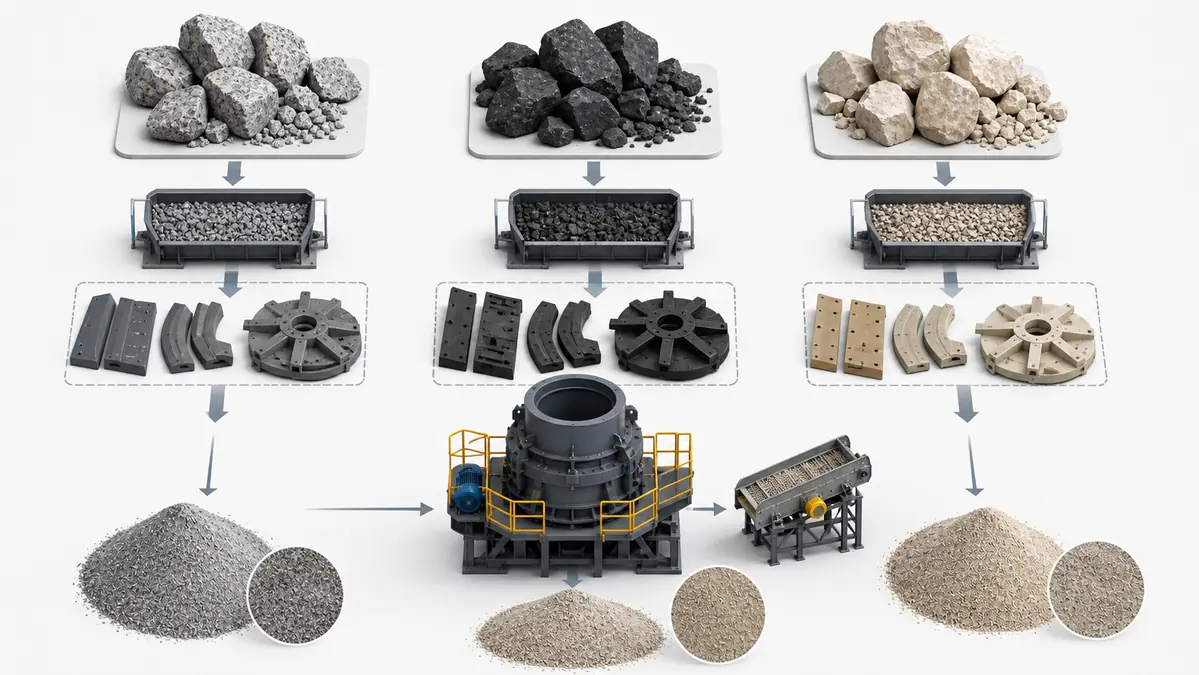
Different rocks behave differently inside a VSI crusher. Before choosing a model, confirm the material name and whether the rock is hard, abrasive, sticky, wet, or mixed with clay.
Granite
Granite is hard and abrasive. It usually requires primary jaw crushing and secondary cone crushing before VSI sand making. The VSI feed should be controlled to avoid oversized material entering the rotor.
For granite, buyers should pay attention to rotor tip quality, wear-resistant liners, feed size control, closed-circuit screening, spare parts availability, power consumption, and wear cost per ton.
Basalt
Basalt is also hard and can be highly abrasive. It can produce strong aggregate for roads and concrete, but it may increase wear cost if the VSI configuration is not selected correctly.
For basalt, the VSI machine should have a strong rotor assembly, proper rotor speed, stable feeding system, good dust control, easy maintenance access, and enough screen capacity for recirculation.
Limestone
Limestone is usually softer and less abrasive than granite or basalt. It is often easier to crush, but the final sand may need grading control, dust control, and careful screening.
In many limestone projects, the VSI crusher is used mainly to improve particle shape and increase manufactured sand output.
Check Feed Size Before Choosing the VSI
A VSI sand making machine is not a primary crusher. If large rock enters the VSI rotor, it can cause vibration, high wear, low sand quality, or machine damage.
In a hard rock plant, jaw crushing and cone crushing usually reduce the material before the vibrating screen separates suitable VSI feed. Always ask the manufacturer for the recommended maximum feed size for the selected VSI model and rotor type.
Decide the Required Sand Size and Grading
Most manufactured sand projects target 0-5 mm sand, but local standards can vary. Some markets require 0-4.75 mm, 0-3 mm, or a specific gradation curve.
The final sand grading is affected by rotor speed, feed size distribution, feed rate, rock hardness, rotor configuration, screen mesh size, recirculation ratio, and sand washing or air classification.
Choose the Right Plant Configuration
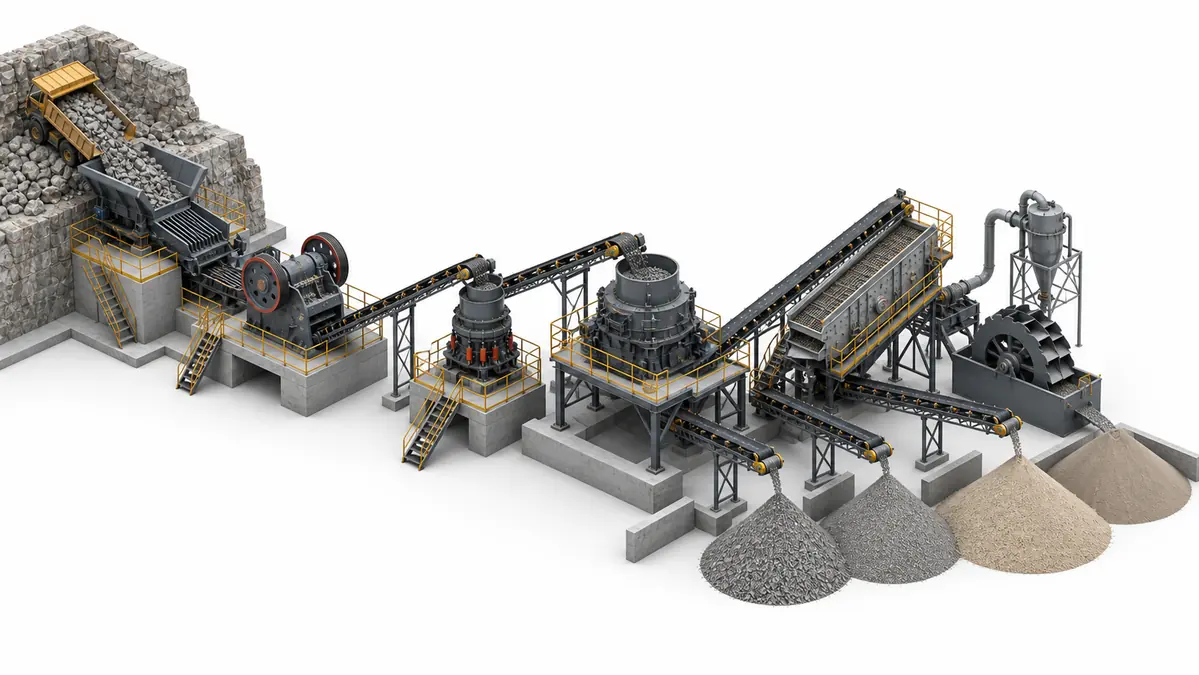
The best configuration depends on raw material and final product requirements.
Configuration for Granite and Basalt
For hard and abrasive rock, a common layout is vibrating feeder, jaw crusher, cone crusher, vibrating screen, VSI sand making machine, sand washer or air classifier, belt conveyors, and control system.
Configuration for Limestone
For limestone, a simpler layout may be enough: vibrating feeder, jaw crusher or impact crusher, vibrating screen, VSI crusher if shaping or sand making is required, and sand washer or dust control system.
Configuration for Existing Plant Upgrade
If the quarry already has jaw and cone crushers, adding a VSI machine can improve final aggregate shape and increase manufactured sand output.
Capacity Selection: 50 TPH to 500 TPH
VSI capacity should match the whole plant. A large VSI machine cannot reach its rated capacity if the feeder, screen, and conveyors are too small.
| Capacity Target | Typical Project | Selection Notes |
|---|---|---|
| 50-100 TPH | Small sand making line | Control feed size and use a simple screen system |
| 100-200 TPH | Medium quarry or concrete sand project | Match VSI model with screen area and return conveyor |
| 200-300 TPH | Commercial aggregate plant | Use stronger rotor, larger screen, and stable feeding |
| 300-500 TPH | Large quarry production | Consider multiple crushers, large screens, automation, and dust control |
Rock-on-Rock or Rock-on-Iron?
Rock-on-rock crushing lets material impact a packed rock bed. It is often used to reduce metal wear and improve shaping in many sand making applications. Rock-on-iron crushing lets material impact metal anvils. It can provide strong crushing force, but wear cost may increase when processing abrasive rock such as granite or basalt.
Cost and Wear Factors
The purchase price of a VSI machine is only one part of the total cost. Long-term cost is affected by rotor tips, anvils, liner life, motor power, feed size control, screen and conveyor capacity, dust control, spare parts, automation, installation, and maintenance skill.
Common Mistakes When Buying a VSI Sand Making Machine
- Choosing a VSI machine only by motor power
- Feeding oversized material into the rotor
- Ignoring rock abrasiveness
- Expecting one VSI machine to replace jaw and cone crushing
- Buying too small a vibrating screen
- Forgetting return conveyor capacity
- Not checking local sand grading standards
- Asking for a quotation without feed size and final size details
What Information Should You Send for a VSI Quotation?
Send the raw material, maximum feed size before VSI, required final sand size and aggregate sizes, capacity in tons per hour, mobile or stationary preference, site photos, power voltage and frequency, operating hours, budget range, and delivery requirement.
Internal Reading
If you are comparing crusher types, read VSI Crusher vs Cone Crusher: Which Is Better for Manufactured Sand?.
If you need a full plant plan, read Complete Stone Crusher Plant Setup: Equipment, Layout, and Cost.
Conclusion
Choosing a VSI sand making machine starts with the material. Granite and basalt need stronger wear parts, controlled feed size, and usually cone crushing before VSI shaping. Limestone is easier to crush, but the plant still needs correct screening, dust control, and grading management. For any material, the VSI crusher should be selected together with the feeder, upstream crusher, vibrating screen, return conveyor, and sand treatment system.
If you are planning a manufactured sand plant, send your raw material, feed size, output size, capacity, site photos, and budget range. MVSI can recommend a suitable VSI sand making machine or complete crushing and screening solution for your project.
FAQ
Which VSI sand making machine is best for granite?
For granite, choose a VSI machine with strong wear parts, controlled feed size, and a plant configuration that includes jaw crushing and cone crushing before the VSI stage.
Can a VSI crusher process basalt?
Yes. A VSI crusher can process basalt if the feed size, rotor design, wear parts, and screening system are selected correctly. Basalt is abrasive, so wear cost must be considered.
Is limestone easier for VSI sand making?
Usually yes. Limestone is often softer and less abrasive than granite or basalt, but the plant still needs correct grading control, dust control, and screening.
What feed size is suitable for a VSI sand making machine?
The suitable feed size depends on the VSI model and rotor type. In most plants, upstream jaw, cone, or impact crushers should reduce the material before it enters the VSI crusher.
How many tons per hour can a VSI machine produce?
VSI machines can be selected for small 50-100 TPH plants or large 300-500 TPH sand making systems. Real capacity depends on material, feed size, screen efficiency, and recirculation.
Do I need a cone crusher before a VSI crusher?
For hard rock such as granite and basalt, a cone crusher before the VSI is often recommended. It reduces feed size and protects the VSI rotor from oversized material.
Should I use sand washing after VSI crushing?
Use sand washing or air classification when the final sand needs controlled fines content, lower dust, or a specific concrete sand standard.
What information should I provide before asking for a quotation?
Send raw material, maximum feed size, final product sizes, required capacity, mobile or stationary preference, site photos, power conditions, operating hours, and budget range.