Table of Contents
- The Short Answer: Stable Loading Matters More Than a Momentary Peak Rate
- Feed Rate, Feed Size, and Product Capacity Are Different Numbers
- What Happens When a VSI Is Starved or Overloaded?
- Starved feed: lower utilisation and variable product
- Overloading: more internal tonnes, not always more saleable sand
- Feed segregation changes the VSI duty
- A Practical VSI Feed-Control Configuration
- How to Set the Rate During Commissioning
- Signals Worth Trending Every Shift
- What to Require in a Supplier Proposal
- Cost and Operating Factors Often Missed
- Common Buyer Mistakes
- Asking only for VSI nameplate capacity
- Controlling the loader instead of the feeder
- Treating a belt-scale reading as proof of saleable output
- Increasing feed after the screen is already the bottleneck
- FAQ
- What is the best feed rate for a VSI crusher?
- Is a higher VSI feed rate always better for sand production?
- How can I tell if a VSI is being starved?
- Does a VSI need choke feeding?
- Should I install a belt scale before a VSI crusher?
- Can wet material cause unstable VSI feed?
- Why is my VSI feed rate high but final sand output low?
- What information should I send for a VSI feed-control quotation?
- Request a VSI Feed-Control Review
VSI Crusher Feed Rate: How to Avoid Overloading, Low Throughput, and Unstable Sand
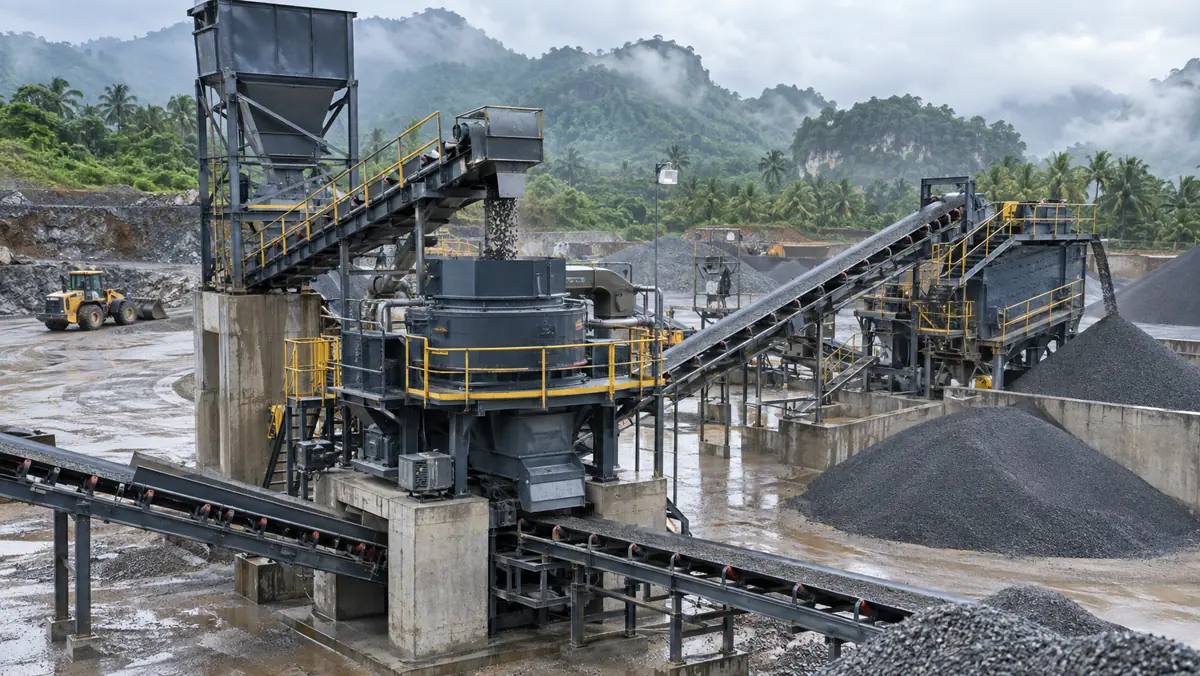
A VSI crusher needs a stable, correctly sized feed stream—not the highest possible instantaneous tonnes per hour—to produce consistent sand economically. Too little feed can make the rotor work inefficiently and make output fluctuate; sudden surges can overload the crusher, screen, or return conveyor, increase fine material, and accelerate wear. Start with the approved feed-size range, then control the average rate and short-term variation with a properly selected feeder, surge capacity, belt-scale data, and a screen circuit sized for both new feed and recirculating load. Compare proposals on a stated material basis and a stated product boundary, not a bare VSI nameplate capacity.
The Short Answer: Stable Loading Matters More Than a Momentary Peak Rate
VSI capacity is a system result. It depends on rock type, feed-size distribution, moisture, natural fines, rotor configuration, power, product target, screen performance, and the rate at which material actually enters the machine. A rate shown briefly on a loader estimate or belt scale is not automatically the rate the VSI can sustain while producing compliant sand.
A healthy operating target has two parts: an average feed rate inside the supplier’s approved window for the named material and rotor duty, and a stable feed profile without repeated empty periods followed by large slugs. Do not treat “choke feed” as a universal instruction. For a VSI, the practical objective is a controlled, evenly distributed stream through the feed tube, with no bridging, uncontrolled surges, or upstream starvation. Confirm the required loading condition for the actual machine and material.
For the upstream size boundary, see our VSI feed-size and screening guide. For the final product boundary, read how to control VSI sand grading and fines.
Feed Rate, Feed Size, and Product Capacity Are Different Numbers
| Number in a proposal or report | What it should mean | Why it can mislead alone |
|---|---|---|
| Fresh feed rate | New material entering the plant boundary per hour | It does not show recirculating oversize or saleable yield. |
| VSI feed rate | Tonnes per hour entering the VSI feed tube | It may include returned material in a closed circuit. |
| Screen feed rate | Total material presented to the final screen | It can be far higher than fresh feed when return load rises. |
| Instantaneous belt rate | A short reading at one point in time | It can hide stops, surges, cycling, or inconsistent loading. |
| Saleable product rate | Finished material meeting the agreed product boundary | It needs a named material basis and test method. |
The average rate is not enough. A belt can average 100 tonnes per hour while alternating between nearly empty and overloaded. That fluctuation affects power draw, feed distribution, screen loading, return load, and final grading. Record a time trend, not only a single reading, when diagnosing an unstable circuit.
What Happens When a VSI Is Starved or Overloaded?
Starved feed: lower utilisation and variable product
When feed arrives in intermittent batches, the rotor does not see a repeatable material curtain. Output becomes uneven, the downstream screen alternates between light and heavy loading, and product samples may no longer represent a stable operating point. A plant can have spare installed power yet produce less saleable sand per shift because the feeder, hopper, transfer point, or upstream crusher is limiting continuous supply.
Starvation can result from a bridged bin, slow feeder, wet fines packing on a chute, a wrong bypass route, or irregular loader bucket delivery. Check the whole feed route before changing rotor speed.
Overloading: more internal tonnes, not always more saleable sand
A sudden surge can push the feed beyond the intended crusher, screen, or conveyor load. The result can be high motor load, material build-up, unstable feed-tube flow, screen blinding, excess return, and unwanted fine material. The constraint may be the screen, transfer point, return conveyor, electrical supply, dust system, or stockpile route rather than the VSI itself.
Feed segregation changes the VSI duty
Even at a constant belt rate, a segregated feed can vary the fraction of fines, elongated pieces, or top-size rock entering the rotor. Sample the feed after the last upstream screen or bin, not from the blasted rock pile. Moisture and clay also change hopper and chute behavior; consider wet-feed and pre-screening decisions before selecting a nominal rate.
A Practical VSI Feed-Control Configuration
A reliable layout needs clear duties from hopper to feed tube. Feeder type, bin volume, belt width, and controls must suit material behavior and site constraints.
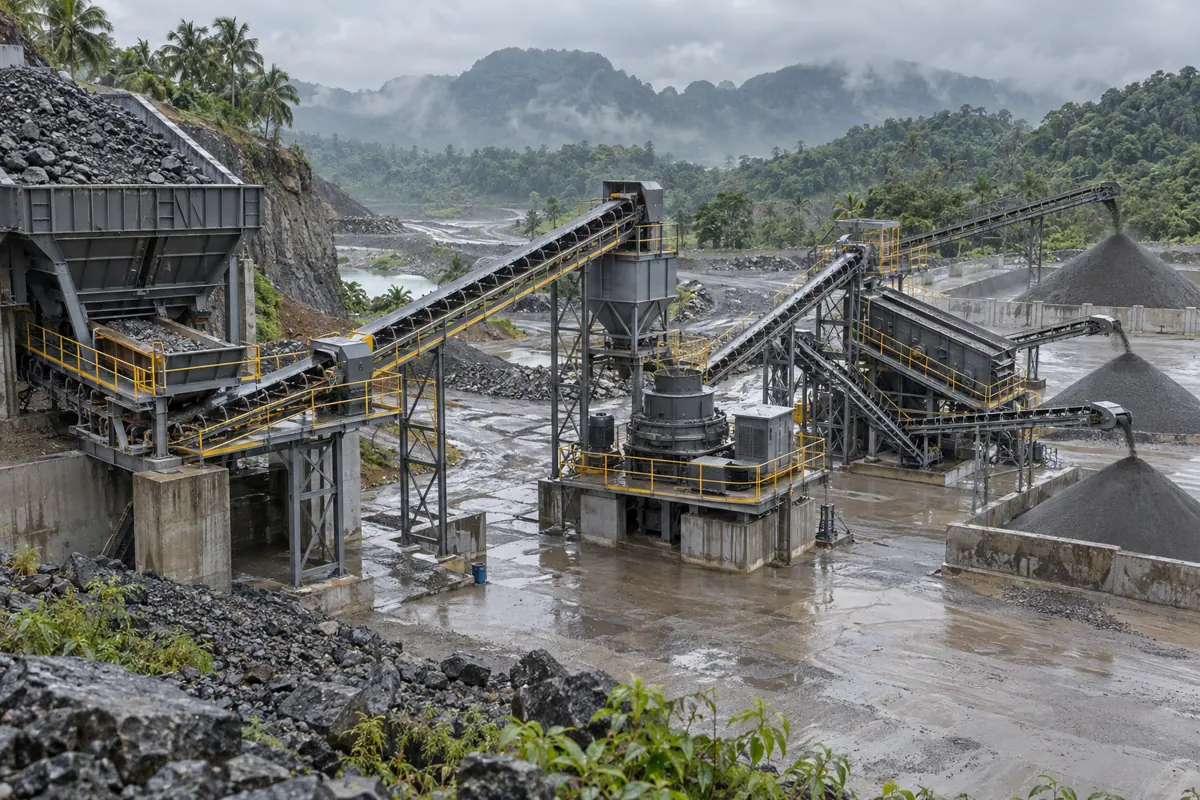
| Component | Primary job | Buyer question |
|---|---|---|
| Receiving hopper or surge bin | Buffers irregular delivery | What usable storage is available before bridging, segregation, or compaction becomes likely? |
| Feeder and discharge gate | Meters a controlled rate | Is it selected for actual top size, moisture, and fines rather than only dry bulk density? |
| Feed conveyor | Carries material evenly to the VSI | What belt width, speed range, skirting, and transfer geometry are included? |
| Belt scale or weighed feeder | Measures rate for control and reporting | Is it a process indication, trade measurement, or both, and how is it calibrated? |
| Level and load interlocks | Prevent empty running, overflow, and overload | Which signals slow, stop, or restart upstream equipment? |
| Final screen and return conveyor | Establish product and carry oversize | Are they designed for fresh feed plus expected circulating load? |
A controlled surge point can smooth short-term variation and create a stable sampling point. It does not replace correct upstream crushing and screening.
How to Set the Rate During Commissioning
- Define the measurement boundary: agree whether the target is fresh feed, VSI feed, or saleable product; state material, moisture, product sizes, and test period.
- Verify feed condition: record representative size distribution, visible fines, moisture, rock behavior, and maximum normal particle size after upstream preparation.
- Start inside the approved range: use the supplier’s approved lower commissioning point, not a brochure maximum.
- Stabilize the feeder first: observe bin level, feeder speed, belt loading, transfer behavior, and feed-tube distribution.
- Increase in controlled steps: allow steady state, then record rate trends, power, screen behavior, return load, and product sample.
- Locate the limiting component: stop increasing when an agreed product or mechanical limit is reached.
- Document the sustainable point: retain the material basis, setpoint, sample results, and operating data for future shifts.
For closed circuits, monitor the return conveyor independently. A rise in circulating load can make VSI feed look high while saleable output stays flat. See our closed-circuit versus open-circuit VSI guide.
Signals Worth Trending Every Shift
- Average and short-term variation of feeder or belt-scale rate.
- Hopper level, bridging events, and manual interventions.
- VSI motor power or current trend.
- Feed size and moisture after upstream preparation.
- Screen loading, blinding, product split, and return-conveyor rate.
- Product sieve results, fines proportion, and shape observations.
- Rotor wear checks and unplanned stops.
Compare energy and wear against a clear tonne boundary. Energy per tonne of fresh feed and per tonne of saleable sand answer different questions in a circuit with high return load. See how to compare VSI power consumption per tonne.
What to Require in a Supplier Proposal
| Proposal item | What it should state |
|---|---|
| Material basis | Rock type, feed-size distribution, top size, abrasion, moisture, natural fines, and clay/sticky-material risk. |
| Capacity basis | Fresh feed, VSI feed, circulating load, and saleable product as separate figures under named assumptions. |
| Feeder and bin design | Feeder type, variable-speed range, hopper geometry, usable surge volume, liner/chute scope, and anti-bridging approach. |
| Measuring and controls scope | Measurement point, calibration, PLC signals, level switches, interlocks, alarms, and manual mode. |
| Conveyor and screen loads | Design tonnes per hour at each transfer, including return load and product routing. |
| Acceptance-test basis | Test material, duration, sampling method, product limits, exclusions, and measurement boundary. |
Cost and Operating Factors Often Missed
Feed control has a cost, but poorly controlled feed costs more over time. Include hopper liners, variable-speed drives, belt-scale calibration, controls integration, chute maintenance, spillage cleanup, screen loading, return-conveyor power, wear parts, sampling, and operator time in the comparison.
A bigger hopper does not automatically solve instability: wrong geometry can cause segregation, compaction, or difficult reclaim. A higher belt speed can raise a displayed rate without improving the evenness of the stream into the VSI. The right operating point produces repeatable, saleable product inside the limits of the whole circuit.
Common Buyer Mistakes
Asking only for VSI nameplate capacity
Request the material basis, feed condition, product target, screen arrangement, return load, and measurement boundary behind every capacity statement.
Controlling the loader instead of the feeder
Use the loader to maintain a sensible surge level; use a correctly selected feeder to keep the process rate stable.
Treating a belt-scale reading as proof of saleable output
The scale may sit upstream of the screen and may include material that later returns or is removed. Pair feed-rate data with product samples and product-stream measurements.
Increasing feed after the screen is already the bottleneck
When screen efficiency falls, return load rises, or product grading drifts, more fresh feed can lower saleable yield. Verify downstream capacity first.
FAQ
What is the best feed rate for a VSI crusher?
There is no single best rate. It depends on approved machine configuration, rock properties, feed-size distribution, moisture, rotor duty, product target, and downstream capacity. Set it from commissioning measurements under stated material conditions.
Is a higher VSI feed rate always better for sand production?
No. Above the sustainable system limit, a higher rate can overload screens or conveyors, raise return load, create unwanted fines, and reduce saleable output.
How can I tell if a VSI is being starved?
Look for empty periods, fluctuating feeder rate, inconsistent power draw, irregular belt loading, intermittent product flow, and unstable product samples. Inspect the feed route before changing crusher settings.
Does a VSI need choke feeding?
Do not apply a generic choke-feed rule. A VSI needs an even, controlled stream inside the supplier’s approved operating range. Confirm the required loading condition for the specific machine, rotor, and material.
Should I install a belt scale before a VSI crusher?
A properly selected and calibrated belt scale or weighed feeder provides valuable process-control data. It does not replace product sampling or downstream measurements.
Can wet material cause unstable VSI feed?
Yes. Moisture, clay, and fines can bridge in hoppers, pack on chutes, change belt loading, blind screens, and alter product grading.
Why is my VSI feed rate high but final sand output low?
Possible causes include high circulating load, a screen bottleneck, off-spec material, excess natural fines, poor product routing, or a measurement boundary that includes returned material.
What information should I send for a VSI feed-control quotation?
Send raw material details, feed-size and moisture data, product limits, target capacity, site photos, layout restrictions, power availability, current plant data, and budget range.
Request a VSI Feed-Control Review
Send MVSI your raw material details or sample data, normal and maximum feed size, moisture and natural-fines observations, required output size and product limits, target capacity, current feed-rate or power trends if available, site photos, layout restrictions, available power, and budget range. We can help outline the feeder, surge, conveyor, VSI, screen, return, and control boundaries to evaluate. Final equipment selection should be confirmed against representative material and the agreed performance-test method.