Table of Contents
- Information Gain: Select the Crushing Space Before Comparing the Alloy
- Release One Measured Feed Record to Every Supplier
- Match the Chamber to Crushing Stage, CSS and Target Product
- Design the Feed Arrangement Around the Selected Chamber
- Compare Supplier Proposals on One Chamber Schedule
- Inspect the Wear Pattern Before Changing Chamber or Alloy
- Buyer Checklist Before Approving the Chamber
- Frequently Asked Questions
- Can I choose a cone crusher chamber from maximum feed size alone?
- Is a finer cone crusher chamber always better for smaller output?
- Does harder liner alloy solve poor cone crusher performance?
- Why is feed gradation important for cone chamber selection?
- Should a cone crusher be choke fed?
- What documents should a chamber proposal include?
- When should a quarry reconsider its existing chamber profile?
- Sources and Evidence Boundary
How to Match a Cone Crusher Chamber to Feed Gradation and Product Size
A buyer should match a cone-crusher chamber to measured feed gradation, maximum lump size, required closed-side setting and target product—not to the alloy name or crusher model alone. The selected mantle and concave must accept the actual top size, maintain a stable crushing zone and work with the eccentric throw, feed level and closed circuit. Ask every supplier to show the feed-opening boundary, recommended CSS range, assumed fines and moisture, choke-feed requirement and predicted product curve for the exact proposed chamber. If those inputs differ, capacity, wear and product-shape claims are not comparable, even when the base crusher model is identical.
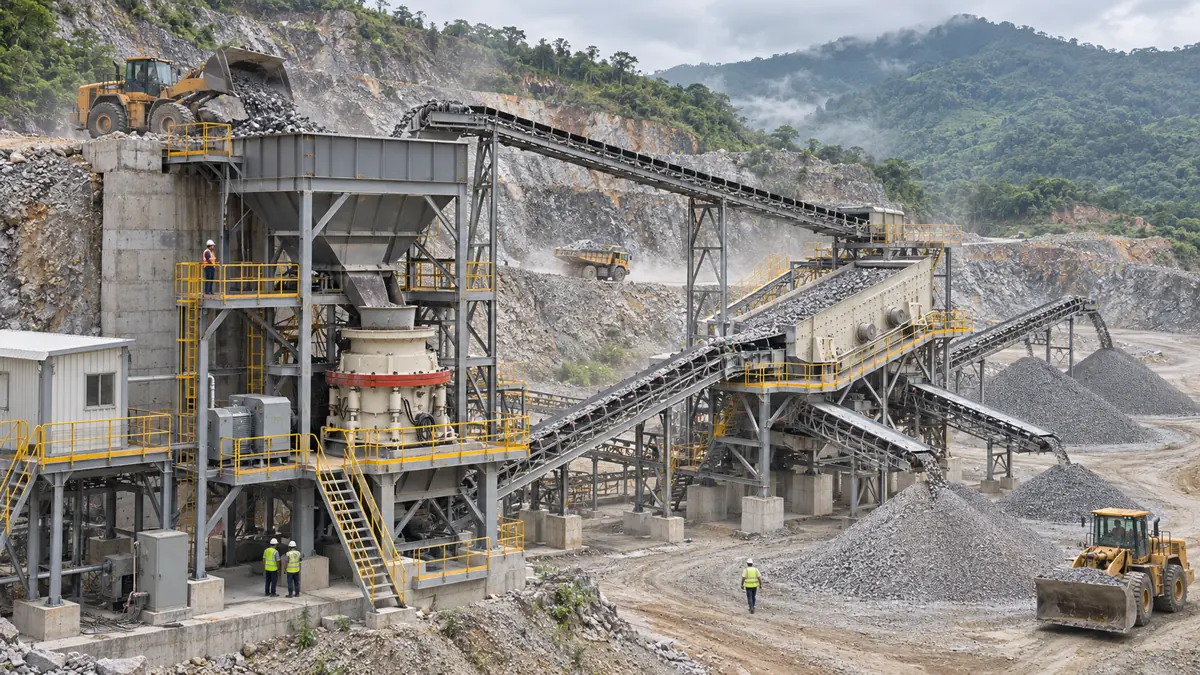
Information Gain: Select the Crushing Space Before Comparing the Alloy
Chamber geometry decides where and how the rock is compressed; alloy mainly changes how the wearing surface resists the application. A harder or more expensive liner material cannot correct a chamber that is too coarse, too fine or poorly fed for the actual duty.
Metso’s cone-crusher chamber selection guidance links liner-profile suitability to feed grading, closed-side setting, feed characteristics and the circuit duty. Sandvik’s cone-crusher performance guidance similarly separates chamber selection and feed conditions from alloy choice. These sources support the decision method below; they do not establish the result of a specific untested chamber.
| Choice | What it controls | Evidence the buyer should request |
|---|---|---|
| Chamber profile | Feed opening, compression path, usable CSS range and where the rock is gripped | Exact mantle and concave references, chamber drawing and the supplier’s feed-opening and setting boundary |
| Liner alloy and construction | Resistance to abrasion, impact and fatigue within the declared application | Material specification, part traceability and application exclusions |
| Circuit operation | Feed level and distribution, power/load, screen return and tonnes passing through the chamber | Feeder/control description, screen data, recirculating-load basis and acceptance record |
Release One Measured Feed Record to Every Supplier
A cone-chamber proposal needs the size distribution, not only a maximum feed-size number. Oversize can overload or wear the upper chamber, while a feed that is too small for a coarse cavity can concentrate wear lower in the liners. Gaps, excessive fines, moisture or clay can also change how material packs and moves.
| Feed field | Minimum useful record | Why it changes chamber selection |
|---|---|---|
| Representative gradation | Sieve results from more than one normal operating period, with sample location and date | Shows whether the cavity receives a continuous range or a segregated/gapped feed |
| Top size | Typical large pieces plus a defensible maximum, including dimension and shape | Must fit the proposed feed opening with the supplier’s stated margin and bridging boundary |
| Fines and moisture | Percentage or observations at the crusher feed, including wet-season variation | Helps identify packing, bypass or prescreening questions |
| Material behavior | Rock type, known variability, crushability or abrasion evidence if available, and clay/sticky zones | Changes load, wear assumptions and whether one chamber can cover all domains |
| Feed source | Upstream crusher setting, screen/scalper route, surge bin and feeder arrangement | Explains how stable and controllable the incoming stream can be |
If the project is still deciding the full circuit, read when a hard-rock quarry needs a jaw and cone crusher circuit. That page defines the stage relationship; this article focuses on the cone chamber inside that circuit.
Match the Chamber to Crushing Stage, CSS and Target Product
The same base cone-crusher model may offer more than one chamber because secondary, tertiary and fine-crushing duties are not interchangeable. The buyer should state the incoming feed, required product and screen return together, then ask the supplier to show why the proposed profile works across the intended CSS range.
The Metso HP Series application guide is one public example showing different chamber feed openings and setting ranges. Its values apply to the documented product family only. For another crusher, request that manufacturer’s current table and drawing instead of transferring a chamber name or number.
| Duty question | Supplier response needed | Comparison risk if omitted |
|---|---|---|
| What crushing stage is proposed? | Secondary, tertiary or finer duty, with upstream and downstream handovers | A chamber label is compared without knowing its intended reduction role |
| What CSS range is usable? | Recommended operating range for the exact chamber, not only the machine’s mechanical limit | A small setting is treated as sustainable even when it causes unstable load or poor utilization |
| What product is required? | Target grading and shape basis plus the screen apertures and return path | The crusher is expected to create a final product without the circuit that classifies it |
| What reduction is assumed? | Feed and product grading on the same sampling basis | Nominal reduction claims hide different feeds or recirculating loads |
| What happens as liners wear? | Setting-control method, inspection points and criteria for turning or replacement | New-liner performance is assumed to remain unchanged through the full wear cycle |
For product-size planning beyond the chamber, see how to design a crushing plant for 0–5 mm, 5–10 mm and 10–20 mm aggregates.
Design the Feed Arrangement Around the Selected Chamber
A correct chamber can still perform poorly when the feed is intermittent, segregated or delivered to one side. Stable feed level and distribution are part of the chamber proposal, not an operator detail to solve after commissioning.
Sandvik’s optimal feed arrangement guidance recommends non-segregated choke feeding and describes the role of the surge bin, feeder, level control and distribution devices. The specific arrangement still depends on the crusher design, crushing stage and bridging risk.
Ask how the proposal will:
- keep a stable material level without exceeding the supplier’s operating boundary;
- center and distribute coarse and fine particles around the chamber;
- control surges from the upstream crusher or loader;
- interlock the feeder, crusher, discharge conveyor and level signal;
- detect power, pressure or load behavior that indicates unstable feeding;
- provide safe access for inspection and removal of oversize or tramp material.
The wider feeder, crusher, screen and conveyor selection guide helps expose these interfaces before the equipment total is compared.
Compare Supplier Proposals on One Chamber Schedule
A chamber recommendation should be traceable to the buyer’s issued data and the exact supplied parts. A brochure capacity range or generic “medium chamber” name is not enough because naming conventions and assumptions differ across manufacturers.
| Proposal line | Written evidence to request | Buyer check |
|---|---|---|
| Design basis | Issued feed gradation, top size, moisture/fines, material domain, duty and target product | Confirm that every supplier used the same revision |
| Exact chamber | Crusher model, mantle and concave references, profile/drawing and supplied quantity | Prevent a generic chamber name from substituting for an exact configuration |
| Feed boundary | Maximum accepted dimension/shape, distribution, level and prescreening assumptions | Identify conditions that require upstream changes or a different profile |
| Operating boundary | CSS range, throw and speed basis, power/load limits and control method | Separate an indicative catalogue point from the proposed operating range |
| Product statement | Predicted curve or test/simulation basis, screen apertures and circulating-load assumption | Compare like-for-like product and circuit definitions |
| Wear plan | Alloy, expected wear pattern, inspection interval, replacement criterion and evidence class | Keep profile suitability separate from an unsupported liner-life promise |
| Acceptance | Site-ready conditions, permitted adjustments, sampling method and sign-off | Define how the chamber choice will be checked after installation |
The granite-quarry cone-crusher quotation checklist covers the wider supply package. For a supplier-scope comparison, use the basalt cone-crusher supplier guide. Neither page replaces the feed-to-chamber schedule above.
Inspect the Wear Pattern Before Changing Chamber or Alloy
Uneven or localized wear is evidence to investigate, not automatic proof that the alloy is wrong. Compare the worn profile with feed distribution, level, CSS, load and product records before changing one variable.
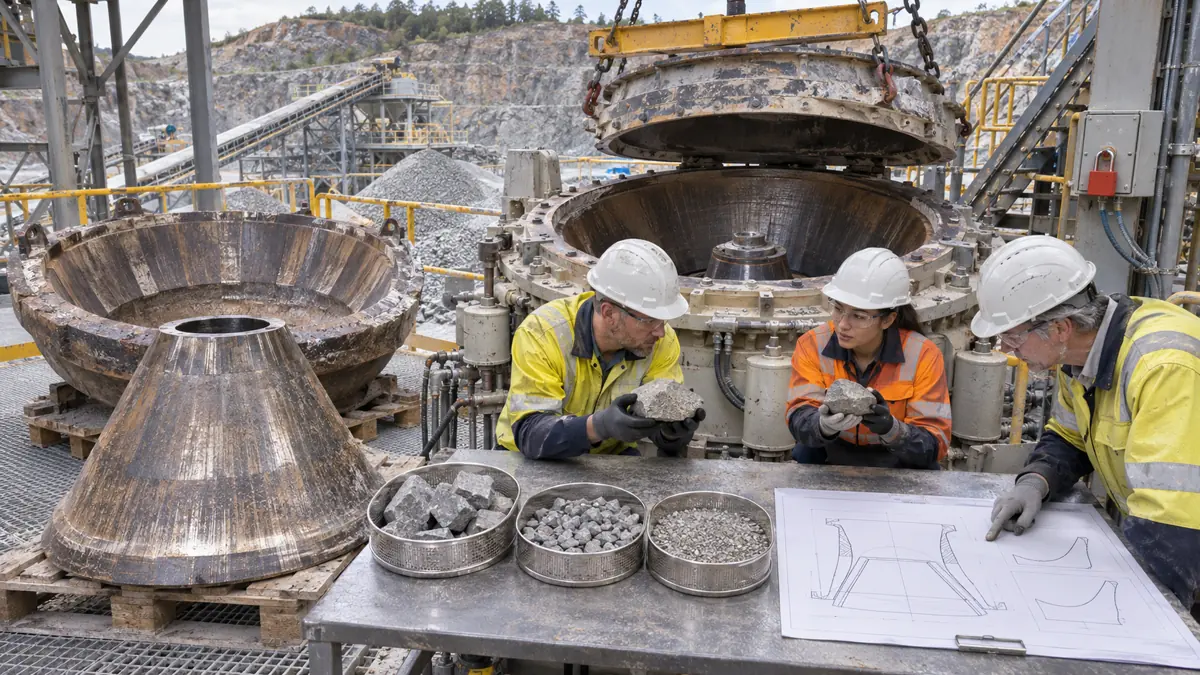
Record photographs and measurements at consistent operating intervals. Note the feed source, chamber part references, CSS, hours, processed tonnes, power/load behavior, screen return and any abnormal events. If a trial chamber is installed, agree which operating parameters may change; otherwise a simultaneous feeder, CSS and screen change makes the cause of a different result unclear.
Before site acceptance, use the cone-crusher commissioning verification guide to allocate test conditions and sign-off responsibility.
Buyer Checklist Before Approving the Chamber
- Issue one representative feed gradation and top-size record to every bidder.
- State the crushing stage, target product, screen apertures and return route.
- Require exact mantle and concave part references plus the chamber drawing.
- Confirm feed opening and usable CSS range for the proposed profile.
- Separate chamber geometry, liner alloy and feeder/control responsibilities.
- Check the surge bin, level signal and non-segregated feed arrangement.
- Ask for the product-curve and recirculating-load assumptions.
- Define inspection, wear-profile, sampling and acceptance records before start-up.
For a project review, send MVSI the raw material description, representative feed size analysis and maximum lump size, required output sizes, capacity and operating basis, upstream/downstream equipment, screen apertures, site photos and layout, power conditions and budget range. These inputs allow a chamber recommendation to state its assumptions; they do not create a universal capacity, product or liner-life guarantee.
Frequently Asked Questions
Can I choose a cone crusher chamber from maximum feed size alone?
No. Maximum size is one boundary, but the full gradation, particle shape, fines, moisture, crushing stage, CSS, target product and feed arrangement also affect whether the chamber is suitable.
Is a finer cone crusher chamber always better for smaller output?
No. A finer profile must still accept the actual feed and operate within its supported setting and load range. Product size also depends on the screen and recirculating circuit, not only the chamber name.
Does harder liner alloy solve poor cone crusher performance?
Not by itself. Alloy can change wear resistance and toughness, but it cannot correct an unsuitable chamber profile, segregated feed, unstable level or mismatched CSS.
Why is feed gradation important for cone chamber selection?
Gradation shows how different particle sizes fill and move through the crushing zone. Oversize, undersize-dominated or gapped feed can change load distribution, liner utilization and product behavior.
Should a cone crusher be choke fed?
Many cone-crusher applications benefit from a stable, evenly distributed full chamber, but the required level and control method depend on the crusher, chamber, stage and bridging risk. Follow the selected manufacturer’s operating boundary.
What documents should a chamber proposal include?
Request the exact mantle and concave references, chamber drawing, feed-opening and CSS range, issued feed basis, throw/speed assumptions, predicted product basis, feed/control requirements, alloy specification, exclusions and acceptance method.
When should a quarry reconsider its existing chamber profile?
Reconsider it when the feed source or grading changes, the target product or screen circuit changes, wear becomes uneven, load becomes unstable or the current profile cannot use the supported operating range. Diagnose the circuit before changing parts.
Sources and Evidence Boundary
- Metso: Selecting crushing chambers for cone crusher
- Sandvik: What affects cone crusher performance?
- Sandvik: Optimal feed arrangement
- Metso: HP Series cone crusher chamber selection
These sources explain general chamber-selection and feed principles. They do not verify a specific MVSI chamber, project, capacity, product curve, liner life or warranty. Final selection requires current documentation for the exact proposed crusher and parts, representative project data, and the responsible site’s engineering and safety review.