Table of Contents
- Begin with one shared quarry duty
- Make the cavity and liner proposal evidence-led
- Compare the complete circuit boundary, not the cone alone
- Put wear parts, maintenance access, and safety scope in writing
- Price each quotation with an assumptions and responsibility map
- Release the order only after a quotation-review gate
- Common quotation mistakes
- Frequently Asked Questions
- What information should I send for a cone crusher quotation?
- Is a cone crusher model number enough to compare quotations?
- Should liners be included in the first cone crusher quotation?
- How should I compare cone crusher capacity claims?
- Who should supply the screen and return conveyor?
- What service support should be written into the quotation?
- Can a quotation guarantee final granite product grading?
- Request a Cone Crusher Quotation Review
What Should a Granite Quarry Buyer Check in a Cone Crusher Quotation?
A granite quarry buyer should accept a cone crusher quotation only after it converts one defined material duty into a visible technical and commercial scope. The quotation should state the representative feed range and fines or moisture observations, product sizes, circuit position, cavity and liner basis, power and controls boundary, screen and return arrangement, maintenance access, initial spares, supplied documents, and site acceptance method. A model name and nominal tonnes-per-hour figure are not enough: granite variability, the actual feed to the cone, recirculating load, and product specification can change both the configuration and the risk. Compare every bidder against the same duty sheet, then price the differences that remain.
Begin with one shared quarry duty
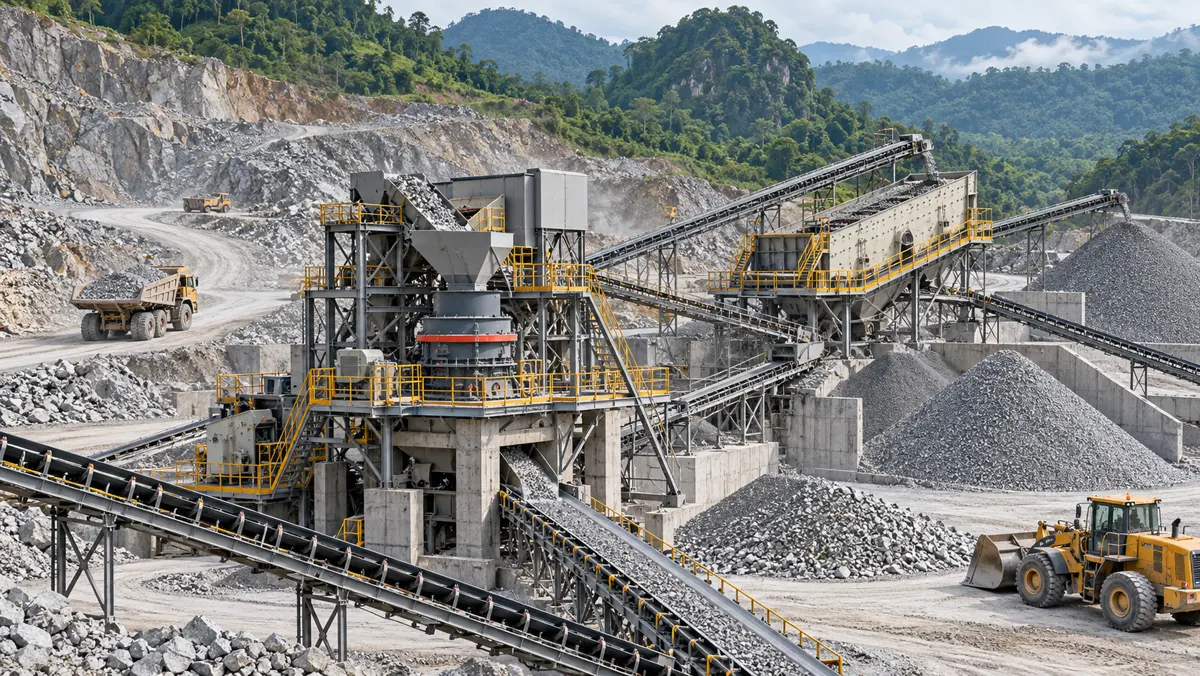
A cone crusher quotation is comparable only when every bidder receives the same material, product, and circuit record. A cone does not operate alone: feed preparation, surge capacity, screening, recirculation, conveyors, stockpiling, controls, dust, and safe access can decide whether the selected configuration works as intended.
The US EPA’s crushed-stone processing description is useful general context because it treats crushing, screening, material handling, and storage as connected operations. It does not size a quarry or prove a particular equipment configuration.
| Duty item | Put the same information in every enquiry | Why it changes the quote |
|---|---|---|
| Granite feed | Source, representative photos or samples, typical and maximum size, grading if available, weather-related moisture, clay or fines observations, and known variation | The crusher receives a distribution, not a rock name alone. |
| Required products | Product sizes, grading or shape requirements, permitted fines, and which streams are saleable | A reduction target is not the same as a saleable-product duty. |
| Operating basis | Required rate, planned hours, normal and peak conditions, and planned operating regime | Prevents a nominal figure being mistaken for the buyer’s duty. |
| Circuit boundary | Feeder or surge bin, upstream crusher, cone, screen, return path, product conveyors, and stockpiles | Finds an omitted conveyor, screen, or return-load interface before order. |
| Site constraints | Layout, elevations, foundations, lifting and transport route, power, controls, water or dust interfaces, access and safety rules | A technically plausible crusher can still be impractical to install or maintain. |
| Acceptance method | Test material, run window, sampling or observation method, witnesses, documents, and response to unresolved findings | Makes the release condition reviewable rather than verbal. |
Use the quarry feeder, crusher, screen, and conveyor guide to identify connected equipment, and the granite, basalt, limestone, and river-stone flow-sheet guide to trace the material paths before inviting quotations.
Make the cavity and liner proposal evidence-led
For granite, the meaningful question is not simply which cone model appears on the offer. Ask each supplier to state the proposed chamber or cavity, liner basis, feed envelope, target setting range, and the assumptions used to connect those selections to the stated product duty. Do not treat a liner designation, product brochure, or broad capacity band as a guarantee.
| Quotation line to request | What a buyer should be able to compare |
|---|---|
| Selected configuration | Crusher model or frame, proposed cavity/chamber and its intended process role, with the supplier’s stated material and feed assumptions |
| Feed basis | Maximum and normal feed size, grading where known, fines/moisture observations, feed-control method, and any scalping requirement |
| Liner basis | Included liner set, material or grade if offered, compatible alternatives, part identification, changeout assumptions, and exclusions |
| Operating window | How the supplier describes setting, feed distribution, choke-feed or other operating expectations, and limitations that require site confirmation |
| Product route | Screen deck and return-path assumptions, product streams, and whether any shaping or further crushing is outside the cone scope |
| Evidence and limits | Drawings, technical documents, stated exclusions, and which question needs a sample, trial, survey, or engineering review |
The cone crusher supplier comparison for basalt aggregate explains the value of a common duty dossier for a hard-rock comparison. The method is transferable; it does not make a basalt record interchangeable with the buyer’s granite.
Compare the complete circuit boundary, not the cone alone
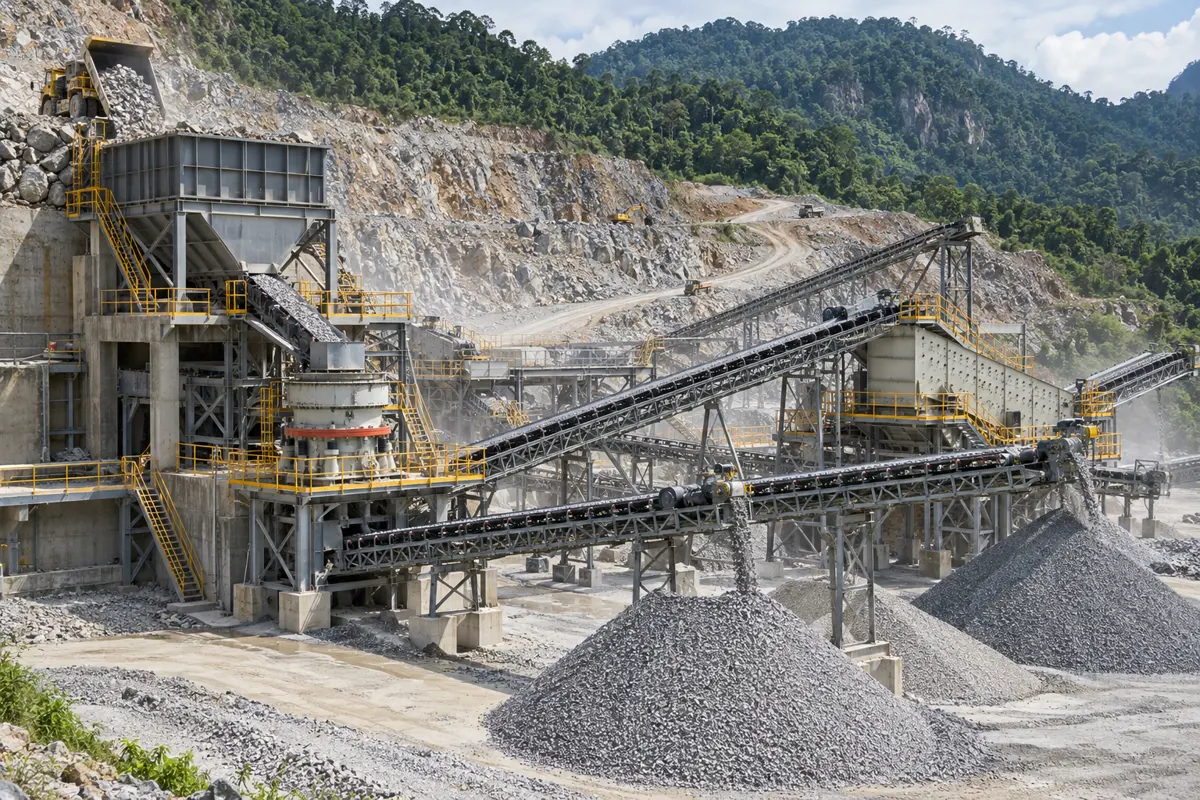
A quotation can look complete while leaving an interface between suppliers, trades, or site teams unassigned. Draw the material and control boundaries on one simple layout and ask each bidder to mark inclusions, exclusions, inputs, outputs, and responsibilities. This is especially important where a cone is being added to an existing primary crusher or screen.
| Interface | Questions to put in the quotation comparison |
|---|---|
| Feed to cone | What feeder, bin, conveyor, chute, feed distribution device, instrumentation, and anti-bridging responsibility are included or assumed? |
| Cone discharge | Who designs or supplies the discharge chute, transition, conveyor, supports, liners, and dust or drainage interfaces? |
| Screen and return | Which screen decks, product cuts, return conveyor, transfer capacity, and controls are assumed? Who owns recirculating-load limits? |
| Electrical and controls | What motor, starter or drive, cabinet, field wiring boundary, interlocks, alarms, instrumentation, and integration responsibility are included? |
| Foundations and steelwork | Who provides loads, anchor requirements, structural supports, platforms, handrails, access, lifting points, and installation drawings? |
| Dust, water, and housekeeping | Which collection, suppression, drainage, containment, or cleaning interfaces are included and which belong to the site? |
For a buyer comparing a replacement cone with an operating plant, include current site photos, elevations, a sketch of the present chutes and conveyors, and control drawings where available. The cone-circuit commissioning checklist is a useful next step for separating quotation assumptions from the release checks needed at startup.
Put wear parts, maintenance access, and safety scope in writing
The initial liner set is only one part of the maintenance decision. Ask the bidder to identify the parts included at handover, the part numbers or identification route, the stated replacement basis, the tools and lifting assumptions, and the access provisions that make planned service practical. A low initial price can be misleading if essential spares, lifting arrangements, guarding, or maintenance platforms have no named owner.
OSHA’s hazardous-energy standard is a United States reference for servicing and maintenance, not worldwide legal advice. Its transferable point for procurement is that a service task requires a deliberate control and access plan; a quotation should not leave that plan invisible.
| Maintenance and support question | Evidence to request |
|---|---|
| What is supplied for first operation? | Line-by-line initial-spares and wear-parts list, quantities, exclusions, and identification method |
| How will liners be changed? | Stated access, lifting, tooling, isolation, clearance, and site responsibility assumptions; validate them against the final layout and local rules |
| What data is handed over? | Operation and maintenance documents, parts information, drawings needed for installed interfaces, and control information within the supplier’s scope |
| What support is actually offered? | Named scope for remote support, commissioning attendance if any, training, response route, travel boundaries, and exclusions—not an assumption of local presence |
| What needs ongoing confirmation? | Inspection points, wear monitoring method, spares-review timing, and items requiring the selected supplier’s current documentation |
The crusher spare-parts inventory guide is VSI-specific, but its purchasing principle applies: do not create a generic parts list before the confirmed machine configuration and operating plan are known.
Price each quotation with an assumptions and responsibility map
The right comparison is not the lowest cone price. It is the known cost and responsibility required to deliver the agreed granite-processing duty safely into service. Make a side-by-side table that separates inclusions from allowances, exclusions, and information still needed.
| Cost or risk area | Record from each bidder |
|---|---|
| Main equipment | Exact equipment list, selected configuration, included drives, controls, guards, access items, and loose parts |
| Circuit completion | Included feeder, bin, screen, conveyors, chutes, supports, steelwork, instruments, and interface work |
| Site work | Freight boundary, unloading, foundations, erection, wiring, dust or water interfaces, and commissioning roles |
| Wear and spares | Initial liner/parts package, recommended early spares if supplied, part identification, and price validity or exclusions |
| Documentation and support | Deliverables, language/version assumptions if relevant, training or site-support scope, travel boundary, and escalation route |
| Acceptance and change control | Test conditions, evidence required, acceptance limits, deviations, exclusions, corrective-work route, and how changes are priced |
The stone crusher plant cost guide can help structure total-cost questions. It is not a substitute for the project-specific scope, supplier documents, and local site review.
Release the order only after a quotation-review gate
Before order release, hold a short technical-commercial review in which the buyer marks every statement as confirmed, assumption, exclusion, or open item. This prevents one bidder’s full circuit boundary from being compared with another bidder’s bare-crusher price.

- Give every bidder the same granite evidence package, feed record, product schedule, capacity basis, circuit sketch, and site constraints.
- Confirm the cone’s process role and the stated cavity, liner, feed, setting, screen, and return-path assumptions.
- Map every mechanical, electrical, controls, civil, access, dust, water, and installation interface to one responsible party.
- Check initial wear parts, spare parts, tools, lifting, platforms, guards, isolation expectations, documents, and support scope against the final site layout.
- Agree the test material, operating window, product and sampling method, witnesses, documents, exceptions, and corrective-action route before treating the quotation as complete.
Common quotation mistakes
The usual mistake is treating two capacity figures as comparable even though the feed, product, circuit, and operating basis differ. Buyers also lose visibility when cavity and liner assumptions sit only in an email, when screen or return capacity belongs to no supplier, or when a list of spare parts does not identify what configuration it fits.
Avoid promising a commissioning result based on a preliminary quotation. Product grading, wear, throughput, power, and maintenance needs depend on the final equipment, actual material, operating method, and site integration. Use the quotation to define what has been assumed and what still needs evidence.
Frequently Asked Questions
What information should I send for a cone crusher quotation?
Send representative granite information, feed sizes and grading if available, moisture or fines observations, target products, required capacity and operating basis, a circuit sketch, site photos, layout constraints, available power, and the existing equipment or interfaces. Ask bidders to state the missing information and assumptions.
Is a cone crusher model number enough to compare quotations?
No. Compare the proposed process role, cavity and liner basis, feed assumptions, screen and return path, drives and controls, access, initial spares, documents, exclusions, and acceptance method. A model number alone does not define the supplied duty.
Should liners be included in the first cone crusher quotation?
Ask the bidder to state whether initial liners are included, how they are identified, what operating basis they assume, and which alternatives are compatible. Do not infer liner life or ongoing availability from a preliminary list.
How should I compare cone crusher capacity claims?
Give every bidder the same material record, feed-size distribution, product schedule, circuit boundary, operating hours, moisture or fines observations, and test or acceptance basis. Record every untested condition and exclusion beside the stated figure.
Who should supply the screen and return conveyor?
The answer depends on the project boundary, but it must be explicit. The quotation should state whether screen decks, return conveying, transfer chutes, controls, supports, and recirculating-load responsibility are supplied, assumed, or excluded.
What service support should be written into the quotation?
Request the actual support scope: supplied documents, parts-identification route, commissioning attendance if offered, remote-support path, training, travel boundary, response arrangements, and exclusions. Do not assume a local dealer, stock, or response time without evidence in the offer.
Can a quotation guarantee final granite product grading?
Do not treat an early quotation as a guarantee. Final product depends on the actual granite, feed, selected configuration, screen and return circuit, operating settings, and agreed sampling method. Put the acceptance method and limitations in writing.
Request a Cone Crusher Quotation Review
Send MVSI your raw material, feed size, output size, capacity, site photos, and budget range. Include any granite test data or representative photos, current flow sheet, product specification, existing equipment list, layout constraints, and target startup date. A review can separate a suitable quotation scope from the inputs that still need confirmation before a final proposal.