Table of Contents
- Information Gain: Specify the Transfer Between the Jaw and Cone
- Start With the Quarry Feed, Not a Crusher Model
- When a Jaw and Cone Circuit Is a Better Fit
- The Jaw Discharge Must Be a Real Cone-Feed Definition
- Choose the Screen and Recirculation Plan With the Product Schedule
- Compare Complete Scope, Not Jaw and Cone Prices
- Buyer Checklist for a Hard-Rock Jaw and Cone Circuit
- Send a Circuit-Selection Brief
- Frequently Asked Questions
- When should a quarry use a jaw crusher and cone crusher together?
- Can a jaw crusher feed a cone crusher directly?
- Is a cone crusher always required after a jaw crusher?
- What information is needed to size a jaw and cone circuit?
- Why is a screen important in a jaw-and-cone plant?
- What is recirculating load in this type of circuit?
- How should I compare jaw-and-cone crusher quotations?
- Can a factory inspection prove the quarry circuit will meet capacity?
When Does a Hard-Rock Quarry Need a Jaw and Cone Crusher Circuit?
A hard-rock quarry normally needs a jaw-and-cone circuit rather than a single crusher when blasted rock must be reduced from variable run-of-mine feed into controlled aggregate sizes at a duty that needs both primary reduction and secondary size control. The jaw crusher should be selected around the actual largest rocks, feed variability, fines, and feeding method; the cone stage must be selected around the jaw discharge, product schedule, screen duty, and recirculating load. It is not a default package. If the rock breaks readily, the required product is only coarse road base, or the feed and product records point elsewhere, another circuit may be more suitable. The buying decision is to define the interfaces, not simply order two machine names.
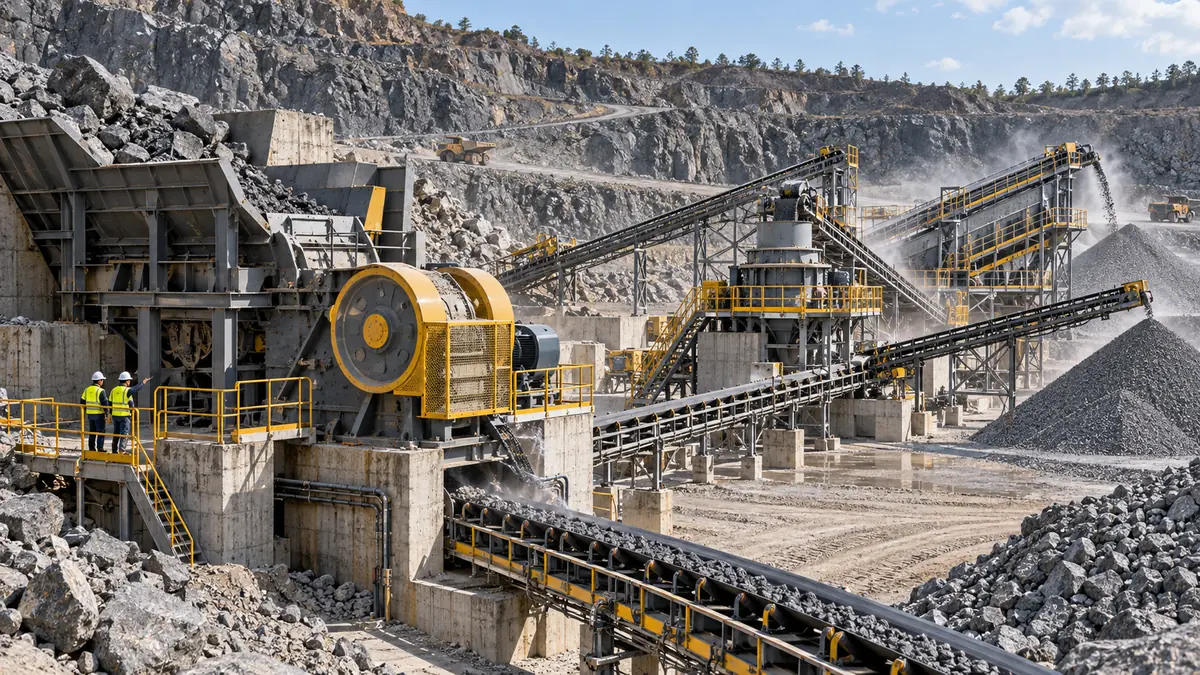
Information Gain: Specify the Transfer Between the Jaw and Cone
Many descriptions stop at “jaw for primary crushing, cone for secondary crushing.” That is useful shorthand, but it does not make a quotation comparable. A jaw crusher can accept one feed condition while the cone is offered around a different feed curve, a different surge arrangement, or a different final-product expectation. The gap is usually hidden in the conveyor, bin, screen, return load, controls, and civil interfaces between the machines.
The practical decision boundary is a crusher-to-crusher duty sheet. It follows material from the quarry face through receiving, primary reduction, transfer or surge, secondary reduction, screening, recirculation, and stockpiling. A buyer should give the same sheet to every supplier, then ask what each proposal includes, assumes, excludes, and needs from the site team. This does not replace detailed process design; it stops a two-machine list from being mistaken for a complete hard-rock circuit.
Start With the Quarry Feed, Not a Crusher Model
A jaw-and-cone arrangement is usually worth considering when the project has large, variable blasted rock and needs several controlled aggregate sizes. It is less useful to start with a model name than with a feed record that shows the largest blocks, typical material, fines, moisture, clay or contamination, loading method, and daily variation. The hard and abrasive rock crusher guide explains why material hardness and abrasiveness need to be separated from a simple rock name.
| Input to define | What the buyer should provide | What the circuit proposal must make clear |
|---|---|---|
| Run-of-mine material | Typical and maximum rock size, source faces, photos, representative fragments, fines, moisture, and visible clay or contamination | The receiving and jaw-feed assumption; any pre-screening, scalping, rock-breaking, or contamination-control requirement |
| Production basis | Target tonnes per hour, operating-hours assumption, seasonal variation, and whether the rate is an equipment rating or a plant acceptance basis | The stated duty point, allowance for feed variation, storage or surge assumptions, and the constraint that governs the quoted rate |
| Product schedule | Required coarse, intermediate, and fine aggregate sizes; any shape, clean-stone, road-base, or downstream asphalt/concrete requirement | Which product comes directly from the screen, which material returns for further crushing, and what grading is not being promised |
| Site boundary | Site photos, quarry level changes, available footprint, truck/loader movement, power, water, drainage, dust, lifting, and civil constraints | The ownership of foundations, structures, transfer points, utilities, controls, access, and safety interfaces |
The feeder, crusher, screen, and conveyor selection guide is a useful companion because the circuit starts before the jaw chamber. A good primary crusher choice cannot fix unstable loading, an unsuitable feeder, uncontrolled fines, or a receiving arrangement that cannot handle the actual largest material.
When a Jaw and Cone Circuit Is a Better Fit
A jaw crusher provides the first substantial reduction from run-of-mine rock. A cone crusher is commonly considered after that primary stage when the project needs further reduction and screened aggregate products. The circuit becomes stronger when the secondary crusher receives a controlled feed and the screen has a defined role in separating saleable sizes from oversize return material.
The following signals justify asking suppliers to assess a jaw-and-cone circuit. They are prompts for engineering review, not guaranteed selection rules.
| Project condition | Why the two-stage circuit may help | Boundary to verify before accepting it |
|---|---|---|
| Blasted hard rock has large and variable pieces | A primary jaw stage can establish a manageable downstream feed condition | Actual largest rock, jaw setting, feeder behavior, and whether oversize needs breaking or separate handling |
| Several aggregate sizes must be made consistently | A secondary cone plus screen can separate product and identify oversize return material | Screen cuts, screen capacity, product stockpiles, moisture/fines behavior, and the route for recirculating material |
| The quarry needs a stable secondary feed | A transfer conveyor and surge arrangement can reduce direct coupling between primary and secondary stages | Surge volume, belt capacity, control logic, overflow path, access, and what happens during downstream stops |
| The circuit must work within a defined quarry layout | A stationary or semi-stationary arrangement can be laid out around elevations, roads, and stockpiles | Civil responsibility, foundations, retaining conditions, drainage, dust control, electrical feeds, and maintenance access |
| Abrasive or variable rock is expected | A staged arrangement makes the duty of each reduction stage visible for maintenance planning | Wear-part scope, access to liners and jaw components, inspection plan, spares, and which wear assumptions are commercial exclusions |
For a broader explanation of how material and desired aggregate sizes influence the sequence, see the crushing plant flow-sheet guide for granite, basalt, limestone, and river stone. It is a starting framework, not a substitute for the actual quarry feed record.
The Jaw Discharge Must Be a Real Cone-Feed Definition
The most important handover in a jaw-and-cone plant is the physical and operational link between the two stages. A cone crusher is not selected independently just because the primary machine is called a jaw crusher. The proposal should state what reaches the cone after the jaw, what material is removed or diverted before it, how the feed is buffered, and what returns from the screen.
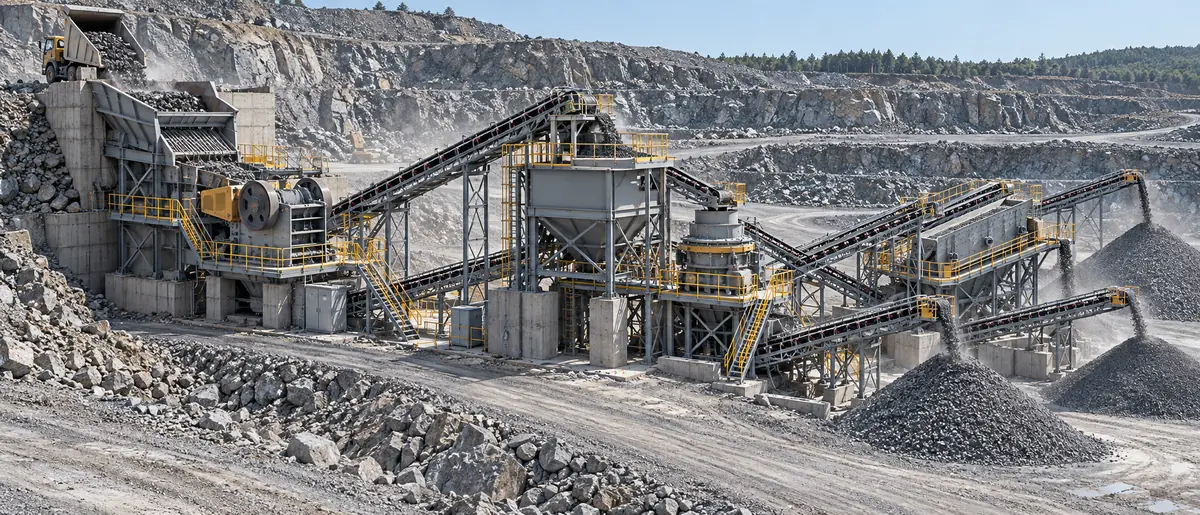
- Delivery from truck, loader, or hopper to the feeder and any grizzly or scalping point.
- Primary jaw-crusher feed and discharge condition, including how bypass fines and tramp material are handled.
- Transfer conveyor, magnet or protection equipment where applicable, and any surge bin between stages.
- Secondary cone feed condition, reduction duty, drive and control assumptions, and maintenance clearance.
- Screen feed, decks and product routes, with a distinct line for oversize recirculation if it is proposed.
- Stockpiles, conveyors, dust/water services, drainage, power, control, platforms, and the assigned site interfaces.
That sequence gives a buyer something that a headline capacity does not: a way to see whether the cone, screen, belts, bins, and stockpiles are all being offered for the same duty. The iron ore crushing and screening plant equipment guide is relevant for the same reason—feed preparation must be defined across equipment handovers, even when the downstream use of the crushed material is different.
Choose the Screen and Recirculation Plan With the Product Schedule
The screen determines what is sold, what is sent onward, and what returns for another pass. A cone proposal without a matched screening and recirculation description is therefore incomplete for a multi-product quarry. The right screen arrangement depends on the requested sizes, feed distribution, moisture and fines, product cleanliness, stockpile routes, and the consequences of returning oversize material.
Do not assume that a closed circuit is automatically better. Recirculation can be useful when the project needs to control oversize, but it also adds a return conveyor, loading on the cone and screen, controls, and access requirements. If the end product, rock behavior, or production plan does not justify it, a simpler arrangement may be more appropriate. The buyer should ask each bidder to identify the conditions under which its screening plan changes.
The existing aggregate-size crushing plant design guide helps frame the product-schedule conversation. Its size examples are not a promise that the same arrangement will meet every quarry’s grading or capacity requirement.
Compare Complete Scope, Not Jaw and Cone Prices
A two-crusher quotation can look inexpensive because the essential items are placed outside the listed supply. Before comparing prices, create one responsibility matrix and make every bidder fill it in. A lower amount may describe a smaller boundary, not a lower-cost circuit.
| Scope line | Ask each bidder to identify | Risk if it is left unnamed |
|---|---|---|
| Equipment duty | Feed basis, reduction stages, machine list, drives, liners, screens, conveyors, guards, optional items, and exclusions | Different duties are compared under the same “jaw and cone plant” label |
| Material handovers | Feeder, grizzly, chute, transfer, surge, bypass, magnet/protection, return belt, and product routes | An overloaded or missing interface appears after equipment is ordered |
| Structures and site works | Foundations, steel, platforms, stairs, access, drainage, dust/water, electrical supply, control cables, and lighting | Civil, electrical, or safety work is assumed to belong to someone else |
| Documents and inspection | Layout level, load information, operating manuals, drawings, inspection points, packing, and exception records | The site cannot confirm fit, delivery scope, or open issues before shipment |
| Site execution | Delivery term, unloading, lifting, assembly labor, supervisors, commissioning prerequisites, training, spares, warranty trigger, and escalation contact | The plant is delivered without a named path to completion or support |
The stone crusher plant cost guide provides a wider cost-boundary view. For this decision, the key is to compare the same physical circuit and handover responsibilities before treating two totals as comparable.
Buyer Checklist for a Hard-Rock Jaw and Cone Circuit
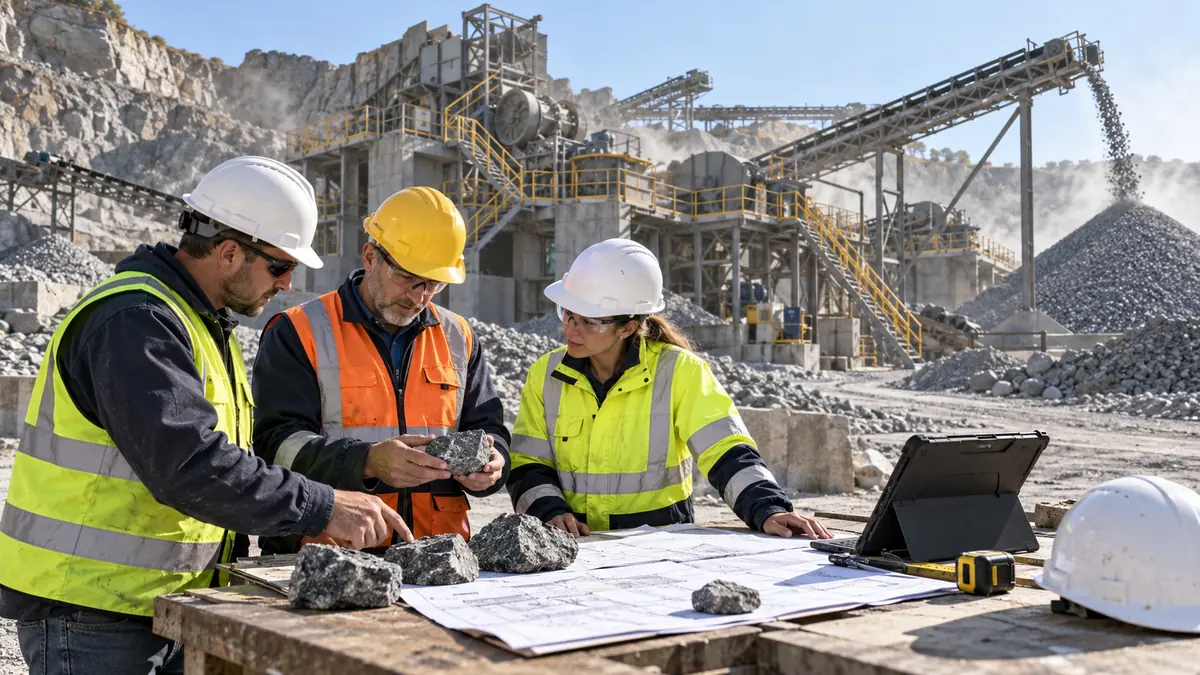
- Received the same typical and maximum run-of-mine feed description, representative photos or samples, fines/moisture note, and source-variability record.
- Stated the primary jaw feed and discharge assumptions instead of only listing an opening or model.
- Defined the transfer, surge, protection, bypass, and control arrangement between jaw and cone.
- Identified the cone feed condition, screen duty, product routes, and any oversize recirculation path.
- Shown the full equipment boundary: feeder, crushers, screens, conveyors, chutes, drives, guards, platforms, and stockpile routes.
- Assigned foundations, steelwork, electrical, water/dust, drainage, access, lifting, and maintenance interfaces to named parties.
- Attached a dated proposal, layout or physical scope map, exclusions, document list, inspection plan, delivery terms, and commissioning prerequisites.
- Compared total price only after differences in equipment duty, site work, risks, and post-delivery responsibilities are recorded.
The stone crusher plant maintenance checklist can help the site team add maintenance access and routine inspection needs to that procurement review. A plant that cannot be safely serviced is not complete simply because it can be drawn on one layout.
Send a Circuit-Selection Brief
MVSI can review the inputs needed to scope a hard-rock jaw-and-cone circuit. Send the raw material description and representative photos or samples, maximum and typical feed size, target output sizes and intended aggregate use, capacity and operating-hours basis, site photos and layout constraints, available power and water information, delivery and commissioning boundary, and budget range. Those inputs allow the technical and commercial questions to be stated before a supplier proposes equipment.
Frequently Asked Questions
When should a quarry use a jaw crusher and cone crusher together?
Consider the combination when variable run-of-mine hard rock needs primary reduction followed by controlled secondary reduction and screened aggregate products. Confirm it against the real feed record, product schedule, screen duty, transfer arrangement, and site constraints rather than treating it as a default package.
Can a jaw crusher feed a cone crusher directly?
Sometimes, but the proposal must define the jaw discharge, any fines removal or bypass, conveyor and surge arrangement, protection, and the cone’s intended feed condition. A direct connection without those details may not describe a stable or maintainable circuit.
Is a cone crusher always required after a jaw crusher?
No. The need depends on the material, desired aggregate sizes, product quality, production duty, and layout. Some projects may need a different secondary stage, a different screening plan, or only coarse output. Use the product and feed data to compare alternatives.
What information is needed to size a jaw and cone circuit?
Provide maximum and typical feed size, material variability, fines, moisture or clay, target products, capacity and operating-hours basis, site photos, available utilities, footprint, delivery/commissioning boundary, and budget range. Representative samples or test information can reduce uncertainty where the material is variable.
Why is a screen important in a jaw-and-cone plant?
The screen identifies saleable product sizes and, if proposed, separates oversize for return crushing. Its duty must be aligned with the feed distribution, moisture/fines, product schedule, and conveyor routes; it should not be treated as an afterthought to the cone selection.
What is recirculating load in this type of circuit?
It is material screened as oversize and sent back for further reduction. It can help control the final product, but it also affects the cone, screen, return conveyor, controls, wear, and maintenance access. The supplier should show the route and the design assumptions.
How should I compare jaw-and-cone crusher quotations?
Give every bidder the same crusher-to-crusher duty sheet, then compare the material path, included equipment, physical interfaces, civil/electrical responsibilities, drawings, inspection, delivery, commissioning, spares, warranty, and exclusions before comparing prices.
Can a factory inspection prove the quarry circuit will meet capacity?
No. A factory inspection can review the order-specific equipment, visible build, documents, packing, and recorded exceptions within its agreed scope. Installed capacity and product grading need a defined acceptance basis using the actual material, complete circuit, and site conditions.