Table of Contents
- Information Gain: Compare a Defined Duty, Not a Cone Crusher Label
- Start With the Basalt Source and the Aggregate Specification
- Define the Cone Crusher’s Place in the Circuit
- Questions Every Technical Proposal Should Answer
- Use One Scope Matrix for All Suppliers
- Compare Price Only After the Inclusion List Is Aligned
- Check the Supplier’s Evidence Against the Actual Project
- Buyer Checklist Before Shortlisting a Cone Crusher Supplier
- Send a Comparable Project Brief Before Requesting Quotations
- Frequently Asked Questions
- Is a cone crusher suitable for basalt aggregate?
- What information should I send to cone crusher suppliers?
- Why do cone crusher quotations vary so much?
- Do I need a material test before buying a cone crusher?
- Should I compare supplier capacities directly?
- Does a cone crusher quotation include screens and conveyors?
- How should I compare a direct manufacturer and another supplier route?
- What should be agreed before commissioning?
How to Compare Cone Crusher Suppliers for Basalt Aggregate Projects in Ethiopia
To compare cone crusher suppliers for a basalt aggregate project in Ethiopia, ask every bidder to price the same written plant duty rather than comparing model names or headline capacities. The common basis should state the representative basalt sample and its variability, maximum and typical feed, required aggregate sizes, capacity and operating-hours basis, screen cuts, existing or supplied equipment, site utilities, delivery boundary, and the support expected after shipment. Basalt sources can vary in weathering, fines, moisture, fracture pattern, and abrasiveness, so one generic description is not enough. The strongest proposal makes its assumptions, exclusions, equipment interfaces, testing method, and responsible party visible before a purchase order is placed.
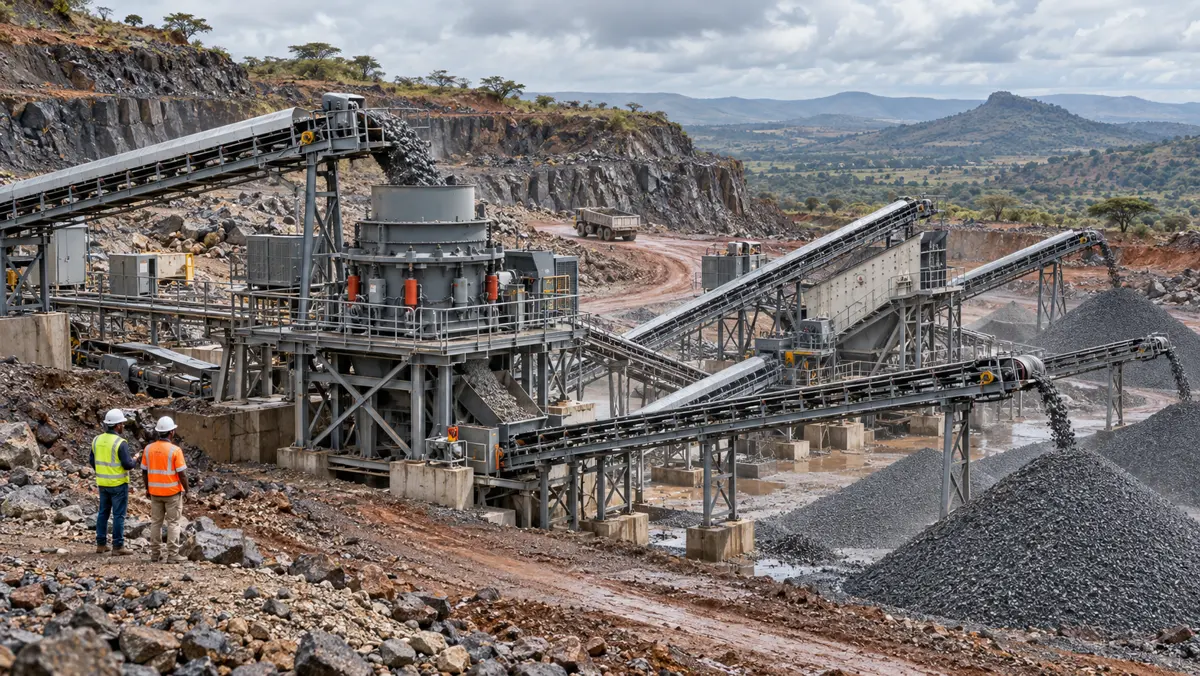
Information Gain: Compare a Defined Duty, Not a Cone Crusher Label
“Cone crusher supplier” searches often return product pages that describe a machine but leave the buyer with incompatible quotations. One offer may cover a cone and drive only; another may include a feeder, screen, conveyors, controls, platforms, spares, freight support, and commissioning supervision. Those offers do not describe the same project, even if both name a cone crusher.
The buyer-controlled comparison boundary is a shared quotation basis. It turns a generic equipment inquiry into a record of what each supplier has accepted, excluded, or left open. The process still begins with material and products: the crusher guide for hard ore and abrasive rock explains why hardness alone is not enough to select a crushing stage.
Start With the Basalt Source and the Aggregate Specification
Basalt is often considered for aggregate work, but a project should not infer a crusher duty from the rock name alone. The Ethiopian Roads Administration flexible-pavement manual notes weathered basalt gravel in some Ethiopian areas and emphasizes a range of material tests. That is a useful procurement lesson: submit the actual planned source and its variability, rather than asking a supplier to size a plant from “basalt” alone.
Give every supplier the same inputs before asking for a technical offer.
| Input | What the buyer should send | Why it affects the proposal |
|---|---|---|
| Material record | Representative sample details, source photos, current face condition, and available test results | Shows what is known about hardness, abrasiveness, weathering, moisture, fines, and variability |
| Feed basis | Typical and maximum feed size, top-size control, fines content, clay or contamination, and expected feed-rate pattern | Defines the feed preparation and whether a scalper, feeder, or other protection is needed |
| Product schedule | Required aggregate sizes, permitted oversize or fines, and the share expected from each product | Determines chamber, screen cuts, recirculating load, and whether a shaping stage belongs in the circuit |
| Production basis | Target tonnes per hour, operating hours, seasonal plan, and planned availability assumptions | Prevents a catalogue capacity from being treated as a site commitment |
| Existing interfaces | Primary crusher, screen, conveyors, controls, power, dust suppression, and layout constraints | Makes clear whether the cone is a replacement, a standalone package, or one part of a complete plant |
| Site and commercial boundary | Site photos, access and lifting constraints, power arrangement, transport route, requested delivery term, and local work division | Identifies installation, utility, transport, and handover items that may otherwise be omitted |
Do not turn a single test number into a universal prediction. If the material varies between benches or weathered and fresh zones, state that fact in the request. Ask every bidder to identify which sample, product schedule, and operating assumptions its recommendation uses.
Define the Cone Crusher’s Place in the Circuit
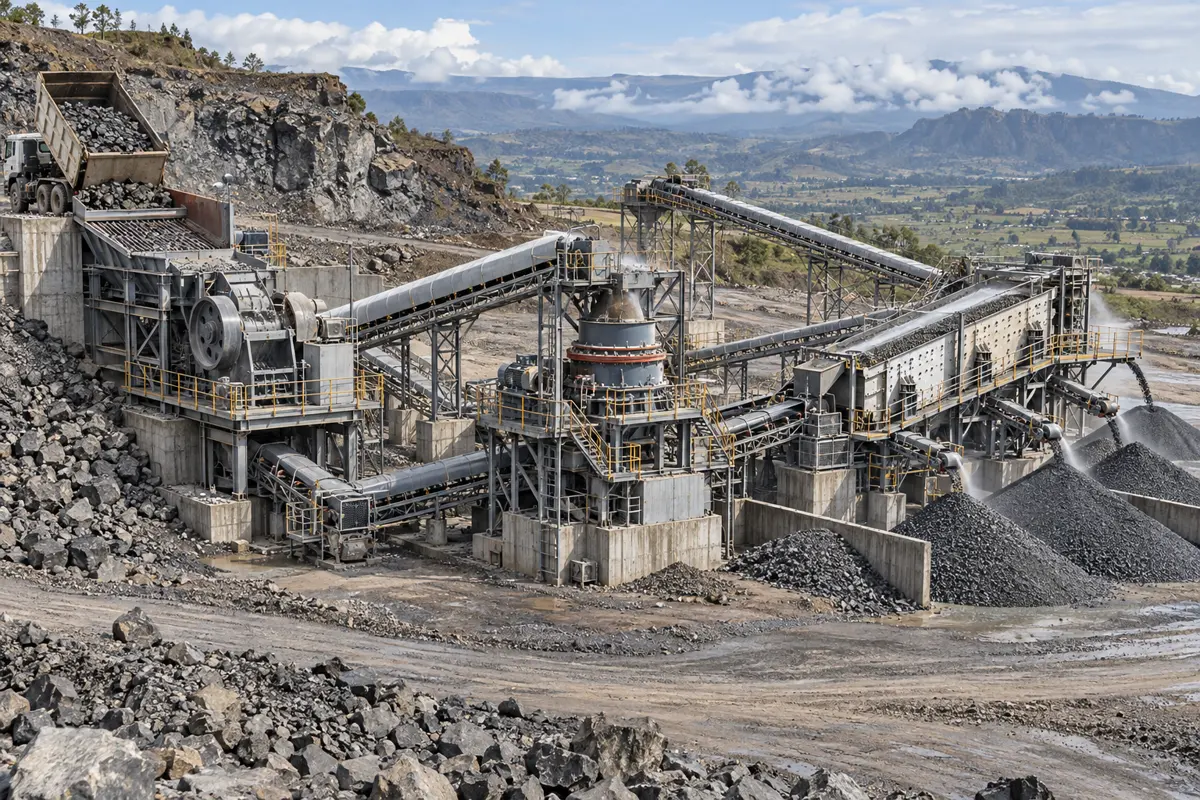
A cone crusher can be a secondary or tertiary reduction stage for suitable hard-rock feed, but its role must be stated before suppliers are compared. A supplier may quote different chamber arrangements, feed controls, screen duties, and recirculation methods depending on whether the cone follows a jaw, accepts screened material, feeds a final screen, or prepares feed for a shaping stage.
For a basalt aggregate project, draw the material flow—even as a simple annotated site sketch—and show where the proposed scope begins and ends. The complete stone crusher plant setup guide helps buyers identify the components that belong in a whole-plant discussion. When final shape or manufactured sand is part of the requirement, the cone crusher versus VSI crusher guide shows why a cone and VSI should be compared by circuit role rather than treated as interchangeable machines.
Questions Every Technical Proposal Should Answer
| Proposal item | Question to ask | Evidence to request |
|---|---|---|
| Crusher selection | Which chamber, setting range, feed arrangement, drive, and protection devices are proposed for this written duty? | Dated technical offer that repeats the submitted feed, products, throughput basis, and stated limitations |
| Feed preparation | What material size, grading, moisture, fines, and tramp-material conditions does the proposed cone assume? | Process description and layout marking the upstream feed control and any excluded preparation equipment |
| Circuit and screening | What screen decks, apertures, conveyors, transfers, and return flow are assumed? | General arrangement or flow drawing with physical interfaces and recirculation shown |
| Product basis | Which outputs are expected, under which material and operating assumptions, and how will they be checked? | Written acceptance or test basis; do not accept an unstated product claim |
| Wear and maintenance | Which liners, lubricants, tools, lifting provisions, guards, and critical spares are included or recommended? | Included-items list, recommended spares list, and maintenance-access drawing or description |
| Controls and utilities | Which motors, electrical panels, cables, safety circuits, water or dust interfaces, and local connections are in scope? | Single-line or interface list that names buyer work, supplier work, and third-party work |
The right comparison is not “which supplier promises the largest output.” It is “which supplier has addressed the same material, circuit, product, and operating boundary in writing.”
Use One Scope Matrix for All Suppliers
Supplier routes can include a direct manufacturer, an export supplier, an EPC participant, or a locally represented seller. Those descriptions do not prove equivalent technical or support scope. Compare the named contracting party, the people responsible for each stage, and the documents attached to the order—not a label such as “factory direct” or “local support.”
| Scope line | Confirm for every quotation | Risk if it is left vague |
|---|---|---|
| Equipment supply | Exact model, chamber, accessories, feeder, screen, conveyors, platforms, guards, and optional items | A lower price may describe a smaller equipment package |
| Engineering | Layout, foundation loads or interfaces where applicable, utility list, and documentation revision | Civil, electrical, or structural work may be discovered late |
| Freight and packing | Delivery term, packing, load dimensions, shipment documents, insurance boundary, and customs responsibility | The buyer may assume obligations that are not in the supply contract |
| Site assembly | Who provides lifting plan inputs, supervision, labor, tools, consumables, and safety coordination | Commissioning can stall at the handover between parties |
| Commissioning and training | Preconditions, duration, personnel, test material, operator training, and acceptance record | “Start-up support” can mean very different work in different offers |
| Warranty and parts | Warranty trigger, exclusions, serial-number parts identification, critical spares, and escalation contact | A parts or warranty question may have no contracted owner after shipment |
The broader crusher manufacturer comparison framework can help separate brand preference from documented project responsibility. For plant interfaces, use the feeder, crusher, screen, and conveyor selection guide alongside the supplier scope matrix.
Compare Price Only After the Inclusion List Is Aligned
An ex-works cone crusher number, a delivered equipment-package number, and a partly commissioned plant number are different commercial answers. The buyer should first align the technical and responsibility matrix, then list every remaining difference next to the price. That makes it possible to see whether a lower proposal omits a screen, electrical package, platforms, recommended spares, supervision, documentation, or another project-critical item.
Ask suppliers to record:
- The quotation revision and the material/product basis it answers.
- Included equipment and separately priced options.
- Exclusions, buyer-supplied items, and third-party interfaces.
- Delivery term, currency, validity, payment milestones, and what event starts the warranty.
- The installation, commissioning, training, and acceptance activities included in the amount.
- The documents that will be delivered before shipment and at handover.
No supplier should be rejected or selected solely because it uses a particular commercial route. Instead, assign each obligation to a named party and require written confirmation before the commercial comparison is finalized.
Check the Supplier’s Evidence Against the Actual Project
Evidence should be proportional to the order and the uncertainty. A proposal that repeats your feed data, sketches the circuit, explains exclusions, and names a technical contact is more useful than a glossy brochure with no traceable project basis. If a supplier offers testing, a factory inspection, or a commissioning plan, ask what each step can and cannot verify.
A pre-shipment check can confirm the order-specific machine, visible build, documents, packing, and recorded exceptions. It cannot by itself prove site production, aggregate grading, liner life, or plant availability without the actual material and installed circuit. Use the factory acceptance test checklist as a boundary-setting example; adapt the checklist to the proposed cone crusher and contract scope.
Buyer Checklist Before Shortlisting a Cone Crusher Supplier

Before a final comparison, confirm that the project team has:
- Sent one controlled material-and-product record to every bidder.
- Marked whether the basalt sample is fresh, weathered, variable, wet, fines-bearing, or otherwise limited by the available evidence.
- Defined the cone crusher’s role and all upstream and downstream interfaces.
- Used one inclusion/exclusion matrix for equipment, utilities, delivery, assembly, commissioning, training, and parts.
- Asked for named contacts and a written responsibility path for technical clarification, shipment, commissioning, warranty, and parts.
- Separated a stated performance or acceptance basis from a brochure claim.
- Compared price only after marking scope differences and third-party work.
- Preserved the quotation revision, drawings, exceptions, and clarifications with the procurement file.
Send a Comparable Project Brief Before Requesting Quotations
MVSI can review the project inputs needed for a like-for-like cone crusher comparison. Send the raw material description and representative sample information, maximum and typical feed size, required output sizes, target capacity and operating hours, current plant or site photos, screen and conveyor interfaces, site utilities, requested delivery boundary, and budget range. Those inputs make it possible to identify what a supplier must confirm before its offer can be compared fairly.
Frequently Asked Questions
Is a cone crusher suitable for basalt aggregate?
A cone crusher can be a suitable reduction stage for a basalt aggregate circuit when the proposed feed, chamber, screen arrangement, product plan, and operating duty match the actual material evidence. The rock name alone is not enough to select a specific model or configuration.
What information should I send to cone crusher suppliers?
Send representative material information, typical and maximum feed size, moisture and fines condition, product sizes, required capacity, operating hours, a process sketch or site photos, existing interfaces, utilities, delivery boundary, and budget range. Ask each supplier to repeat its assumptions in the offer.
Why do cone crusher quotations vary so much?
They may cover different chambers, feed arrangements, screens, conveyors, controls, platforms, spares, freight terms, commissioning, and warranty boundaries. Compare a common inclusion/exclusion matrix before comparing the totals.
Do I need a material test before buying a cone crusher?
The depth of testing depends on the project risk and available material evidence. Where the source is variable or the product specification is demanding, representative samples and documented test results help keep supplier assumptions visible. A supplier should state what evidence it relied on.
Should I compare supplier capacities directly?
Only after confirming that every stated capacity uses the same material, feed grading, setting, product requirement, screen duty, operating basis, and circuit. A headline number without those conditions is not a like-for-like project comparison.
Does a cone crusher quotation include screens and conveyors?
Not necessarily. Some quotations cover a base crusher, while others include a wider package. Require an itemized scope and a layout showing where the supplier’s responsibility starts and ends.
How should I compare a direct manufacturer and another supplier route?
Compare the actual order evidence: technical proposal, included equipment, named contacts, documents, delivery responsibilities, commissioning method, warranty terms, and parts path. A route label alone does not establish technical capability or support coverage.
What should be agreed before commissioning?
Agree the completed installation, electrical and utility interfaces, safety checks, test material, operator availability, commissioning tasks, acceptance basis, documents, exceptions process, and the responsibility of each party. Put the agreed boundary in the contract or order records.