Table of Contents
- Which transport facts must be confirmed before comparing offers?
- Separate transport dimensions from operating dimensions
- Reconcile every removed component with the packing list
- Compare the complete move and reassembly scope
- When is a transport proposal sufficiently defined?
- Frequently asked questions
- Is a catalogue weight enough for a freight quotation?
- Are transport dimensions the same as working dimensions?
- Does a folded conveyor always stay on the machine?
- Does a smaller main unit mean fewer transport loads?
- Who should confirm the route and vehicle arrangement?
- Should reassembly be included in the transport comparison?
- Request the cargo schedule before approving the move scope
- Sources and technical references
What Transport Data Should a Mobile Jaw Crusher Quote Include?
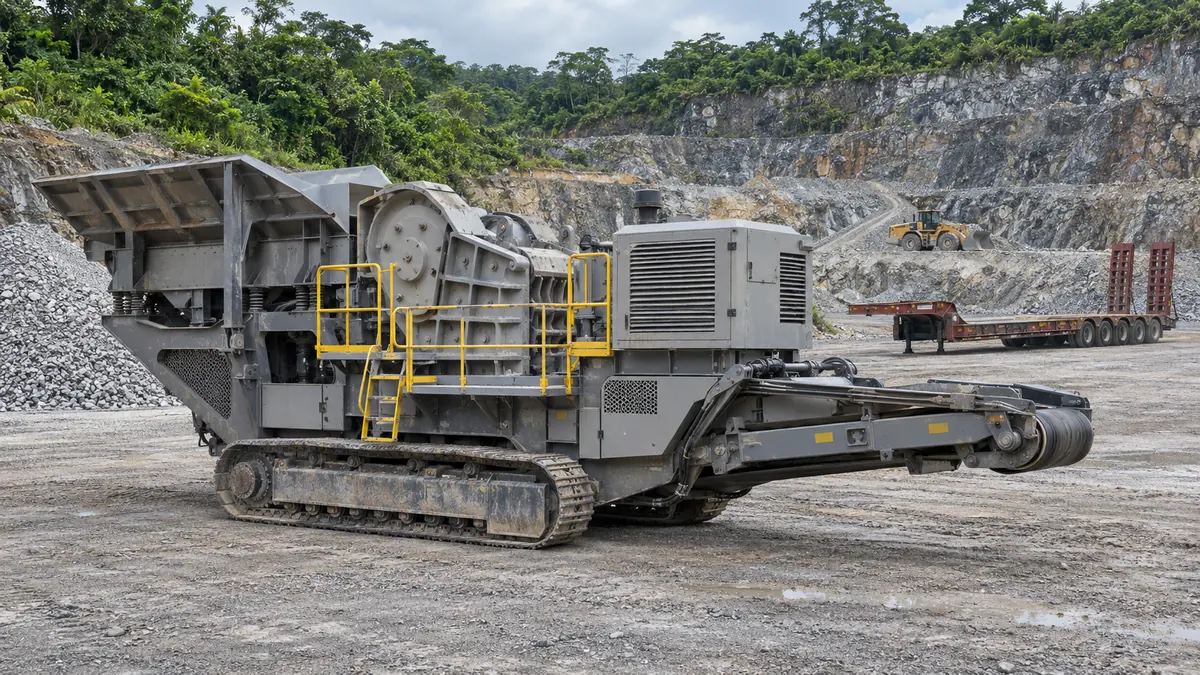
A mobile jaw crusher quotation should include transport dimensions and mass for the exact supplied configuration, a list of components removed or folded for travel, and a packing schedule covering every separate item. Ask the supplier to link those records to the equipment drawing and identify who handles dismantling, packing and reassembly. Give the complete schedule to the carrier before accepting a freight comparison. A catalogue weight or a compact transport photograph is insufficient when options, loose parts or the destination route remain undefined; keep the transport proposal provisional until those gaps are resolved.
By MVSI Company. Published 2026-11-18.
Which transport facts must be confirmed before comparing offers?
Compare the same delivered equipment in the same transport state. Start with the supplier’s cargo schedule, then have the carrier assess the actual consignment and route.
| Decision fact | Request in the quotation | Boundary |
|---|---|---|
| Equipment identity | Model, offered options and drawing revision | A model-family name does not identify the shipped configuration |
| Main unit envelope | Transport length, width and height in mm or m, with folded and removed items identified | Use transport state, not operating position |
| Mass basis | Main-unit transport mass plus packed gross mass in kg or t for every separate item | State what is included and whether values are preliminary or verified |
| Separate pieces | Piece count, item IDs, dimensions, packed mass and handling documents | Include removed equipment, accessories, spares and packing |
| Completion boundary | Carrier review and named owners for preparation, unloading and reassembly | Equipment supply alone does not establish a complete move scope |
The MVSI mobile primary jaw crusher page is the relevant product-family enquiry route. Its table labels transport dimensions as requiring teardown. Ask for the current offered model and a written breakdown of that teardown; the page alone does not establish which items remain attached or how the complete shipment will be carried.
Separate transport dimensions from operating dimensions
A transport envelope describes a particular travel arrangement. It does not define the space needed to unfold, feed, discharge or service the machine after arrival.
Sandvik’s QJ341 technical specification, page 2, lists transport and operating dimensions separately and qualifies its weight and dimension data as applying to standard units. This illustrates why a buyer should request the correct drawing and configuration. It supplies no dimension or weight for an MVSI machine.
Ask for side and end views showing the maximum extents in the proposed transport state. Identify whether height is measured from the machine’s own support surface or from another stated reference. For a machine carried on a trailer, have the carrier assess the loaded vehicle arrangement rather than treating the machine height as the complete travelling height. For a towed arrangement, request the appropriate configuration and connection data instead of assuming the same low-bed plan applies.
Keep chassis selection separate from shipment approval. The track-mounted versus tire-mounted guide addresses site mobility and purchase trade-offs; either route still needs its own configuration-specific transport review.
Reconcile every removed component with the packing list
A smaller main-unit envelope may leave additional pieces to transport and reconnect. Require the supplier to reconcile the delivered equipment list, transport drawing and packing list before comparing the number or cost of loads.
For each major assembly, ask whether it stays attached, folds or is removed. Kleemann’s MC 110 EVO2 technical data, page 2, distinguishes basic-plant and maximum-configuration transport mass; its side-conveyor footnote says that conveyor remains attached during transportation. This is a model-specific example, not permission to assume the same arrangement on another plant.
- Assign an item ID to the main unit and each loose assembly, crate or accessory package; cross-reference the relevant drawing and packing-list entry.
- Record packed dimensions and gross mass for each piece, identifying any supports, protective packing or loose hardware included in that value.
- Request supplier-issued handling information, including relevant centre-of-gravity, lifting and securing-point information for the proposed state; pass it to the responsible transport and lifting parties.
- Record connection labels, protected interfaces, required fasteners and the documents needed to restore removed items after delivery.
- Resolve missing or preliminary entries before the carrier finalizes its proposal; reconcile the final packing list before dispatch.
An overall machine mass should not be copied into every cargo line, and a total shipment mass does not identify the heaviest individual piece. Likewise, adding piece masses checks the schedule’s arithmetic but does not establish how they can be combined into loads. Leave load planning and handling approval with the responsible specialists using the released supplier data.
Compare the complete move and reassembly scope
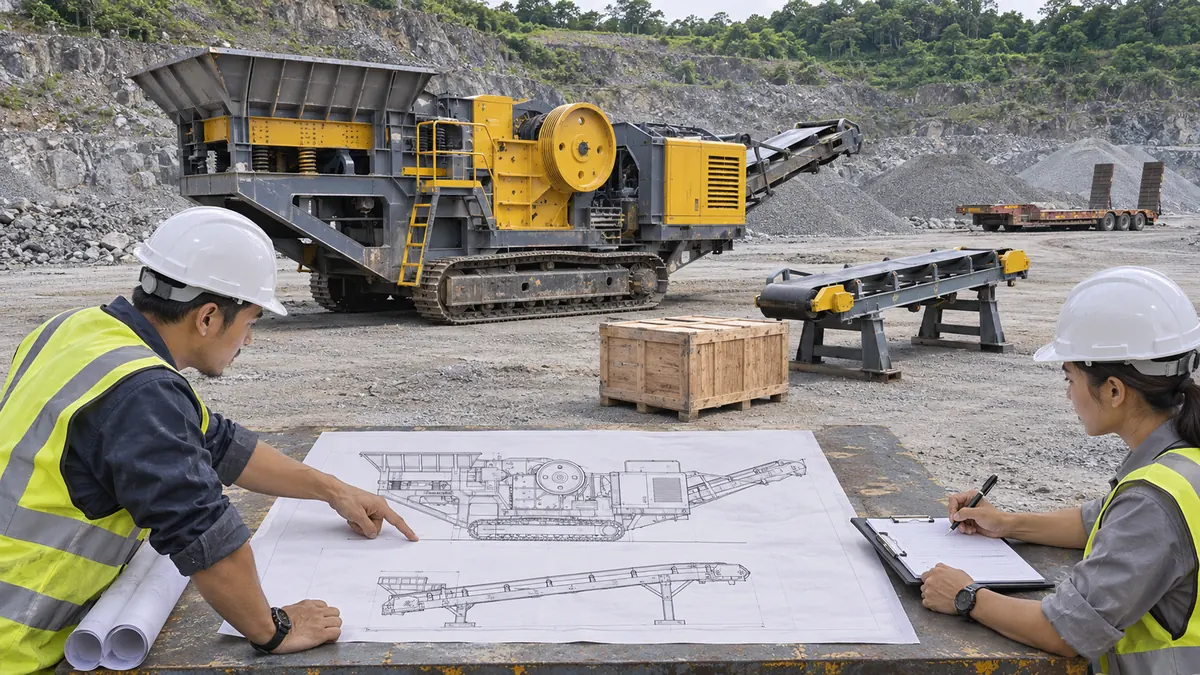
Compare transport offers through the same agreed delivery point and equipment state. Include preparation and restoration tasks when they are required, rather than comparing a freight line against a complete relocation package.
| Scope item | Question to close before order |
|---|---|
| Factory preparation | Who folds or dismantles the equipment, protects interfaces, packs loose items and issues the final cargo documents? |
| Transport proposal | Who checks the exact cargo, route, ports, vehicle or shipping arrangement and applicable transport requirements? |
| Delivery and unloading | What arrival equipment and handling documents are needed, and which party provides them? |
| Reassembly | Who reconnects removed equipment, supplies specified hardware and checks the restored configuration? |
| Handover | Which inspections and functional checks are required before release, who performs them and what records are supplied? |
Request separate quotations or stated inclusions for packing, handling, freight, site lifting equipment, reassembly labour and any agreed supervision. Record exclusions and their owners. No universal freight allowance or setup duration is assumed here; an unresolved task is a cost input still to obtain.
For broader purchasing checks, use the mobile-crusher import quotation checklist. For site-side engineering and access responsibilities, use the jaw crusher installation scope guide. Keep the transport register attached to those wider scope documents.
When is a transport proposal sufficiently defined?
A proposal is suitable for detailed carrier review when the exact configuration, piece schedule and supporting drawings agree. It remains unsuitable for final freight comparison when a material dimension, mass, loose item or destination task is unresolved.
Illustrative comparison, not a customer case: Offer A lists one catalogue weight and says the conveyor is removed for shipment, but supplies no separate conveyor entry. Offer B identifies the main unit, the removed module and the hardware crate, with drawing references and packing data for each. Offer B gives the carrier a more complete basis, but still needs route and load review; this example assumes no dimensions, freight price, load count or approval.
A complete assembly can remain a candidate when its documented transport arrangement is accepted by the responsible parties. A split arrangement can remain a candidate when every piece and the arrival restoration work are defined. Reject neither solely from a photograph, and do not choose the apparently smaller package before accounting for its loose pieces and reassembly requirements. Follow the exact supplier instructions; this comparison is not a procedure for loading or dismantling equipment.
Frequently asked questions
Use these questions to close transport-data gaps before approving a mobile jaw crusher purchase.
Is a catalogue weight enough for a freight quotation?
It can support an initial enquiry, but the final comparison needs the exact configuration, mass basis and a schedule for all separate pieces. Ask which values are preliminary and how the final shipment data will be confirmed.
Are transport dimensions the same as working dimensions?
No. Transport dimensions describe the stated travel configuration. Request separate operating and access information for deployment, feeding, discharge and maintenance at the destination.
Does a folded conveyor always stay on the machine?
Do not assume so. Ask the supplier to state whether each assembly stays attached, folds or is removed for the exact offered model and options, and reconcile that answer with the packing list.
Does a smaller main unit mean fewer transport loads?
Not necessarily. Removed assemblies and accessories still belong in the shipment schedule. The carrier must assess their dimensions, masses and compatible load arrangements before confirming the transport plan.
Who should confirm the route and vehicle arrangement?
The responsible carrier or transport specialist should review the exact cargo and route using current supplier documents. The quotation should identify who obtains any further information or approvals needed for that move.
Should reassembly be included in the transport comparison?
Include its scope and cost when equipment is dismantled for shipment. Identify who supplies labour, handling equipment, specified hardware, reconnection checks and the records needed before the restored machine is released.
Request the cargo schedule before approving the move scope
Choose an offer that connects the supplied configuration to every transported piece and assigns the work needed at both ends. Resolve a missing cargo entry or reassembly owner before treating freight prices as comparable.
For a mobile jaw proposal, contact MVSI through its listed WhatsApp or email route. Send raw material, maximum and typical feed size, required output size, capacity in t/h, project country, site photos and budget range. Add destination port and final delivery location, known access constraints, expected relocation frequency, proposed equipment options, available unloading resources and the delivery boundary you want quoted. Request the current transport drawing, piece-by-piece packing schedule and dismantling/reassembly scope for the offered configuration.
Sources and technical references
Sources retrieved 2026-11-18. Other OEM documents illustrate transport-data distinctions; they do not establish MVSI dimensions, options, transport approval or supplied services.
- MVSI Mobile Primary Jaw Crusher, linked above: product-family scope and the teardown qualification beside transport dimensions.
- Sandvik QJ341 Technical Specification, copyright 2024, page 2, linked above: separate operating/transport dimensions and standard-unit qualification.
- Kleemann MOBICAT MC 110 EVO2 Technical Data, page 2 and side-conveyor footnote, linked above: configuration-dependent transport mass and a model-specific attached-conveyor arrangement.