Table of Contents
- Information Gain: Select a Circuit From the Actual Limestone, Not Its Name
- Start With a Limestone Record That Describes the Quarry Source
- Where an Impact Crusher Can Belong in a Limestone Aggregate Circuit
- Questions the Proposed Impact-Crusher Route Should Answer
- Compare an Impact Route With Other Limestone Crushing Routes
- Put Wear, Access, and Safety Into the Quotation Scope
- Compare Commercial Offers Only After Technical Scope Is Aligned
- Buyer Checklist Before Selecting an Impact Crusher for Limestone
- Send a Defined Limestone Project Brief Before Requesting a Proposal
- Frequently Asked Questions
- Is an impact crusher suitable for limestone aggregate?
- Why should a limestone project test or document the source rock?
- Do I need a jaw crusher before an impact crusher?
- What information should I send before asking for an impact crusher quotation?
- How should I compare impact crusher capacity claims?
- What wear items should be included in an impact crusher offer?
- Does an impact crusher quotation include screens and conveyors?
- What should be agreed before impact-crusher commissioning?
An impact crusher can be a practical choice for a limestone aggregate project in Pakistan when the representative rock, maximum feed, target sizes, fines limit, moisture and clay condition, and required operating duty suit the proposed rotor and complete circuit. It should not be selected from the word “limestone” alone. Punjab Mineral Company notes that limestone quality varies by deposit and identifies the harder Margallah limestone for road and concrete work, which is a reminder to verify the actual source. Before buying, compare a jaw-plus-impact circuit, a jaw-plus-cone circuit, and any screen or recirculation arrangement using the same sample record, product schedule, inclusion list, wear-plan assumptions, and acceptance boundary.
Information Gain: Select a Circuit From the Actual Limestone, Not Its Name
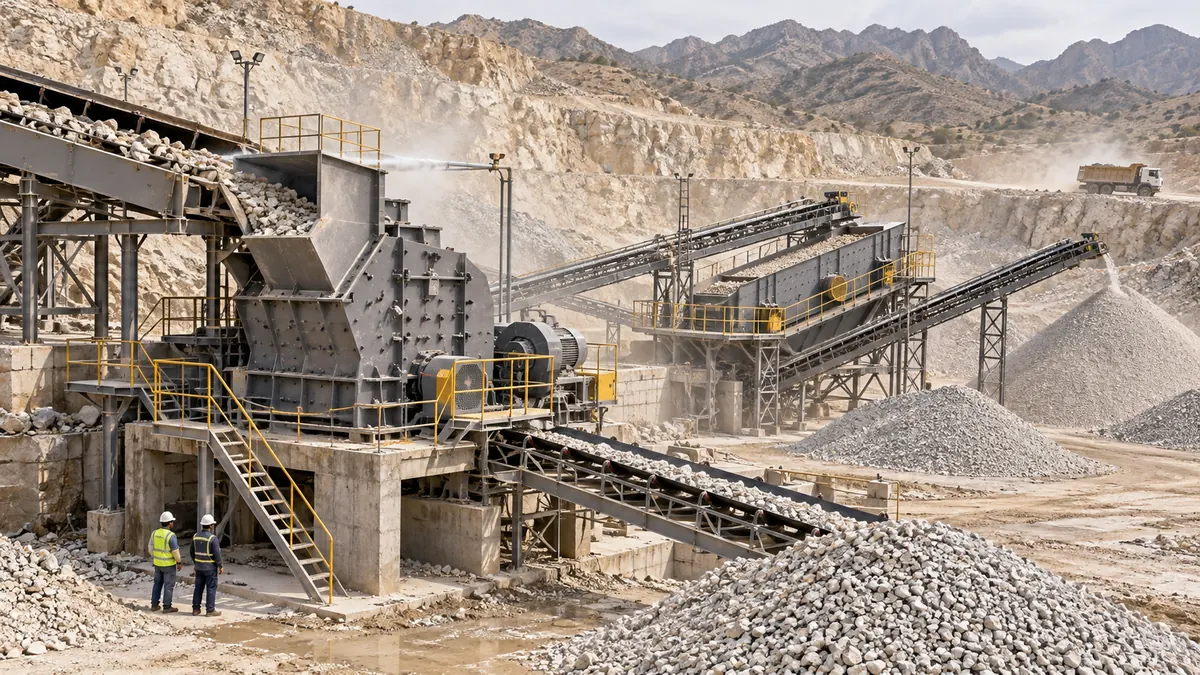
Many impact-crusher pages stop at the statement that limestone is suitable for impact crushing. That does not resolve a purchase decision. One quarry may have a relatively uniform, clean feed; another may have a harder zone, weathered bands, fines, moisture, clay seams, large shot rock, or a product specification that demands a different circuit and wear plan.
The useful comparison boundary is a shared material-and-product record. Give every supplier the same representative source information, feed limits, product schedule, operating basis, and scope map. Then ask each bidder to show what its proposed crusher, screen, conveyors, access provisions, wear items, and controls assume. The jaw crusher versus impact crusher limestone guide is a related starting point; this page focuses on the project evidence and purchase scope needed before an impact-crusher route is selected.
Start With a Limestone Record That Describes the Quarry Source
Limestone is a material family, not a complete duty description. Punjab Mineral Company says limestone deposits in Punjab have varying qualities and identifies Margallah limestone as a harder material used in roads and concrete work. That public context does not determine a particular project’s machine selection. It does show why a buyer should obtain source-specific evidence before asking for a firm technical proposal.
| Project input | What to document | Decision it supports |
|---|---|---|
| Source and variability | Quarry face photos, bench or stockpile location, representative sample identity, weathered versus fresh zones, and available test results | Keeps a proposal tied to the intended rock, rather than a generic limestone assumption |
| Feed condition | Maximum and typical feed size, feed grading, fines, moisture, clay, and any contamination or metal risk | Defines primary reduction, scalping, feed control, and protection requirements |
| Product schedule | Required aggregate sizes, permitted fines, shape expectation, and any road-base, concrete, or other specification | Determines screen cuts, recirculation, and whether the impact stage has the right role |
| Production basis | Target capacity, operating hours, seasonal plan, and availability assumptions | Prevents a catalogue figure from being treated as a site commitment |
| Existing interfaces | Current feeder, jaw, screen, conveyors, power, dust control, foundations, and control system | Reveals whether the purchase is a replacement, a new stage, or a whole plant package |
| Site constraints | Access, lifting, drainage, power arrangement, dust and water interfaces, space, and site photos | Exposes work that can be omitted from a machine-only quotation |
If the source varies across the quarry, mark that uncertainty in the request. Do not ask a supplier to turn a single unverified rock name into a capacity, wear-life, or final-product guarantee.
Where an Impact Crusher Can Belong in a Limestone Aggregate Circuit
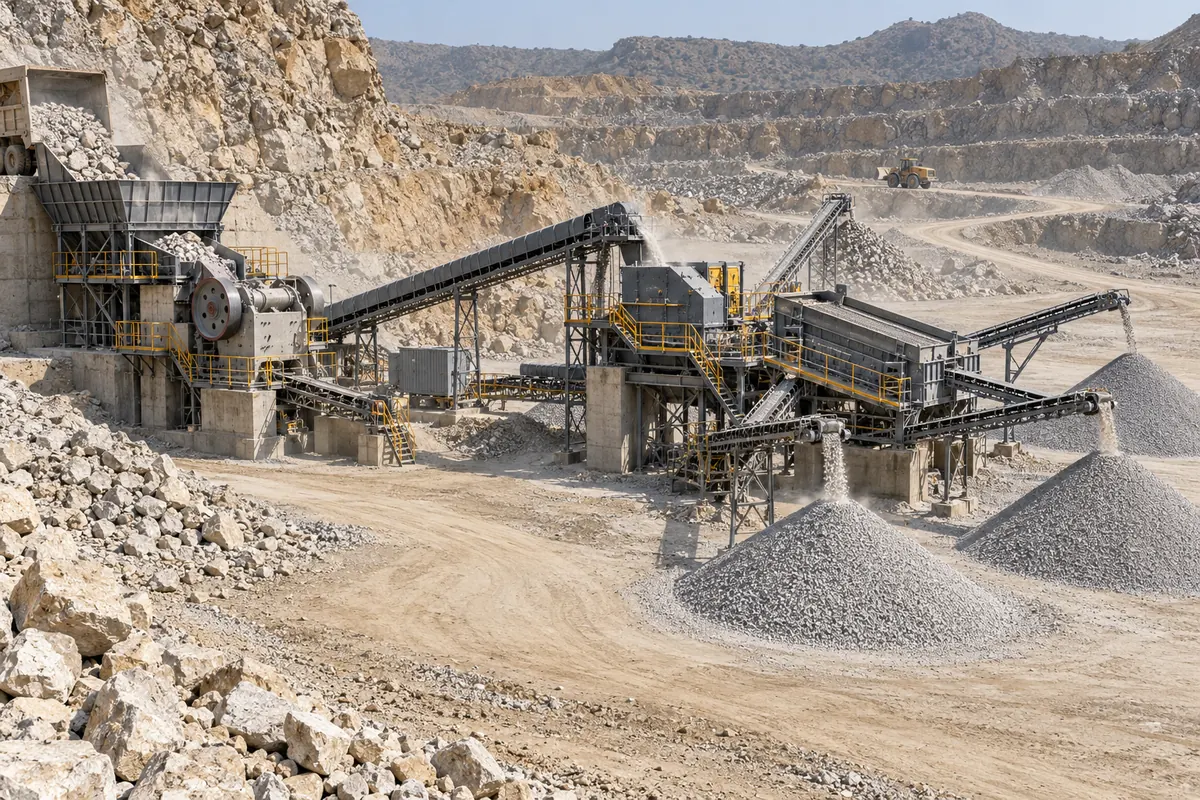
An impact crusher can serve as a primary, secondary, or shaping-related reduction stage only when its feed preparation, reduction duty, product target, and protection arrangement fit the submitted material record. The precise role depends on the whole circuit, not merely on the crusher name. A jaw may be needed ahead of it for run-of-quarry material; a screen and return conveyor may be needed after it to control products and oversize; another route may make more sense if the feed or final product demands it.
For every proposal, draw a simple material path from quarry feed to stockpile. The crushing plant flow-sheet guide for granite, basalt, limestone, and river stone explains why the process flow must follow material and product requirements. The feeder, crusher, screen, and conveyor guide helps buyers identify the physical interfaces that a crusher-only offer can leave open.
Questions the Proposed Impact-Crusher Route Should Answer
| Circuit item | Question to ask | Evidence to request |
|---|---|---|
| Feed preparation | What maximum size, grading, moisture, fines, and tramp-material condition does the impact crusher assume? | Process description and layout that marks the feeder, scalper, primary stage, and any excluded preparation equipment |
| Crusher duty | What rotor, chamber, setting range, drive, feed arrangement, and protection devices are proposed for the written duty? | Technical offer that repeats the actual feed and product assumptions, including limits and exclusions |
| Screening and return flow | Which deck count, apertures, conveyors, and return paths are required to make the requested products? | General arrangement or flow drawing showing every stream and connection |
| Wear and maintenance | Which blow bars, liners, tools, lifting points, guards, and recommended critical spares are included? | Itemized wear and spares list plus a maintenance-access description or drawing |
| Product and acceptance basis | What products are expected under which material and operating assumptions, and how will they be checked? | Written test or acceptance basis; avoid accepting an unstated brochure result |
| Utilities and controls | Which motors, panels, cables, interlocks, dust interfaces, water connections, and local work are in scope? | Interface list that assigns supplier, buyer, and third-party responsibilities |
The right comparison is not “which impact crusher sounds most powerful.” It is “which proposal has addressed the same rock record, circuit, product target, and responsibility boundary in writing.”
Compare an Impact Route With Other Limestone Crushing Routes
An impact crusher should be compared as a complete process route. A lower equipment price can become an incomplete comparison if one quotation includes a feeder, scalper, screen, discharge conveyors, access platform, wear package, controls, or commissioning support while another covers a bare machine.
| Route to compare | When it should be examined | Boundary to verify before deciding |
|---|---|---|
| Jaw plus impact | The project needs primary feed preparation followed by impact reduction and screened aggregate products | Confirm the jaw discharge, feed control, impact duty, screen cuts, return flow, and access for wear replacement |
| Jaw plus cone | The material record, required reduction stages, or aggregate plan may favor a cone-based secondary route | Compare the same feed, screen duty, product schedule, controls, spares, and acceptance assumptions—not just the crusher model |
| Mobile jaw plus mobile impact | The project needs relocation flexibility and has access, transport, and operating constraints to define | Confirm site moves, material handling between units, screen arrangement, power or fuel boundary, and service responsibilities |
| Existing primary plus new impact stage | A quarry is adding capacity or changing products while retaining installed upstream equipment | Document the true feed arriving at the new stage, existing controls, foundation or support conditions, and tie-in downtime |
The mobile jaw crusher versus mobile impact crusher comparison is useful when mobility is part of the decision. If the project needs to compare several crusher types at once, use the jaw, cone, impact, or VSI selection guide to keep each machine in its circuit role instead of treating them as interchangeable.
Put Wear, Access, and Safety Into the Quotation Scope
Wear does not become a predictable number just because the source is called limestone. Abrasiveness, feed preparation, contamination, moisture, rotor selection, throughput pattern, and operating discipline all affect the maintenance plan. The purchase record should state the supplied wear set, recommended initial spares, safe access, lifting arrangements, guard arrangement, lockout points, and the party responsible for commissioning checks.
| Scope line | Confirm before order | Risk if it is vague |
|---|---|---|
| Wear components | Initial blow bars and liners, recommended critical spares, identification method, exclusions, and price validity | Startup or first maintenance can be delayed while the buyer clarifies parts scope |
| Access and lifting | Platforms, stairs, handrails, lifting points, tools, clearance, and local lifting responsibility | Safe wear changes and inspections may not be practical after installation |
| Guarding and controls | Drive guards, emergency stops, interlocks, control panel scope, cable boundary, and lockout approach | A technically complete crusher can remain incomplete as an operating package |
| Dust and material transfer | Chutes, transfer interfaces, dust collection or suppression responsibility, and cleanup access | Fines, dust, and transfer problems may be assigned late between suppliers |
| Commissioning | Preconditions, test material, personnel, duration, operator training, records, and acceptance procedure | “Commissioning included” can mean different work in different quotations |
Use the daily stone crusher plant maintenance checklist to plan the operating records that will support later inspections. It is a maintenance framework, not a substitute for the selected impact crusher’s current supplier instructions.
Compare Commercial Offers Only After Technical Scope Is Aligned
An ex-works impact crusher, a delivered crusher package, and a partly commissioned aggregate line are not comparable prices. First align the material and circuit basis, then mark the inclusions and exclusions beside every commercial offer. This exposes whether a lower figure leaves out a screen, electrical package, platform, dust interface, freight boundary, spares, supervision, or documents that the project still needs.
Ask each supplier to state:
- The quotation revision and the material/product basis it answers.
- Included equipment, separately priced options, and excluded interfaces.
- Drawings, data sheets, manuals, and document revisions to be delivered before shipment and at handover.
- Delivery term, packing, load information, insurance boundary, and customs responsibility.
- Assembly, commissioning, training, and acceptance work included in the amount.
- Warranty start point, exclusions, parts identification, and named path for technical questions after delivery.
No route should be chosen because it is described as “factory direct,” “local,” or “turnkey” without documentation. Compare the named contracting party, written responsibilities, and evidence attached to the actual offer.
Buyer Checklist Before Selecting an Impact Crusher for Limestone

Before a final selection, confirm that the team has:
- Defined the representative limestone source and noted any variable, weathered, wet, fines-bearing, or clay-bearing material.
- Sent the same feed record, product schedule, capacity basis, operating plan, and site constraints to every bidder.
- Drawn where the impact crusher starts and ends in the feeder, crusher, screen, conveyor, and stockpile circuit.
- Requested the proposed rotor, chamber, feed limits, protection arrangement, screen duty, and product checks in writing.
- Compared included wear components, critical spares, access, lifting provisions, guards, controls, dust interfaces, and training.
- Aligned delivery, packing, assembly, commissioning, warranty, and local-work boundaries before comparing prices.
- Recorded the acceptance basis and the limits of any stated product or performance expectation.
- Kept supplier quotations, drawings, clarifications, and exceptions with the procurement file.
Send a Defined Limestone Project Brief Before Requesting a Proposal
MVSI can review the project inputs needed to compare impact-crusher routes on a like-for-like basis. Send the raw material description and representative sample information, maximum and typical feed size, required output sizes, target capacity and operating hours, current plant or site photos, existing feeder/screen/conveyor interfaces, power and dust-control conditions, requested delivery boundary, and budget range. Those inputs make the technical and commercial assumptions visible before a proposal is evaluated.
Frequently Asked Questions
Is an impact crusher suitable for limestone aggregate?
An impact crusher can be suitable when the actual limestone, feed preparation, target products, screen circuit, wear plan, and operating duty fit the proposed configuration. A rock name alone cannot confirm a specific model or plant arrangement.
Why should a limestone project test or document the source rock?
Limestone can vary between deposits and even within quarry zones. A representative material record helps suppliers make their assumptions visible and helps the buyer compare proposals without treating all limestone as the same crushing duty.
Do I need a jaw crusher before an impact crusher?
It depends on the run-of-quarry feed, top size, feed control, required reduction stages, and complete circuit. Ask suppliers to show exactly how material reaches the impact crusher and which upstream equipment is included or excluded.
What information should I send before asking for an impact crusher quotation?
Send raw material and sample information, typical and maximum feed size, moisture and fines condition, output sizes, capacity and operating-hour basis, site photos, existing equipment interfaces, utilities, delivery boundary, and budget range.
How should I compare impact crusher capacity claims?
Compare only offers that use the same material, feed grading, moisture/fines condition, reduction duty, product schedule, screen arrangement, recirculation, and operating basis. A capacity figure without those conditions is not a like-for-like comparison.
What wear items should be included in an impact crusher offer?
Ask for an itemized list of the initial wear components, recommended critical spares, exclusions, parts identification method, access and lifting provisions, and the operating assumptions behind the recommendation. Do not infer a fixed service life from the rock name.
Does an impact crusher quotation include screens and conveyors?
Not necessarily. Some offers are for a crusher only, while others cover a wider package. Require an inclusion/exclusion matrix and a process layout that shows every feeder, screen, conveyor, transfer, and interface.
What should be agreed before impact-crusher commissioning?
Agree the completed installation, utilities, controls, safety checks, test material, operator availability, commissioning tasks, training, documents, acceptance basis, exceptions process, and the responsibility of each party.