Table of Contents
- Why Daily Maintenance Matters in a Crusher Plant
- Safety and Record-Keeping Come First
- Daily Stone Crusher Plant Maintenance Checklist
- Start-Up Checks Before Feeding Rock
- Feeder and Hopper Maintenance
- Primary Crusher Daily Checks
- Secondary, Tertiary, and VSI Crusher Checks
- Vibrating Screen Maintenance
- Conveyor and Transfer Point Maintenance
- Weekly and Monthly Maintenance Items
- Spare Parts and Tools to Keep on Site
- Common Maintenance Mistakes
- What to Send When Asking for Maintenance Support
- Conclusion
- FAQ
- What should be included in a stone crusher plant maintenance checklist?
- How often should a crusher plant be inspected?
- What causes unexpected downtime in a stone crusher plant?
- How do I know when crusher wear parts need replacement?
- Why does my vibrating screen need frequent maintenance?
- How can I reduce conveyor maintenance in a crusher plant?
- Should maintenance be different for granite, basalt, limestone, and river stone?
- What information should I provide before requesting crusher plant maintenance support?
Stone Crusher Plant Maintenance Checklist for Daily Operation
A stone crusher plant maintenance checklist should cover safety lockout, feeder condition, crusher chamber, lubrication, screen media, conveyor belts, transfer points, dust control, electrical devices, and spare parts before production starts. The goal is to find loose bolts, abnormal wear, oil leaks, blocked chutes, torn belts, damaged guards, and screen problems before they stop the plant. Quarry operators should inspect the line at the same time every shift, record small faults, and stop the machine when a fault can create safety risk or serious equipment damage. A disciplined daily checklist protects uptime, product quality, and cost per ton.
Why Daily Maintenance Matters in a Crusher Plant
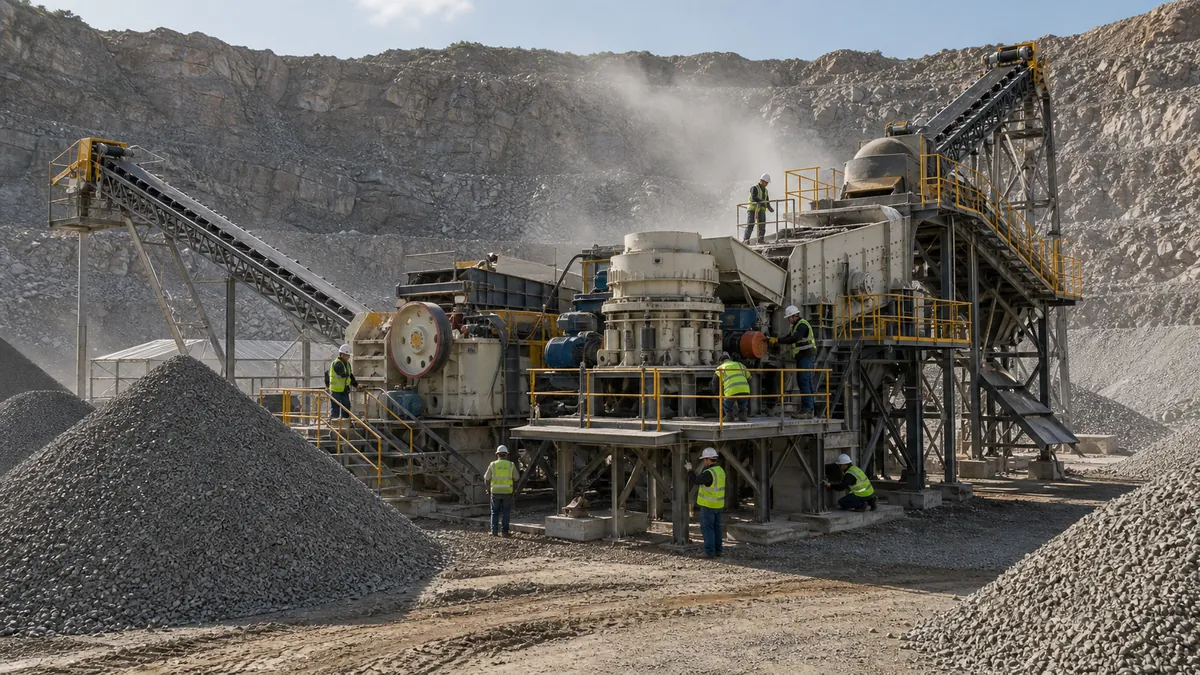
A stone crusher plant works under impact load, vibration, dust, abrasive rock, and changing feed conditions. Even a well-designed plant can lose output quickly if a blocked chute, loose screen mesh, worn belt cleaner, low oil level, or damaged guard is ignored for one shift. Daily maintenance is not only a repair activity. It is the routine that keeps the feeder, crusher, screen, conveyor, electrical system, and dust control working as one process.
For quarry owners and aggregate producers, the best maintenance checklist should be short enough for operators to use every day, but detailed enough to catch the faults that cause shutdowns. If you are still selecting the full plant configuration, compare this maintenance guide with our article on how to choose a feeder, crusher, screen, and conveyor for a quarry and the complete stone crusher plant setup guide.
Safety and Record-Keeping Come First
Before any inspection, the plant team must follow local safety rules, lockout procedures, and the equipment manual. Never enter a crusher chamber, screen box, transfer chute, or conveyor area while the equipment can start unexpectedly. Maintenance should be done by trained personnel with the correct tools, guards, communication, and permit process.
A useful daily checklist should record:
- Inspection date, shift, operator, and machine hours.
- Abnormal sound, vibration, temperature, oil level, leakage, dust, or spillage.
- Wear-part condition and estimated remaining life.
- Corrective actions completed during the shift.
- Faults that need planned shutdown, spare parts, or supplier support.
Written records help the owner see patterns. For example, repeated belt tracking adjustments may point to a pulley, loading chute, or frame alignment problem. Repeated screen blinding may point to moisture, clay, wrong mesh opening, or insufficient screen area.
Daily Stone Crusher Plant Maintenance Checklist
Use the following checklist as a practical starting point. The final checklist should be adjusted to the actual machine model, motor power, material hardness, feed size, output sizes, working hours, and site conditions.
| Plant Area | What to Check Daily | Stop or Action Trigger |
|---|---|---|
| Site and safety | Access roads, walkways, handrails, guards, warning signs, emergency stops, pull cords, lighting, housekeeping | Missing guard, unsafe access, failed emergency stop, heavy spillage near moving equipment |
| Hopper and feeder | Hopper blockage, feeder liner wear, grizzly opening, springs, bolts, drive condition, steady feed rate | Bridging, broken spring, loose feeder bolts, uneven feed causing crusher choking |
| Primary crusher | Jaw plates or impact parts, chamber blockage, discharge setting, bearing temperature, abnormal noise, flywheel and belt guard | Metal object in chamber, loose jaw plate, high bearing temperature, abnormal vibration |
| Secondary crusher | Cone liners or impact wear parts, oil pressure, oil temperature, hydraulic system, CSS setting, chamber feed level | Low oil pressure, leakage, irregular product size, high vibration, serious liner damage |
| VSI or shaping stage | Rotor, tips, anvils, liners, cascade feed, vibration, bearing temperature, feed gradation | Rotor imbalance, severe tip wear, oversized feed, abnormal vibration, high temperature |
| Vibrating screen | Screen cloth, deck tension, side plates, springs, motor, exciter, discharge flow, blinding | Torn mesh, loose screen media, cracked spring, abnormal noise, excessive carryover |
| Conveyors | Belt tracking, belt damage, rollers, pulleys, cleaners, skirts, take-up, belt tension, return material | Torn belt, seized roller, pulley slip, heavy spillage, belt running against structure |
| Transfer points | Chute blockage, liner wear, skirt sealing, dust leakage, impact bed, material buildup | Blocked chute, exposed sharp steel, uncontrolled dust, material backing up into crusher |
| Lubrication | Oil level, grease points, filters, oil leaks, hose condition, contamination, lubrication schedule | Low oil, milky oil, blocked grease line, visible leak, high bearing temperature |
| Electrical and controls | Motor current, cables, control cabinet, sensors, interlocks, alarms, dust inside cabinets | Overload trips, damaged cable, failed interlock, overheating cabinet, repeated alarm |
| Dust control | Water spray nozzles, pump, pipe leakage, chute covers, belt covers, dust collector if installed | No spray water, blocked nozzle, excessive dust cloud, damaged cover |
| Spare parts and tools | Wear parts, screen mesh, rollers, belts, oil, grease, tools, lifting points | Critical spare missing for known high-wear machine |
Start-Up Checks Before Feeding Rock
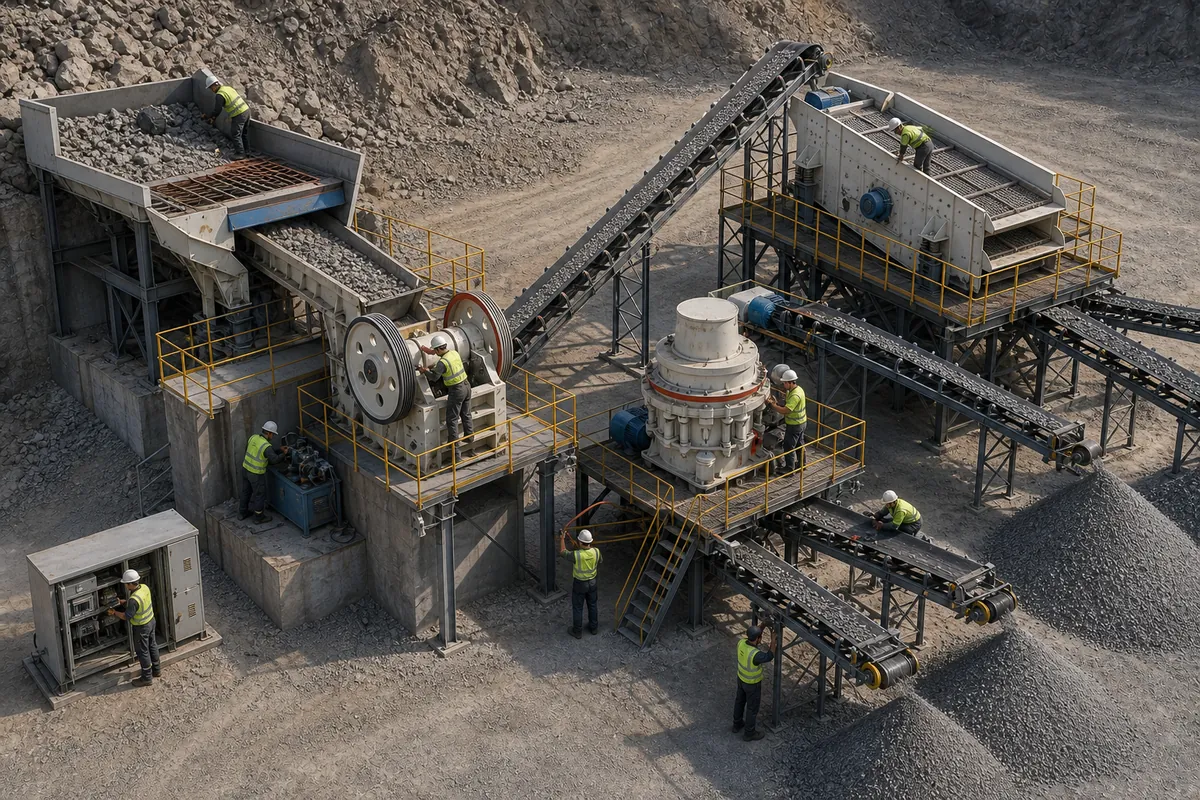
The first inspection should happen before the loader or excavator feeds stone into the hopper. Walk the line from the feed end to the stockpile end. Look for people, tools, steel bars, large foreign objects, material buildup, oil leakage, loose guards, broken walkways, and water or electrical hazards.
Start the machines in the correct sequence, usually from downstream conveyors toward upstream feeding equipment. This prevents material from being discharged onto a stopped belt or full chute. After each machine starts, listen for abnormal sound and watch for vibration, belt tracking, motor current, bearing temperature, and dust control function.
Do not begin full-load production immediately if the plant has been idle, repaired, or washed. Run the equipment empty first, then feed gradually. Sudden full-load feeding can hide a blocked chute, loose liner, damaged roller, or screen problem until it becomes a shutdown.
Feeder and Hopper Maintenance
The feeder controls the stability of the whole plant. If the feeder surges, stops, or sends too much fine material into the crusher, every downstream machine is affected. A daily feeder check should cover the hopper liner, grizzly bars, spring condition, drive bolts, discharge opening, and feed pattern.
Common feeder issues include:
- Oversized stone bridging in the hopper.
- Wet clay or soil blocking the grizzly.
- Worn liner plates exposing structure.
- Loose bolts caused by vibration.
- Uneven discharge into the jaw crusher.
- Feeder speed set too high for the downstream crusher.
The feeder should deliver a controlled, even bed of material. If the primary crusher is repeatedly choking, do not only adjust the crusher setting. Check the feeder stroke, grizzly opening, feed size, clay content, and loader feeding method.
Primary Crusher Daily Checks
The primary crusher handles the largest feed and often receives the highest shock load. In a quarry plant, this is commonly a jaw crusher. Operators should check jaw plates, cheek plates, wedges, bolts, bearings, flywheel guards, drive belts, discharge setting, and the condition around the crusher foundation.
Stop the plant before clearing a blocked jaw crusher. Never use unsafe methods to remove lodged stone while the machine can move. If blockages happen often, the cause may be oversized feed, poor blasting, wrong feeder control, unsuitable jaw opening, or too tight a discharge setting.
For plants still choosing crusher types, see Jaw Crusher, Cone Crusher, Impact Crusher, or VSI: Which Crusher Do You Need?.
Secondary, Tertiary, and VSI Crusher Checks
Secondary and tertiary crushers control final size, shape, and return load. A cone crusher should be checked for liner wear, chamber feed level, CSS setting, oil temperature, oil pressure, filter condition, hydraulic leakage, and abnormal vibration. An impact crusher should be checked for blow bar wear, apron setting, rotor condition, liner bolts, and access door sealing.
If a VSI crusher is used for manufactured sand or aggregate shaping, check rotor tips, anvils, liners, feed tube, bearing temperature, vibration, and feed gradation. Oversized feed or uneven feed can shorten wear-part life and damage product shape. For more VSI-specific guidance, review VSI crusher wear parts maintenance and how to improve cubical shape with a VSI crusher.
The most important daily rule is to react early to changes. A sudden change in vibration, current, sound, or product size usually means the machine is no longer operating under normal conditions.
Vibrating Screen Maintenance
The screen decides whether the plant can produce sellable aggregate sizes. If the screen mesh is torn, loose, blinded, or overloaded, good crushers will still produce poor final products. Daily checks should include screen media tension, deck wear, side plate condition, springs, motor or exciter bolts, feed distribution, and discharge flow.
Screen problems usually appear as:
- Too much oversize in finished material.
- Good material carried into the return conveyor.
- Sudden drop in production capacity.
- Screen cloth tearing in the same area.
- Abnormal knocking sound or side plate vibration.
- Wet fines blocking the mesh.
If screen blinding or carryover happens often, check moisture, clay, feed gradation, mesh opening, screen angle, screen area, and washing or dust-control water. Sometimes the best fix is process adjustment, not only a new screen cloth.
Conveyor and Transfer Point Maintenance
Conveyors are easy to overlook until they stop the plant. Daily checks should cover belt tracking, belt surface damage, pulley lagging, return rollers, trough rollers, belt cleaners, skirt rubber, take-up travel, chute liners, dust sealing, and spillage under transfer points.
A small belt-tracking issue can become a torn belt if ignored. A seized roller can cut the belt or start a fire risk. A blocked transfer chute can back material into the crusher or screen. Operators should clean buildup around safe access areas and record recurring spillage points so the chute design, belt speed, skirt sealing, or loading angle can be corrected.
If dust is one of the main site problems, read How to Reduce Dust in a Stone Crusher Plant before finalizing spray points, covers, transfer chute sealing, and stockpile layout.
Weekly and Monthly Maintenance Items
Daily checks catch obvious faults. Weekly and monthly work should go deeper and may require planned shutdown time, lifting tools, oil sampling, electrical inspection, or supplier support.
| Frequency | Maintenance Items | Purpose |
|---|---|---|
| Every shift | Walkaround, safety devices, oil level, belt tracking, screen condition, abnormal noise, dust control | Find visible faults before production loss |
| Daily after shutdown | Clean spillage, inspect liners and screen mesh, check loose bolts, record wear and downtime | Prepare the plant for the next shift |
| Weekly | Check belt tension, pulley alignment, crusher settings, lubrication schedule, filters, water nozzles, electrical cabinet dust | Prevent repeated minor faults |
| Monthly | Measure wear parts, inspect foundations and structures, test interlocks, review downtime records, check spare parts stock | Plan shutdowns and reduce emergency repairs |
| Seasonal or major shutdown | Replace liners, rebuild worn chutes, service bearings, inspect motors, review process bottlenecks | Restore performance and update the maintenance plan |
The exact interval depends on material abrasiveness, operating hours, equipment model, climate, and maintenance history. Hard and abrasive rock such as granite, basalt, river stone, and iron ore usually needs closer wear tracking than softer limestone.
Spare Parts and Tools to Keep on Site
A maintenance checklist is more useful when the site also has the parts needed to fix common faults. The right inventory depends on the plant layout, but many quarry operators keep the following items:
- Jaw plates, cheek plates, wedges, and bolts for the primary crusher.
- Cone liners, mantle, concave, seals, filters, and lubrication parts.
- VSI rotor tips, anvils, liners, feed tube, and bearing-related spares if a VSI is installed.
- Screen mesh, tension plates, springs, bolts, and rubber buffers.
- Conveyor rollers, belt cleaners, skirt rubber, pulley lagging, splice materials, and belt repair tools.
- Oil, grease, filters, hoses, spray nozzles, pressure gauges, and basic electrical spares.
- Lockout devices, lifting tools, torque tools, cleaning tools, and inspection forms.
Do not buy spare parts only after a failure occurs. A common wear item that is missing from stock can turn a two-hour repair into a multi-day stoppage.
Common Maintenance Mistakes
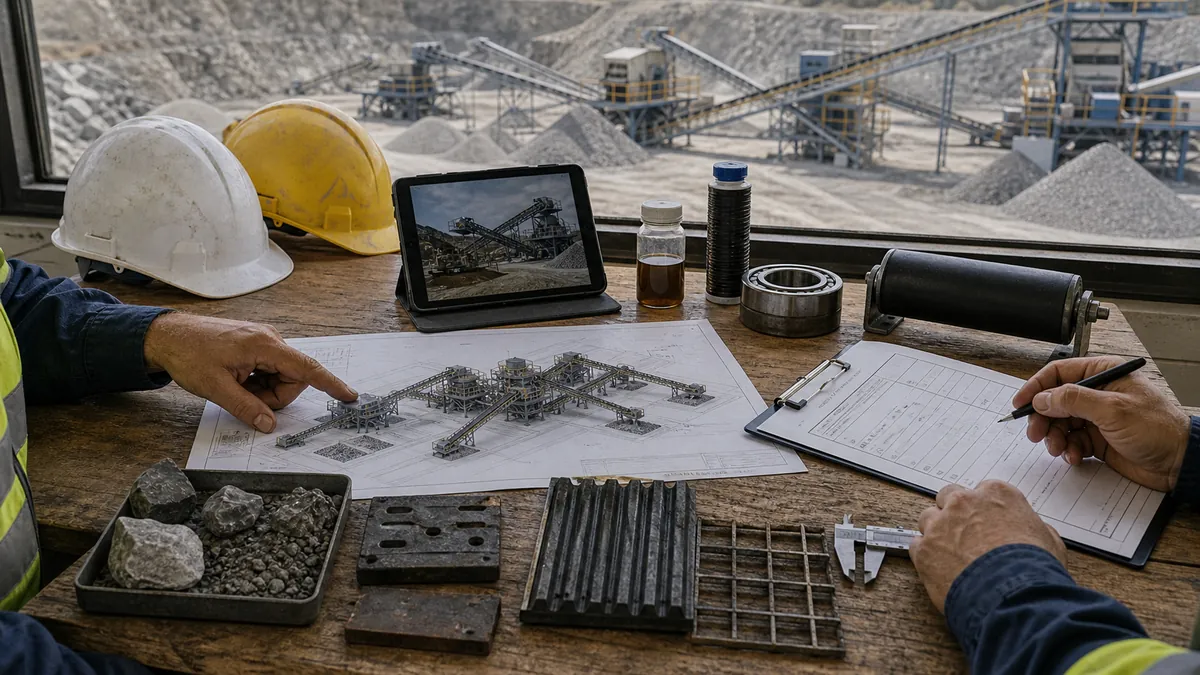
The first mistake is treating maintenance as emergency repair. If the team only reacts after a failure, the plant will lose production hours and may damage expensive components.
The second mistake is checking the crusher but ignoring the feeder, screen, conveyor, and transfer points. A crusher plant is a connected system, and many crusher stoppages are caused by upstream or downstream problems.
The third mistake is using the same checklist for every material. Wet limestone, abrasive basalt, river stone, recycled concrete, and iron ore create different wear, dust, and blockage problems.
The fourth mistake is not recording small faults. Operators may fix the same belt tracking, chute blockage, or screen mesh issue many times without seeing the pattern.
The fifth mistake is comparing maintenance cost only by spare-part price. Low-cost wear parts can be expensive if they reduce uptime, damage product quality, or create more frequent shutdowns.
What to Send When Asking for Maintenance Support
If you ask a supplier for troubleshooting, spare parts, or a maintenance proposal, send enough information for a practical answer. General messages such as “my crusher plant has low capacity” are difficult to diagnose without site details.
Prepare the following information:
- Raw material name, hardness, abrasiveness, moisture, and clay content if known.
- Maximum feed size and actual feed size distribution.
- Required output sizes and the product that is currently out of specification.
- Target capacity and actual capacity in tons per hour.
- Site photos and short videos of the feeder, crusher chamber, screen, conveyors, transfer points, and finished stockpiles.
- Machine model, motor power, crusher setting, screen mesh sizes, and operating hours.
- Recent spare-part changes, oil changes, alarms, vibration problems, and downtime records.
- Budget range and urgency if the request includes repair parts, upgrade parts, or a plant improvement proposal.
With these details, MVSI can review the real operating condition and suggest a practical maintenance, spare parts, or plant improvement solution.
Conclusion
A stone crusher plant maintenance checklist should protect safety first, then stabilize production. The daily routine should cover lockout, feeder condition, crusher chamber, lubrication, screen media, conveyor belts, transfer chutes, dust control, electrical devices, records, and spare parts. The best checklist is not a form kept in the office. It is a working habit used by operators before and after production.
If you are running a quarry, aggregate plant, road-base plant, or mining crushing circuit, send MVSI your raw material, feed size, output size, capacity, site photos, machine condition, and budget range. We can help review the maintenance risk, spare parts plan, and practical equipment improvements for your crusher plant.
FAQ
What should be included in a stone crusher plant maintenance checklist?
A practical checklist should include safety lockout, feeder and hopper, primary crusher, secondary crusher, VSI or shaping stage if installed, vibrating screen, conveyors, transfer chutes, lubrication, electrical system, dust control, spare parts, and maintenance records.
How often should a crusher plant be inspected?
Operators should inspect the plant before every shift and after shutdown. Weekly and monthly inspections should check deeper items such as belt alignment, lubrication records, screen media condition, foundation bolts, electrical cabinets, interlocks, and wear-part measurements.
What causes unexpected downtime in a stone crusher plant?
Common causes include blocked chutes, uneven feeding, loose bolts, low lubrication, torn screen mesh, worn liners, damaged conveyor belts, seized rollers, failed sensors, uncontrolled dust, and spare parts not being available when needed.
How do I know when crusher wear parts need replacement?
Track product size, capacity, vibration, current, liner thickness, jaw plate profile, rotor tip condition, and visual wear patterns. Wear parts should be replaced before they damage the holder, chamber, rotor, or downstream product quality.
Why does my vibrating screen need frequent maintenance?
Frequent screen problems may come from wrong mesh opening, loose tension, wet or sticky feed, poor feed distribution, excessive tonnage, worn springs, wrong screen angle, or a screen that is too small for the real plant capacity.
How can I reduce conveyor maintenance in a crusher plant?
Keep the belt aligned, control loading at transfer points, replace seized rollers early, maintain belt cleaners and skirt sealing, avoid material buildup, and check pulley lagging and take-up travel. Most conveyor damage starts as a small tracking or spillage problem.
Should maintenance be different for granite, basalt, limestone, and river stone?
Yes. Hard and abrasive materials such as granite, basalt, and river stone usually need closer wear-part tracking and stronger crushing chambers. Limestone may create more dust or sticky fines depending on moisture and clay content, so dust control and screening checks may be more important.
What information should I provide before requesting crusher plant maintenance support?
Provide raw material, feed size, output size, capacity, site photos, equipment models, operating hours, current faults, recent wear-part changes, alarms, downtime records, and budget range. These details help the supplier diagnose the real problem and suggest useful action.