Table of Contents
- The Short Answer: Use the Crusher That Fits the Stage
- Jaw Crusher vs Impact Crusher: What Changes in a Limestone Plant?
- When a Jaw Crusher Gives Better Results for Limestone
- Large or variable blasted feed
- Feed with clay, moisture, or occasional tramp material
- A plant that may later process harder rock
- When an Impact Crusher Gives Better Results for Limestone
- Cubical aggregate and fine product are priorities
- The feed is already controlled
- A compact, lower-stage circuit is valuable
- Recommended Limestone Crushing Configurations
- Configuration A: Large quarry feed and several aggregate products
- Configuration B: Clean, controlled feed for a compact plant
- Configuration C: Base-course material where shape is less critical
- Capacity, Wear, and Cost: How Buyers Should Compare Offers
- Common Buying Mistakes
- Treating limestone as one uniform material
- Choosing an impact crusher for oversize feed without scalping
- Ignoring the fines balance
- Buying a crusher without its maintenance plan
- FAQ
- Is a jaw crusher or impact crusher better for limestone?
- Can an impact crusher replace a jaw crusher for limestone?
- Does an impact crusher make more fines than a jaw crusher?
- What feed size should I provide before choosing a limestone crusher?
- Is a jaw crusher cheaper to maintain than an impact crusher?
- What is the best limestone crushing plant for 0-5 mm, 5-10 mm, and 10-20 mm aggregate?
- Do I need a screen after an impact crusher?
- What information should I send for a limestone crusher quotation?
- Get a Limestone Crushing Circuit Matched to Your Feed
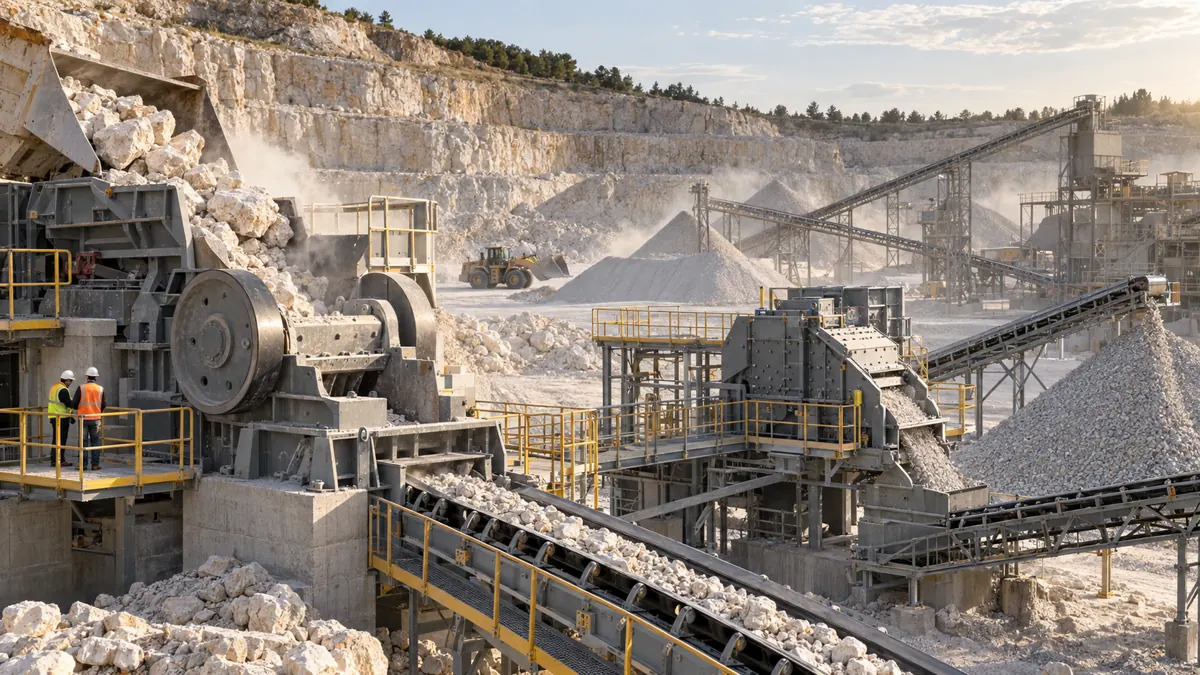
For most limestone quarries, a jaw crusher is the better primary crusher when the feed contains large, variable run-of-quarry rock, while an impact crusher is often the better choice for secondary reduction where a smaller, more cubical aggregate and a high reduction ratio are needed. A single impact crusher can work well on clean, moderately sized limestone, but it is less forgiving of tramp steel, sticky clay, or very large feed. The practical choice is based on the actual feed size distribution, moisture and clay, required products, capacity, wear tolerance, and the cost of recirculating material—not on a brochure capacity alone.
The Short Answer: Use the Crusher That Fits the Stage
Limestone is usually softer and less abrasive than granite or basalt, so both jaw and impact crushers can be effective. The main distinction is the crushing job. A jaw crusher uses compression and is built to accept large primary feed. An impact crusher uses high-speed blow bars and impact aprons; it can make a finer, more shaped product in one pass when the feed is already controlled.
For a quarry receiving blasted stone with occasional oversize, start with a jaw crusher and use an impact crusher after it when the market demands shaped 0-5 mm sand, 5-10 mm, or 10-20 mm aggregate. For smaller, clean limestone feed and a compact plant, a primary impact crusher may be a sensible one-machine solution. The right answer must state the material and operating duty. Our complete stone crusher plant setup guide explains the whole line around either machine.
Jaw Crusher vs Impact Crusher: What Changes in a Limestone Plant?
| Decision point | Jaw crusher | Impact crusher |
|---|---|---|
| Main crushing action | Compression between jaw plates | Blow bars throw rock against impact aprons |
| Best place in circuit | Primary stage, especially large feed | Primary on controlled feed or secondary stage after a jaw |
| Feed tolerance | Strong for large, variable quarry feed | Needs feed within the selected opening and controlled tramp material |
| Reduction and shape | Moderate reduction; product is often less cubical | High reduction; generally better cubical shape and more fines |
| Wear focus | Jaw plates, cheek plates, bearings | Blow bars, impact aprons, liners, rotor components |
| Best commercial use | Robust first reduction and dependable primary feed acceptance | Shape improvement, fewer stages for suitable limestone, and finer products |
This table is a selection starting point, not a performance guarantee. A jaw chamber, rotor design, screen setting, moisture, clay, and feed grading can change the result materially. Give each supplier the same raw-material report, largest and typical feed size, desired gradations, and operating-hours target before comparing the two choices.
When a Jaw Crusher Gives Better Results for Limestone
Large or variable blasted feed
A jaw crusher is usually the safer first machine when primary feed includes large blocks or the loader cannot maintain a tight top size. It is designed for coarse run-of-quarry material and gives the plant a stable first reduction step before screening and secondary crushing. A correctly sized feeder and grizzly are just as important as the jaw: they remove fines, regulate the feed, and prevent the crusher from seeing sudden surges.
Feed with clay, moisture, or occasional tramp material
Limestone deposits often include weathered zones, clay seams, or damp material. No crusher performs well when sticky fines blind the screen or pack transfer chutes, but a jaw-first circuit is commonly more forgiving than using a high-speed impact machine as the only first stage. Design the hopper, scalping, chutes, and water-management plan around the wet-season material—not only the dry sample.
A plant that may later process harder rock
If a quarry alternates limestone with harder material, or plans future expansion into more abrasive feed, a jaw-first arrangement can give more operating flexibility. It does not automatically make the entire plant suitable for every rock, but it puts the robust primary reduction where it is most useful. For difficult feed, compare the material-based criteria in our hard ore and abrasive rock crusher guide.
When an Impact Crusher Gives Better Results for Limestone
Cubical aggregate and fine product are priorities
Impact crushing repeatedly breaks particles along weaker planes and can improve particle shape for concrete aggregate, asphalt aggregate, and manufactured sand feed. It also produces more fines than a jaw crusher. That is an advantage when the product plan needs 0-5 mm material, but it can be a cost when fines have limited value or the quarry must control the percentage passing a given sieve.
The feed is already controlled
A primary impact crusher can replace a jaw-plus-secondary stage only when the feed is clean, within the machine’s opening, and reasonably consistent. Use a vibrating grizzly or screen ahead of it to bypass natural fines. A metal detector and magnet help protect the rotor from tramp steel. Do not choose a compact impact plant solely from the headline reduction ratio if the actual blast pattern will create blocks beyond its safe feed limit.
A compact, lower-stage circuit is valuable
For a moderate-capacity limestone operation with a defined feed top size, an impact crusher with a screen and recirculation conveyor can make several aggregate products in a compact layout. This can reduce the number of crushing stages, but the screen still determines whether the plant meets saleable gradations. See our aggregate crushing plant design guide for how product bins and return load affect a proposed line.
Recommended Limestone Crushing Configurations
Configuration A: Large quarry feed and several aggregate products
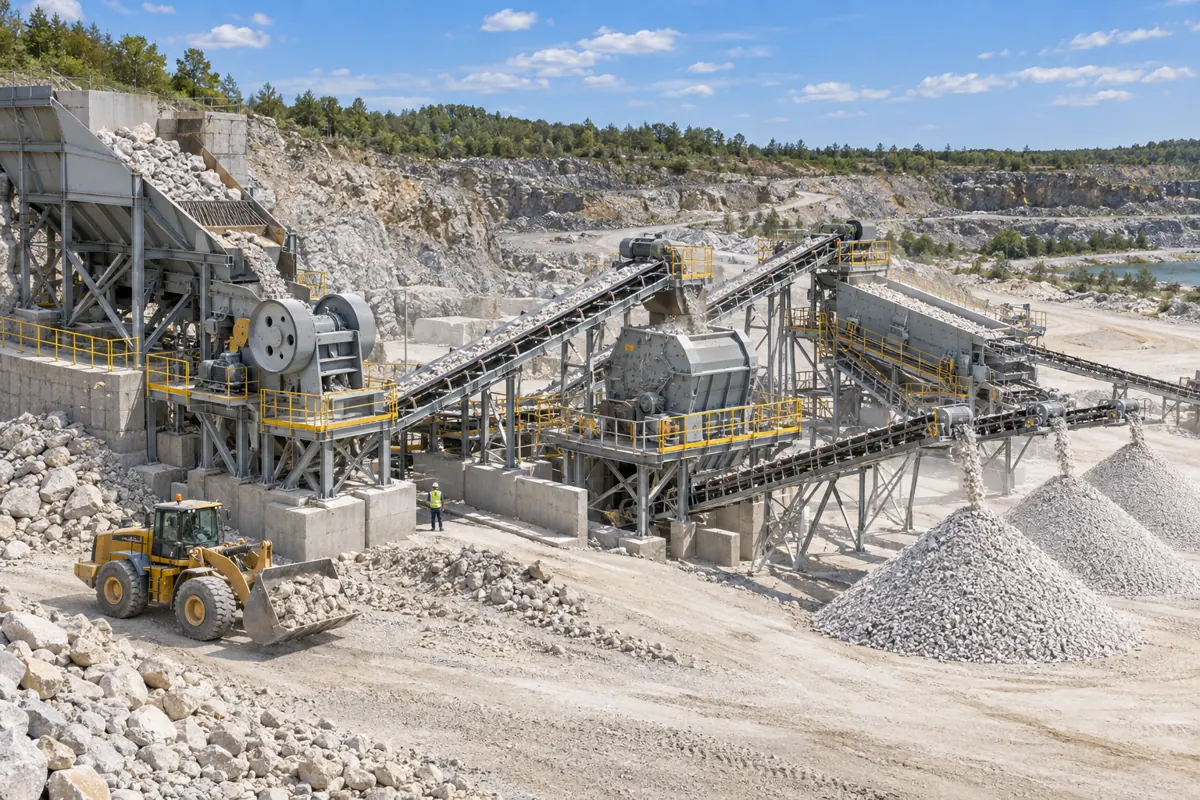
Use a hopper and grizzly feeder, jaw crusher, transfer conveyor, impact crusher, multi-deck screen, return conveyor, and separate product conveyors. This is usually the more reliable route when feed can exceed the practical opening of a primary impact crusher. The jaw controls the first reduction; the impact crusher develops shape and final reduction; the screen closes the circuit.
Configuration B: Clean, controlled feed for a compact plant
Use a vibrating feeder with scalping, primary impact crusher, multi-deck screen, return conveyor, and product conveyors. This can suit a deposit with consistent limestone and a known maximum feed size. Confirm the rotor feed opening, expected reduction, wear package, bypass arrangement, and screen area at the target tonnes per hour.
Configuration C: Base-course material where shape is less critical
Use a jaw crusher, screen, and optional secondary crusher only where the gradation shows it is needed. If the market accepts a more angular product and fines control matters, avoid adding an impact stage simply because it is common. Test a representative feed and build the circuit around the actual specification.
For equipment interfaces from feeder through stockpile, use our quarry feeder, crusher, screen, and conveyor selection checklist.
Capacity, Wear, and Cost: How Buyers Should Compare Offers
Do not compare a jaw and an impact crusher by maximum rated tonnes per hour. Ask each bidder to state capacity on the same limestone: feed distribution, bulk density, moisture, clay content, closed-side setting or apron setting, screen arrangement, recirculating load, and product requirement. The plant capacity is often limited by the feeder, screen, transfer point, or return conveyor rather than by the crusher nameplate.
Wear cost should also be converted to an operating basis. A limestone that appears soft can still be abrasive if it contains silica or hard inclusions. Ask for the expected wear components, estimated consumption assumptions, part materials, change-out access, lead times, and opening-spares recommendation. A lower first-cost crusher can become expensive if the line stops while waiting for rotor parts or if the screen return overloads the impact stage.
The owner-side comparison should include equipment, civil work, electrical supply, dust suppression, steelwork, installation, commissioning, opening spares, power or fuel, labor, and downtime. Our stone crusher plant cost guide helps buyers put these scopes on one cost sheet.
Common Buying Mistakes
Treating limestone as one uniform material
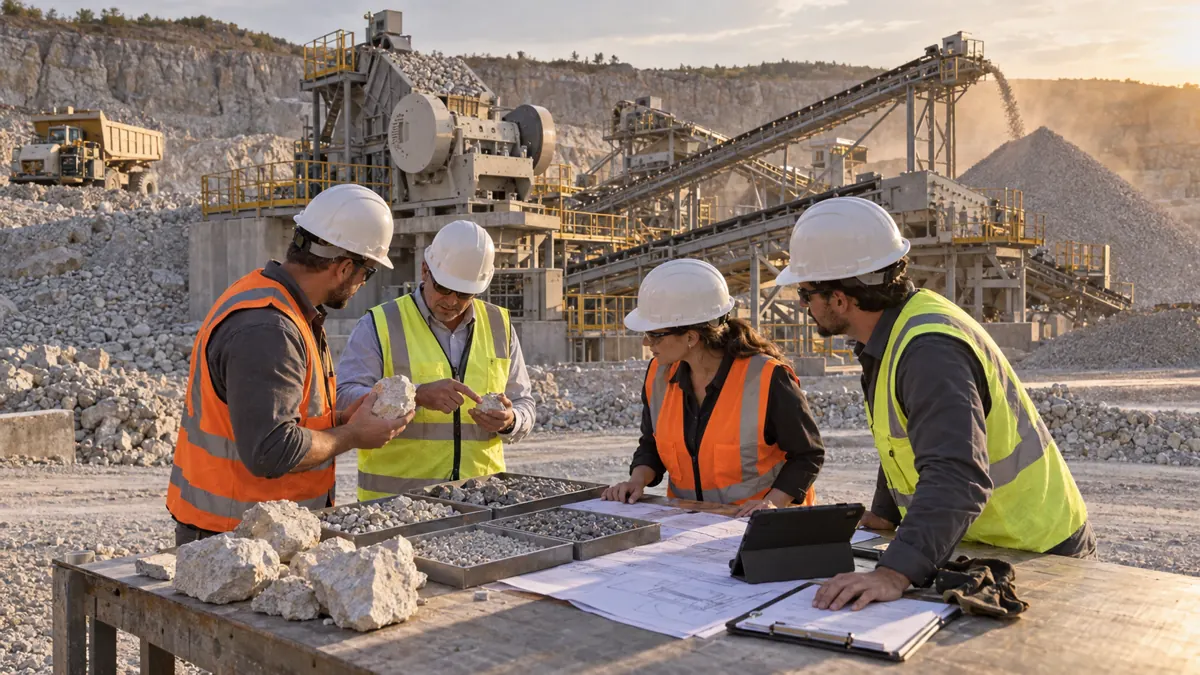
Limestone strength, abrasiveness, moisture, clay, and contaminants can change between benches. Supply photos, a representative sample where practical, and a feed-size distribution. Do not select from the rock name alone.
Choosing an impact crusher for oversize feed without scalping
An impact crusher can be productive on limestone, but large blocks, unregulated feed, and tramp steel create unnecessary rotor risk. Specify the maximum allowable feed and choose the feeder, grizzly, and magnet to enforce it.
Ignoring the fines balance
Impact crushing can be useful for shape, yet it can also create more fine material. Make the bidder show expected gradation, screen cuts, recirculation, and the destination for every product fraction before award.
Buying a crusher without its maintenance plan
Compare access for jaw-plate, blow-bar, apron, liner, and screen-media changes. Confirm lifting tools, opening spares, part numbers, storage conditions, and service support. Safe, quick maintenance protects availability as much as rated capacity does.
FAQ
Is a jaw crusher or impact crusher better for limestone?
A jaw crusher is normally better for large, variable primary feed. An impact crusher is normally better for controlled feed when higher reduction and more cubical aggregate are needed. Many limestone plants use a jaw first and an impact crusher after it.
Can an impact crusher replace a jaw crusher for limestone?
It can when the feed is clean, within the impact crusher’s allowable opening, and consistently sized. For blasted quarry feed with oversize, a jaw crusher is usually the safer primary machine.
Does an impact crusher make more fines than a jaw crusher?
Usually, yes. Impact crushing can improve shape and generate more fines. Whether that is useful depends on the required aggregate gradations and whether the quarry can sell or process the fine fraction.
What feed size should I provide before choosing a limestone crusher?
Provide both the maximum block size and the normal feed-size distribution, plus moisture, clay, rock strength, abrasiveness, and any tramp-material risk. One headline feed size does not describe a quarry face accurately.
Is a jaw crusher cheaper to maintain than an impact crusher?
It depends on the material, duty, wear parts, and operating practice. Compare measured or stated wear assumptions, part prices, lead times, and the labor required for change-outs on the same production basis.
What is the best limestone crushing plant for 0-5 mm, 5-10 mm, and 10-20 mm aggregate?
For large quarry feed, a jaw crusher followed by an impact crusher and multi-deck screen is a common configuration. The final selection should be sized from the feed, capacity, required gradations, and fines limit.
Do I need a screen after an impact crusher?
Usually. The screen separates saleable products and returns oversize material for further reduction. Without it, the plant cannot reliably control product sizes or return load.
What information should I send for a limestone crusher quotation?
Send your raw material, maximum and typical feed size, output sizes, target capacity, site photos, available power, operating hours, layout constraints, and budget range. Add test data or product specifications when available.
Get a Limestone Crushing Circuit Matched to Your Feed
Send MVSI Crusher your raw material, maximum and typical feed size, required output sizes, target capacity, site photos, available power, operating hours, and budget range. We can help compare a jaw-first circuit, an impact-first circuit, and the required screening and conveying equipment against the same limestone duty.