Table of Contents
- Information Gain: Decide the Project Boundary Before Comparing Machines
- Start With the Granite and the Required Products
- When a Mobile Jaw Is the Right First Stage
- Do Not Substitute an Impact Crusher Comparison for a Supplier Comparison
- Define the Plant Scope Before You Ask for a Price
- Compare a Chinese Manufacturer, Export Supplier, and Local Dealer by Evidence
- Check the Mobility Plan at the Actual Quarry
- Supplier Comparison Checklist for the Granite Quarry Team
- Send a Clear Project Brief Before Requesting a Proposal
- Frequently Asked Questions
- Is a mobile jaw crusher suitable for granite?
- Can a mobile jaw crusher make all final aggregate sizes by itself?
- What should a quarry buyer send to a crusher supplier?
- What is the difference between a Chinese manufacturer and a local crusher dealer?
- Should I buy from a local supplier or import directly?
- Does tracked mobility remove the need for quarry planning?
- Why do supplier quotations for a mobile jaw crusher vary so much?
- What is the first question to resolve before choosing a mobile jaw crusher?
Mobile Jaw Crusher for Granite Quarry Projects in Nigeria
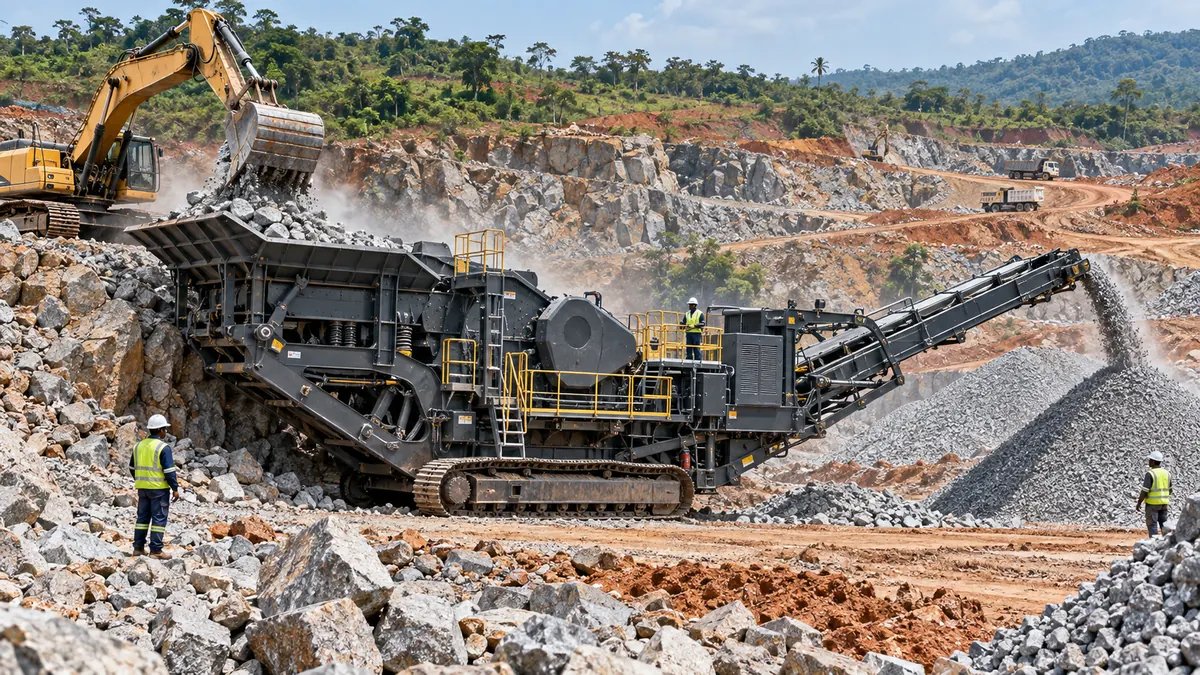
For a granite quarry project in Nigeria, a mobile jaw crusher is normally the first stage to evaluate when blasted or oversize hard rock must be reduced close to the face and the plant may need to move as the quarry develops. It is not, by itself, proof that the final aggregate specification, operating cost, or project schedule will work. The purchase decision should begin with representative granite, feed-size range and oversize condition, target product sizes, required throughput, operating hours, site layout, haul route, power or fuel plan, and the boundary between the crusher supplier and the local project team. A screen, cone stage, feeder, or conveyors may still be needed.
Information Gain: Decide the Project Boundary Before Comparing Machines
“Mobile jaw crusher for granite” is a useful starting query, but it leaves the most expensive decisions unanswered. Is the jaw intended to make a temporary primary stockpile? Is it expected to feed a screen? Does the buyer need one mobile train, a jaw-and-cone arrangement, or a plant that will later connect to fixed conveyors? Who owns mobilization, operator training, spares, commissioning, and the interface to local fuel, power, civil work, and transport?
The useful comparison is therefore not one brochure against another. It is a like-for-like project basis that makes those boundaries visible before quotations are judged. The related mobile crushing plant buying guide helps define the broader procurement brief; this page focuses on the primary mobile jaw decision for hard granite.
Start With the Granite and the Required Products
A mobile jaw crusher should be selected from the actual quarry feed and the required downstream products, not from a nominal model name. Granite can be hard and abrasive, but the relevant purchasing information also includes the largest lumps, fines and clay content, moisture, shape of blasted rock, contamination risk, and whether the quarry faces change materially through the year.
Before requesting a technical offer, prepare a short material-and-product record:
| Decision input | What to provide | Why the supplier needs it |
|---|---|---|
| Feed material | Representative granite photos and, where available, material test information | Helps define the crushing duty and identify information still missing |
| Feed condition | Typical and maximum feed size, oversize frequency, fines, moisture, and contamination | Determines whether scalping, grizzly spacing, feeder arrangement, or a different loading practice must be considered |
| Finished products | Required aggregate sizes and the share expected from each size | Shows whether primary reduction alone is enough or whether screening and secondary crushing are required |
| Production target | Required tonnes per hour, planned hours, and desired operating availability assumptions | Keeps the proposal tied to a stated duty rather than an isolated catalogue value |
| Quarry layout | Face location, bench access, gradients, road widths, stockpile space, and relocation frequency | Tests whether tracked mobility adds value at this site |
| Operating constraints | Fuel or electrical plan, water and dust-control approach, maintenance access, and crew capability | Exposes the site interfaces that can otherwise remain outside the quoted scope |
Do not treat a laboratory figure or a photograph of one rock as a complete material description. A final machine selection should be based on the information the selected supplier requires and, where appropriate, representative testing or a documented technical review.
When a Mobile Jaw Is the Right First Stage
A mobile jaw crusher is commonly considered when the project needs primary reduction near the quarry face, wants to limit repeated hauling of unprocessed rock, or expects the working area to change. The value of mobility depends on actual relocation frequency, ground condition, transport access, loading method, and the cost of reconnecting the rest of the plant—not simply on whether the machine has tracks.
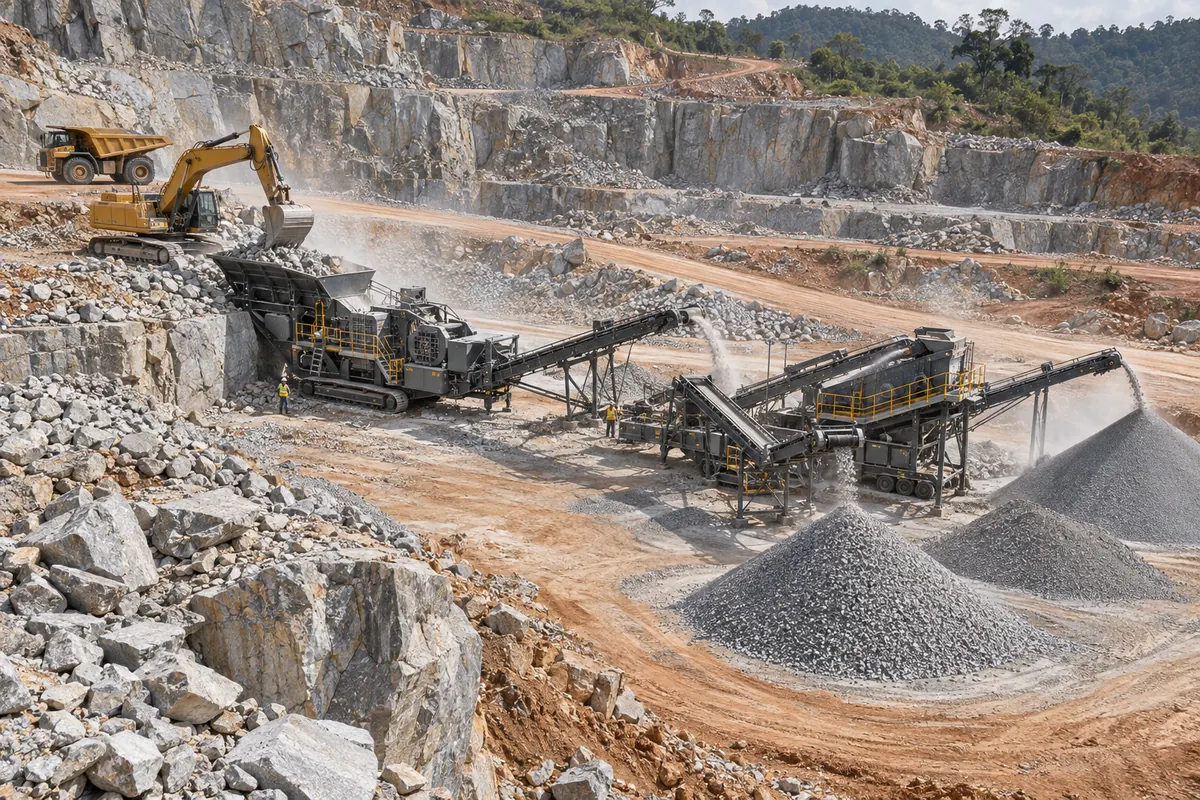
For hard granite, the jaw usually defines the first size reduction. It does not automatically create every saleable aggregate fraction. If the specification calls for controlled graded products, cubical shape, or several stockpile sizes, a screen and often a secondary stage must be evaluated as part of the same production plan. The mobile crusher plant for granite: jaw, cone, VSI, and screen combination guide explains how those stages can be compared without assuming that every quarry needs the same train.
Do Not Substitute an Impact Crusher Comparison for a Supplier Comparison
Jaw versus impact is a process question: material condition, product need, wear, feed preparation, and plant role all matter. Supplier choice is a delivery-and-support question: technical basis, configuration transparency, documents, commercial boundary, response path, and handover evidence matter. Both decisions are important, but they should be recorded separately. For the process comparison, see mobile jaw crusher vs. mobile impact crusher.
Define the Plant Scope Before You Ask for a Price
Two offers can both say “mobile jaw crusher” while covering very different work. One may contain a jaw unit only; another may include an integrated feeder; a third may assume separate conveyors, a screen, electrical distribution, operator support, or commissioning by other parties. A price comparison without a scope matrix can reward the shortest supply list rather than the best project fit.
Use a scope matrix such as this one for every quotation:
| Scope line | Confirm in the offer | Buyer decision to record |
|---|---|---|
| Primary crushing unit | Model, opening, feed arrangement, drive concept, standard and optional equipment | Is the indicated machine configured for the submitted feed information? |
| Feed control | Hopper, grizzly/scalping arrangement, feeder type, and stated exclusions | How will fines and oversize be managed before the chamber? |
| Downstream handling | Discharge conveyor, transfer points, screen or secondary-stage interface, stockpile method | Where does the supplier scope end and the rest of the plant begin? |
| Site movement | Transport dimensions, relocation procedure, ground assumptions, and required support equipment | Can the proposed movement method work on the actual quarry roads and benches? |
| Utilities and dust control | Fuel or electrical interfaces, water/dust-control interfaces, lighting, and communication needs | Which connection points must the local team prepare? |
| Delivery and handover | Packing, shipment terms, documents, supervision, commissioning, training, and acceptance boundary | Who is accountable at each handover point? |
| Service and parts | Recommended consumables, critical spares, manual list, contact path, and stated response scope | Does the plan match the site’s maintenance and downtime risk? |
The feeder, crusher, screen, and conveyor selection guide is useful when the primary jaw cannot be isolated from the rest of the material flow.
Compare a Chinese Manufacturer, Export Supplier, and Local Dealer by Evidence
Buyers may search for a Chinese manufacturer, an export supplier, a local dealer, or “where to buy” a mobile crusher. Those phrases describe possible commercial routes, not guaranteed capability. A manufacturer may offer direct technical access and factory documentation; an export supplier may coordinate the cross-border scope; a local dealer may be closer for field response. The important question is what each party can demonstrate for the proposed equipment and which obligations it will contractually accept.
Ask every candidate to give the same evidence set:
- A dated technical offer that repeats the submitted feed, products, throughput basis, operating assumptions, and exclusions.
- A general arrangement or layout basis that shows the unit and the stated interfaces, not just a stock illustration.
- A defined list of included equipment, optional equipment, consumables, recommended spares, manuals, and electrical or fuel interfaces.
- Named commercial and technical contacts for quotation clarification, shipment, commissioning, warranty, and parts support.
- A written description of what is supplied directly, what is arranged through another party, and what remains with the buyer or local contractor.
- Applicable factory, quality, export, safety, or project documentation that the supplier can actually provide for the order—without accepting a generic certificate as proof of an entire project scope.
Do not publish or rely on claims such as “top,” “best,” “local support,” “fast delivery,” or “installed worldwide” without evidence relevant to the actual order. The buyer’s evaluation should attach each promised service to a named party, document, date, and delivery boundary.
Check the Mobility Plan at the Actual Quarry
Tracked equipment can reduce rehandling in some quarry layouts, but a mobile crusher still needs a workable route, stable working position, safe loading zone, maintenance clearance, stockpile room, and access for fuel, parts, and service personnel. The project team should verify these with current site photographs and a layout drawing rather than assuming that a machine which is mobile on a brochure can move anywhere on site.
- Will the loading excavator have a safe, repeatable approach to the hopper?
- Can the working bench and travel route carry the proposed unit and support vehicles under the site rules?
- Is there enough room to separate feed, product stockpiles, people, and traffic?
- How will the plant connect to screening, secondary crushing, or transfer conveyors if those are required later?
- Which party confirms transport and road permissions for the planned route?
For a project that is choosing between configurations, track-mounted vs. tire-mounted mobile crusher considerations can help frame the questions. It does not replace a route, ground, or transport review for the specific site.
Supplier Comparison Checklist for the Granite Quarry Team
The best time to expose an unclear interface is before the purchase order, when the offer can still be corrected. Review the commercial route together with the plant layout, material record, and operating plan.
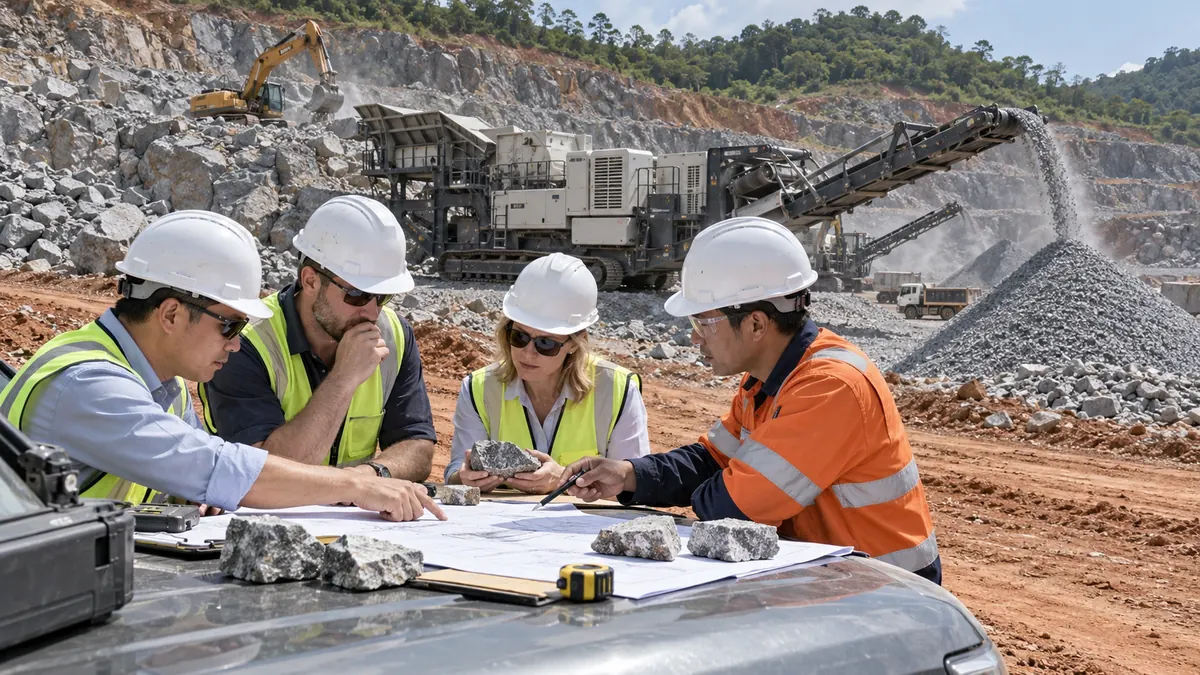
- Match each offer to one written feed-and-product basis.
- Mark whether the proposal is jaw-only, jaw-plus-screen, or a wider plant scope.
- List every excluded item: civil works, fuel or power connection, site assembly, transport permits, operators, water, dust control, and acceptance testing.
- Ask which party provides the final layout, operating manual, parts list, commissioning method, and training plan.
- Compare the proposed maintenance access, wear-part plan, critical spare recommendation, and named service route.
- Keep written answers with the quotation revision so later changes do not disappear into informal messages.
Send a Clear Project Brief Before Requesting a Proposal
MVSI can review a project basis and explain which further information is needed before a mobile jaw crusher configuration is compared. Send the raw material or rock description, feed-size range and photos, target output sizes, required capacity and operating hours, site photos or a simple layout, preferred mobility arrangement, power or fuel information, and budget range. Those inputs make it possible to distinguish a primary mobile jaw request from a complete granite aggregate plant request.
Frequently Asked Questions
Is a mobile jaw crusher suitable for granite?
It can be a suitable primary-reduction option for granite when the actual feed condition, largest lumps, fines, operating duty, and site arrangement support the proposed configuration. Material and project information must be reviewed before a specific model is selected.
Can a mobile jaw crusher make all final aggregate sizes by itself?
A jaw performs primary reduction; controlled multi-size products may require screening and, depending on the specification, a secondary crushing stage. Confirm the process against the product schedule rather than assuming a jaw-only arrangement.
What should a quarry buyer send to a crusher supplier?
Send representative rock information, feed-size range, output sizes, required capacity, planned operating hours, site photos or layout, mobility and transport constraints, power or fuel plan, and budget range. Ask the supplier to repeat the assumptions in its technical offer.
What is the difference between a Chinese manufacturer and a local crusher dealer?
They are commercial roles, not quality rankings. A manufacturer may provide direct factory access; a dealer may coordinate local sales or service. Compare the exact equipment scope, technical contact path, shipment responsibility, commissioning, warranty, parts, and documented local obligations for the order.
Should I buy from a local supplier or import directly?
Choose based on the documented project scope, delivery responsibility, technical clarity, service arrangement, and total risk—not the label alone. Ask every candidate to identify who does what from quotation through commissioning and parts support.
Does tracked mobility remove the need for quarry planning?
No. The quarry still needs a safe route, stable operating area, loading arrangement, stockpile space, maintenance access, and workable interfaces to any screen, conveyor, or secondary crusher.
Why do supplier quotations for a mobile jaw crusher vary so much?
They can include different feeders, screens, conveyors, controls, utilities, spares, shipment terms, site support, and exclusions. A scope matrix is necessary before comparing the totals.
What is the first question to resolve before choosing a mobile jaw crusher?
Define whether the project needs a movable primary jaw only or a complete aggregate-production system. That answer determines the equipment interfaces, site preparation, quotation scope, and supplier responsibilities that must be compared.