Table of Contents
- When a VSI Makes Sense for River Stone
- Start With the River-Stone Inputs That Change the Flow Sheet
- A Practical River-Stone VSI Configuration
- Screen the Circuit for Saleable Product, Not Just Crusher Throughput
- Feed, Moisture, and Wear: The Three River-Stone Risks to Control
- Keep the VSI feed inside its approved range
- Plan for wet fines and clay before they reach the screen
- Compare wear scope with the actual rock mix
- How to Define a Concrete-Sand Acceptance Plan
- What Should Be Included in a River-Stone VSI Quotation
- Common Buying Mistakes
- Selecting the VSI before confirming the final product split
- Treating all river stone as the same feed
- Comparing gross feed capacity instead of saleable output
- Leaving water, drainage, and stockpile separation out of the scope
- FAQ
- Is a VSI crusher good for river stone?
- Can a VSI crusher make concrete sand from river stone?
- Does river stone need a jaw crusher before a VSI?
- Why is a vibrating screen important in a river-stone sand plant?
- What causes excessive VSI wear on river stone?
- Do wet river stones reduce sand-plant output?
- Should oversize material return to the VSI after final screening?
- What information should I send for a river-stone VSI proposal?
- Get a River-Stone Sand Plant Configuration Based on Your Material
A VSI crusher can be a strong final-stage choice for river stone when the project needs cubical aggregate or controlled manufactured sand for concrete, but it should be selected as part of a complete crushing-and-screening circuit. Rounded river stone can be hard, variable in size, and wet or clay-contaminated after washing or rainy-season stockpiling. The practical route is normally feed control, primary and secondary reduction as required, a screened VSI feed, final screening, and a planned path for oversize, fines, water, and stockpiles. Choose the line from representative material and the required final grading—not from a VSI nameplate alone.
When a VSI Makes Sense for River Stone
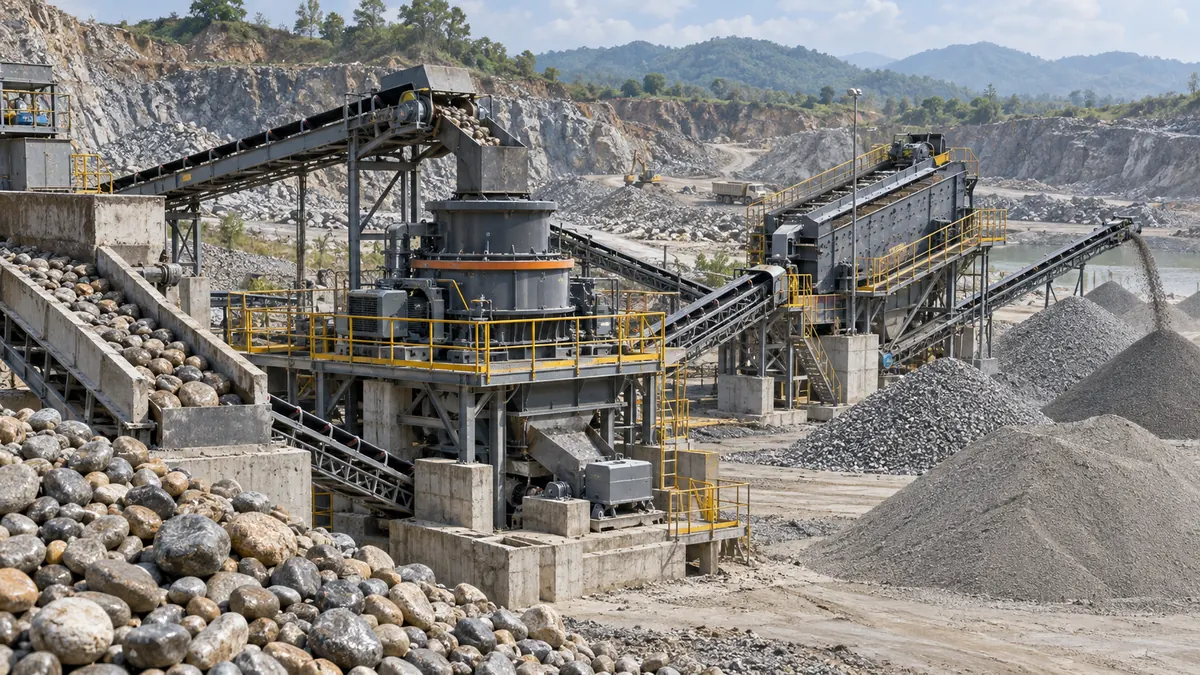
River stone is often rounded and tough enough that the plant needs more than one reduction step. A jaw crusher can accept the larger run-of-river feed; a cone crusher is often used where further controlled reduction is needed; and a VSI can then shape selected material or create a sand fraction. The exact route depends on the largest feed, hardness, abrasiveness, moisture, clay content, required aggregate sizes, and whether the buyer is selling concrete sand, asphalt aggregate, road-base material, or several products.
A VSI is most useful when the final product value depends on shape and controlled grading. It is not automatically the right answer for every river-stone project. If the target is only a coarse, broadly graded product, a well-designed jaw/cone/screen circuit may be sufficient. If the target includes 0–5 mm concrete sand or a tighter shape requirement, a final shaping stage plus screening and, where needed, washing or air classification may be justified. Our VSI versus cone crusher guide explains how to separate reduction duty from final shaping duty.
Start With the River-Stone Inputs That Change the Flow Sheet
Do not call all river stone the same material. The following inputs should be documented before selecting equipment or comparing quotations.
| Input | What to provide | Why it matters |
|---|---|---|
| Source and rock mix | Representative samples, quarry or river location, and known geological variation | One deposit may include quartz-rich, basaltic, granite, limestone, or mixed cobbles with different breakage and wear behaviour. |
| Feed-size distribution | Maximum stone size plus a sieve analysis of normal and worst-case feed | Determines grizzly, jaw opening, secondary reduction, screen decks, conveyor width, and permitted VSI feed. |
| Moisture and contamination | Rainy-season condition, clay, silt, organics, and washing status | Wet fines can blind screens, contaminate sand, build up in chutes, and change the actual material arriving at the VSI. |
| Product plan | Required aggregate sizes, sand grading, shape expectation, and permitted fines | Defines the screen cuts, return route, stockpiles, and whether washing or classification is part of the proposal. |
| Production basis | Required tonnes per hour, operating hours, stockpile strategy, and growth plan | Separates instantaneous crusher feed from saleable output after screening and recirculation. |
River material can change with extraction area, depth, weather, and washing practice. A proposal should state the material assumptions behind capacity and product estimates. If a supplier has no representative sample or data, their process route should be described as a preliminary configuration rather than a guaranteed output result.
A Practical River-Stone VSI Configuration
For a typical hard river-stone project that needs several aggregate sizes and concrete sand, the process often follows this logic:
- Hopper, grizzly, and feeder: remove unsuitable oversize and keep the downstream circuit fed evenly.
- Primary crushing: use a jaw crusher when incoming cobbles exceed the acceptable secondary-stage feed.
- Secondary or tertiary reduction: use a cone crusher or other selected reduction stage to create a controlled feed for the shaping circuit.
- Pre-screening and surge: remove material already within a usable size band, reject excessive oversize, and stabilize the stream entering the VSI.
- VSI shaping or sand-making stage: process only feed that is inside the selected machine’s permitted range and matches the product objective.
- Final screen and return conveyor: separate saleable aggregate and sand fractions; return only the fraction that needs more reduction or shaping.
- Washing, air classification, or dust control when needed: manage fine material according to the concrete-sand specification and local environmental conditions.
- Product conveyors and stockpiles: keep different products separate and avoid contamination during loading.
This is a design approach, not a fixed recipe. A smaller project may not require every stage; a high-capacity project may need multiple screens, surge capacity, parallel equipment, or more detailed water and fines handling. The important point is that the VSI needs the support system around it. See our VSI feed-size and screening guide for the screening conditions that protect the rotor and support a stable product.
Screen the Circuit for Saleable Product, Not Just Crusher Throughput
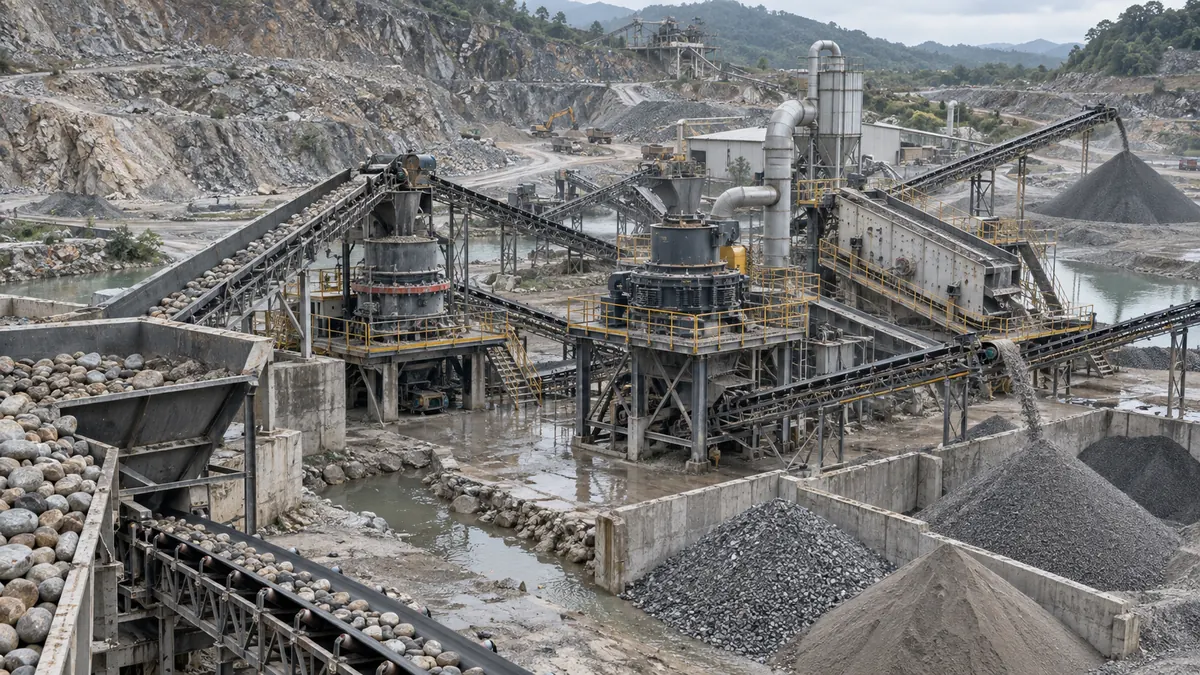
The screen arrangement determines whether the plant produces the intended product split. It also controls how much material returns to the VSI. A screen that is too small, poorly maintained, overloaded, or affected by wet fines can push excess return load into the circuit. That can make a nominally large VSI look short of capacity even when the limiting condition is actually the screen, chute, conveyor, or moisture condition.
For river stone concrete sand, discuss these points with the supplier:
- The proposed top deck, middle deck, and bottom-deck cuts and the product each deck will make.
- The screen capacity basis, including moisture, clay, open area, deck angle, and expected loading.
- Which fraction bypasses the VSI, which fraction enters it, and which fraction returns after screening.
- How finished 0–5 mm material will be sampled and checked against the buyer’s concrete-sand grading and cleanliness requirements.
- Whether excess fine material will be controlled with washing, hydrocyclones, dewatering, air classification, or another selected method.
The target is not the highest recirculation rate or the most crusher feed. It is stable saleable output after the final screen and any classification stage. Our VSI capacity guide explains why gross feed rate and net sand output should be evaluated separately.
Feed, Moisture, and Wear: The Three River-Stone Risks to Control
Keep the VSI feed inside its approved range
Do not feed cobbles directly to a VSI unless the selected machine and material data clearly support that duty. Oversize can raise impact stress, reduce stability, and increase wear. A screened and evenly distributed feed helps the rotor and crushing chamber work as intended. The supplier should identify the permitted feed range for the exact model, rotor, chamber arrangement, and material basis.
Plan for wet fines and clay before they reach the screen
River stone may carry silt, clay, or moisture even after a stockpile looks clean. Fine wet material can adhere to rock, blind screen apertures, build up in transfer chutes, and make a dry screening circuit unstable. A wash screen, dewatering equipment, drainage plan, covered stockpile, or dust-and-water balance may be more valuable than a larger crusher. The right answer depends on the material and required product cleanliness.
Compare wear scope with the actual rock mix
Rounded cobbles are not necessarily low-wear material. Quartz-rich or hard river stone can be abrasive, and a mixed source can change wear patterns. Ask for the rotor tips, anvils or rock-bed arrangement, liners, feed tube, and access requirements to be stated clearly. Any wear-life estimate should explain its material basis and remain a planning estimate until verified in operation. Read our VSI wear-parts guide before comparing spare-parts packages.
How to Define a Concrete-Sand Acceptance Plan
Concrete sand is not defined only by calling it “0–5 mm.” The buyer should provide the intended specification, required grading envelope, limits for unwanted material, target shape, moisture condition at delivery, and any local concrete-plant or standard requirements. The equipment supplier can then describe the proposed circuit and the site tests needed during commissioning.
| Check | What it protects | Practical evidence |
|---|---|---|
| Final-screen samples by product fraction | Grading stability and saleable split | Recorded sieve results from stable production conditions |
| Sand cleanliness and fine-material control | Concrete suitability and washing/classification need | Material test results and stated site assumptions |
| Particle shape review | Workability and aggregate-quality objective | Representative samples reviewed against the project’s acceptance method |
| Return-load measurement | Capacity and power planning | Measured conveyor rate or a documented process estimate |
| Wear and power record | Operating-cost control | Inspection interval, part condition, and motor-load trend |
Do not promise a concrete outcome from a generic plant drawing. The proper approach is to align the process proposal with the buyer’s specification and then verify the result with representative material during commissioning or testing.
What Should Be Included in a River-Stone VSI Quotation
- The material assumptions, feed-size range, moisture condition, and target tonnes per hour.
- A flow sheet showing every crusher, screen, return conveyor, product conveyor, and optional washing or dust-control stage.
- The exact VSI model, rotor and chamber option, motor, feed limit, and operating basis.
- Screen size, deck arrangement, mesh or media type, and design assumption for wet or clay-bearing material.
- The proposed product splits and the point at which each product is accepted or returned.
- Wear-parts scope, recommended spares, inspection access, and the assumptions behind any consumption estimate.
- Electrical load, control system, foundation or steelwork needs, water and drainage requirements if relevant, and commissioning support.
- Site layout limits, local service plan, delivery scope, installation responsibilities, and exclusions.
This makes competing proposals comparable and helps prevent a buyer from purchasing a VSI that is not supported by enough screen capacity, return-conveyor capacity, or fines-management equipment. For a broader process choice, review our guide to improving cubical shape with a VSI crusher.
Common Buying Mistakes
Selecting the VSI before confirming the final product split
The product plan should determine the screen cuts, return route, sand-management equipment, and then the VSI duty. Buying the crusher first can leave a plant with insufficient screen area or an unclear path for fines.
Treating all river stone as the same feed
Rock type, maximum cobble size, moisture, clay, and seasonal variation affect equipment selection. Use representative samples and document the limits of the proposal.
Comparing gross feed capacity instead of saleable output
A circuit may process a large amount of material but return too much to the VSI or produce an unsuitable sand split. Compare final product after screening and classification.
Leaving water, drainage, and stockpile separation out of the scope
These are process items, not civil afterthoughts. Poor drainage, wet-fine buildup, or mixed stockpiles can compromise an otherwise suitable crushing line.

FAQ
Is a VSI crusher good for river stone?
It can be a good final-stage machine when the project needs shaped aggregate or manufactured sand from correctly prepared river stone. The decision depends on feed size, rock mix, abrasiveness, moisture, product specification, screen circuit, and wear economics.
Can a VSI crusher make concrete sand from river stone?
It can help produce a sand fraction, but concrete-sand suitability must be checked against the required grading, cleanliness, fine-material limits, shape, and moisture condition after final screening and any washing or classification.
Does river stone need a jaw crusher before a VSI?
Often, yes, when the incoming cobbles are larger than the selected VSI feed limit. Many projects use primary crushing, controlled secondary reduction, and screening before the VSI stage, but the exact route should follow the measured feed and equipment proposal.
Why is a vibrating screen important in a river-stone sand plant?
It controls the feed reaching the VSI, separates finished products, and determines the return load. Screen performance has a direct effect on product grading, net output, and the stability of the whole circuit.
What causes excessive VSI wear on river stone?
Hard or abrasive rock, oversize feed, uneven feed distribution, unsuitable rotor or chamber configuration, and uncontrolled return load can all increase wear. The actual rock mix and operating record should guide the wear plan.
Do wet river stones reduce sand-plant output?
They can. Moisture, clay, and silt can reduce screen efficiency, create buildup in chutes, and change the material split. Discuss drainage, washing, dewatering, or other fines-management measures with the process design.
Should oversize material return to the VSI after final screening?
Only the fraction that the designed circuit intends to reprocess should return. The selected return route must match the VSI feed limit, product objective, screen capacity, and measured circulating load.
What information should I send for a river-stone VSI proposal?
Send the raw material or representative samples, feed-size analysis and maximum stone size, required output sizes and concrete-sand specification, capacity, moisture and clay condition, site photos, available power and water information, layout limits, and budget range.
Get a River-Stone Sand Plant Configuration Based on Your Material
Send MVSI Crusher your raw material or representative river-stone sample, feed size analysis and maximum cobble size, required output size and concrete-sand grading, target capacity, moisture and clay condition, current process layout, site photos, available power and water details, and budget range. We can help define the jaw, cone, VSI, screen, return-conveyor, fines-control, and stockpile arrangement around a practical product plan.