Table of Contents
- Why Crusher Selection Matters
- Quick Crusher Selection Table
- Jaw Crusher: Best for Primary Crushing
- Cone Crusher: Best for Hard and Abrasive Rock
- Impact Crusher: Best for Limestone and Recycling
- VSI Crusher: Best for Sand Making and Shaping
- Recommended Crusher Configurations
- Hard Granite or Basalt Aggregate Plant
- Limestone Crushing Plant
- Concrete Recycling Plant
- Manufactured Sand Plant
- Selection by Raw Material
- Selection by Feed Size and Output Size
- Capacity, Wear Cost, and ROI Factors
- Mobile or Stationary Crusher?
- Common Buyer Mistakes
- What to Send Before Asking for a Crusher Quote
- Conclusion
- FAQ
- What is the best crusher for hard granite or basalt?
- When should I choose an impact crusher instead of a cone crusher?
- Can a VSI crusher be used as the primary crusher?
- Which crusher is best for 0-5 mm manufactured sand?
- What crusher do I need for concrete recycling?
- Is a mobile crusher better than a stationary crusher?
- How do I know if my plant needs more than one crusher?
- What information should I provide before asking for a crusher quotation?
Jaw Crusher, Cone Crusher, Impact Crusher, or VSI: Which Crusher Do You Need?
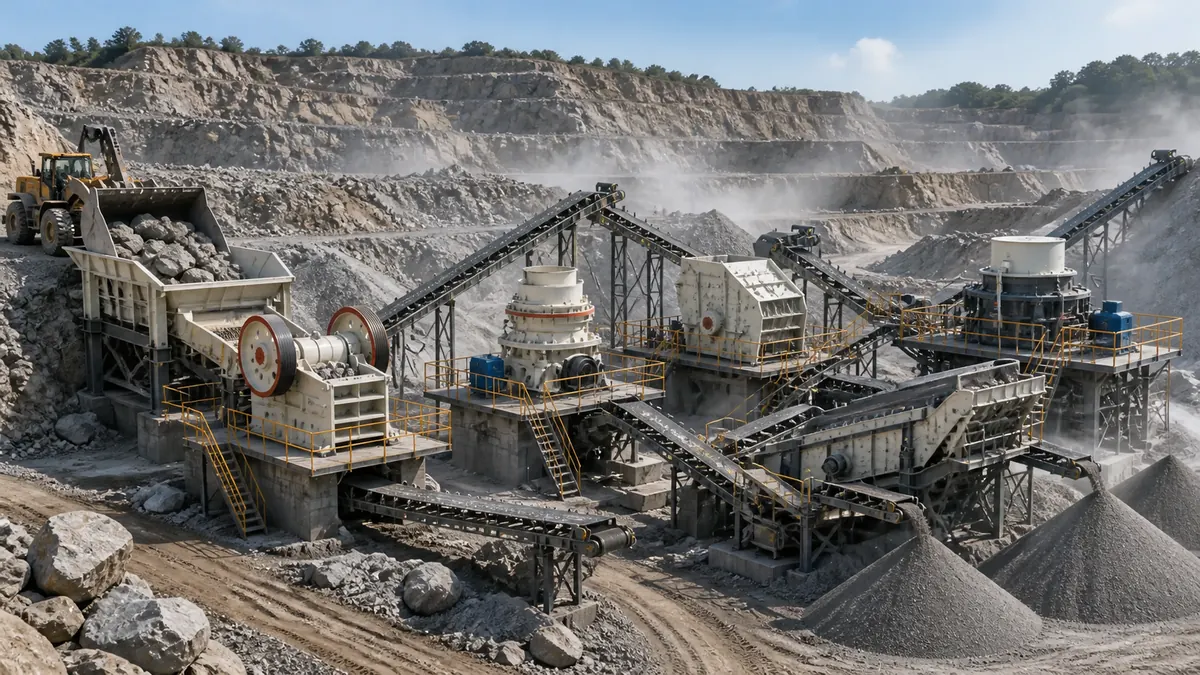
Choose a jaw crusher when the job is primary crushing of large stone. Choose a cone crusher when hard and abrasive rock needs stable secondary or tertiary reduction. Choose an impact crusher for limestone, concrete recycling, and medium-hard materials where cubical shape is important and wear cost is acceptable. Choose a VSI crusher for manufactured sand, final shaping, and improving particle shape after jaw, cone, or impact crushing. The right crusher depends on raw material, feed size, required output size, capacity, abrasiveness, mobility, power, and whether the plant must produce coarse aggregate, fine aggregate, or high-quality sand.
Why Crusher Selection Matters
Crusher selection affects the whole plant, not only the main machine price. A crusher that is strong enough for the feed may still be wrong if it creates too much fine material, wears too quickly, overloads the screen, or cannot produce the required aggregate shape.
For quarry owners and aggregate producers, the decision usually starts with material hardness and feed size. For road contractors, mobility and fast setup may be just as important. For concrete producers, final shape and grading control matter because flaky aggregate can hurt workability and strength. For mining operators, reduction ratio, downstream grinding, and wear cost often drive the choice.
If you are planning the complete line, also compare our guides to complete stone crusher plant setup and how to design a crushing plant for 0-5mm, 5-10mm, and 10-20mm aggregates.
Quick Crusher Selection Table
| Crusher Type | Best Stage | Best Materials | Typical Output Role | Main Buyer Concern |
|---|---|---|---|---|
| Jaw crusher | Primary crushing | Granite, basalt, river stone, hard ore, limestone | Reduces large feed to a manageable size | Feed opening, jaw plate wear, foundation, capacity |
| Cone crusher | Secondary or tertiary crushing | Hard and abrasive rock such as granite, basalt, quartzite, iron ore | Produces medium and fine aggregate with controlled setting | Wear cost, chamber selection, closed-side setting |
| Impact crusher | Secondary crushing or recycling | Limestone, dolomite, concrete waste, asphalt, medium-hard stone | Produces cubical aggregate with high reduction ratio | Blow bar wear, moisture, clay, feed control |
| VSI crusher | Final shaping and sand making | Crushed granite, basalt, limestone, river stone, manufactured sand feed | Produces 0-5 mm sand and improves particle shape | Feed size control, rotor wear, screen recirculation |
This table is a starting point. A final selection still needs the actual raw material, feed size, output size, capacity target, site layout, and budget range.
Jaw Crusher: Best for Primary Crushing
A jaw crusher is usually the first crusher in a stone crushing plant. It uses two jaw plates to compress large rock until the material is small enough to leave through the discharge opening. Jaw crushers are selected when the plant must accept large feed directly from the quarry face, excavator, or truck.
Jaw crushers are a practical choice for:
- Primary crushing of granite, basalt, limestone, river stone, and hard ore.
- Reducing 400-800 mm feed before cone, impact, or VSI crushing.
- Stationary quarry plants and mobile jaw crusher units.
- Projects where simple structure and strong feed acceptance matter.
The main limitation is product shape. A jaw crusher is strong, but it does not normally make final commercial aggregate by itself. It prepares the material for the next stage. If the project needs 10-20 mm concrete aggregate, road base, or manufactured sand, the jaw crusher should be followed by cone, impact, screen, and sometimes VSI equipment.
Cone Crusher: Best for Hard and Abrasive Rock
A cone crusher uses compression between a moving mantle and a fixed concave. It is commonly used after a jaw crusher when the material is hard or abrasive. For granite, basalt, river stone, quartzite, and many ores, cone crushing is often more economical than impact crushing because wear parts usually last longer.
Cone crushers are suitable for:
- Secondary crushing after a jaw crusher.
- Tertiary crushing for smaller aggregate sizes.
- Hard rock quarry plants with continuous production.
- Closed-circuit crushing with a vibrating screen and return conveyor.
The final product shape from a cone crusher can be good, but it may still contain flaky or elongated particles depending on chamber type, feed grading, closed-side setting, and screen recirculation. If the buyer needs premium manufactured sand or better particle shape, a VSI crusher can be added after cone crushing. For more detail, read VSI Crusher vs Cone Crusher: Which Is Better for Manufactured Sand?.
Impact Crusher: Best for Limestone and Recycling
An impact crusher breaks material with high-speed impact from blow bars and impact plates. It can provide a high reduction ratio and produce a cubical product, especially in limestone and medium-hard stone. It is also common in concrete and asphalt recycling because it can liberate aggregate from cement paste and break slab material efficiently.
Impact crushers are often selected for:
- Limestone, dolomite, gypsum, and other lower-abrasion stone.
- Concrete recycling and construction waste processing.
- Road base aggregate where cubical shape is useful.
- Plants that need a simpler jaw plus impact plus screen flow.
The risk is wear cost. If the feed is hard basalt, abrasive granite, or quartz-rich river stone, blow bars and impact plates can wear quickly. In that case, a jaw plus cone configuration is usually safer. If you are comparing mobile units, see Mobile Jaw Crusher vs Mobile Impact Crusher: Which One Should You Choose?.
VSI Crusher: Best for Sand Making and Shaping
A VSI crusher is not normally the primary crusher. It is a final-stage machine used for manufactured sand, aggregate shaping, and fine crushing. The rotor accelerates rock at high speed and throws it against a rock bed or metal anvils. This impact removes weak edges and helps produce a more cubical final product.
VSI crushers are commonly used for:
- 0-5 mm manufactured sand production.
- Improving particle shape after cone crushing.
- Reducing flaky aggregate in 5-10 mm or 10-20 mm products.
- Final-stage crushing in stationary or mobile sand making plants.
The key requirement is controlled feed size. Oversized feed can damage the rotor and increase wear. The VSI crusher also needs a matching vibrating screen and return conveyor because product grading depends on closed-circuit control. For a working principle explanation, read What Is a VSI Crusher and How Does It Work?.
Recommended Crusher Configurations
Hard Granite or Basalt Aggregate Plant
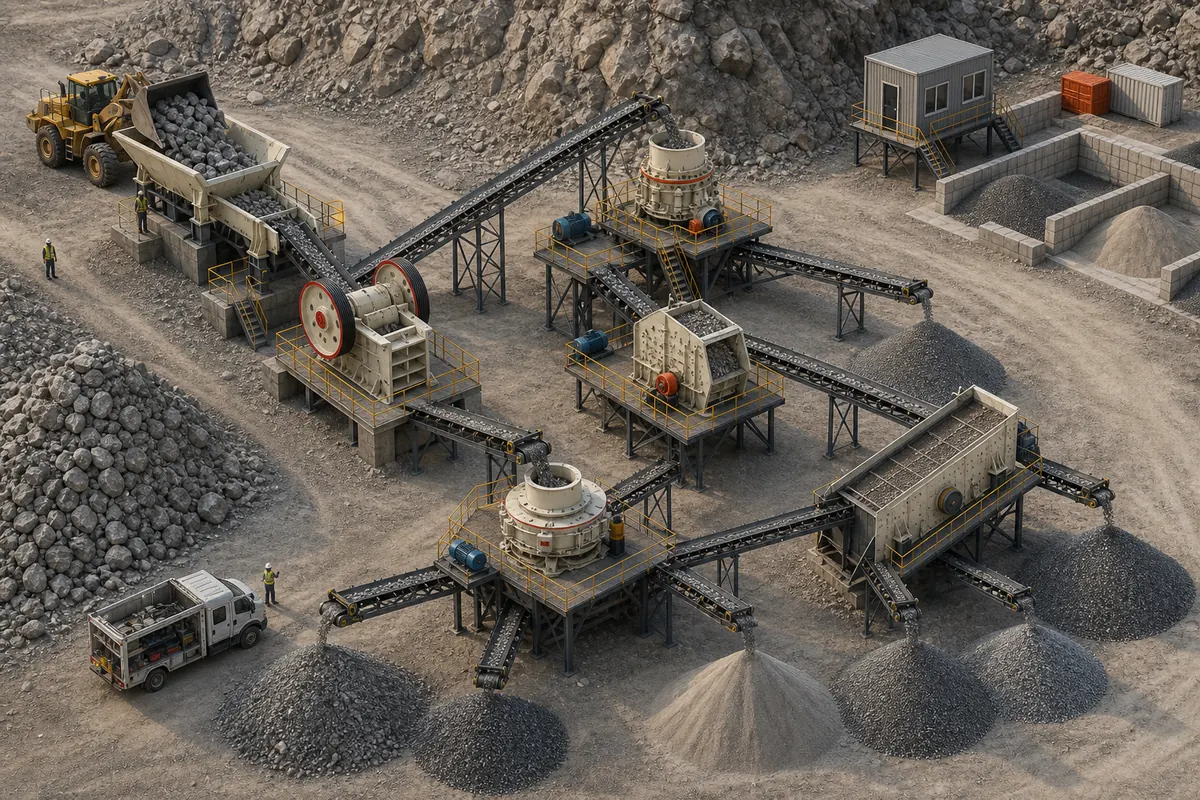
For hard and abrasive rock, a common configuration is feeder, jaw crusher, cone crusher, vibrating screen, return conveyor, and stockpile conveyors. If the final aggregate shape must be improved, add a VSI crusher after cone crushing.
This flow is suitable for quarry owners producing 5-10 mm, 10-20 mm, and 20-30 mm aggregate, plus optional 0-5 mm manufactured sand.
Limestone Crushing Plant
For limestone, a jaw crusher plus impact crusher plus screen can be economical. The impact crusher can reduce the material and improve product shape in one stage. If the limestone is very large, the jaw crusher handles the primary reduction first.
This flow is suitable for road base, concrete aggregate, cement raw material preparation, and commercial limestone aggregate.
Concrete Recycling Plant
For concrete waste, a mobile jaw crusher or mobile impact crusher is often selected. A jaw crusher is stronger for large reinforced blocks, while an impact crusher can produce better recycled aggregate shape. Magnetic separation, pre-screening, and dust control should be considered.
For more recycling detail, see Mobile Crushing and Screening Plant for Concrete Recycling.
Manufactured Sand Plant
For sand making, the usual flow is jaw crusher, cone crusher or impact crusher, VSI crusher, vibrating screen, and return conveyor. The VSI stage controls particle shape and sand output, while the screen separates 0-5 mm sand from oversized material.
If you need to plan capacity, see VSI Crusher Capacity Guide: 50 TPH to 500 TPH Sand Production.
Selection by Raw Material
Raw material is the first filter for crusher selection.
- Granite and basalt: jaw crusher plus cone crusher is usually the base flow. Add VSI for sand making or shape improvement.
- River stone: jaw crusher plus cone crusher is common because river stone is often hard and rounded. VSI can improve final shape.
- Limestone: jaw crusher plus impact crusher is often economical, but cone crusher can still be used when abrasion is higher than expected.
- Concrete waste: jaw crusher or impact crusher can be selected depending on feed block size, steel content, and final aggregate requirement.
- Hard ore: jaw crusher plus cone crusher is often preferred before grinding or beneficiation.
When the material is uncertain, do not choose based only on name. Send photos, hardness data if available, moisture condition, clay content, and sample size distribution. A limestone with silica bands may wear like a harder material, while some granite deposits may fracture more easily than expected.
Selection by Feed Size and Output Size
Feed size decides whether the first machine must be a jaw crusher. If the maximum feed is 500 mm or larger, a jaw crusher is normally the practical starting point. If the feed has already been reduced below 150 mm, cone, impact, or VSI selection depends on the next target product.
Output size decides the downstream stages:
- 0-5 mm sand: usually needs VSI crusher and fine screening.
- 5-10 mm aggregate: may need cone or VSI depending on shape requirement.
- 10-20 mm aggregate: cone or impact crusher with screen control is common.
- 20-30 mm road base: jaw plus cone or jaw plus impact can work depending on material.
Screening is as important as crushing. A correctly selected crusher cannot deliver stable final products if the screen deck area, mesh size, conveyor width, and return load are undersized.
Capacity, Wear Cost, and ROI Factors
Capacity should be selected according to real production demand, working hours, loader capacity, truck loading, stockpile area, and sales plan. A crusher plant rated at 200 TPH may not actually deliver 200 TPH of final saleable product if the return load is high or the screen is too small.
Important cost and ROI factors include:
- Crusher model, motor power, and chamber configuration.
- Wear parts such as jaw plates, cone liners, blow bars, rotor tips, anvils, and liners.
- Screen size, number of decks, return conveyor, and dust control.
- Power supply, automation, operator skill, and maintenance access.
- Mobile or stationary structure, civil foundation, transport, and installation.
- Spare parts package and expected replacement interval.
For budget planning, compare Stone Crusher Plant Cost: What Determines the Final Price? and How Much Does a VSI Crusher Cost in 2026?.
Mobile or Stationary Crusher?
A stationary crusher plant is usually better for long-term quarry production, stable raw material, larger stockpiles, and lower operating cost per ton. It gives more freedom for heavy foundations, wide conveyors, multiple screens, and dust control.
A mobile crusher plant is better when the job site changes, installation time is limited, or civil works are difficult. Mobile jaw, cone, impact, screen, and VSI units can be combined for road projects, mining sites, recycling projects, and temporary aggregate supply. For a broader selection framework, read the Mobile Crushing Plant Buying Guide for Quarry and Mining Projects.
Common Buyer Mistakes
The first mistake is asking for a crusher price without providing raw material, feed size, output size, and capacity. Without these details, the supplier can only quote a rough model, not a complete solution.
The second mistake is choosing impact crusher for abrasive hard rock only because the initial price looks attractive. For basalt, granite, and quartz-rich stone, blow bar wear can quickly offset the lower purchase price.
The third mistake is expecting one crusher to do every job. A jaw crusher handles large feed, but it does not make premium sand. A VSI crusher shapes aggregate well, but it cannot replace primary crushing. A reliable plant uses the right crusher at each stage.
The fourth mistake is ignoring screening, return load, and conveyors. Final product quality depends on the whole circuit. Undersized screens and short conveyors can limit the plant more than the crusher itself.
What to Send Before Asking for a Crusher Quote
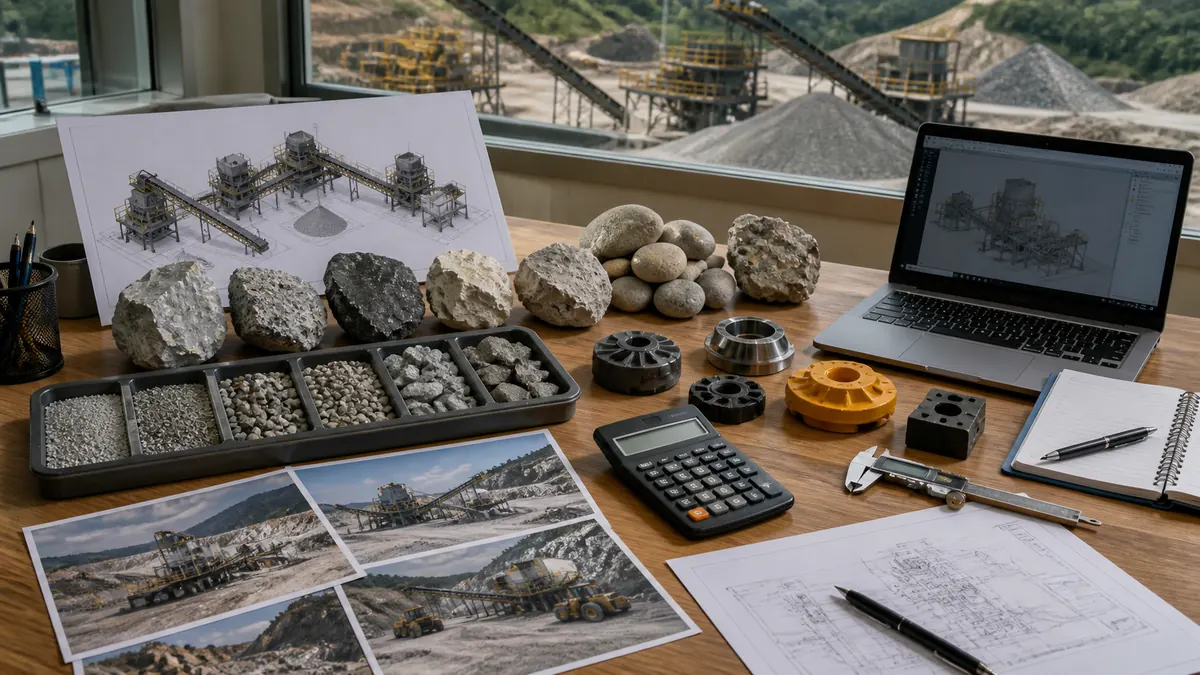
Before requesting a quotation, prepare:
- Raw material name, hardness, abrasiveness, moisture, and clay content if known.
- Maximum feed size before crushing.
- Required output sizes, such as 0-5 mm, 5-10 mm, 10-20 mm, or 20-30 mm.
- Required capacity in tons per hour.
- Whether the plant should be stationary, track-mounted, or tire-mounted.
- Site photos, available land size, foundation limits, and power condition.
- Working hours per day, expected production days, and local dust requirements.
- Budget range, delivery schedule, and spare parts preference.
With this information, MVSI can recommend whether your project should use jaw crusher, cone crusher, impact crusher, VSI crusher, or a complete crushing and screening plant.
Conclusion
There is no single best crusher for every quarry or mining project. A jaw crusher is the practical choice for primary crushing and large feed. A cone crusher is strong for hard and abrasive rock. An impact crusher is efficient for limestone and recycling when wear cost is acceptable. A VSI crusher is the right final-stage machine for manufactured sand and aggregate shaping.
If you are choosing a crusher or designing a complete plant, send MVSI your raw material, feed size, output size, required capacity, site photos, and budget range. We can help compare the crusher types and suggest a configuration that fits your material, product target, and operating cost.
FAQ
What is the best crusher for hard granite or basalt?
For hard granite or basalt, a jaw crusher plus cone crusher is usually the most reliable base configuration. Add a VSI crusher when the project needs manufactured sand or improved aggregate shape.
When should I choose an impact crusher instead of a cone crusher?
Choose an impact crusher for limestone, dolomite, concrete recycling, and medium-hard materials where cubical shape and high reduction ratio are important. For very abrasive hard rock, a cone crusher is usually safer for wear cost.
Can a VSI crusher be used as the primary crusher?
No. A VSI crusher is normally a final-stage machine. It needs controlled feed from a jaw, cone, or impact crusher before it can make sand or improve particle shape.
Which crusher is best for 0-5 mm manufactured sand?
A VSI crusher is commonly used for 0-5 mm manufactured sand. It should work with a vibrating screen and return conveyor so oversized material can return for further shaping.
What crusher do I need for concrete recycling?
For concrete recycling, choose a jaw crusher when feed blocks are large and reinforced. Choose an impact crusher when better recycled aggregate shape is required and wear cost is acceptable.
Is a mobile crusher better than a stationary crusher?
A mobile crusher is better for temporary sites, road projects, and fast relocation. A stationary crusher plant is better for long-term quarry production, larger capacity, and lower long-term cost per ton.
How do I know if my plant needs more than one crusher?
If the feed is large and the final product must be small, shaped, or separated into several sizes, the plant usually needs more than one crusher plus screening. Primary, secondary, and final shaping stages do different work.
What information should I provide before asking for a crusher quotation?
Provide raw material, maximum feed size, final output sizes, target capacity, site photos, power condition, mobile or stationary preference, and budget range. These details allow a supplier to recommend the right crusher combination.