Table of Contents
- What Is a VSI Crusher?
- How Does a VSI Crusher Work?
- 1. Material Feeding
- 2. Rotor Acceleration
- 3. Impact Crushing
- 4. Particle Shaping
- 5. Discharge and Screening
- Where Is a VSI Crusher Used?
- VSI Crusher vs Other Crushers
- How to Choose the Right VSI Crusher
- Raw Material
- Feed Size
- Required Output Size
- Capacity
- Mobile or Stationary Installation
- Cost and ROI Factors for a VSI Crusher
- Common VSI Crusher Problems
- Common Buyer Mistakes
- What Information Should You Send Before Buying a VSI Crusher?
- Conclusion
- FAQ
- What is a VSI crusher used for?
- Is a VSI crusher good for making sand?
- What is the difference between a VSI crusher and a cone crusher?
- Can a VSI crusher crush granite and basalt?
- What feed size is suitable for a VSI crusher?
- How much does a VSI crusher cost?
- Is a mobile VSI crusher better than a stationary VSI plant?
What Is a VSI Crusher and How Does It Work?
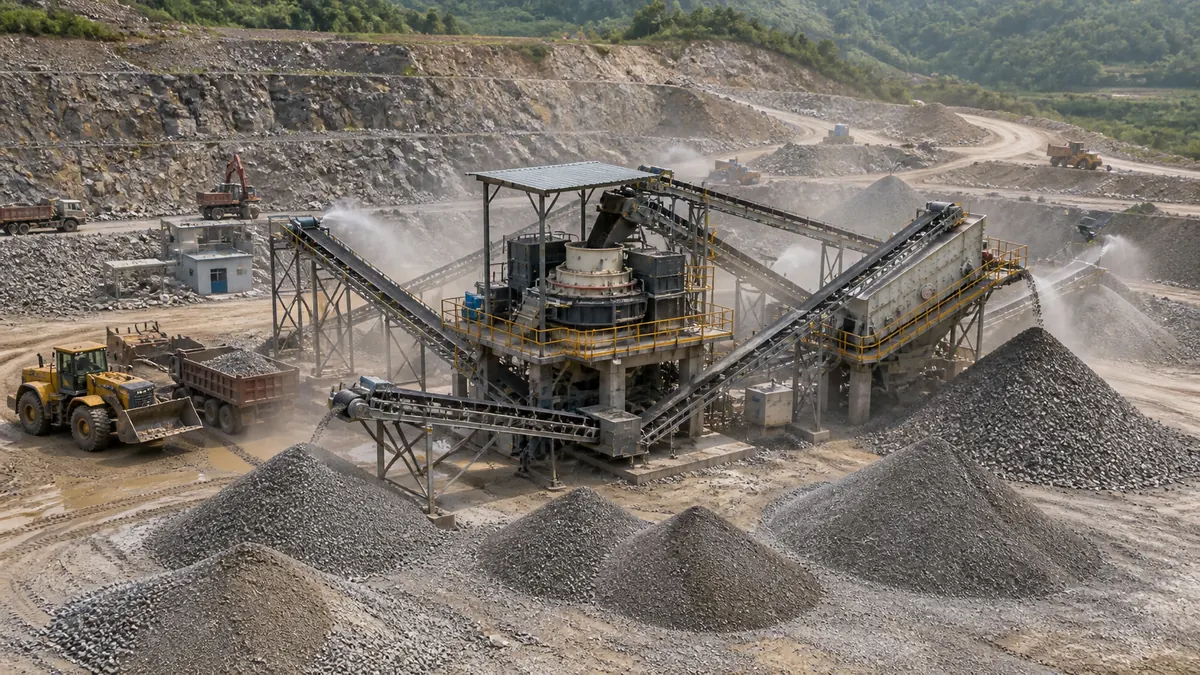
A VSI crusher, or vertical shaft impact crusher, is a final-stage crushing machine that uses high-speed impact to shape stone, improve aggregate particle form, and produce manufactured sand. Rock enters a vertical rotor, accelerates outward, and strikes a rock bed or metal anvils inside the crushing chamber. This impact breaks weak edges and turns flaky particles into more cubical sand or aggregate. For quarry owners, concrete producers, road contractors, and mining operators, a VSI crusher is normally chosen after jaw, cone, or impact crushing when 0-5 mm sand, better shape, and stable grading matter more than simple size reduction.
What Is a VSI Crusher?
A VSI crusher is a type of impact crusher with a vertical rotor shaft. The machine feeds material into the center of a high-speed rotor. The rotor throws the material outward at high velocity, causing it to hit other rock particles or impact surfaces inside the crushing chamber.
Because the crushing force comes from impact rather than only pressure, a VSI crusher is especially useful for:
- Manufactured sand production
- Aggregate shaping
- Final-stage crushing after jaw, cone, or impact crushers
- Reducing flaky and elongated particles
- Producing 0-5 mm sand and fine aggregate
If you are comparing final-stage machines, also read VSI Crusher vs Cone Crusher: Which Is Better for Manufactured Sand? and Complete Stone Crusher Plant Setup: Equipment, Layout, and Cost.
How Does a VSI Crusher Work?
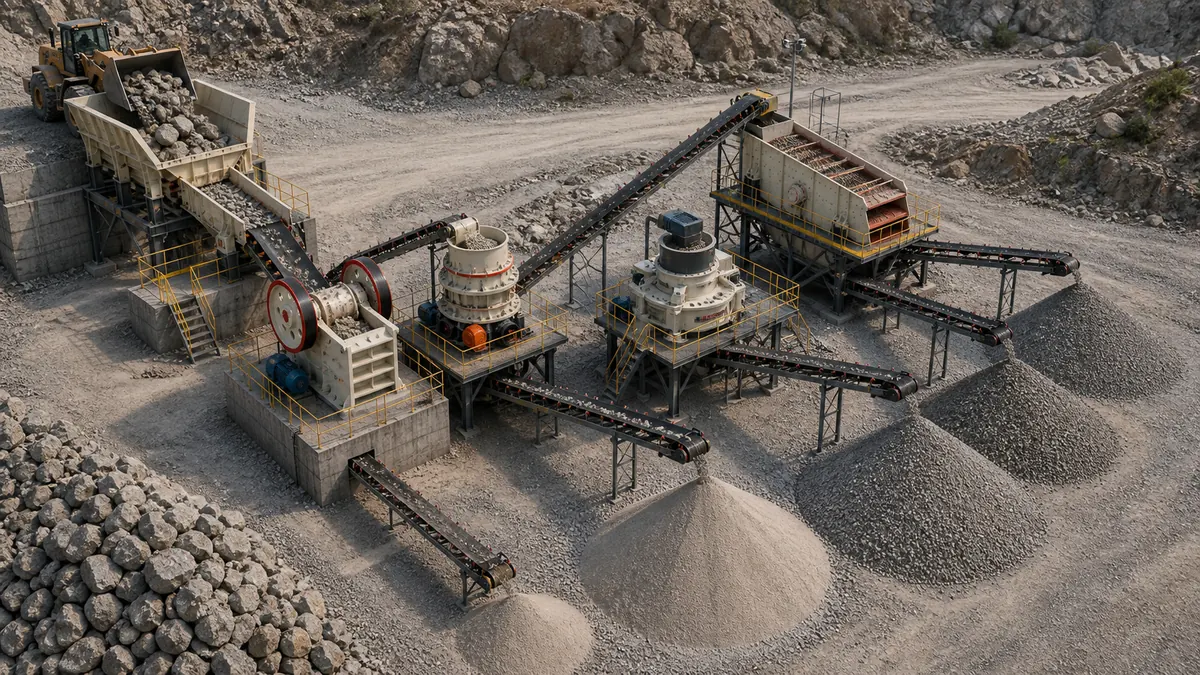
The working process of a VSI crusher can be understood in five steps.
1. Material Feeding
Crushed rock is fed into the top of the VSI crusher. The feed material is usually already reduced by a primary jaw crusher or secondary cone crusher. A stable and controlled feed is important because uneven feeding can increase wear and reduce product quality.
2. Rotor Acceleration
The material enters the rotor through the center feed tube. As the rotor spins at high speed, centrifugal force accelerates the rock and throws it outward through rotor ports.
3. Impact Crushing
The accelerated rock collides with the crushing chamber. Depending on the machine design, the impact may happen in two common ways:
- Rock-on-rock: the material impacts a packed bed of rock inside the chamber. This usually reduces metal wear and is suitable for many sand making applications.
- Rock-on-iron: the material impacts metal anvils. This can provide strong crushing force but may increase wear cost when processing abrasive rock.
For a deeper chamber comparison, see Rock-on-Rock vs Rock-on-Iron VSI Crusher: Key Differences.
4. Particle Shaping
Repeated impact breaks weak edges and helps improve particle shape. This is why VSI crushers are widely used when a project requires cubical aggregate or high-quality manufactured sand.
5. Discharge and Screening
The crushed material exits from the bottom of the machine and is usually sent to a vibrating screen. Oversized material may return to the VSI crusher for further shaping, while qualified sand or aggregate goes to the final stockpile.
Where Is a VSI Crusher Used?
A VSI crusher is commonly used in quarry, aggregate, and construction material production. It can process materials such as granite, basalt, limestone, river stone, dolomite, quartz, and some ores, depending on hardness and abrasiveness.
Typical applications include:
- Producing manufactured sand for concrete and asphalt
- Improving the shape of 5-10 mm, 10-20 mm, and 20-30 mm aggregate
- Crushing hard rock after a cone crusher
- Reducing flaky particles in road base aggregate
- Final-stage crushing in a mobile crushing and screening plant
VSI Crusher vs Other Crushers
Different crushers are designed for different crushing stages. A VSI crusher is not usually the first machine in a crushing plant. It works best after the material has already been reduced to a suitable feed size.
| Crusher Type | Main Crushing Method | Best Use |
|---|---|---|
| Jaw Crusher | Compression | Primary crushing of large stone |
| Cone Crusher | Compression and bending | Secondary or tertiary hard rock crushing |
| Impact Crusher | Horizontal impact | Limestone, concrete recycling, medium-hard rock |
| VSI Crusher | High-speed vertical impact | Sand making and aggregate shaping |
How to Choose the Right VSI Crusher
Before requesting a quotation for a VSI crusher, buyers should prepare several key details. These details help the manufacturer recommend the correct model, rotor configuration, motor power, and screening system.
Raw Material
The material type affects wear cost and crushing performance. Granite and basalt are harder and more abrasive than limestone, so they usually require stronger wear parts and careful rotor selection.
Feed Size
A VSI crusher needs controlled feed size. If the feed is too large, the rotor and wear parts may be damaged. A jaw crusher, cone crusher, or impact crusher is normally used before the VSI machine.
Required Output Size
For manufactured sand, the target is often 0-5 mm. For aggregate shaping, the target may include 5-10 mm, 10-20 mm, or other local specifications. The screen and return conveyor should match these output requirements.
Capacity
The required tons per hour determines the machine model and plant configuration. A small sand making project may need 50-100 TPH, while a larger quarry may need 200-500 TPH or more.
Mobile or Stationary Installation
A stationary VSI plant is suitable for long-term quarry production. A mobile VSI crusher is better when the project site changes, installation time is limited, or the buyer needs a flexible crushing and screening system.
For capacity planning, see VSI Crusher Capacity Guide: 50 TPH to 500 TPH Sand Production. If mobility is the main decision, compare Is a Mobile VSI Crusher Better Than a Stationary Sand Making Plant?.
Cost and ROI Factors for a VSI Crusher
The cost of a VSI crusher is not only the price of the crusher body. Buyers should compare the complete sand making circuit, including feed preparation, vibrating screen, return conveyor, dust control, electrical control, spare wear parts, installation support, and commissioning.
Important cost and ROI factors include:
- Rock hardness and abrasiveness, which affect rotor tips, anvils, liners, and maintenance cost.
- Required capacity and motor power.
- Whether the plant needs only shaping or also high-volume manufactured sand production.
- Screen size, return load, conveyor width, and stockpile design.
- Local power supply, dust control requirement, and operator skill.
- Spare parts package and expected wear part replacement interval.
A lower purchase price may not be the lowest operating cost if the feed size is wrong, the screen is undersized, or the selected chamber wears too quickly. For price planning details, see How Much Does a VSI Crusher Cost in 2026?.
Common VSI Crusher Problems
Like all crushing equipment, VSI crushers need correct operation and regular maintenance. Common problems include abnormal vibration, uneven wear, low sand output, high dust, and unstable product grading.
Many of these problems are caused by poor feed control, worn rotor tips, incorrect rotor speed, unsuitable chamber configuration, or a screening system that does not match the crusher capacity.
Common Buyer Mistakes
The first common mistake is asking only for a VSI crusher price without explaining the raw material, feed size, output size, and capacity target. A VSI that works well for limestone sand may not be the right choice for abrasive basalt or granite.
The second mistake is ignoring upstream crushing. A VSI crusher should not receive oversized material directly from the quarry face. Jaw, cone, or impact crushing must prepare a controlled feed before the VSI stage.
The third mistake is forgetting screening and recirculation. Even when the VSI crusher is correctly sized, the plant cannot produce stable sand if the screen, return conveyor, and stockpile layout are too small.
What Information Should You Send Before Buying a VSI Crusher?
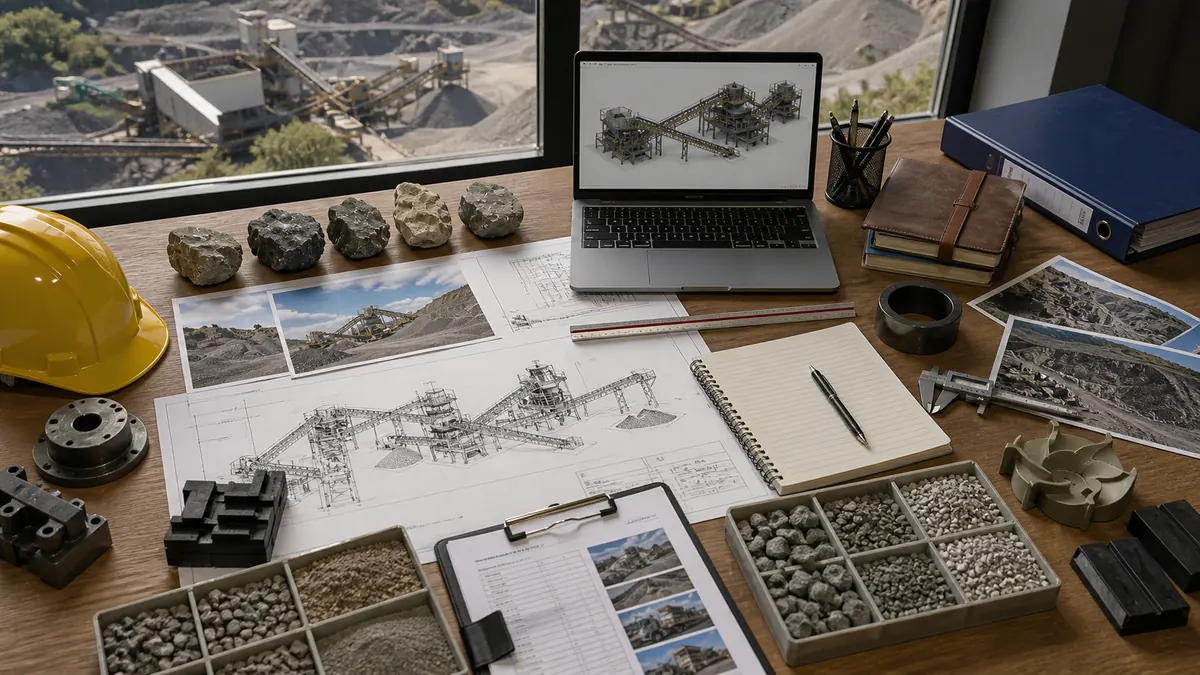
To get an accurate VSI crusher recommendation, send the following information to the equipment supplier:
- Raw material name, such as granite, basalt, limestone, or river stone
- Maximum feed size
- Required final product size
- Required capacity in tons per hour
- Whether the plant should be mobile or stationary
- Site photos or layout drawings if available
- Local power conditions and installation requirements
- Budget range and expected delivery time
Conclusion
A VSI crusher is an important machine for manufactured sand production and aggregate shaping. It works by accelerating rock through a high-speed vertical rotor and using impact force to break and shape the material. For buyers who need better particle shape, controlled sand grading, and high-quality final aggregate, a VSI crusher can be a practical final-stage crushing solution.
If you are planning a sand making plant or aggregate production line, send your raw material, feed size, output size, capacity, site photos, and budget range. MVSI can help recommend a suitable VSI crusher or complete mobile crushing and screening solution for your project.
FAQ
What is a VSI crusher used for?
A VSI crusher is used for manufactured sand production, aggregate shaping, and final-stage crushing. It is commonly used in quarry, road construction, concrete aggregate, and mining projects.
Is a VSI crusher good for making sand?
Yes. A VSI crusher is one of the most common machines for producing manufactured sand because it can improve particle shape and produce fine aggregate such as 0-5 mm sand.
What is the difference between a VSI crusher and a cone crusher?
A cone crusher mainly crushes rock by compression, while a VSI crusher uses high-speed impact. Cone crushers are often used for secondary or tertiary size reduction, while VSI crushers are often used for sand making and particle shaping.
Can a VSI crusher crush granite and basalt?
Yes, a VSI crusher can process hard rock such as granite and basalt if the feed size, rotor design, wear parts, and plant configuration are selected correctly.
What feed size is suitable for a VSI crusher?
The suitable feed size depends on the VSI model and rotor configuration. In most plants, material is reduced by jaw, cone, or impact crushers before entering the VSI crusher.
How much does a VSI crusher cost?
The cost depends on capacity, motor power, wear part configuration, automation, mobile or stationary design, and supporting equipment such as feeders, screens, and conveyors.
Is a mobile VSI crusher better than a stationary VSI plant?
A mobile VSI crusher is better for flexible projects, short installation time, and changing job sites. A stationary VSI plant is usually better for long-term, high-volume quarry production.