Table of Contents
- Why Concrete Recycling Needs a Mobile Plant
- What Materials Can a Mobile Concrete Crusher Process?
- Recommended Mobile Concrete Recycling Flow
- Jaw Crusher or Impact Crusher for Concrete Recycling?
- Screen Size, Product Sizes, and Recycled Aggregate Use
- Capacity Planning for Concrete Recycling Projects
- Dust, Noise, Rebar, and Site Control
- Cost Factors and ROI
- Track-Mounted or Tire-Mounted for Recycling?
- Common Buyer Mistakes
- Quotation Checklist for Buyers
- Conclusion
- FAQ
- What is a mobile concrete crusher used for?
- Is an impact crusher or jaw crusher better for concrete recycling?
- What equipment is needed for a mobile concrete recycling plant?
- Can a mobile crusher remove rebar from concrete?
- What output sizes can recycled concrete aggregate produce?
- How many tons per hour can a mobile concrete crusher produce?
- Is track-mounted or tire-mounted better for concrete recycling?
- What information should I provide before requesting a quotation?
Mobile Crushing and Screening Plant for Concrete Recycling
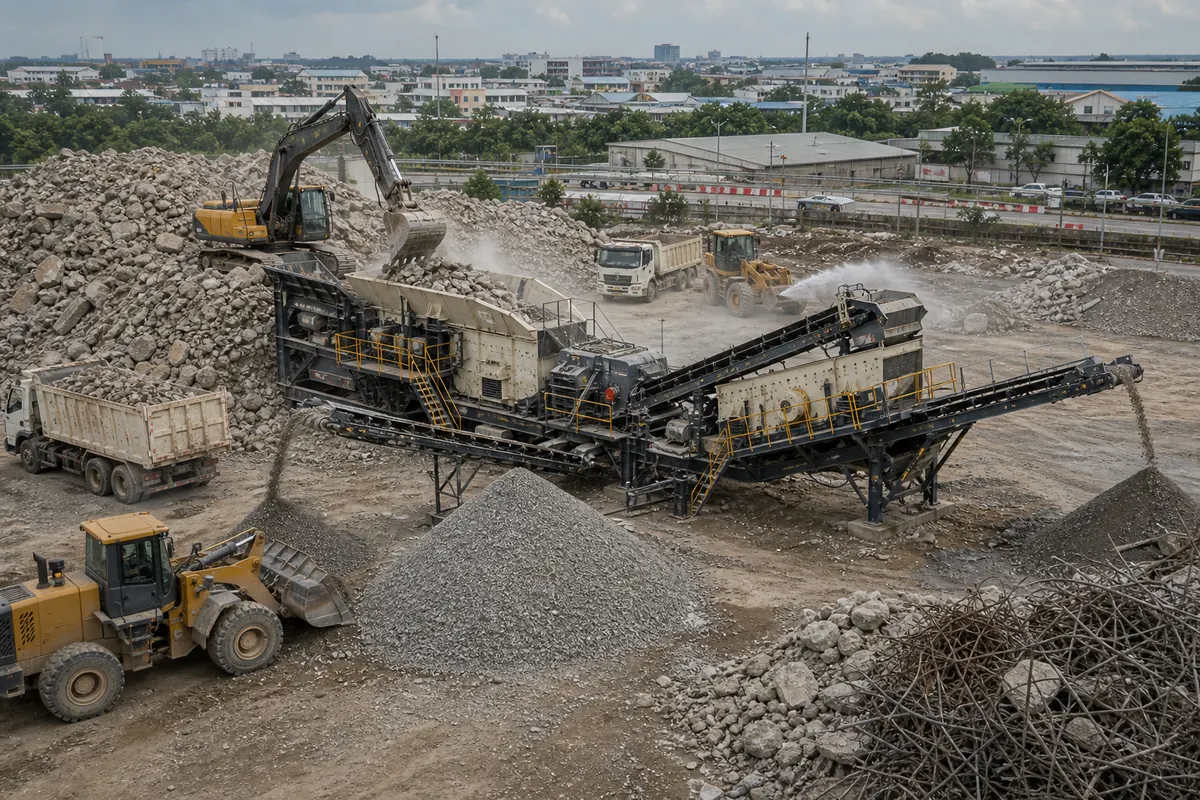
A mobile crushing and screening plant for concrete recycling should be configured around the size and contamination of the demolition waste, the target recycled aggregate sizes, and the required tons per hour. Most projects start with a mobile impact crusher when concrete is clean and medium-hard, or a mobile jaw crusher when feed pieces are large, reinforced, or mixed with hard rubble. Add a magnetic separator for rebar, a mobile screen for 0-5 mm, 5-20 mm, and larger products, conveyors, dust suppression, and stockpile space. The best plant is chosen by cost per ton, mobility, permit limits, and resale demand.
Why Concrete Recycling Needs a Mobile Plant
Concrete demolition waste is heavy, bulky, and expensive to move when it is hauled away without processing. A mobile concrete crusher can turn broken slabs, columns, foundations, blocks, and road pavement into usable recycled aggregate near the demolition site, road project, or recycling yard.
The business value is practical. Contractors can reduce disposal trips, recover steel rebar, make road base material, and sell graded recycled aggregate when local specifications allow it. Recycling operators can also move the same plant between demolition yards, temporary stockpile areas, and municipal construction waste projects.
If you are still comparing general mobile plant options, start with the Mobile Crushing Plant Buying Guide for Quarry and Mining Projects. If the main decision is crusher type, also read Mobile Jaw Crusher vs Mobile Impact Crusher: Which One Should You Choose?.
What Materials Can a Mobile Concrete Crusher Process?
A mobile concrete recycling plant can process many common construction waste materials, but the feed must be checked before equipment selection.
Typical acceptable materials include:
- Reinforced concrete from buildings, bridges, slabs, and foundations.
- Unreinforced concrete blocks, curbs, precast parts, and pavement.
- Mixed concrete and asphalt when the final product specification allows it.
- Brick, tile, and masonry in controlled ratios.
- Natural stone mixed with demolition waste if the crusher chamber is suitable.
Problem materials should be removed or controlled before feeding:
- Large steel beams, long rebar bundles, wire mesh, and cables.
- Wood, plastic, insulation, gypsum board, and domestic waste.
- Wet clay, soil, and fine mud that can blind screens.
- Oversized slabs that exceed feeder opening or crusher inlet size.
- Hazardous material that requires separate handling under local rules.
The cleaner the feed, the easier it is to produce consistent recycled aggregate. For heavily contaminated demolition waste, add manual sorting, pre-screening, or a separate picking station before the crusher.
Recommended Mobile Concrete Recycling Flow
A practical concrete recycling plant is not only a crusher. It is a complete material flow from feed control to final stockpiles.
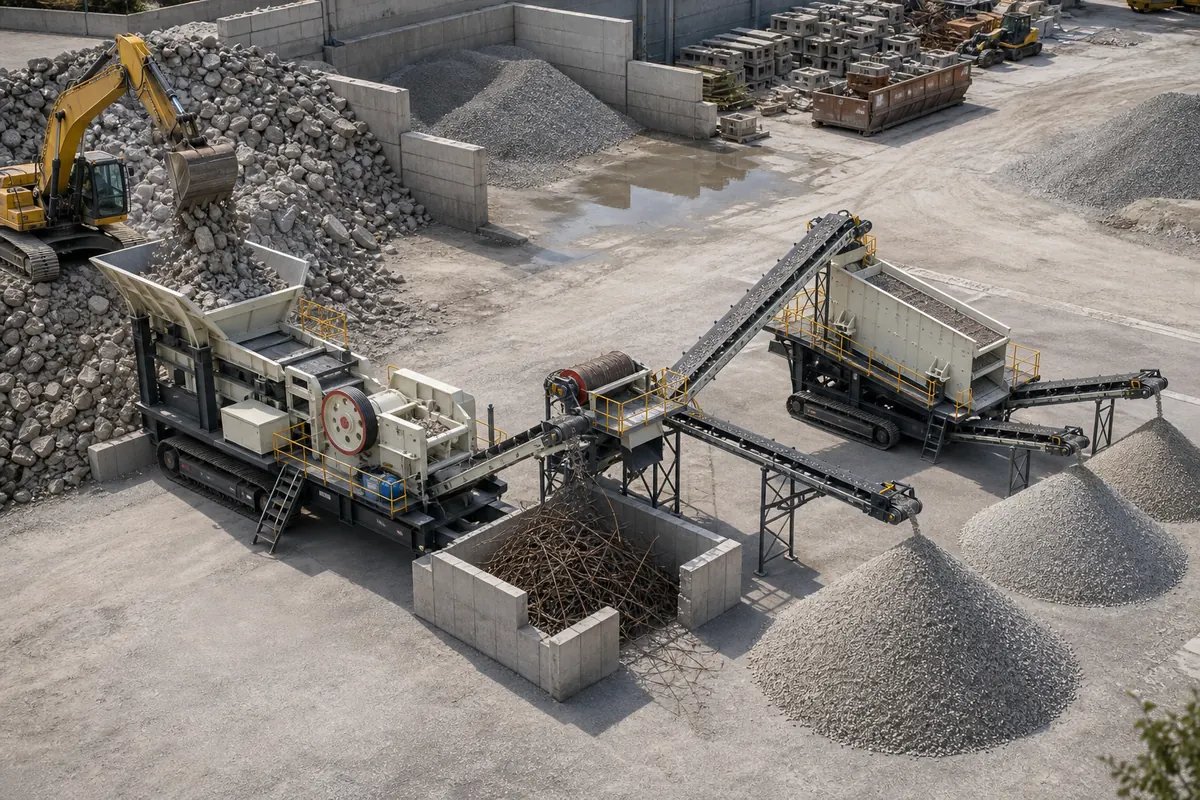
The common flow is:
- Excavator or loader feeds broken concrete into a vibrating feeder or grizzly hopper.
- Oversized concrete enters the mobile jaw crusher or mobile impact crusher.
- Crushed material passes under a magnetic separator to remove rebar and steel.
- Material is transferred to a mobile screen plant.
- The screen separates fine material, road base aggregate, and oversize return material.
- Conveyors build stockpiles for recycled aggregate and separated steel.
For clean concrete, a mobile impact crusher plus screen can often produce a good cubical recycled aggregate in one compact flow. For heavily reinforced concrete or large feed pieces, a mobile jaw crusher before screening may be safer and more stable. Some projects use jaw crusher primary crushing followed by impact crusher secondary crushing when the final aggregate shape and reduction ratio are demanding.
Jaw Crusher or Impact Crusher for Concrete Recycling?
The crusher choice should match feed size, steel content, final product shape, and operating cost. Do not select by price alone.
| Crusher Type | Better For | Main Advantages | Key Checks |
|---|---|---|---|
| Mobile jaw crusher | Large slabs, reinforced concrete, mixed hard rubble | Strong primary reduction, handles large feed, stable for rough demolition waste | Product shape may need secondary crushing; check discharge size and screen demand |
| Mobile impact crusher | Clean concrete, asphalt, road recycling, cubical recycled aggregate | Good reduction ratio, often better particle shape, compact flow | Wear cost rises with hard stone or abrasive contaminants |
| Jaw plus impact combination | Large feed and strict final aggregate shape | More control over reduction and final product | Higher capital cost, more conveyors, more space required |
| Mobile screen only | Pre-crushed concrete or sizing stockpiled material | Lower cost if crushing is already done | Cannot reduce oversized material by itself |
If the feed includes granite, basalt, or hard natural stone mixed with concrete, ask the supplier to check wear parts and crusher chamber selection carefully. A plant that works well for clean concrete may not be economical for abrasive hard rock.
Screen Size, Product Sizes, and Recycled Aggregate Use
The screen plant determines whether the recycled material can be sold or reused efficiently. A crusher without the right screen may produce a mixed pile that still needs extra handling.
Common product targets include:
- 0-5 mm fines for backfill or blending when accepted by the project.
- 5-20 mm recycled aggregate for drainage, pipe bedding, and some concrete applications where local specifications allow.
- 20-40 mm road base and sub-base material.
- Oversize return material for re-crushing.
Screen deck selection depends on moisture, fines content, clay, required cut sizes, and throughput. Wet or dusty concrete waste may need stronger screening area, cleaning access, and dust suppression. If rebar and wire are common, make sure the magnet location and discharge path do not create blockages near the screen feed.
Capacity Planning for Concrete Recycling Projects
Concrete recycling capacity is usually lower than clean quarry rock capacity because feed size, steel content, slab shape, and contamination are less predictable. Plan capacity from real site conditions, not only brochure numbers.
| Target Capacity | Typical Application | Suggested Starting Configuration |
|---|---|---|
| 30-80 TPH | small demolition contractor, temporary job site, local road base | compact mobile impact crusher or jaw crusher with magnet and simple screen |
| 80-150 TPH | recycling yard, city demolition waste, road contractor | mobile impact crusher plus mobile screen, magnet, return conveyor, dust control |
| 150-250 TPH | larger recycling business, infrastructure demolition, commercial aggregate supply | heavy mobile jaw or impact crusher plus independent screen plant and larger stockpile conveyors |
| 250+ TPH | high-volume recycling yard or long-term material supply | multi-stage mobile or semi-mobile plant with pre-sorting, primary crushing, screening, and possible secondary crushing |
For road contractors comparing capacity-based layouts, the 100 TPH mobile crushing plant guide and 200 TPH mobile crusher plant article can help frame the equipment scale.
Dust, Noise, Rebar, and Site Control
Concrete recycling sites need more control points than many quarry applications because they often operate near roads, cities, industrial parks, or demolition zones.
Important control measures include:
- Water spray or misting at feed, crusher discharge, screen, and conveyor transfer points.
- Magnetic separation for rebar before material reaches final stockpiles.
- Safe steel discharge area with enough room for removal by loader or forklift.
- Loader traffic lanes separated from people, trucks, and maintenance zones.
- Crusher access platforms for clearing blockages and changing wear parts.
- Screen access for mesh changes and cleaning.
- Noise planning if the project is close to residential or commercial areas.
Local permits, dust rules, noise limits, working hours, and recycled aggregate acceptance standards vary by market. Check these requirements before ordering the plant, especially when the plant will work inside a city or near a public road.
Cost Factors and ROI
The purchase price of a mobile concrete crusher is only one part of the project cost. Buyers should compare total cost per ton and the value of avoided disposal, recovered aggregate, and reduced hauling.
Main cost factors include:
- Crusher type, feed opening, rotor size, jaw chamber, and screen deck area.
- Track-mounted or tire-mounted chassis, transport dimensions, and setup time.
- Magnetic separator, dust suppression, return conveyor, and stockpile conveyors.
- Wear parts for blow bars, jaw plates, liners, screen mesh, and belts.
- Fuel or electric power, generator size, and local power availability.
- Labor for sorting, feeding, stockpile management, and maintenance.
- Shipping, import duties, installation, commissioning, spare parts, and service support.
The ROI is strongest when the plant can reduce disposal distance, reuse material on the same project, keep trucks moving efficiently, and produce product sizes that local buyers actually need. A cheap crusher that creates unsellable mixed material can cost more than a properly configured plant.
Track-Mounted or Tire-Mounted for Recycling?
Both chassis types can work for concrete recycling. The right choice depends on how often the plant moves and how prepared the site is.
A track-mounted mobile crusher is usually better when the machine must move around a demolition site, follow changing stockpiles, or work on uneven ground. A tire-mounted plant can be practical for recycling yards, road-accessible projects, and buyers who relocate less frequently between prepared sites.
For a full chassis comparison, see Track-Mounted vs Tire-Mounted Mobile Crusher: Pros and Cons. For regional recycling demand examples, the Mobile Crusher for UAE Construction Waste and Aggregate Recycling article is also relevant.
Common Buyer Mistakes
Many concrete recycling problems come from incomplete feed information or missing site details before quotation.
Avoid these mistakes:
- Choosing an impact crusher when the feed has too much hard abrasive stone.
- Choosing a small jaw crusher when slabs and reinforced pieces are too large.
- Forgetting the magnetic separator and then contaminating final aggregate with steel.
- Buying a crusher without enough screen area for the required output sizes.
- Ignoring dust suppression, noise control, and city working restrictions.
- Underestimating stockpile space and loader movement.
- Asking for a price without photos of feed material, rebar content, and site layout.
- Comparing machine prices without checking wear parts, shipping, installation, and service.
Quotation Checklist for Buyers
Before requesting a mobile concrete crusher quotation, prepare the information that directly affects equipment selection and price.
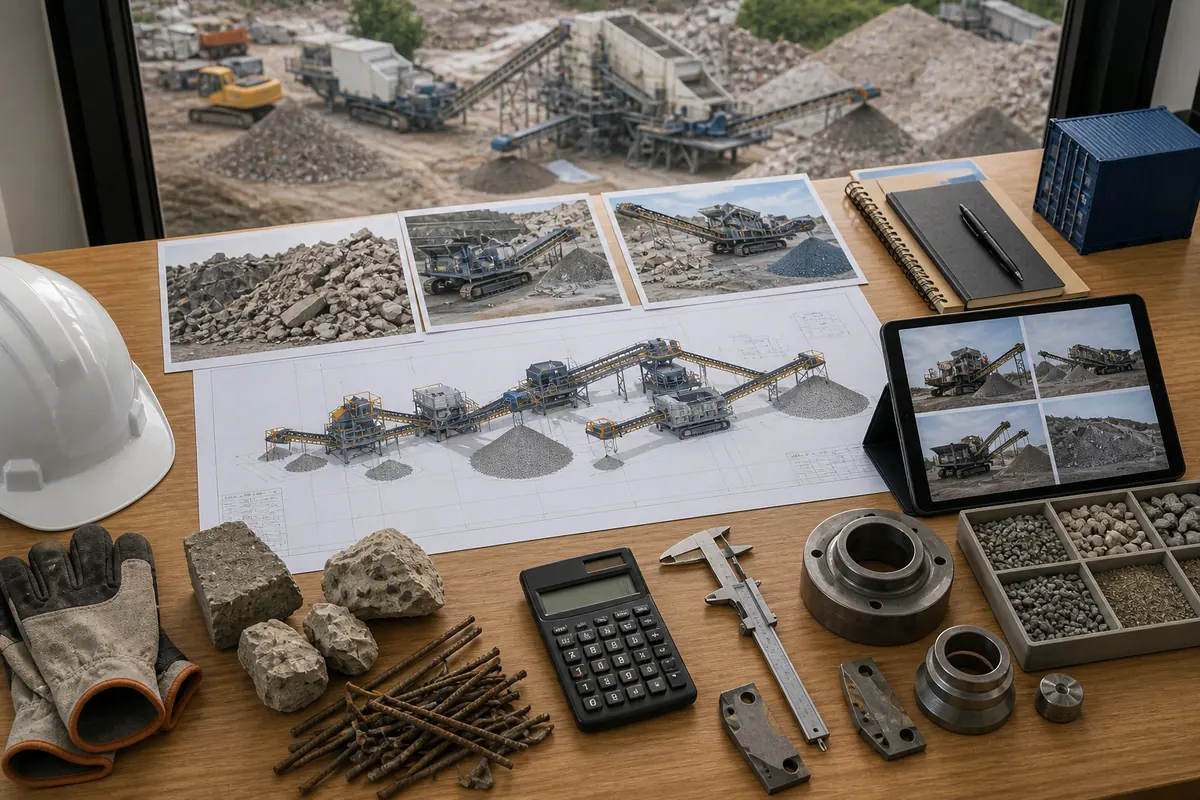
Send the supplier:
- Raw material type: reinforced concrete, clean concrete, mixed demolition waste, asphalt, brick, or natural stone.
- Feed size: maximum slab size, average piece size, and whether oversized pieces can be pre-broken.
- Output size: required recycled aggregate sizes such as 0-5 mm, 5-20 mm, or 20-40 mm.
- Capacity: target tons per hour and working hours per day.
- Rebar condition: content, length, mesh, wire, and steel separation requirements.
- Site photos: feed piles, working area, access road, truck loading area, and power condition.
- Mobility requirement: track-mounted or tire-mounted, relocation frequency, and transport limits.
- Budget range, delivery timeline, local permit requirements, and after-sales support expectations.
Conclusion
A mobile crushing and screening plant for concrete recycling should be designed as a complete material flow: feeding, crushing, steel removal, screening, recirculation, dust control, and stockpiling. Clean concrete may work well with a mobile impact crusher and screen. Large reinforced slabs may need a mobile jaw crusher or a jaw plus impact combination. The best decision depends on feed size, steel content, output size, capacity, site limits, and cost per ton.
If you are planning a concrete recycling project, send MVSI your raw material, feed size, output size, capacity, site photos, rebar condition, mobility requirement, and budget range. We can help review the application and suggest a practical mobile crushing and screening configuration.
FAQ
What is a mobile concrete crusher used for?
A mobile concrete crusher is used to crush demolition concrete, pavement, blocks, slabs, foundations, and other construction waste into recycled aggregate for road base, backfill, drainage, and other approved applications.
Is an impact crusher or jaw crusher better for concrete recycling?
An impact crusher is often better for clean concrete and cubical recycled aggregate. A jaw crusher is usually better for large feed pieces, heavily reinforced concrete, and mixed hard rubble. The final choice depends on feed size, steel content, output size, and wear cost.
What equipment is needed for a mobile concrete recycling plant?
A practical plant usually includes a feeder, mobile jaw or impact crusher, magnetic separator, mobile screen, return conveyor, stockpile conveyors, dust suppression, and service access for maintenance.
Can a mobile crusher remove rebar from concrete?
The crusher breaks the concrete, while a magnetic separator removes much of the exposed rebar and steel after crushing. Long rebar, wire mesh, and heavy steel should still be reduced or removed before feeding when possible.
What output sizes can recycled concrete aggregate produce?
Common output sizes include 0-5 mm fines, 5-20 mm aggregate, 20-40 mm road base material, and oversize return material. The exact sizes depend on screen mesh, crusher setting, feed condition, and local product demand.
How many tons per hour can a mobile concrete crusher produce?
Small plants may produce 30-80 TPH, medium plants often target 80-150 TPH, and larger systems can reach 150-250 TPH or more. Real capacity depends on feed size, reinforcement, crusher type, screen area, moisture, and operator control.
Is track-mounted or tire-mounted better for concrete recycling?
Track-mounted equipment is usually better for frequent movement, rough ground, and changing demolition stockpiles. Tire-mounted equipment can be practical for road-accessible recycling yards and projects with prepared working pads.
What information should I provide before requesting a quotation?
Provide raw material, feed size, output size, capacity, site photos, rebar condition, mobility requirement, power condition, permit limits, budget range, and delivery timeline.