Table of Contents
- Which facts decide where the upgrade money should go?
- When should screening improvements come before a bigger cone?
- When is a larger cone crusher the stronger proposal?
- What does a simple mass balance reveal, and what does it miss?
- How should the two upgrade quotations be compared?
- Frequently asked questions
- Does high circulating load prove that the cone crusher is too small?
- Should all material smaller than the screen opening leave as saleable product?
- Will larger screen openings remove the need for a cone upgrade?
- Can a screen-media change solve the problem without replacing the screen?
- Is there a universal acceptable return-load percentage?
- What should be agreed before ordering either upgrade?
- Choose the upgrade that removes the measured constraint
- Sources and technical references
Should You Upgrade the Cone Crusher or the Screen First?
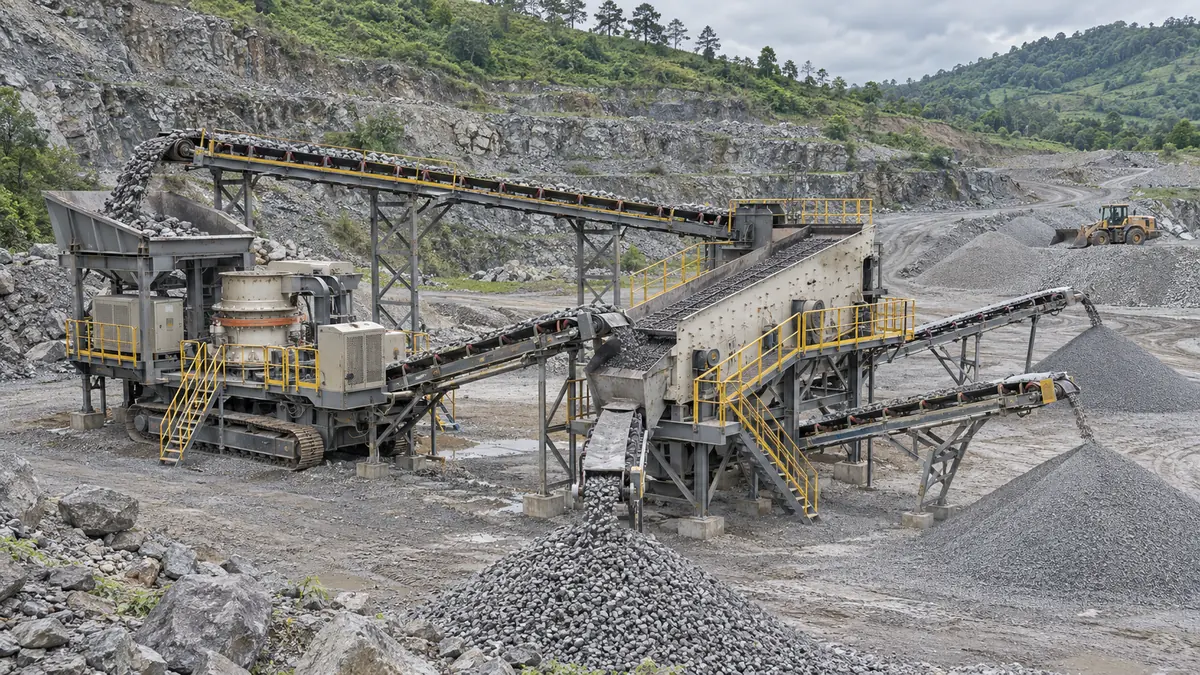
Investigate the screen first when return material contains a substantial fraction that should already pass the specified screen opening, or when blinding and uneven feeding restrict separation. Compare a larger cone crusher when the return is genuinely coarse and the existing crusher cannot perform the required reduction within its approved operating limits. High return tonnage alone does not identify which machine to buy. Measure fresh feed, return grading, accepted product and operating interruptions over the same period, then compare complete circuit proposals. Some plants need both upgrades; others need feeding or maintenance corrections before either purchase.
By MVSI Company. Published 2026-11-07.
Which facts decide where the upgrade money should go?
The composition of the return stream matters as much as its tonnage. Establish whether the loop is carrying material that still needs crushing, material the screen failed to separate, or a mixture of both.
| Decision fact | Evidence to obtain | Implication for the buying decision |
|---|---|---|
| Return grading | Representative size analysis against the actual screen opening, with moisture and clay observations | Misplaced undersize supports a screening investigation; genuinely coarse return supports a crushing-duty review |
| Accepted product | Measured output meeting the complete grading, shape and cleanliness specification | A higher crusher belt reading is not automatically more saleable product |
| Cone operating condition | Approved chamber and closed-side setting, feed distribution, wear condition, load and interruption records | A worn or poorly fed cone must be distinguished from a machine that is genuinely too small |
| Screen condition | Deck loading, feed distribution, open area, blinding, wear and actual product cuts | Separate an application or maintenance correction from a larger-screen requirement |
| Whole circuit load | Fresh, return and product rates on one time and moisture basis; storage changes and bypasses identified | Size the affected conveyors and transfers for their own stream, including return where applicable |
This is a diagnostic purchasing framework, not a universal return-load limit. Metso’s screening-efficiency guidance identifies misplaced particles, feeding and screen sizing as relevant checks. Its brand-specific examples do not establish an MVSI capacity, screen-media life or project result.
When should screening improvements come before a bigger cone?
Screening deserves priority when samples show material repeatedly returning even though it can pass the intended opening, and observations identify a separation constraint. That finding does not yet prove that the entire screen must be replaced.
Ask the screen supplier to review feed distribution, bed loading, blocked openings, damaged media and moisture-related adhesion. A maintenance correction or a suitable media arrangement may be enough; an undersized or unsuitable screen may require replacement. Evaluate these routes separately rather than treating every screening problem as a request for a larger box.
Do not simply enlarge the openings to reduce return. The resulting product must still meet the buyer’s grading and oversize limits. Similarly, material passing one control sieve is not automatically a finished product: shape, fines and contamination requirements can still prevent its sale into the intended specification.
Use the screen size and deck selection guide to describe the required cuts. For an upgrade, add the measured feed to each deck and the existing installation constraints; a deck count alone does not size the duty.
When is a larger cone crusher the stronger proposal?
A larger cone merits comparison when the required breakage duty exceeds the existing machine’s supported operating envelope after feed, wear and screen issues have been assessed. The proposed screen, return path and discharge equipment must also accept the new duty.
Check the actual cone feed and product curves, not only the total return. Genuinely coarse return may reflect the chosen chamber, closed-side setting (CSS), feed distribution or required reduction. Those factors need review before deciding that more installed power is the answer. A low average motor load alone does not prove spare useful capacity, because feed interruptions or other machine limits may dominate.
Metso’s HP cone application guide links feed condition, chamber, CSS and operating load to performance. Use it for general principles; its model settings and limits are not operating instructions for another manufacturer’s machine. The cone chamber selection article explains the separate profile-selection decision.
For a mobile replacement or secondary-stage package, the relevant inquiry route is the MVSI mobile secondary crushing plant family, specifically its cone route. The landing page describes cone and return-screen arrangements alongside a separate impact route. Obtain current written confirmation of the offered model, screening scope, interfaces and material limits. It does not establish that a historical configuration fits an existing plant or guarantees its required output.
A cone upgrade is unsuitable as the only remedy when the present screen cannot separate the required product or the return conveyor is already the limiting interface. Conversely, a screen upgrade alone cannot supply breakage that the crusher is unable to perform. Metso’s circuit improvement guidance supports identifying bottlenecks and available capacity across the system before selecting changes.
What does a simple mass balance reveal, and what does it miss?
A mass balance distinguishes new production from material passing through the crusher again. It cannot identify the correct purchase without size analysis and equipment-condition evidence.
In a simplified steady circuit where every tonne of fresh feed enters one cone, all its discharge reaches one screen, and screen oversize returns to that cone, gross cone feed equals fresh feed plus return. If there are no losses, rejects, bypasses or inventory changes, total material leaving the circuit equals fresh feed. Saleable output equals that total only if every outgoing stream meets its required specification. Use a more complete balance whenever those assumptions do not hold.
| Illustrative quantity | Assumption or calculation | Meaning |
|---|---|---|
| Fresh feed | Assume 120 metric tonnes per hour (t/h) | New material entering this simplified loop |
| Return to cone | Assume 60 t/h | Material circulating again, not new output |
| Gross cone and screen feed | 120 + 60 = 180 t/h | Internal stream load under the stated routing |
| Undersize found in return | Assume 40% by mass: 0.40 × 60 = 24 t/h | A diagnostic lead for separation, not an automatic capacity gain |
All numbers in this example are hypothetical arithmetic inputs, not MVSI ratings, a customer record or a recommended return fraction. The 24 t/h finding would justify investigating why those particles returned. Removing that material from the loop would not prove that fresh feed can rise by 24 t/h: the crusher product distribution, screen performance and other limits will change with the new operating condition. Rebalance and verify the modified circuit.
How should the two upgrade quotations be compared?
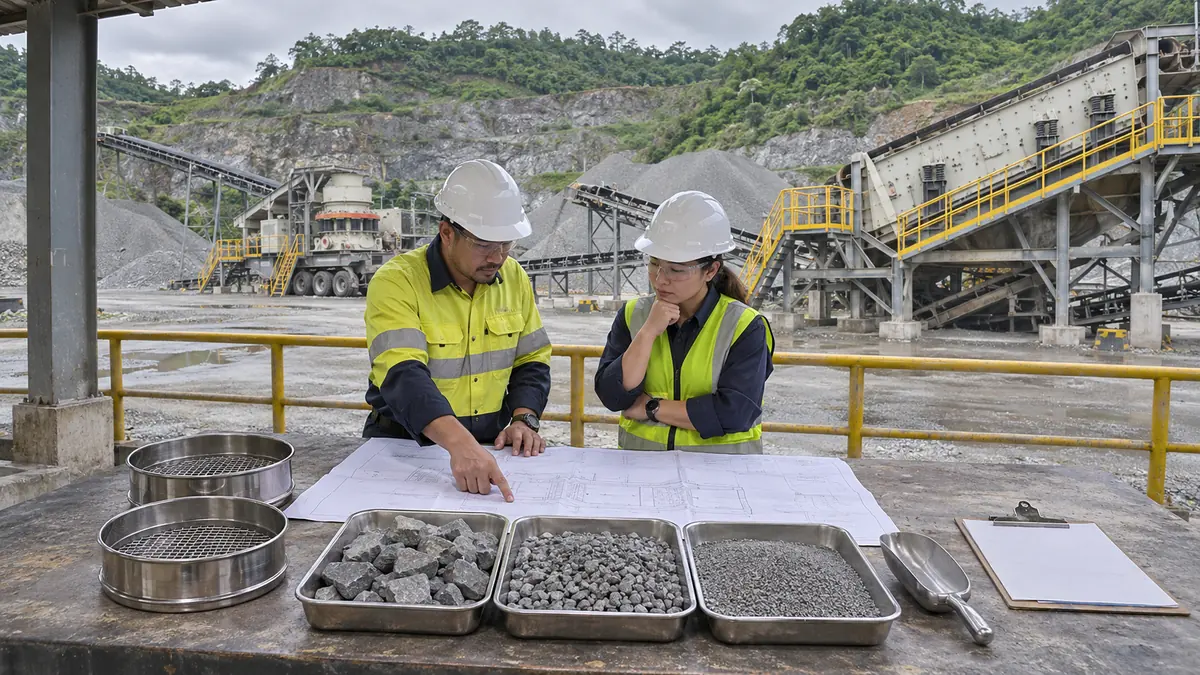
Compare both proposals against the same material, product requirement and elapsed operating period. Each bidder should explain which measured constraint its equipment addresses and which connected equipment must change.
- Issue one baseline: raw material and variability, feed and product size analyses, fresh and return rates, screen openings, cone chamber/CSS, operating records and current layout.
- For the screening route, request a diagnosis and separation basis, proposed screen or media scope, deck loads, chute and conveyor changes, access requirements and exclusions.
- For the cone route, request the proposed chamber and operating envelope, predicted product distribution and its evidence basis, new internal loads, power/control scope and downstream checks.
- For both routes, identify freight, installation, supports, wiring, guarding, downtime, initial parts, documentation and commissioning responsibilities. Confirm retrofit compatibility instead of assuming it.
- Agree representative material, measurement points, a common moisture basis, sampling methods, permitted adjustments and an elapsed-time test window. Use the site-approved sampling procedure; do not collect material from an exposed moving belt.
- Record in-spec product tonnes, off-spec streams, fresh feed, return composition, stoppages and deviations. Distinguish a simulation or estimate from a witnessed trial and a contractual performance commitment.
The quarry equipment interface guide helps identify unassigned transfers and controls. Compare the installed cost and the cost of operating the agreed scope per accepted product tonne using actual quotations and site records. Without those inputs, neither a cheaper bare machine nor a proposed reduction in return proves a better investment.
A useful decision trial changes one defined factor where practical and records any other changes. If feed source, CSS, screen opening and operating hours all change together, the result cannot isolate which intervention helped. A trial that improves the measured separation but leaves required output unmet is evidence for further review, not a failed reason to buy any specific machine.
Frequently asked questions
High return load is a reason to investigate the circuit, rather than a standalone order specification. These answers distinguish the measurements needed for a replacement decision.
Does high circulating load prove that the cone crusher is too small?
No. Return may contain genuinely coarse particles, misplaced undersize or both. Check its size distribution, screen condition and the crusher’s approved operating envelope before identifying the limiting equipment.
Should all material smaller than the screen opening leave as saleable product?
Not necessarily. Passing one opening establishes only a size condition. The material must also meet the complete product grading, shape, fines and contamination requirements for its intended use.
Will larger screen openings remove the need for a cone upgrade?
Larger openings may change the return stream, but they also change the product cut. Do not accept that change unless the resulting product remains within specification and the complete circuit is reassessed.
Can a screen-media change solve the problem without replacing the screen?
It may help when the diagnosed constraint is media-related and the screen is otherwise suitable for the duty. If deck capacity, feed distribution or the equipment application is inadequate, a media change alone may not resolve it.
Is there a universal acceptable return-load percentage?
No universal purchasing threshold is established here. Define return relative to fresh feed or another stated denominator, then assess the actual particle sizes, circuit routing and supported equipment loads.
What should be agreed before ordering either upgrade?
Agree the baseline material and product, complete equipment boundary, proposed changes, interface responsibilities and acceptance method. Compare accepted output over the same elapsed period and distinguish estimates, trial evidence and contractual guarantees.
Choose the upgrade that removes the measured constraint
Investigate screening first when misplaced undersize and separation problems explain the return. Compare a larger cone when verified breakage duty remains the constraint after the existing arrangement is assessed. If both are limiting, request a balanced package rather than approving either machine in isolation.
To review the mobile secondary cone scope, contact MVSI with raw material, maximum and typical feed size in mm, output size, required capacity in t/h, project country, site photos and budget range. Add the current cone model/chamber/CSS, screen openings and media, fresh and return measurements, return size analysis, moisture/clay observations, accepted output per shift and a layout showing every bypass and product route. Request written confirmation of the offered equipment and upgrade interfaces.
Sources and technical references
These product and primary OEM sources support the family mapping and general circuit principles. The purchasing method and numerical mass balance above are explicitly editorial guidance and hypothetical arithmetic, not published test results.
- MVSI Mobile Secondary Crushing Plant: documented mobile cone/return-screen family; current model, integration and project duty require confirmation.
- Metso, Six Tips to Make Screening Aggregates More Efficient: misplaced-particle checks, feeding, screen sizing and moisture-related separation constraints.
- Metso, HP Cone Crusher Application Guide: general relationships between feed, chamber, CSS and cone performance; model-specific limits are not transferred to MVSI.
- Metso, Three Ways to Improve Your Crushing Circuit: assess bottlenecks and available capacity across the circuit before choosing modifications.