Table of Contents
- What must be true before one screen can cover both jobs?
- Why are scalper and finishing-screen labels insufficient?
- Which configuration differences should the supplier document?
- When are two machines the better comparison?
- What evidence should close the purchase decision?
- Frequently asked questions
- Can a scalping screen produce finished aggregates?
- Can a finishing screen handle raw quarry feed after a mesh change?
- Must both duties use the same screen media?
- Does one capacity figure cover scalping and final sizing?
- Can one unit replace two screens operating in a plant train?
- What should a dual-duty quotation include?
- Choose one unit only after both duties are supported
- Sources and technical references
Can One Mobile Screen Handle Scalping and Final Sizing?
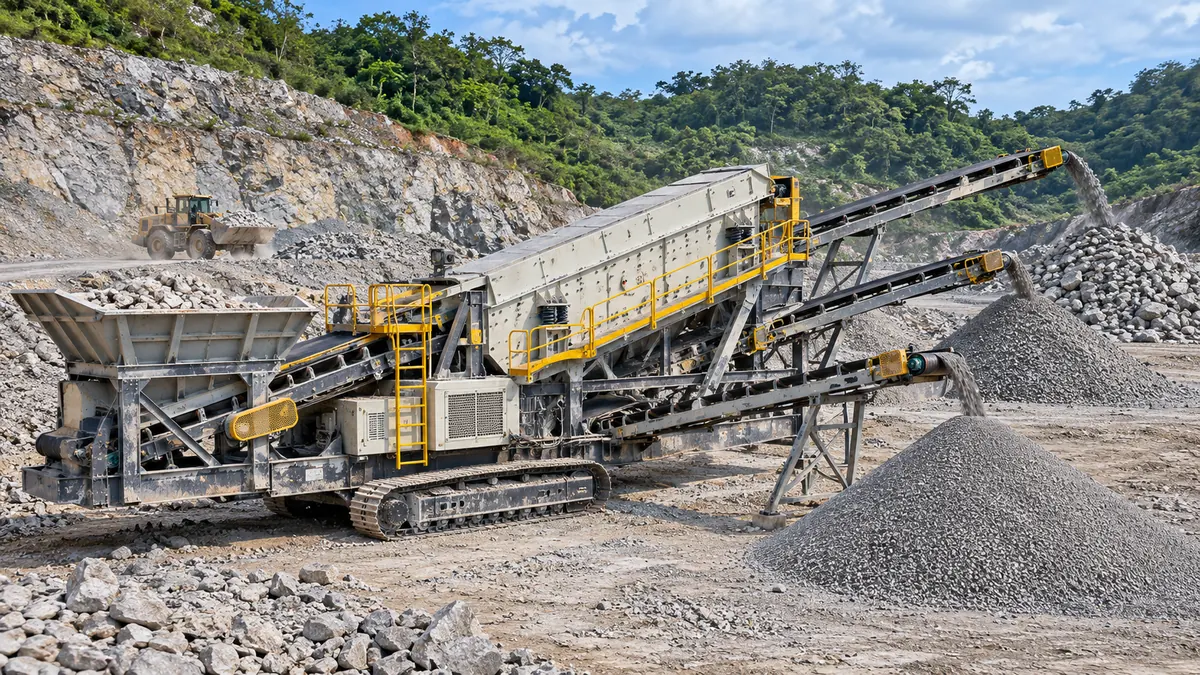
One mobile screen can be a candidate for both scalping and final sizing when the exact machine has a supported configuration for each duty and the jobs can run in separate campaigns. Do not assume that changing the mesh converts any finishing screen into a heavy-duty scalper, or that a scalper will meet every aggregate specification. Before buying, compare two documented operating configurations, including feed limits, material routes, required products and conversion work. If either duty remains unverified, or both jobs must run simultaneously, retain separate screening equipment in the comparison.
By MVSI Company. Published 2026-11-20.
What must be true before one screen can cover both jobs?
The same proposed machine must satisfy two defined duties, and the production schedule must allow it to move between them. Use this decision register before comparing machine prices.
| Decision fact | Evidence needed | Reason to retain separate equipment |
|---|---|---|
| Feed envelope | Maximum and typical lump size, grading, shape and condition for each job | Raw feed exceeds the proposed hopper, feeder or screen limits |
| Output obligation | Identify each stream as crusher feed, reject, return or specified product | A rough separation is offered where final product grading is required |
| Configuration | Supplier-supported media, feed arrangement and discharge routes for each duty | The second duty relies only on changing aperture |
| Conversion scope | Parts, cleanout, access, labour and reset checks included or excluded | Changeovers remove too much usable campaign time |
| Schedule | When and where each duty must operate | Independent duties must run concurrently |
The MVSI mobile screen family describes dual-deck vibrating screens fed by a crusher or excavator in aggregate and multistage applications. It provides a relevant starting point for an enquiry. Confirm the actual offered configuration for both duties; that description alone does not approve heavy raw feed or a particular final grading.
Why are scalper and finishing-screen labels insufficient?
The labels describe common duties, but the capability boundary belongs to the exact design and configuration. A scalper can sometimes make finished fractions, while a finishing-screen label does not establish coarse-feed tolerance.
RUBBLE MASTER’s screen-type guide describes a relatively unobstructed route for bulky material and protective top-deck media, while also discussing precision screening with a scalper after crushing. EvoQuip’s screening range likewise describes its Colt scalpers as serving heavy-duty and precision applications. These are examples of overlap in those manufacturers’ ranges, not proof that all screens are interchangeable.
Ask the supplier to explain the proposed material path using the actual arrangement drawing. Where can a slab bridge, a large lump strike a belt, or a discharge choke? A smaller aperture cannot change those clearances or establish impact resistance. Use the screen size and deck guide for general sizing; the dual-duty decision needs a separate configuration review.
Which configuration differences should the supplier document?
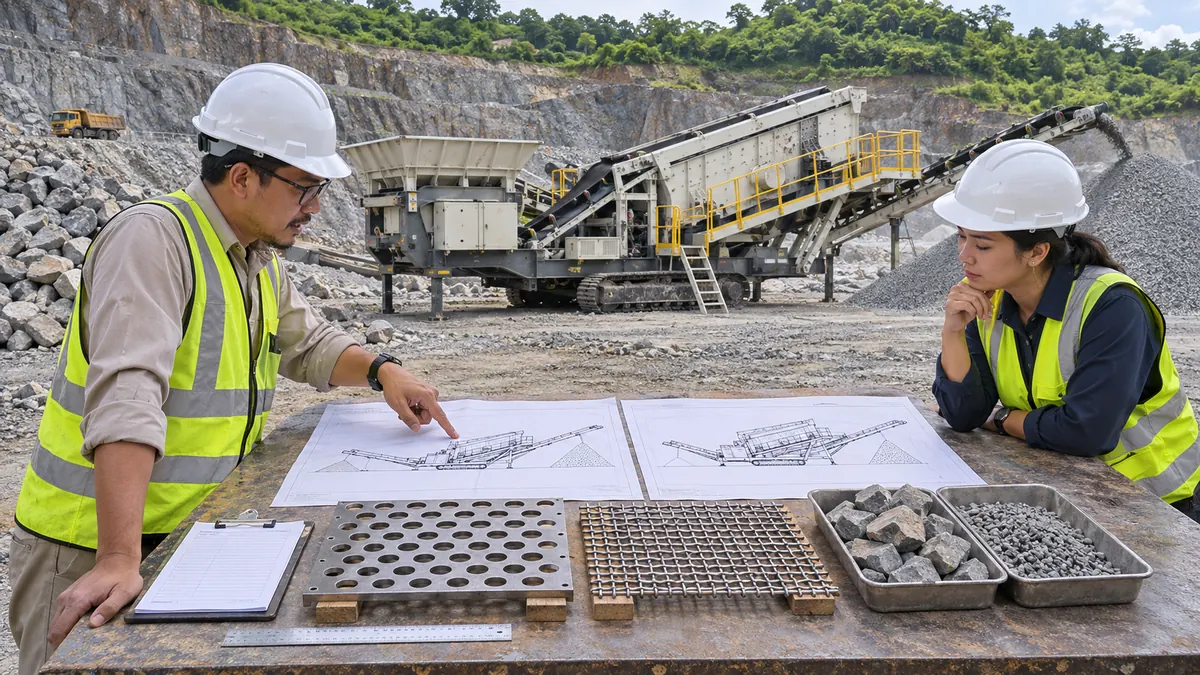
Request a configuration sheet for each duty, with common hardware and required changes identified. A statement that the machine is versatile leaves the purchase scope unresolved.
| Item | Scalping campaign | Final-sizing campaign |
|---|---|---|
| Material basis | Record raw-feed lumps, shape, fines and loading method | Record crushed-feed grading and required product specification |
| Feed and impact protection | Identify approved receiving path and protective components | Identify controlled delivery and distribution across the screen |
| Deck package | List approved media and support arrangement for the raw feed | List approved media for each required cut and product stream |
| Stream destinations | Name bypass, crusher-feed and rejected-material routes | Name product, oversize-return and off-spec routes |
| Changeover record | List items removed, retained or repositioned | List replacement items, reset checks and release responsibilities |
Kleemann’s screening principles explain why coarse-feed impact, material flow, bed depth, media and inclination matter. Its discussion also shows a trade-off between throughput and separation quality. Consequently, request a supported operating range for each duty rather than a single headline capacity or an angle copied from another machine.
A robust upper deck does not by itself demonstrate that the lower deck will deliver the required final fraction. Conversely, a fine-screening media package should not be exposed to raw-feed impact without approval. For damp, clay-bearing feed, use the wet-feed comparison guide; neither equipment label establishes that dry separation will meet the project requirement.
When are two machines the better comparison?
Retain two machines when simultaneous production, an unsupported feed condition or repeated conversion work prevents one unit from covering the required schedule. Compare completed duties and usable production time over the same period.
Illustrative decision scenario, not a customer project: a quarry plans a raw-stockpile scalping campaign followed by grading previously crushed stone. One unit remains a candidate if both configurations are supported, intermediate storage is available and conversion fits the schedule. If the quarry instead needs upstream scalping and downstream final sizing continuously in the same plant train, alternating one unit between those locations cannot fulfil both jobs concurrently. A proposed combined multi-deck duty needs its own complete process review; it should not be inferred from this campaign example.
- Price the additional media, any approved conversion components, storage and handling equipment, cleanout and commissioning checks required by the two-duty proposal.
- Identify planned production hours lost to moving, changing media, resetting, cleaning and checking the screen. Request the supplier’s basis; do not assume a changeover duration.
- Compare the separate-machine alternative with its additional purchase, transport, operating and maintenance scope under the same feed and product requirements.
- Resolve whether campaign stockpiles and loading equipment can support the sequence without mixing rejected or unverified material into a specified product.
What evidence should close the purchase decision?
Close the decision only after each duty has an agreed material basis, configuration and product obligation. Evidence for one campaign does not establish the other.
Attach the two duty sheets to the quotation. Record which requirements are demonstrated, which remain assumptions, what further checks are needed and who accepts the result. For the detailed rate and sampling basis, use the mobile-screen capacity verification guide. Here the additional question is whether both approved configurations and their conversion package belong to the same offer.
Avoid buying one unit simply because two sales descriptions contain the word screening. Other costly gaps are comparing scalping feed tonnes with finished-product tonnes, treating all bypass material as saleable, omitting conversion components and leaving campaign scheduling until delivery.
Frequently asked questions
These answers concern separate duties on one proposed mobile screen; the supplier still needs to confirm the actual machine and configuration.
Can a scalping screen produce finished aggregates?
Some designs can perform final-sizing duties with a suitable configuration. Confirm the required fractions and product quality on the actual feed. A scalping classification alone neither approves nor rules out that use.
Can a finishing screen handle raw quarry feed after a mesh change?
Do not assume it can. Check the approved lump size, receiving path, impact protection, feeder and discharge clearances. Changing the aperture does not establish that the machine can accept the raw feed.
Must both duties use the same screen media?
No. Ask for the supported media and hardware schedule for each duty, including what is changed and what remains common. Do not assume that a sample panel is compatible with the offered screen.
Does one capacity figure cover scalping and final sizing?
No. Require a separate stated basis for each configuration, material condition and output obligation. A raw-feed rate does not establish the rate of a specified finished product.
Can one unit replace two screens operating in a plant train?
Not simply by alternating between simultaneous upstream and downstream jobs. Evaluate separate machines unless a complete proposed combined process is technically supported and meets both duties together.
What should a dual-duty quotation include?
It should identify both duty sheets, exact configurations, material routes, conversion items and exclusions, changeover responsibilities and the evidence required for each duty. Confirm availability and acceptance terms in the actual offer.
Choose one unit only after both duties are supported
One mobile screen is worth evaluating for compatible, sequential campaigns with a documented conversion package. Retain separate equipment when the feed envelope, product obligation or operating schedule cannot be met by that proposal.
To request a configuration review, contact MVSI through its listed WhatsApp or email route. Send raw material, maximum and typical feed size, output size, capacity in t/h, project country, site photos and budget range. Add the two duty schedules, feed grading and moisture records, product specifications, proposed feeding equipment, available stockpile space and whether the jobs must run simultaneously. Ask the offer to identify the supported configuration and unresolved inputs for each duty.
Sources and technical references
Sources retrieved 2026-11-20. Other OEM material explains design principles and terminology; it does not establish MVSI options or performance.
- MVSI Mobile screens, linked above: relevant dual-deck mobile-screen product family and feeding/application scope.
- RUBBLE MASTER Mobile Screener Types, linked above: bulky-feed paths, media and overlap with final-sizing duties.
- Terex EvoQuip Screening Range, linked above: documented heavy-duty and precision applications within a scalper family.
- Kleemann Scalpers and Classifying Screens, linked above: impact, material flow and separation trade-offs.