Table of Contents
- Start with the same quarry duty, not two catalogue descriptions
- When a new crusher route reduces startup uncertainty
- A used crusher is a condition-and-scope purchase
- Compare the full route cost and responsibility map
- Release the quarry only after a documented startup gate
- Common buying mistakes
- Frequently Asked Questions
- Is a new crusher always better for a quarry startup?
- What should be inspected on a used crusher before purchase?
- Can a used crusher be combined with new screens and conveyors?
- Should a buyer compare warranty against used-equipment price?
- How can a buyer compare capacity claims fairly?
- What documents should come with a crusher purchase?
- Is a test run enough to approve a used crusher?
- Request a Quarry Startup Proposal
New Crusher vs Used Crusher: Which Is Better for a Quarry Startup?
A new crusher is usually the lower-uncertainty route for a quarry startup when the buyer needs a defined equipment scope, documented handover, and a clear commissioning path. A used crusher can be sensible only when its actual condition, missing work, compatibility with the proposed circuit, and startup responsibilities are evidenced well enough to compare with a new offer. Do not compare a machine price with a complete new-plant quotation. First set one material duty, feed range, product schedule, operating basis, site interface list, and acceptance method. Then compare the total route needed to put safe, maintainable production into service—not the age of one crusher alone.
Start with the same quarry duty, not two catalogue descriptions
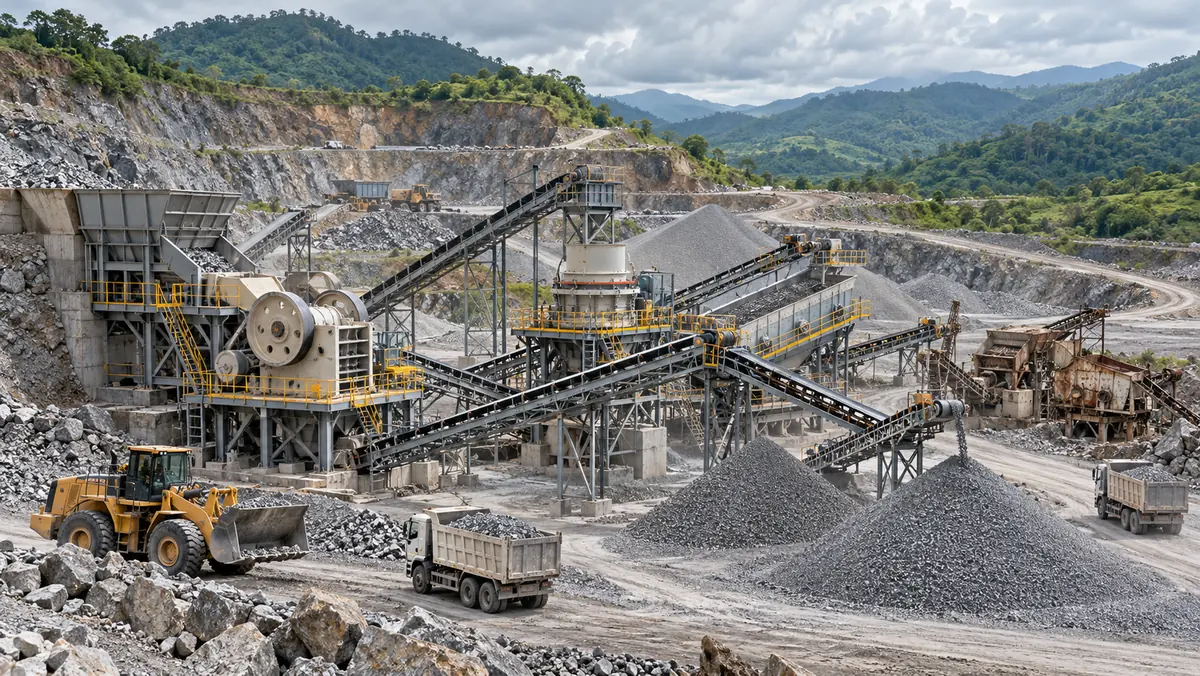
New and used equipment can only be compared after the buyer defines what the quarry must do. A jaw crusher by itself is not a quarry startup: the feed arrangement, transfer points, screen, recirculation, product stockpiles, controls, utilities, guarding, civil works, dust-management interfaces, and commissioning work can determine whether the plant can start.
The US EPA’s crushed-stone process description is useful general context because it treats crushing, screening, classification, material handling, and storage as connected operations. It does not size a plant or establish the right scope for a particular quarry.
Give both routes the same duty sheet:
| Item | Define before comparing offers |
|---|---|
| Material | Rock type, representative photos or samples, hardness/abrasiveness information if available, clay or moisture observations, and expected variation |
| Feed and products | Maximum and typical feed size, target product sizes, quality requirements, and where each product will go |
| Operating basis | Required feed rate, planned hours, peak and normal conditions, planned shifts, and acceptable interruptions |
| Circuit boundary | Hopper, feeder, primary and secondary crushing, screen, conveyors, recirculation, stockpiling, power, controls, dust and water interfaces |
| Site boundary | Ground and access constraints, transport route, lifting plan, utilities, permits, safety rules, installation responsibilities, and completion date |
| Acceptance basis | What is tested, with which material, who witnesses it, what documents are required, and what happens if a stated condition is not met |
The quarry feeder, crusher, screen, and conveyor guide can help identify the missing interfaces. For the production route itself, use the crushing plant flow-sheet guide to trace each material stream before treating either route as complete.
When a new crusher route reduces startup uncertainty
A new route can make responsibility easier to define when the supplier’s written scope identifies the supplied equipment, interfaces, documents, installation support, exclusions, and acceptance procedure. This is not a promise that every new machine will suit every deposit or that all suppliers provide the same support. It is a reason to ask for the same written detail from every bidder.
| New-equipment question | Why it matters to a startup |
|---|---|
| What exact duty and material assumptions support the selection? | A stated machine model is not an operating commitment without feed, product, and circuit assumptions. |
| Which auxiliaries are included? | Missing feeder controls, conveyors, chutes, motors, guards, or spares can move cost and schedule risk to the buyer. |
| What documents will be handed over? | Foundation loads, electrical information, parts identification, operation and maintenance documents, and drawings may be needed before site work and startup. |
| How is the unit tested and released? | A factory demonstration, site startup, and final acceptance can have different material, scope, and witness conditions. |
| Who owns each site interface? | Freight, unloading, installation, civil work, electrical connection, dust control, training, and travel should be allocated rather than assumed. |
For a first quotation, the mobile crushing plant buying guide provides a useful checklist for site, material, product, and logistics inputs. The same discipline applies to a stationary plant.
A used crusher is a condition-and-scope purchase
A used unit can be a workable route if it has a credible identity and condition record, can be inspected safely, and its renewal work is explicitly scoped. Its hours, paint condition, or a seller’s description cannot establish the condition of wear parts, bearings, liners, drives, controls, guarding, structural elements, or prior operating duty.
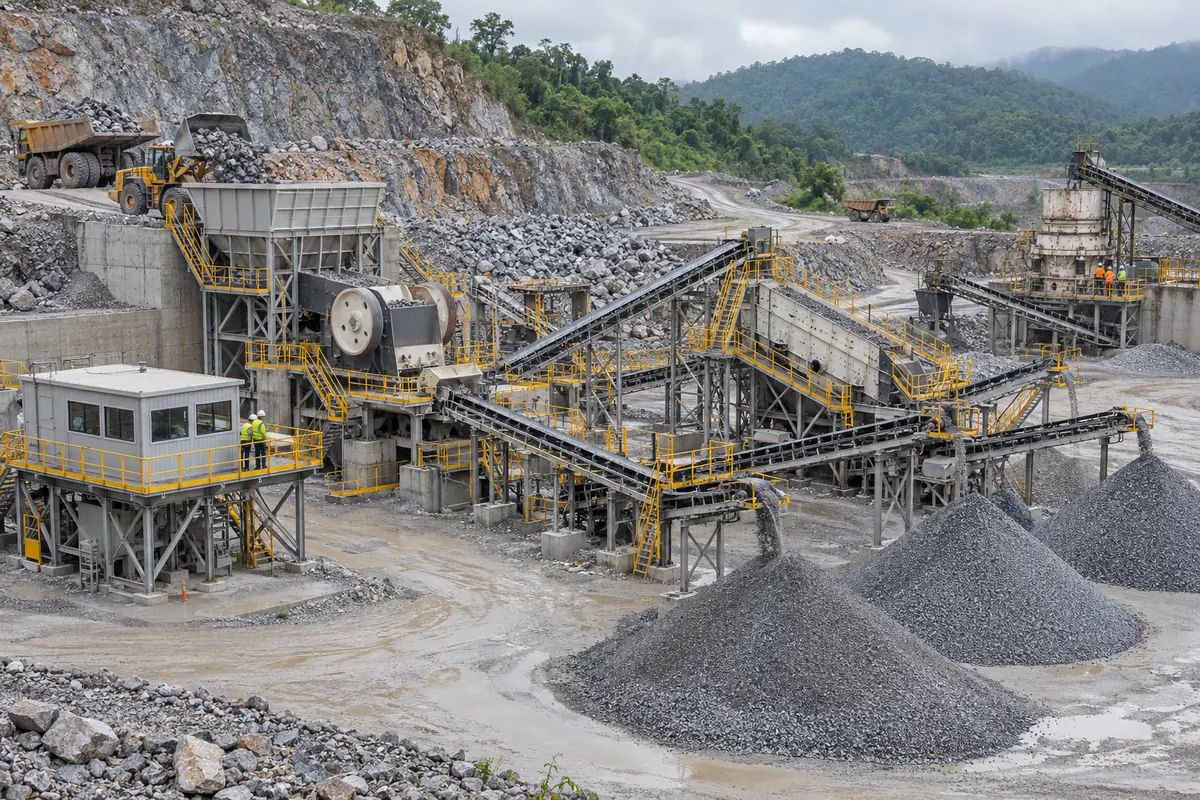
Ask the seller or owner to support a condition file that covers the following items. Engage suitably qualified people for inspection, testing, lifting, electrical work, and any safety-critical decision.
| Evidence or check | What the buyer needs to know |
|---|---|
| Equipment identity | Model, serial identification where available, year, configuration, original manuals, and what is included in the sale |
| Service history | Known repairs, component replacements, lubrication records, unplanned stoppages, operating material, and known limitations—not an unsupported uptime claim |
| Accessible inspection | Condition of the feed opening, wear components, chamber, drive, bearings, belts/couplings, hydraulic or lubrication systems, guarding, ladders, platforms, electrical cabinets, and structural areas as applicable |
| Demonstration or test | Whether the equipment can be safely observed with an agreed material and operating condition; record what the test did and did not prove |
| Missing work | A written list of repairs, wear parts, controls, guarding, electrical work, transport preparation, installation work, and the party responsible for each item |
| Parts and support path | Part numbers, lead-time evidence if offered, compatible components, drawings, and the actual route for future service—not assumed local availability |
In the United States, MSHA’s safety-defect rule calls for examination, correction, and records in its jurisdiction. Elsewhere, local rules and the buyer’s safety system govern. The transferable purchasing lesson is simple: do not put an unsafe or unverified machine into a startup plan just because it is available.
Compare the full route cost and responsibility map
The useful comparison is not “new price versus used price.” It is the cost, time, risk, and responsibility required to reach the agreed production release. Ask each route to populate the same schedule and responsibility map, then separate known inclusions from estimates and exclusions.
| Cost or risk area | New route: clarify | Used route: clarify |
|---|---|---|
| Equipment scope | Included machine, auxiliaries, controls, guards, and initial spares | Included machine, loose parts, removed items, missing auxiliaries, and compatibility work |
| Condition and renewal | Pre-delivery checks, stated documents, and exclusions | Inspection finding, repair scope, consumables, reconditioning standard, and evidence of completion |
| Transport and installation | Packing, loading, freight boundary, unloading, foundation, wiring, assembly, and supervision | Disassembly condition, lifting needs, transport protection, reassembly, fit-up, and replacement interfaces |
| Startup and acceptance | Training, commissioning involvement, trial scope, and defect-resolution path actually offered | Safe recommissioning plan, controls validation, guards, test material, responsible technician, and release criteria |
| Operating exposure | Wear assumptions, maintenance access, utility basis, and parts identification | Baseline condition, immediately required spares, deferred work, availability risks, and any dependency on obsolete components |
Use the stone crusher plant cost guide to structure total-cost questions, but do not use a generic cost range as a quotation. A startup has project-specific site work, material, transport, utilities, and acceptance boundaries.
Release the quarry only after a documented startup gate
A startup decision should end with a release review rather than a verbal assurance that the crusher is “ready.” This matters for either route, though a used route typically needs a more detailed closeout of condition findings and renewal work.

Use a written release checklist:
- Confirm the final equipment list, serial identity where applicable, drawings, manuals, parts list, and the actual configuration against the agreed scope.
- Close or formally accept every condition finding, missing guard, control issue, repair, wear item, installation task, and site interface. Name its owner and due date.
- Verify that feed, discharge, screen, recirculation, stockpiling, power, controls, emergency systems, access, and housekeeping arrangements match the agreed startup boundary.
- Define the test material, operating window, sampling or observation method, witness roles, safety rules, acceptable interruptions, and evidence required for acceptance.
- Record the handover result and the corrective-work route. Do not substitute an unrecorded site conversation for a signed scope or a safe release process.
The daily crusher-plant maintenance checklist can help a buyer turn maintenance access, lubrication, guards, and housekeeping into practical pre-start checks. It does not replace the manufacturer’s instructions or local safety requirements.
Common buying mistakes
The most expensive error is using the word “crusher” to hide an incomplete plant scope. Other common problems are treating a used unit’s appearance as a condition report, assuming a new offer includes every conveyor and site interface, accepting a capacity statement without its feed and product conditions, and scheduling installation before the drawings, lifting plan, utilities, and responsibility map are settled.
Another avoidable mistake is to count a seller’s promise of support as evidence of a service plan. Ask for the actual support scope, response arrangements, parts identification, exclusions, and commissioning responsibilities in the quotation or sale agreement.
Frequently Asked Questions
Is a new crusher always better for a quarry startup?
No. A new route can reduce uncertainty when the complete scope and handover are documented, but it must still suit the rock, product schedule, site, and operating duty. A well-evidenced used route may be viable where its condition and renewal scope are understood.
What should be inspected on a used crusher before purchase?
Inspect the actual configuration, accessible wear and drive components, lubrication or hydraulic systems where applicable, guards, access, structures, controls, documents, included parts, repair history, and any safe demonstration. Use qualified inspectors for safety-critical decisions.
Can a used crusher be combined with new screens and conveyors?
Possibly, but dimensions, feed and discharge elevations, controls, drives, power, guarding, throughput assumptions, product path, and responsibility for integration must be confirmed. Do not assume components from different sources will connect without engineering review.
Should a buyer compare warranty against used-equipment price?
Compare the written new-equipment coverage, exclusions, response path, and acceptance process against the used route’s condition findings, renewal work, spares, startup support, and risk allocation. A headline warranty length is not the entire comparison.
How can a buyer compare capacity claims fairly?
Give each supplier the same material, feed size range, product schedule, operating hours, moisture or clay observations, circuit boundary, and test or acceptance basis. Record any exclusions or untested conditions.
What documents should come with a crusher purchase?
Request the equipment list, identity record, drawings and electrical information needed for the site, operation and maintenance instructions, parts list, included-spares list, condition or test record, and written allocation of installation and commissioning responsibilities.
Is a test run enough to approve a used crusher?
No. A demonstration may show that equipment ran under one condition, but it does not replace an inspection, condition file, integration review, site safety preparation, and agreed startup acceptance plan.
Request a Quarry Startup Proposal
Send MVSI your raw material, feed size, output size, capacity, site photos, and budget range. Also state whether you are evaluating new equipment, an identified used unit, or a mixed route; include any available equipment list, condition photos, drawings, and target startup date. A proposal can then distinguish confirmed scope from assumptions and identify the inspection or engineering inputs still needed.