Table of Contents
- The Short Answer: Build a Circuit Around the Ore, Not a Single Machine
- What “Hard” and “Abrasive” Mean in a Crusher Decision
- Match the Crusher Type to the Reduction Stage
- Jaw crusher: the normal starting point for coarse hard ore
- Cone crusher: controlled secondary and tertiary reduction
- Impact crusher: use selectively when wear economics allow
- VSI crusher: a finishing stage, not usually the primary hard-ore answer
- A Typical Hard-Ore Crushing Configuration
- Size the System for Real Capacity, Not Nameplate Capacity
- Wear Parts and Maintenance Must Be Part of the Purchase Decision
- Site Conditions That Can Change the Recommendation
- Common Buyer Mistakes
- What to Send Before Asking for a Quote
- Conclusion
- FAQ
- What crusher is best for hard ore?
- Is a jaw crusher better than an impact crusher for abrasive rock?
- When should a cone crusher be used after a jaw crusher?
- Can a VSI crusher crush hard abrasive rock?
- What data is needed to size a crusher for ore?
- Why does crusher capacity drop with hard rock?
- How can I reduce wear in a hard-rock crushing plant?
- Should I use a mobile or stationary crusher for hard ore?
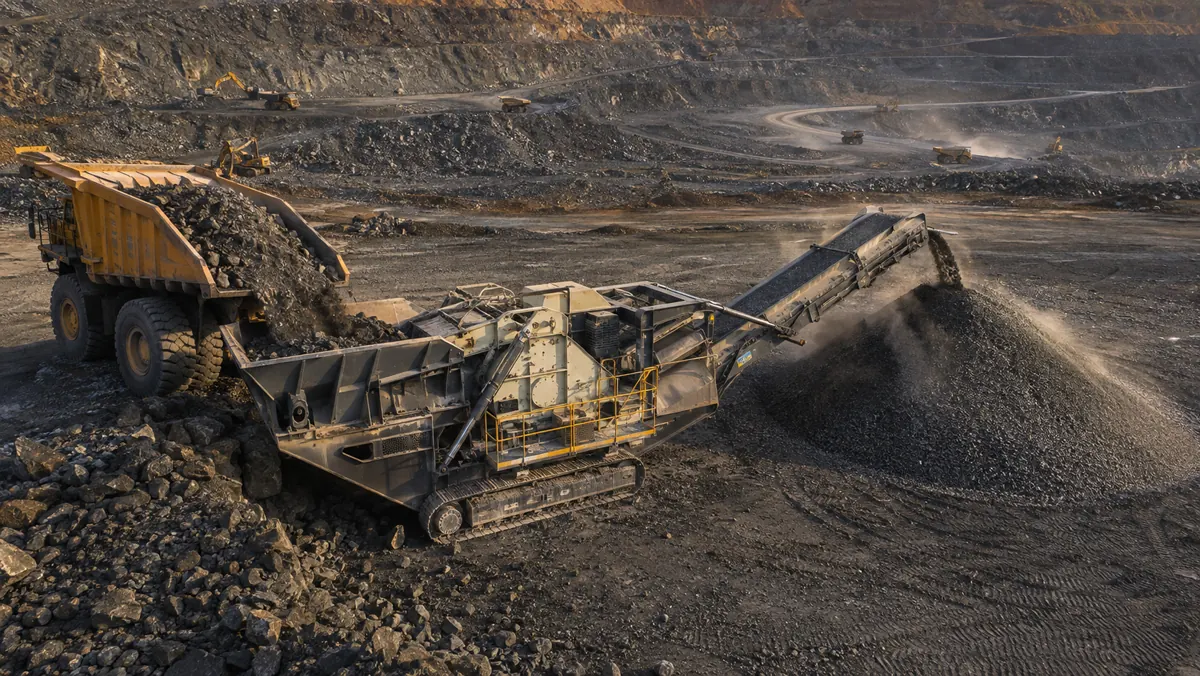
For hard, abrasive ore, a jaw crusher is usually the practical primary crusher, followed by a cone crusher when further reduction and a controlled mill feed are required. The right choice is not decided by rock strength alone. Buyers should check maximum feed size, size distribution, abrasion level, moisture and clay, target product size, required capacity, downstream process, power, site access, and the cost of wear parts and downtime. A crusher that looks economical at purchase can become expensive if liners wear too quickly or the circuit cannot handle real feed variation. Start with representative material data and design the complete crushing route around it.
The Short Answer: Build a Circuit Around the Ore, Not a Single Machine
Hard ore needs a robust reduction path. In many mine and quarry applications, a vibrating feeder or grizzly controls run-of-mine material before a jaw crusher. A cone crusher then performs secondary or tertiary reduction, while a screen removes correctly sized material and returns oversize in a closed circuit. Conveyors, surge stockpiles, dust control, and safe maintenance access are part of the same system.
This does not mean every hard-rock project needs every stage. A small quarry that only needs a coarse product may use a feeder and jaw crusher. A concentrator that needs stable mill feed may need jaw, cone, screen, stockpile, and multiple transfer points. The selection should begin with the process objective: prepare feed for grinding, produce aggregate, make a leach-pad product, or supply several saleable sizes.
For an overview of crusher roles, see our jaw, cone, impact, and VSI crusher selection guide. If the next step is mineral processing, our iron ore crushing plant guide explains how the front end can prepare a more consistent beneficiation feed.
What “Hard” and “Abrasive” Mean in a Crusher Decision
Hardness and abrasiveness are related but different. Hardness affects how much force and reduction work the rock requires. Abrasiveness affects how quickly the material consumes jaw plates, cone liners, crusher chamber parts, chutes, screen media, and conveyor components. Two ores with similar compressive strength can create very different wear costs because mineralogy, silica content, particle shape, and fines are different.
Useful information includes representative samples, geological description, laboratory strength data when available, abrasion-test results, bulk density, moisture, clay content, and the largest expected blasted rock. Test results should be interpreted with the supplier and process engineer rather than used as a stand-alone machine-sizing number. Feed variability matters as much as an average value: occasional oversize, sticky fines, and weather-related moisture can change how a crusher behaves.
Ask these questions before comparing models:
- What is the maximum rock size, and what percentage of the feed is close to that size?
- Is the material hard, abrasive, fractured, slabby, wet, clay-bearing, or prone to contain fines?
- What output size distribution is required, not just the maximum top size?
- Is the product feeding a mill, a leach circuit, a screen, a stockpile, or a customer specification?
- What availability target, shifts, maintenance window, and local spares support are realistic?
Match the Crusher Type to the Reduction Stage
Jaw crusher: the normal starting point for coarse hard ore
A jaw crusher is commonly selected for primary reduction of large, hard run-of-mine rock. Its large feed opening and straightforward compression action make it useful after blasting or excavation, where the top size is substantial and the feed is variable. A grizzly, scalper, or feeder can remove natural fines and regulate the flow before the jaw, which helps protect the chamber and reduce unnecessary wear.
Jaw-crusher selection should allow for the largest real rock, not only the average feed. Check the feed opening, feed gradation, desired discharge setting, crushing duty, liner material, flywheel and drive arrangement, access for plate changes, and the capacity after allowing for actual operating conditions. Choke feeding, bridging, and oversize should be managed by blasting, feed preparation, and hopper design rather than expected to be solved by a larger catalog capacity.
Cone crusher: controlled secondary and tertiary reduction
For hard and abrasive material that needs further reduction, a cone crusher is often the practical secondary or tertiary stage. It works well with screened, controlled feed and can be arranged in closed circuit to maintain a product target. In an ore circuit, the objective may be a steady mill feed. In an aggregate circuit, it may be a specified nominal size with controlled fines before final shaping or screening.
The chamber profile, closed-side setting, feed distribution, crusher speed, liner choice, and circulating load all affect the result. A cone crusher should not be treated as a simple drop-in machine after a jaw. It needs a correctly sized surge bin or stockpile, a controlled feed, and enough screen area to avoid overloading the closed circuit.
Impact crusher: use selectively when wear economics allow
Impact crushers can deliver high reduction and good particle shape, especially for softer or less abrasive rock. With very abrasive ore, however, blow-bar and chamber wear can become a major operating cost. An impact crusher may still fit a specific material, product-shape requirement, or recycling application, but it should be evaluated against wear-life expectations and the full cost per tonne, not only initial price.
For limestone-specific trade-offs, see our jaw crusher versus impact crusher guide.
VSI crusher: a finishing stage, not usually the primary hard-ore answer
A vertical shaft impact (VSI) crusher is normally used after primary and secondary stages when final shaping, controlled fines, or manufactured-sand performance is important. It is not usually the first machine for large hard run-of-mine ore. With highly abrasive feed, the rotor and chamber wear budget must be checked carefully. Where the downstream product needs cubical aggregate or a defined fine fraction, a VSI can be a valuable final stage after the feed is already suitably reduced.
A Typical Hard-Ore Crushing Configuration
The exact flow sheet changes with feed size and product requirements, but the following layout is a useful starting point for many hard-rock projects.
| Process duty | Typical equipment | Main decision points |
|---|---|---|
| Receive and regulate run-of-mine rock | hopper, apron feeder or vibrating feeder, grizzly | maximum rock size, fines bypass, bridging risk, truck or loader cycle |
| Primary reduction | jaw crusher | feed opening, jaw setting, abrasion, oversize control, maintenance access |
| Secondary reduction | cone crusher with surge capacity | chamber selection, controlled feed, liner life, product size |
| Classification and recirculation | multi-deck screen, transfer conveyors, return conveyor | screen area, moisture, blinding risk, circulating load, product splits |
| Final shaping or fine product when required | cone and/or VSI stage, final screen | product gradation, particle shape, fines limit, wear economics |
| Feed to processing plant or stockpile | surge bin, stockpile, belt feeder, conveyor | downstream buffer, dust, belt capacity, sampling and metal detection |
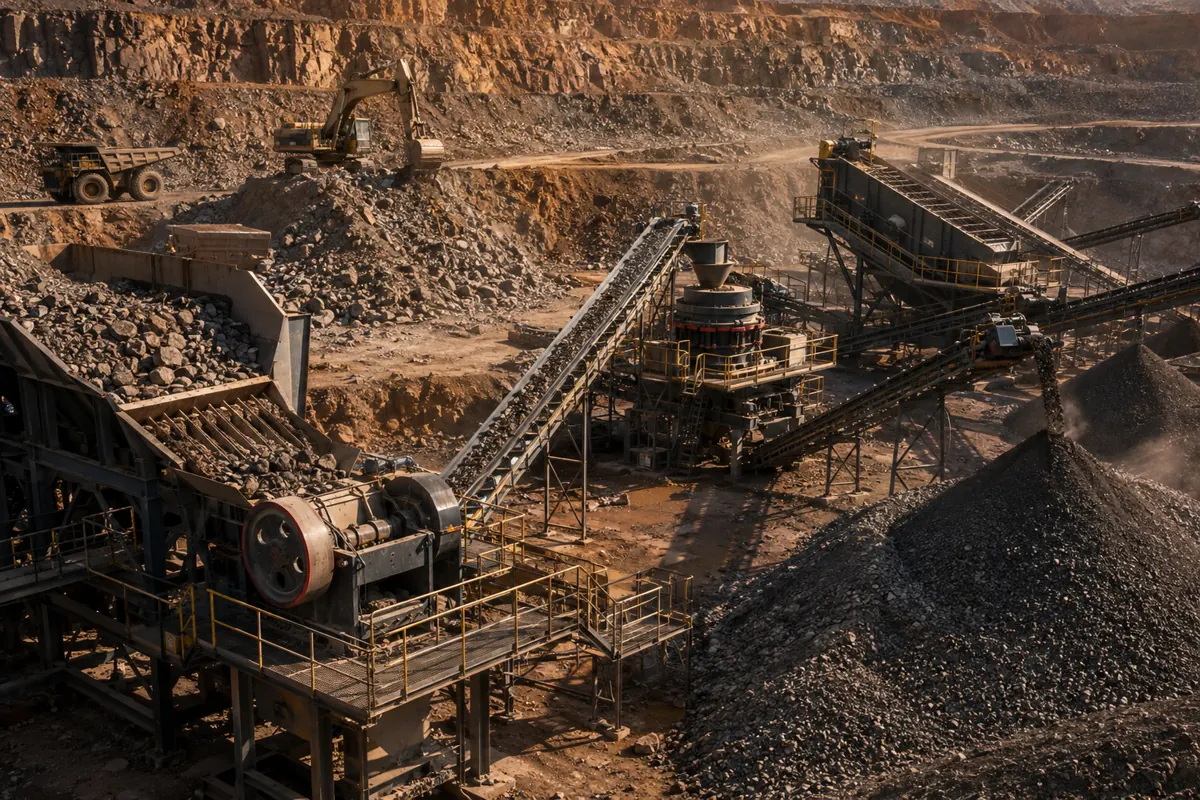
In a mine feeding a ball mill, the objective is usually not the smallest possible crusher discharge. It is a stable, practical feed size and distribution that helps the grinding circuit perform consistently. In an aggregate plant, the desired result may be several screened fractions, controlled flakiness, limited fines, and a repeatable gradation. Define those targets before deciding how many reduction stages to use.
Size the System for Real Capacity, Not Nameplate Capacity
Crusher capacity changes with feed grading, rock properties, moisture, closed-side setting, chamber condition, operator practice, and availability. The quoted capacity should be compared against the project’s actual production plan: annual tonnage, operating days, shifts, expected downtime, and the size distribution of the feed.
Build the calculation from the material route:
- Set the annual tonnage and the number of realistic operating hours.
- Allow for planned maintenance, liner changes, weather, moves, and unscheduled interruptions.
- Define maximum, typical, and fine-feed fractions instead of one average feed size.
- Set the target product distribution and all downstream limits.
- Check the feeder, crusher, screen, conveyor, stockpile, and downstream unit as one capacity chain.
A surge stockpile or bin between stages can often make a system more reliable than simply increasing the nominal crusher size. It decouples the loading equipment, crusher, screen, and mill or product plant during short interruptions. For broader feed-system planning, see our feeder, crusher, screen, and conveyor guide.
Wear Parts and Maintenance Must Be Part of the Purchase Decision
For abrasive rock, liner wear is a core operating variable. Evaluate the expected replacement frequency, part weight, change-out method, local stock policy, delivery lead time, and the equipment needed to perform maintenance safely. A slightly more expensive crusher can be the better choice if it provides longer wear life, safer access, a more stable product, and fewer unplanned stoppages.
Plan the whole wear route, including:
- jaw plates, cheek plates, and wedge components;
- cone liners, feed cone, bowl components, and hydraulic protection;
- feeder liners, hopper liners, chutes, and transfer points;
- screen media and conveyor-belt protection;
- dust suppression, lubrication, and contamination control.
Ask the supplier to identify routine, critical, and long-lead spares separately. Also confirm whether the site has lifting equipment, safe isolation procedures, skilled fitters, and a maintenance area suited to the selected crusher. A spare-parts list without a practical change-out plan is not a maintenance strategy.
Site Conditions That Can Change the Recommendation
Material testing is essential, but the site can change the best configuration. A remote mine may prioritize simple equipment, stock spares, diesel availability, and service access. A plant with reliable grid power may favor electric drives and fixed conveyors. Wet seasons can increase fines carryover, screen blinding, and transfer-point buildup. High altitude, extreme heat, confined layouts, or difficult road transport can influence motor selection, cooling, module size, and installation sequencing.
For projects where the crushing point must move, a mobile jaw-and-cone train may make sense. For a long-life operation with high steady throughput, a fixed plant may offer a better infrastructure fit. Our mobile crusher guide for open-pit mining covers this mobility decision in more detail.
Common Buyer Mistakes
- Selecting a crusher from ore name alone without representative samples or feed-size data.
- Sizing the jaw from average rock and ignoring the maximum blasted rock.
- Comparing a bare-crusher price with a complete system that includes feeder, screen, conveyors, electrics, dust control, and commissioning.
- Choosing an impact crusher for highly abrasive ore without a realistic wear-cost comparison.
- Running a cone crusher without stable feed, surge capacity, or enough screen capacity in the closed circuit.
- Optimizing for the smallest discharge instead of the downstream process target.
- Omitting liner-change access, lifting equipment, spares, and skilled maintenance from the site plan.
- Ignoring moisture, clay, altitude, power quality, and transport constraints until after equipment selection.
What to Send Before Asking for a Quote
Give a supplier a concise but complete project pack. It helps them recommend a system rather than simply offer the largest or lowest-priced crusher.
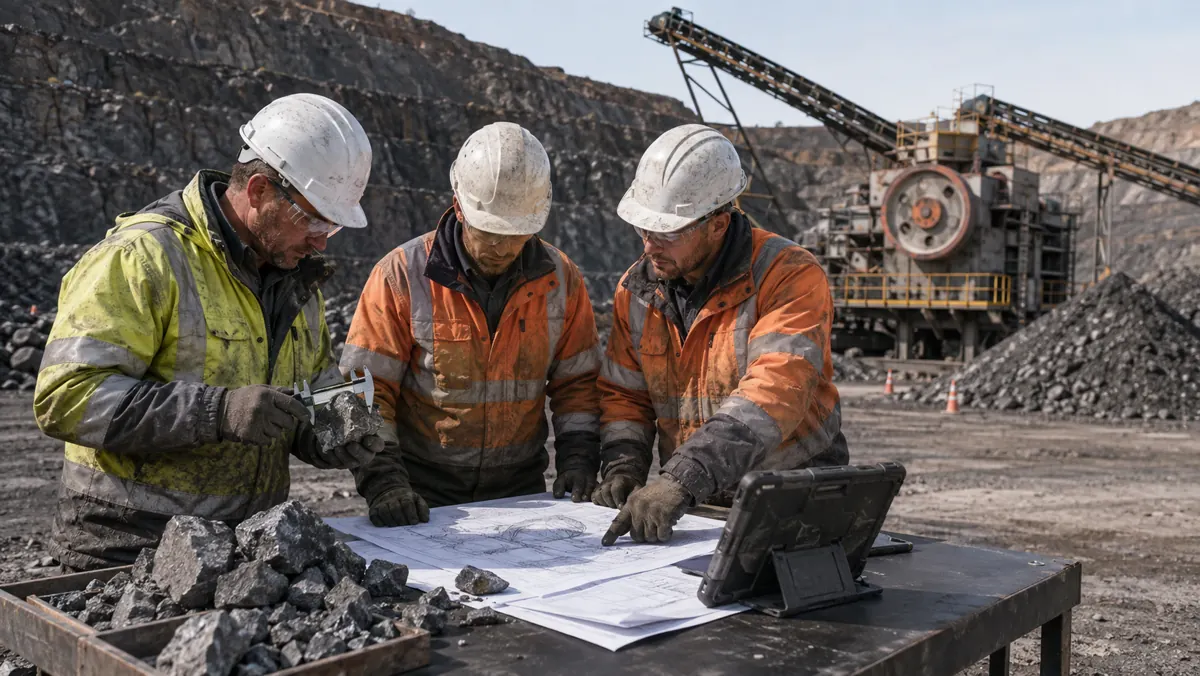
- Raw material name, sample photos, geological description, and laboratory data if available.
- Maximum and typical feed size, size distribution, moisture, clay content, bulk density, hardness, and abrasiveness.
- Required output size distribution, target fines, particle-shape requirements, and downstream process.
- Required capacity in TPH, annual tonnage, shifts, operating days, and availability target.
- Site photos, layout, elevation, road and transport limits, climate, and available power, fuel, and water.
- Required scope: feeder, grizzly, jaw crusher, cone crusher, screen, conveyors, stockpile, controls, dust control, spares, and commissioning.
- Delivery country, schedule, local service expectations, and budget range.
Send MVSI your raw material, feed size, output size, capacity, site photos, and budget range. We can compare jaw, cone, impact, and VSI routes; identify the supporting feeder, screen, and conveyor equipment; and propose a practical scope for your hard-ore duty.
Conclusion
The best crusher for hard ore and abrasive rock is usually part of a well-matched reduction circuit, not a stand-alone model choice. A jaw crusher commonly handles coarse primary reduction, while a cone crusher and screen provide controlled secondary reduction for many hard-rock duties. The correct layout depends on representative material data, real maximum feed size, output target, capacity, wear budget, maintenance resources, and site constraints. When those inputs are clear, buyers can compare total operating fit rather than choosing only by purchase price or catalog TPH.
FAQ
What crusher is best for hard ore?
A jaw crusher is commonly the starting point for large, hard run-of-mine ore. A cone crusher is often added for secondary or tertiary reduction when a controlled product or mill feed is required. Final selection depends on feed size, abrasiveness, capacity, and downstream target.
Is a jaw crusher better than an impact crusher for abrasive rock?
Often, yes, for primary crushing of highly abrasive rock. Jaw crushers use compression and are commonly chosen for hard, coarse feed. Impact crushers can be effective for suitable materials and shape targets, but their wear cost should be checked carefully with abrasive feed.
When should a cone crusher be used after a jaw crusher?
Use a cone crusher after a jaw when the project needs further controlled reduction, a tighter mill feed, or specified aggregate sizes. It normally works best with a stable, screened feed and a correctly sized closed circuit.
Can a VSI crusher crush hard abrasive rock?
Yes, but it is normally a finishing or shaping stage after the feed has been reduced by primary and secondary crushers. For abrasive rock, assess rotor and chamber wear against the value of the required fine product or particle shape.
What data is needed to size a crusher for ore?
Provide raw material description, representative sample data, maximum and typical feed size, feed distribution, hardness, abrasiveness, moisture, clay, bulk density, required output size, capacity, site conditions, and downstream process.
Why does crusher capacity drop with hard rock?
Harder, more abrasive, wet, or poorly graded feed can reduce effective throughput. Capacity also changes with crusher setting, chamber condition, feed control, circulating load, and planned operating availability, so the complete circuit must be checked.
How can I reduce wear in a hard-rock crushing plant?
Use representative material data to select suitable liners, control the feed with a grizzly or feeder, avoid oversize and uneven feed, maintain correct crusher settings, protect transfer points, and keep critical spares and safe change-out equipment on site.
Should I use a mobile or stationary crusher for hard ore?
Mobile units can suit temporary pits, moving faces, or projects that need shorter setup time. A stationary plant can be a better fit for long-life, high-throughput duty. Compare mine plan, feed route, relocation frequency, civil works, power, and operating cost per tonne.