Table of Contents
- Why Dust Control Matters in a Crusher Plant
- Where Dust Usually Starts
- Start with Stable Feeding and Correct Material Preparation
- Use Water Spray or Mist at the Right Points
- Enclose Transfer Points, Screens, and Conveyors
- Match Dust Control to Crusher Type
- Control Haul Roads and Stockpiles
- When to Use a Dust Collector or Bag Filter
- Do Not Ignore Drainage and Product Quality
- Maintenance Checklist for Dust-Control Systems
- Cost Factors for Crusher Plant Dust Control
- Common Mistakes When Reducing Crusher Plant Dust
- What to Send Before Asking MVSI for a Dust-Control Proposal
- Conclusion
- FAQ
- What is the best way to reduce dust in a stone crusher plant?
- Is water spray enough for crusher plant dust control?
- Where should spray nozzles be installed in a crushing plant?
- Can too much water cause problems in aggregate production?
- When does a stone crusher plant need a bag filter?
- How do I reduce dust from quarry haul roads?
- Does crusher type affect dust control?
- What information should I provide before requesting a dust-control quotation?
How to Reduce Dust in a Stone Crusher Plant
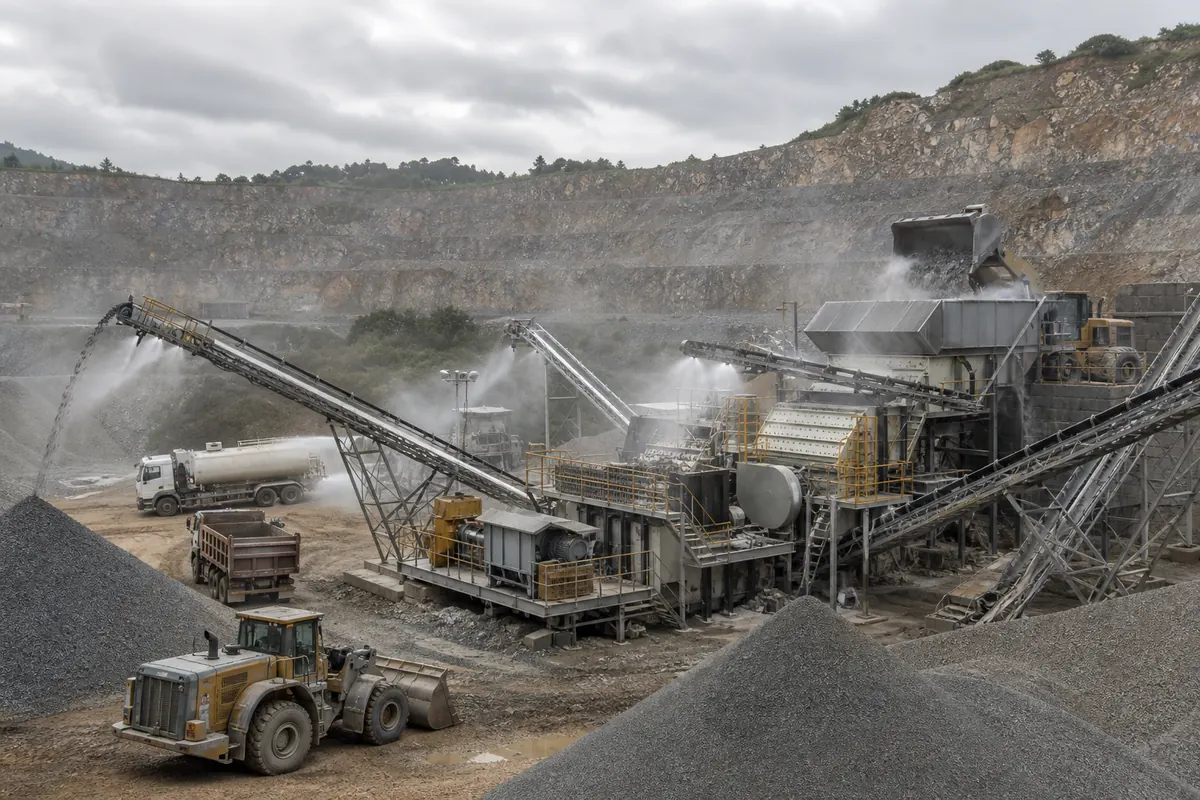
Dust in a stone crusher plant should be reduced by controlling it at the source: stable feeding, enclosed transfer points, water spray or mist, covered screens and conveyors, paved haul roads, and regular housekeeping. A practical dust-control plan starts with raw material moisture and feed size, then matches crusher type, screen layout, conveyor drops, wind direction, water availability, and environmental requirements. For quarry owners and road contractors, the goal is not to hide dust after it spreads; it is to prevent dust from leaving the feed hopper, crusher discharge, screen deck, transfer chute, stockpile, and truck road.
Why Dust Control Matters in a Crusher Plant
Dust control is not only an environmental topic. In a quarry or aggregate plant, excess dust can reduce visibility, increase cleaning work, accelerate wear in bearings and motors, affect screen performance, create complaints from nearby communities, and make daily maintenance less efficient. A plant that controls dust well is usually easier to operate and easier to inspect.
For international buyers, dust control should be considered during plant design, not added after installation as an emergency fix. The feeder height, crusher discharge point, screen cover, conveyor drop height, stockpile direction, road surface, water supply, and electrical control layout all affect dust movement.
If you are still planning the full equipment layout, compare this topic with the complete stone crusher plant setup guide and the crushing plant flow sheet guide. Dust suppression should be part of the same layout discussion as capacity, output sizes, conveyors, and maintenance access.
Where Dust Usually Starts
Most crusher plant dust comes from material impact, dry fines, wind exposure, and truck movement. A good inspection starts by walking the material flow from the feed hopper to final product stockpiles.
Common dust sources include:
- Raw material dumping into the feeder hopper.
- Grizzly feeder fines falling to a bypass conveyor.
- Jaw crusher or impact crusher discharge.
- Cone crusher discharge and return conveyor transfer points.
- Vibrating screen feed box, screen deck, and discharge chutes.
- High conveyor drop heights onto stockpiles.
- Dry manufactured sand and 0-5 mm product handling.
- Loader movement, truck loading, and unpaved haul roads.
- Wind blowing across open stockpiles and exposed belts.
Dust control becomes easier when each source is treated separately. A water spray at the wrong point may wet the product without reducing airborne dust. A covered conveyor may still release dust if the transfer chute is open. A bag filter may not work if the capture hood is too far from the dust source.
Start with Stable Feeding and Correct Material Preparation
Unstable feeding creates sudden surges, impact, and material splash. These surges often create more dust than normal continuous operation. A properly sized vibrating feeder, hopper lining, grizzly section, and feed control gate can reduce dust by keeping the material bed stable.
Before choosing a dust system, check:
- Maximum feed size and typical feed size.
- Fine content in the raw material.
- Moisture content and clay content.
- Whether the material is limestone, granite, basalt, river stone, recycled concrete, or ore.
- Loader bucket height and dumping method.
- Whether the feeder hopper needs rubber curtain, side boards, or a top hood.
Very dry limestone and concrete recycling feed may need more dust suppression than moist river stone. Hard granite and basalt may produce less powder at the feed hopper but more fine dust after secondary crushing and screening. Material testing and site photos help the supplier choose the right solution.
Use Water Spray or Mist at the Right Points
Water spray is one of the most common ways to reduce dust in stone crusher plants. The key is placement and water volume. The spray should meet the dust at the point where it is created, not only wet the belt after dust has escaped.
Useful spray points include:
- Feed hopper and grizzly discharge.
- Crusher inlet when the material is extremely dry.
- Crusher discharge conveyor.
- Screen feed box.
- Screen discharge chutes.
- Conveyor transfer points.
- Final stockpile discharge points.
- Haul road and truck loading area.
Fine mist can capture airborne dust with less water, while larger spray nozzles can wet material surfaces and roads. The plant should include a water tank, pump, filters, pressure control, drain points, and maintenance access to nozzles. If the product must stay dry, such as some manufactured sand or concrete aggregate applications, water volume must be controlled carefully.
Enclose Transfer Points, Screens, and Conveyors
Water spray works better when dust is first contained. Open transfer points allow wind to carry dust away before the spray can capture it. Simple covers, rubber curtains, chute sealing, and screen covers can make a large difference.
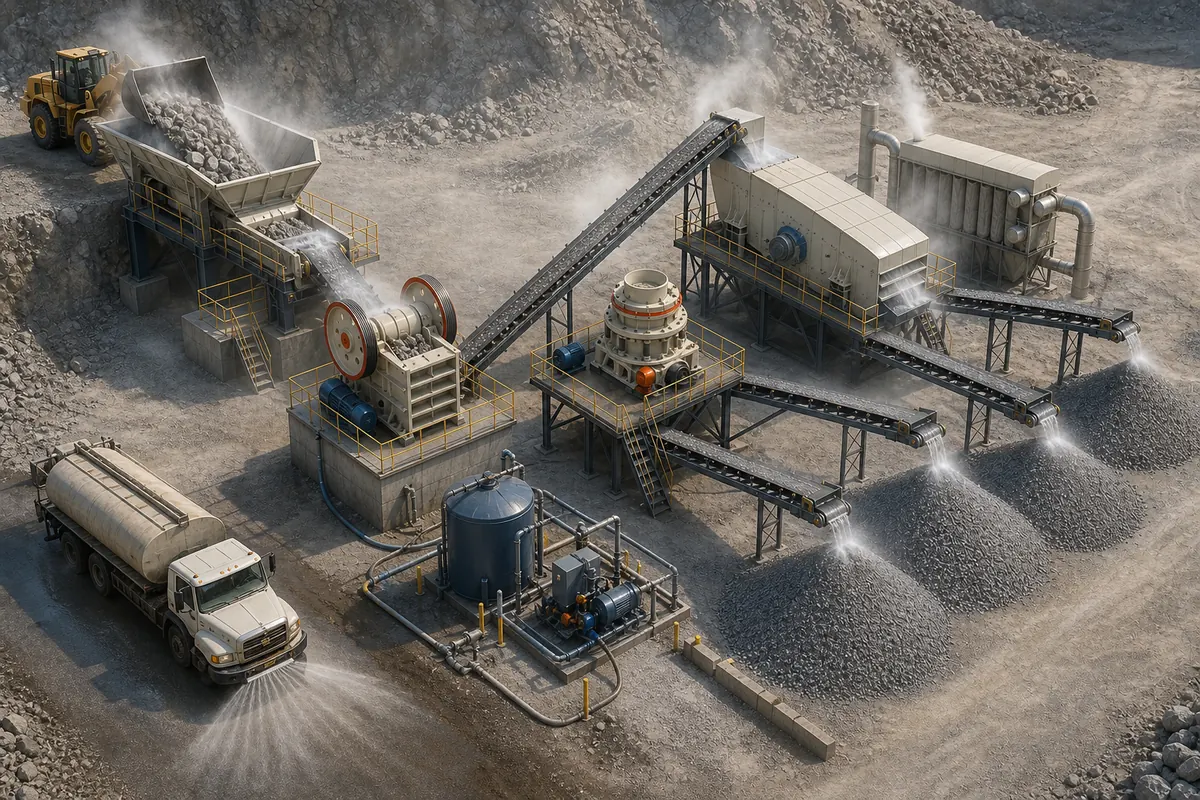
Important enclosure areas include:
- Feeder discharge to primary crusher.
- Crusher discharge to belt conveyor.
- Conveyor-to-conveyor transfer chutes.
- Screen feed box and screen top cover.
- Screen discharge chutes for fine products.
- Return conveyor transfer point in closed circuit.
- Stockpile conveyor head pulley when drop height is high.
The enclosure should not block inspection, liner replacement, screen mesh replacement, or belt maintenance. Good design uses removable panels, access doors, rubber curtains, and enough space for operators. Dust control should improve plant operation, not make maintenance harder.
Match Dust Control to Crusher Type
Different crushers create dust in different areas. The dust-control plan should match the crushing stage and material.
| Equipment Area | Typical Dust Risk | Practical Dust-Control Method |
|---|---|---|
| Vibrating feeder | Dust during loader dumping and fines bypass | Hopper side boards, rubber curtain, feed control, water mist |
| Jaw crusher | Dust at inlet and discharge | Feed hood, discharge enclosure, mist at discharge belt |
| Impact crusher | Fine dust from high-speed impact, especially limestone | Crusher discharge sealing, screen cover, mist and dust collector |
| Cone crusher | Dust at discharge and return circuit | Closed transfer chute, controlled belt drop, mist at transfer point |
| VSI crusher | Fine dust from sand making and shaping | Enclosed feed and discharge, air classifier or dust collector when needed |
| Vibrating screen | Dust from dry fines and screen vibration | Screen top cover, feed box sealing, mist at discharge chutes |
| Stockpile conveyors | Dust from high drop height and wind | Lower discharge height, telescopic chute, mist, wind orientation |
For hard rock aggregate plants, the jaw crusher, cone crusher, impact crusher, or VSI selection guide can help match the equipment to the material. If the plant includes manufactured sand, also consider the VSI sand making machine guide because fine product handling may require stronger dust control.
Control Haul Roads and Stockpiles
Many plants focus only on the crusher, but haul roads and stockpiles can create just as much visible dust. Truck movement on dry unpaved roads, loader turning, and high stockpile drop points can spread dust across the whole site.
Practical road and stockpile controls include:
- Regular water truck operation on haul roads.
- Paved or compacted high-traffic areas.
- Speed control for trucks and loaders.
- Wheel washing where required by the site.
- Lower conveyor discharge height when possible.
- Stockpile placement based on wind direction.
- Windbreaks or partial walls in exposed locations.
- Separate fine product stockpiles from main traffic routes.
Road dust control is especially important for plants near villages, public roads, concrete batching plants, or urban recycling sites. In mobile crushing projects, road watering and traffic planning may be the fastest way to reduce visible dust during short-term production.
When to Use a Dust Collector or Bag Filter
Water spray is not always enough. A dust collector, bag filter, cyclone, or enclosed extraction system may be needed when the plant handles very dry fines, produces manufactured sand, works near strict environmental limits, or must keep the product dry.
Dust collectors are commonly used around enclosed screens, fine crushing stages, transfer houses, and sand making systems. The system needs capture hoods, ducting, fan power, filter area, dust discharge, electrical control, and regular maintenance. If any one of these items is undersized, the collector may look good on paper but perform poorly on site.
Bag filters are more complex than spray systems, so buyers should confirm:
- Dust source and required capture points.
- Air volume and duct layout.
- Filter bag material and replacement plan.
- Dust discharge method.
- Electrical power and control logic.
- Maintenance access and cleaning method.
- Whether water spray is still needed at roads and stockpiles.
For many aggregate plants, a mixed solution works best: enclosure plus mist at crushing and screening points, road watering for traffic dust, and a dust collector for the driest fine-product zones.
Do Not Ignore Drainage and Product Quality
Too much water can create new problems. Wet fines may stick to screens, reduce screening efficiency, block chutes, increase belt carryback, and affect the saleability of certain products. This is why dust suppression should be designed together with drainage and product requirements.
The supplier should check whether the final product is road base, concrete aggregate, asphalt aggregate, manufactured sand, or ore feed before selecting water volume. If the plant produces 0-5 mm sand, water may help dust but also change moisture content. If the project needs dry screening, enclosure and dust collection may be more suitable than heavy water spray.
Drainage planning should include channels, settling pits, water recycling, pump location, and winter or dry-season operation where relevant. Good dust control keeps the plant cleaner without turning the site into a wet, muddy layout.
Maintenance Checklist for Dust-Control Systems
Dust-control equipment needs routine maintenance. Blocked spray nozzles, damaged rubber curtains, missing covers, leaking chutes, broken pump filters, and torn screen covers can quickly reduce performance.
Use a daily or weekly checklist:
- Check spray nozzle blockage and spray direction.
- Confirm pump pressure and water filter condition.
- Inspect rubber curtains and chute seals.
- Clean dust buildup around motors, bearings, and electrical cabinets.
- Check screen cover panels and access doors.
- Inspect conveyor covers and transfer-point sealing.
- Confirm road watering schedule.
- Record visible dust changes after product or feed changes.
- Keep spare nozzles, hose, clamps, filter bags, and curtain rubber on site.
For broader operating discipline, compare this with the common VSI crusher problems guide and the mobile screen plant deck selection guide. Many dust problems become worse when screens, belts, and crusher settings are not maintained.
Cost Factors for Crusher Plant Dust Control
Dust-control cost depends on how much of the plant must be enclosed, how many spray points are needed, whether a dust collector is required, and how much civil work is needed for water supply and drainage.
Main cost factors include:
- Number of crushing and screening stages.
- Plant capacity and conveyor length.
- Material dryness and fine content.
- Required environmental control level.
- Water availability and pump distance.
- Need for water recycling or settling pond.
- Screen cover and transfer chute design.
- Dust collector air volume and filter area.
- Electrical control, sensors, and automation.
- Installation space and maintenance access.
The cheapest system is usually not the best system. A low-cost spray line with poor nozzle placement may waste water and still allow dust to escape. A correctly placed enclosure and mist system may cost more at the beginning but reduce complaints, cleanup, downtime, and wear around sensitive components.
Common Mistakes When Reducing Crusher Plant Dust
The most common mistake is treating dust as a single problem instead of locating each source. A plant may need feeder control, screen cover, road watering, transfer enclosure, and stockpile drop control at the same time.
Other mistakes include:
- Installing spray nozzles too far from the dust source.
- Using too much water and creating wet screening problems.
- Covering conveyors but leaving transfer chutes open.
- Ignoring haul road dust.
- Forgetting wind direction when placing stockpiles.
- Choosing a bag filter without enough hood capture and duct design.
- Blocking maintenance access with fixed covers.
- Not planning spare nozzles, pump filters, curtains, and filter bags.
- Asking for a crusher quote without mentioning environmental requirements.
Dust control should be reviewed during quotation, layout design, installation, and commissioning. It is much easier to add platforms, water lines, and chute covers before shipment than after the plant is already running.
What to Send Before Asking MVSI for a Dust-Control Proposal
To recommend a practical dust-control plan, MVSI needs the crushing process and site conditions, not only the crusher model.

Send the following information:
- Raw material name, moisture, clay content, and photos.
- Maximum feed size and typical feed size.
- Required output size or output sizes, including fine products such as 0-5 mm.
- Target capacity in tons per hour and daily working hours.
- Current or planned plant flow, including feeder, crusher, screen, conveyor, and stockpile layout.
- Site photos showing crusher location, haul roads, stockpiles, nearby roads or buildings, and wind exposure.
- Water supply, power supply, drainage condition, and whether water recycling is required.
- Environmental target, inspection requirement, and local operating limits if known.
- Budget range and whether the plant should be stationary, skid-mounted, tire-mounted, or track-mounted.
With this information, MVSI can review whether your plant needs simple water spray, enclosed transfer points, screen covers, road watering, dust collection, or a combined solution.
Conclusion
Reducing dust in a stone crusher plant requires source control, not only general watering. The best results usually come from stable feeding, enclosed transfer points, correctly placed mist nozzles, covered screens, controlled conveyor drops, road watering, stockpile planning, and regular maintenance. Some fine-product plants also need dust collectors or bag filters.
If your quarry, aggregate plant, road project, or recycling site needs better dust control, send MVSI your raw material, feed size, output size, capacity, site photos, environmental requirement, water condition, plant layout, and budget range. We can help match the dust-control system to the crusher plant instead of adding a temporary fix after dust becomes a complaint.
FAQ
What is the best way to reduce dust in a stone crusher plant?
The best approach is to control dust at each source: feeder hopper, crusher discharge, screen deck, transfer chute, conveyor discharge, stockpile, and haul road. Most plants use a combination of enclosure, mist spray, road watering, and maintenance.
Is water spray enough for crusher plant dust control?
Water spray is useful, but it is not always enough by itself. The spray must be placed near the dust source, and transfer points should be enclosed so dust does not escape before the water captures it.
Where should spray nozzles be installed in a crushing plant?
Common spray points include the feed hopper, crusher discharge belt, screen feed box, screen discharge chutes, conveyor transfer points, final stockpile discharge, truck loading area, and haul roads.
Can too much water cause problems in aggregate production?
Yes. Too much water can make fines stick to screens, block chutes, increase belt carryback, and change the moisture of finished aggregate or manufactured sand. Water volume should match product requirements.
When does a stone crusher plant need a bag filter?
A bag filter or dust collector may be needed when the plant produces dry fine material, operates under strict environmental requirements, must keep products dry, or has enclosed screen and transfer points that can be connected to extraction ducts.
How do I reduce dust from quarry haul roads?
Use road watering, speed control, paved or compacted traffic zones, wheel washing if needed, and stockpile placement that avoids strong wind exposure. Road dust should be managed separately from crusher dust.
Does crusher type affect dust control?
Yes. Impact crushers, VSI crushers, screens, and fine-product conveyors often need stronger dust control than simple coarse crushing. The plan should match material type, crusher type, feed size, output size, and capacity.
What information should I provide before requesting a dust-control quotation?
Send raw material, feed size, output size, capacity, site photos, plant layout, water supply, drainage condition, environmental target, mobility requirement, and budget range so the supplier can recommend a practical system.