Table of Contents
- What Aggregate Quality Means
- Start with Raw Material and Product Specification
- Keep Feeding Stable
- Choose the Right Crusher for Each Stage
- Control Crusher Settings and Chamber Condition
- Use Closed-Circuit Screening Correctly
- Improve Particle Shape with the Right Final Stage
- Manage Fines, Dust, Clay, and Washing
- Protect Product Quality in Conveyors and Stockpiles
- Set Up Routine Quality Checks
- Common Mistakes That Reduce Aggregate Quality
- Cost and ROI Factors
- What to Send Before Asking MVSI for a Quality Improvement Proposal
- Conclusion
- FAQ
- What is the best way to improve aggregate quality in a crushing plant?
- Why does my aggregate contain too much oversize material?
- How can I improve cubical aggregate shape?
- Does a VSI crusher improve aggregate quality?
- How do I reduce fines in aggregate production?
- Is washing always necessary for high-quality aggregate?
- How often should aggregate quality be tested?
- What information should I provide before requesting a crushing plant quotation?
How to Improve Aggregate Quality in a Crushing Plant
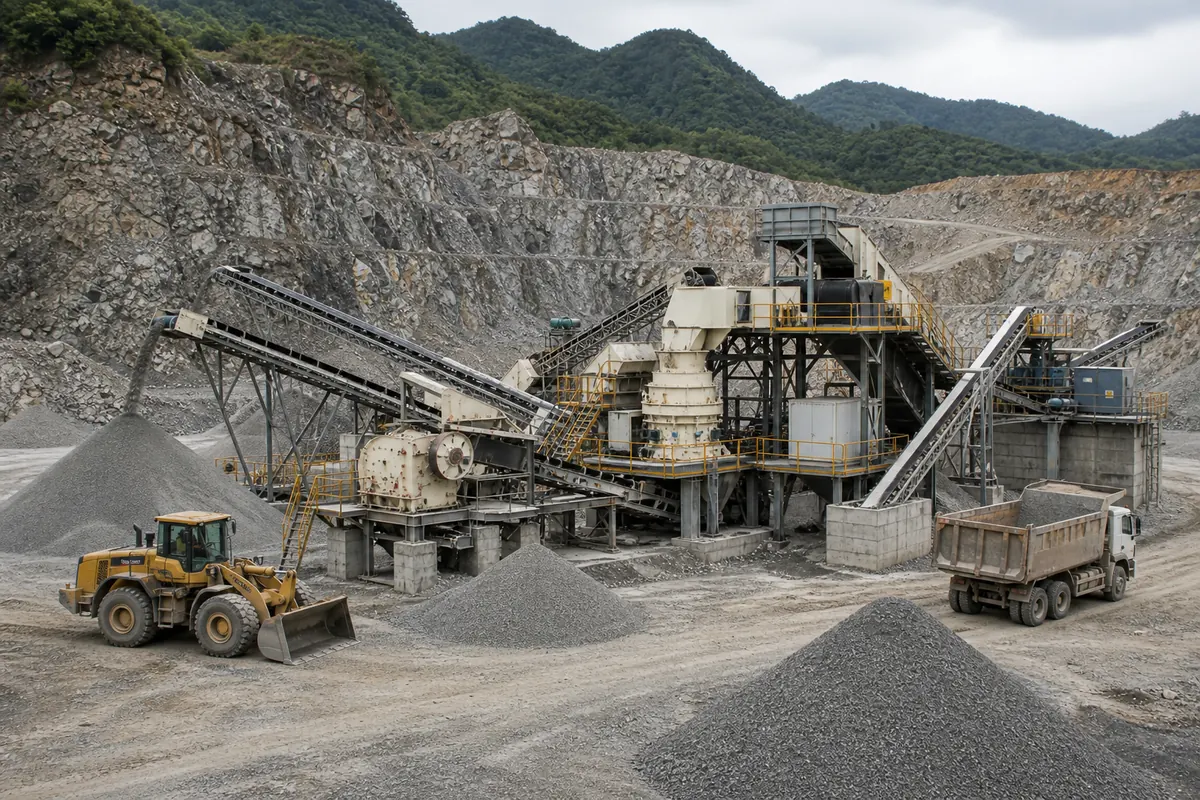
Aggregate quality in a crushing plant is improved by controlling the full process, not only by changing one crusher. The key factors are stable feed, correct crusher type, suitable closed-side setting, enough screening area, controlled recirculation, good particle shape, low clay and dust content, clean stockpiles, and regular sampling. For quarry owners, road contractors, and concrete aggregate suppliers, high-quality aggregate means consistent gradation, cubical shape, low flakiness, limited fines, and reliable moisture control. A practical improvement plan starts with the raw material and final specification, then adjusts the feeder, crusher, screen, conveyor, washing, and stockpile system together.
What Aggregate Quality Means
Aggregate quality is not a single number. In commercial quarry and road construction projects, it normally includes gradation, particle shape, strength, cleanliness, moisture, and consistency from one shift to the next. A plant can have good capacity but still produce poor aggregate if the screen is overloaded, the crusher setting drifts, or stockpiles are contaminated by loader movement.
Important quality targets include:
- Correct product sizes, such as 0-5 mm, 5-10 mm, 10-20 mm, and 20-30 mm.
- Stable gradation inside each product range.
- Cubical particle shape for concrete and asphalt aggregate.
- Low flaky and elongated particles.
- Controlled stone powder and clay content.
- Low oversize and undersize contamination.
- Stable moisture for manufactured sand or washed aggregate.
- Clean stockpiles without mixing between products.
If you are still designing the full plant layout, compare this topic with the complete stone crusher plant setup guide and the crushing plant flow sheet guide. Aggregate quality must be planned in the flow sheet, not corrected only after production starts.
Start with Raw Material and Product Specification
The same crusher plant can produce different results when the feed changes. Basalt, granite, limestone, river stone, and recycled concrete have different hardness, abrasiveness, fracture behavior, moisture, and clay content. Before changing equipment, the operator should confirm what the plant is feeding and what the customer needs to buy.
Check these inputs first:
- Raw material name and rock hardness.
- Maximum feed size and typical feed size.
- Clay, soil, and weathered rock content.
- Moisture condition during dry and rainy seasons.
- Required product sizes and allowed tolerance.
- Whether the aggregate is for concrete, asphalt, road base, drainage, railway ballast, or manufactured sand.
- Required particle shape, flakiness index, powder content, and cleanliness.
- Local test method or project specification.
A quarry selling road base may accept more fines than a concrete aggregate supplier. A concrete batching plant may need cleaner, more cubical aggregate and more stable sand grading. An asphalt plant may care strongly about shape, angularity, and dust control. The crusher plant should be tuned for the actual market, not only for maximum tons per hour.
Keep Feeding Stable
Stable feeding is one of the cheapest ways to improve aggregate quality. A crusher that receives sudden surges will produce uneven reduction, unstable discharge size, high recirculating load, and more flaky particles. The vibrating feeder, hopper, grizzly section, and loader operation all affect the final product.
Practical feeding controls include:
- Keep the feeder bed depth consistent.
- Avoid dumping oversized boulders directly into the crusher mouth.
- Remove soil, clay, and excessive fines before primary crushing when possible.
- Use grizzly bars or a pre-screen to bypass natural fines.
- Match feeder capacity to the crusher and screen, not only to the loader bucket.
- Train loader operators to feed continuously instead of in large intermittent dumps.
- Keep the crusher chamber properly filled, especially for cone and VSI stages.
For hard rock quarries, inconsistent feed often causes both quality and wear problems. The plant may look powerful, but if the cone crusher alternates between empty running and overloaded running, product shape and gradation will change throughout the day.
Choose the Right Crusher for Each Stage
Crusher selection has a direct effect on size reduction and particle shape. A jaw crusher is strong for primary crushing, but it does not usually produce final-quality aggregate by itself. Cone crushers are efficient for hard and abrasive rock. Impact crushers can produce cubical material from medium-hard stone, but wear cost may rise with abrasive feed. VSI crushers are often used for final shaping and manufactured sand.
| Crushing Stage | Common Equipment | Quality Role |
|---|---|---|
| Primary crushing | Jaw crusher or impact crusher | Reduces large feed to a controlled size for secondary crushing |
| Secondary crushing | Cone crusher or impact crusher | Controls main reduction and prepares material for screening |
| Tertiary crushing | Cone crusher, impact crusher, or VSI crusher | Improves final size, shape, and sand yield |
| Shaping | VSI crusher | Improves cubical shape and reduces flaky particles |
| Screening | Vibrating screen | Separates products and controls oversize return |
For detailed machine selection, read the jaw crusher, cone crusher, impact crusher, or VSI guide. If the plant needs better final particle shape, the VSI sand making machine guide explains when VSI shaping is practical for granite, basalt, limestone, and other materials.
Control Crusher Settings and Chamber Condition
Even the right crusher can produce poor aggregate if settings are not controlled. The closed-side setting, liner condition, feed distribution, rotor speed, and wear-part profile should be checked regularly. Many quality problems are caused by gradual setting drift rather than a sudden machine failure.
For cone crushers, check:
- Closed-side setting and actual discharge size.
- Liner wear and chamber profile.
- Feed distribution across the chamber.
- Whether the chamber is choke-fed.
- Recirculating load from the screen.
- Lubrication, tramp iron events, and abnormal vibration.
For impact and VSI crushers, check:
- Rotor speed and feed rate.
- Wear-part condition, including blow bars, rotor tips, anvils, and liners.
- Rock-on-rock or rock-on-iron setup where applicable.
- Material moisture and fines content.
- Whether the feed size is within the recommended limit.
If a plant uses VSI shaping, worn rotor tips or incorrect feed size can quickly reduce sand quality and increase wear. A small setting change may be enough to bring gradation back into range, but only if operators measure the output instead of relying on visual judgment.
Use Closed-Circuit Screening Correctly
Screening is often the hidden limit in aggregate quality. A crusher may be capable of producing the required size, but if the screen is overloaded, blinded, or using the wrong mesh, finished products will contain too much oversize or undersize material.
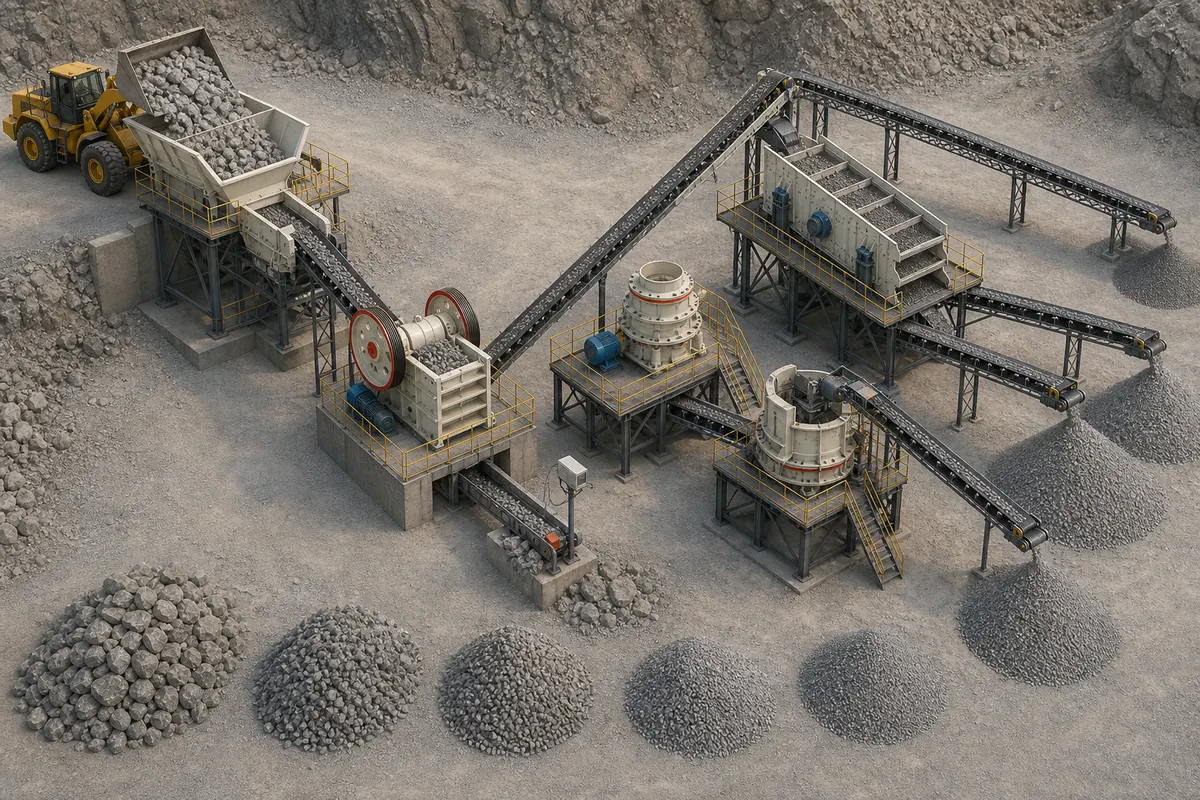
A good screening setup should:
- Provide enough screen area for the required capacity.
- Use the right mesh opening for each product size.
- Return oversize material to the correct crusher stage.
- Keep screen feed evenly distributed across the deck.
- Avoid excessive moisture, clay, or sticky fines that cause blinding.
- Separate final products before they mix on conveyors or stockpiles.
- Allow safe and quick screen mesh replacement.
Closed-circuit crushing improves quality because oversize material is not sold as finished aggregate. However, too much recirculation can overload the plant and create extra fines. The return conveyor and crusher setting should be balanced so the plant keeps both capacity and gradation under control.
For screening details, compare the article on mobile screen plant size and deck selection. The same principles apply to stationary and mobile crushing plants: screen capacity must match the crusher, not only the sales target.
Improve Particle Shape with the Right Final Stage
Poor shape usually means too many flaky or elongated particles. This can reduce concrete workability, asphalt performance, and market value. Shape is affected by rock structure, crusher type, reduction ratio, chamber condition, and whether the final stage breaks particles by compression or impact.
Ways to improve shape include:
- Use a suitable reduction ratio instead of forcing one crusher to do too much work.
- Keep cone crushers choke-fed when the chamber design requires it.
- Avoid selling product directly from primary crushing for high-quality applications.
- Add tertiary crushing when secondary product is too coarse or flaky.
- Add VSI shaping when the market requires cubical aggregate or manufactured sand.
- Keep the screen return circuit stable.
- Replace worn liners, rotor tips, anvils, or blow bars before shape becomes poor.
For concrete and asphalt aggregate, VSI shaping can be valuable after cone crushing because it can break weak edges and improve cubical shape. For road base, a simpler jaw plus cone or jaw plus impact plant may be enough. The decision should be based on the final product value and the cost per ton, not only the machine price.
Manage Fines, Dust, Clay, and Washing
Cleanliness is part of aggregate quality. Too much clay, soil, or stone powder can reduce product value and cause problems in concrete or asphalt production. The solution depends on whether the unwanted material is natural soil in the feed, crusher-generated dust, or sticky fines from wet material.
Practical options include:
- Use a grizzly feeder or pre-screen to remove natural fines before crushing.
- Control crusher settings to avoid unnecessary over-crushing.
- Add dust suppression and enclosure where dry fines escape.
- Use washing, dewatering, or classification when the market requires cleaner aggregate.
- Separate 0-5 mm material carefully if manufactured sand is part of the product range.
- Keep clay-rich waste separate from clean rock feed.
- Avoid contaminating finished stockpiles with loader tires or muddy haul roads.
Dust control and aggregate quality are connected. Excess dust may indicate over-crushing, poor transfer-point control, screen blinding, or stockpile handling problems. For the environmental side of this issue, see the guide on reducing dust in a stone crusher plant.
Protect Product Quality in Conveyors and Stockpiles
Many plants produce good aggregate at the screen but lose quality at the stockpile. Long drop heights can create segregation. Loader movement can mix sizes. Poor stockpile drainage can change moisture. Trucks may contaminate clean aggregate with mud from haul roads.
Stockpile quality controls include:
- Keep separate stockpiles far enough apart.
- Use radial stackers or controlled stockpile building where segregation is a problem.
- Reduce conveyor drop height for finer products.
- Build stockpiles on clean, stable ground.
- Prevent loader tires from crossing one product before loading another.
- Keep 0-5 mm sand away from muddy traffic routes.
- Plan drainage so water does not carry fines into another product.
- Use clear loading rules for each product size.
For high-value aggregate, stockpile management should be treated as part of the production process. A clean screen product can become a complaint if it is mixed or contaminated before delivery.
Set Up Routine Quality Checks
Operators need simple, regular checks. Laboratory testing is important, but daily plant control also needs fast field sampling. The goal is to detect changes before a full stockpile or truck shipment is out of specification.
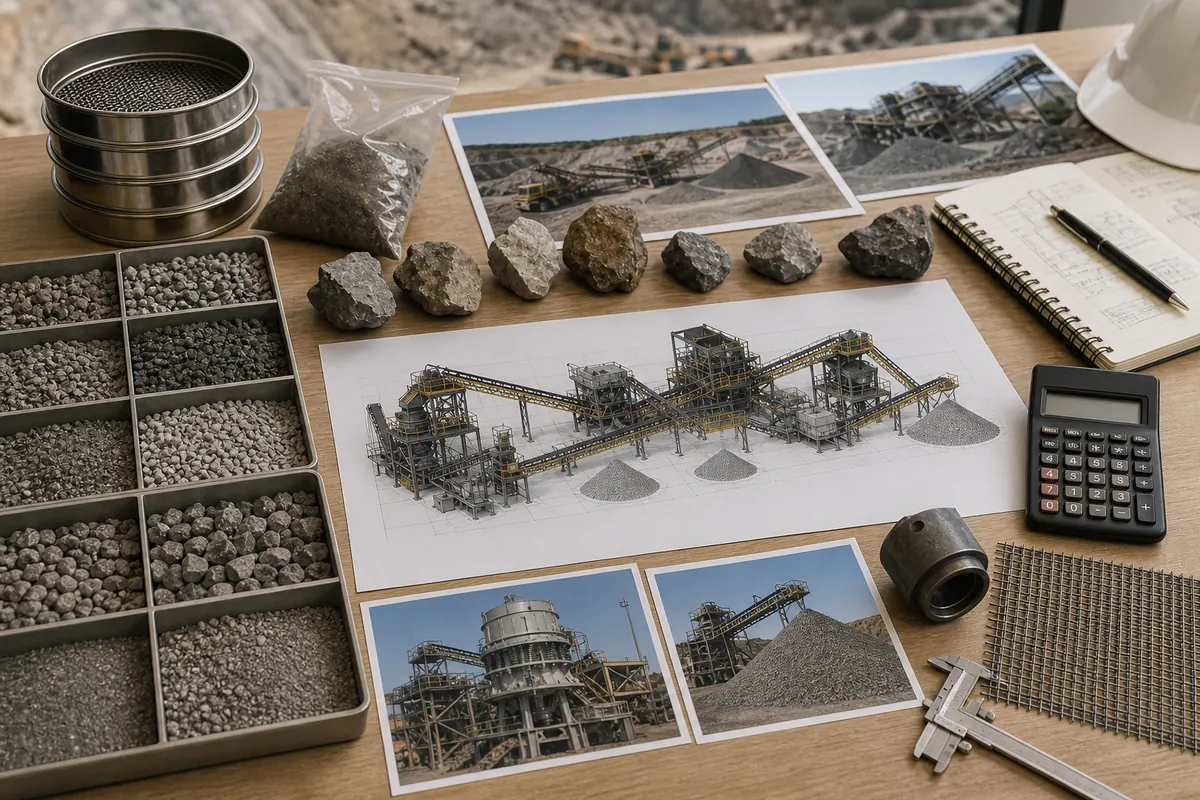
Useful checks include:
- Sample each finished product at a fixed interval.
- Run sieve analysis for gradation.
- Check oversize and undersize contamination.
- Inspect particle shape and flaky particles.
- Record crusher settings and screen mesh condition with each sample.
- Track moisture for sand and fine aggregate.
- Compare results after liner changes, screen changes, and feed changes.
- Keep complaint records linked to production date and stockpile.
The plant does not need a complex control system to start improving quality. A consistent sampling routine, good record keeping, and operator discipline can reveal which part of the process needs attention.
Common Mistakes That Reduce Aggregate Quality
The most common mistake is trying to solve every quality problem by changing the crusher model. In many cases, the real issue is poor feeding, overloaded screening, worn liners, wrong mesh, excessive clay, or stockpile mixing.
Other common mistakes include:
- Asking for maximum capacity without defining final product quality.
- Running the crusher outside the recommended setting range.
- Ignoring feed size variation from the quarry face.
- Using too small a screen for too many product sizes.
- Allowing too much oversize to circulate in the closed circuit.
- Selling product before checking gradation.
- Ignoring VSI wear parts when sand shape gets worse.
- Letting loaders mix clean finished aggregate with waste or soil.
- Comparing supplier quotations without checking the full process flow.
Quality problems are easier to prevent during plant design than to correct after installation. During quotation, buyers should discuss product specifications, test methods, screen deck design, return conveyors, washing needs, dust control, and stockpile layout.
Cost and ROI Factors
Improving aggregate quality may require equipment changes, but it can also improve selling price and reduce rejected loads. The best ROI usually comes from finding the plant bottleneck first.
Cost factors include:
- Pre-screen or grizzly feeder requirement.
- Crusher type and number of crushing stages.
- VSI shaping stage for cubical aggregate or manufactured sand.
- Larger vibrating screen or extra screen deck.
- Return conveyor and closed-circuit structure.
- Washing, dewatering, or air classification.
- Dust suppression, enclosure, and drainage.
- Stockpile conveyors, radial stackers, or loading area improvement.
- Spare wear parts and screen mesh plan.
- Sampling tools and routine testing.
If the current plant already has enough crushing capacity, a screen upgrade or better stockpile control may be more practical than buying another crusher. If the product shape is the main issue, a final VSI or impact shaping stage may create more value than a larger primary crusher.
What to Send Before Asking MVSI for a Quality Improvement Proposal
To recommend a practical solution, MVSI needs both plant information and product targets. Send the following details:
- Raw material name, hardness, abrasiveness, moisture, and photos.
- Maximum feed size and typical feed size.
- Current plant flow, including feeder, crusher, screen, conveyor, and stockpile layout.
- Current crusher settings and screen mesh sizes.
- Required output sizes and allowed tolerance.
- Current quality problem, such as too much oversize, poor shape, high fines, clay, or unstable sand grading.
- Target capacity in tons per hour and daily working hours.
- Product application, such as concrete, asphalt, road base, railway ballast, or manufactured sand.
- Site photos, available space, power condition, water availability, and budget range.
With this information, MVSI can review whether the plant needs better feeding, crusher setting adjustment, screen upgrade, VSI shaping, washing, dust control, stockpile improvement, or a new crushing and screening configuration.
Conclusion
Improving aggregate quality in a crushing plant requires process control from the quarry face to the finished stockpile. Stable feeding, correct crusher selection, controlled settings, enough screening area, balanced closed-circuit return, VSI shaping when needed, clean material handling, and routine sampling all affect the final product. A plant that only chases tons per hour may lose value through poor gradation, bad shape, high fines, or mixed stockpiles.
If your quarry, road project, concrete aggregate plant, or manufactured sand line needs better product quality, send MVSI your raw material, feed size, output size, target capacity, product specification, site photos, current quality problem, and budget range. We can help match the equipment and plant adjustments to the aggregate you need to sell.
FAQ
What is the best way to improve aggregate quality in a crushing plant?
The best approach is to control the full process: stable feeding, correct crusher type, suitable settings, enough screening area, controlled recirculation, clean stockpiles, and regular sampling. Changing only one crusher may not solve the real quality problem.
Why does my aggregate contain too much oversize material?
Oversize contamination is usually caused by screen overload, wrong mesh size, damaged screen media, poor screen feed distribution, or an incomplete closed-circuit return. The screen and return conveyor should be checked before changing the crusher.
How can I improve cubical aggregate shape?
Use a suitable reduction ratio, keep cone crushers properly fed, maintain liners and wear parts, and consider a tertiary crusher or VSI shaping stage when the market requires cubical concrete or asphalt aggregate.
Does a VSI crusher improve aggregate quality?
Yes, a VSI crusher can improve particle shape and manufactured sand quality when it is correctly matched to feed size, capacity, rock type, and wear-part setup. It is most useful for final shaping and sand production.
How do I reduce fines in aggregate production?
Reduce unnecessary over-crushing, control crusher settings, remove natural fines before crushing when possible, keep the screen working efficiently, and separate fine products properly. If clay or dust is the issue, pre-screening, washing, or dust control may be needed.
Is washing always necessary for high-quality aggregate?
No. Washing is useful when clay, soil, or excess fine powder prevents the aggregate from meeting specification. Clean hard rock may not need washing if screening, dust control, and stockpile handling are well managed.
How often should aggregate quality be tested?
For commercial production, each finished product should be sampled at regular intervals and after major changes such as new quarry feed, liner replacement, screen mesh change, or crusher setting adjustment. The exact frequency depends on the project specification and sales risk.
What information should I provide before requesting a crushing plant quotation?
Provide raw material, feed size, output sizes, capacity, product application, quality target, current problem, site photos, power and water conditions, available space, and budget range. These details help the supplier recommend a plant that meets both capacity and quality requirements.