Table of Contents
- Information Gain: Make Manufacturers Bid Against One Bauxite Record
- Start With the Ore Record, Not a Jaw-Crusher Model
- Define the Primary-Crushing Scope Before Comparing Manufacturers
- Ask for Factory Evidence That Matches the Order Scope
- Compare Commercial Responsibility, Not Only the Machine Price
- Use a Site Acceptance Basis Before You Select a Bidder
- Buyer Checklist for a Guinea Bauxite Jaw-Crusher Request
- Send a Comparable Primary-Crushing Brief
- Frequently Asked Questions
- Is a jaw crusher suitable for bauxite crushing?
- Why compare bauxite samples before selecting a jaw crusher manufacturer?
- What should a jaw crusher quotation include for a bauxite project?
- Can a factory inspection prove jaw crusher capacity at the mine?
- Should a buyer use a local dealer or buy directly from a manufacturer in Guinea?
- Which site data affects a jaw crusher proposal most?
- Does a lower jaw crusher price mean a better bauxite project offer?
- Does this article mean MVSI has a Guinea project or local service team?
How to Compare Jaw Crusher Manufacturers for Bauxite Crushing Projects in Guinea
For a bauxite crushing project in Guinea, compare jaw crusher manufacturers only after every bidder receives the same representative ore record, maximum and typical feed sizes, fines and moisture notes, required downstream feed, and site-responsibility brief. A jaw crusher may be appropriate for primary reduction, but neither the word “bauxite” nor a machine model proves that a proposal will suit a particular mine. Ask each manufacturer to document the feed assumption, feeder and scalping arrangement, crusher duty, discharge handling, drawings, inspection evidence, exclusions, delivery terms, commissioning prerequisites, and site acceptance method. Guinea is relevant bauxite context; it is not evidence that any supplier has a local office, dealer, project, stock, or service team there.
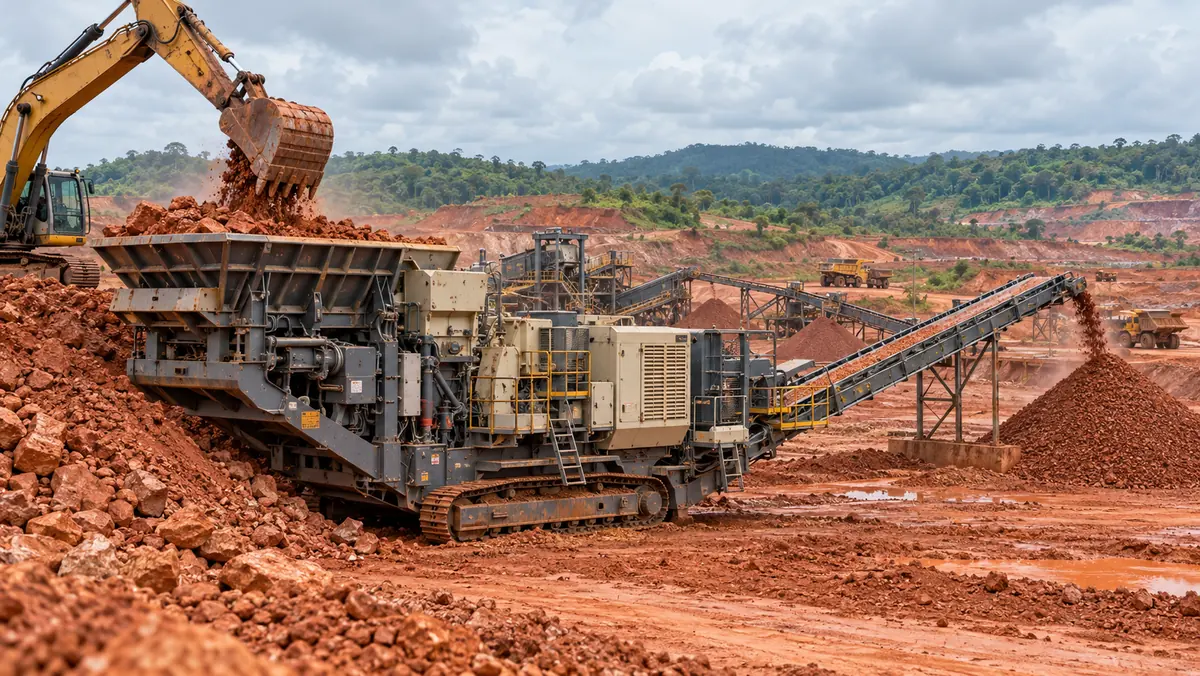
Information Gain: Make Manufacturers Bid Against One Bauxite Record
Many manufacturer-comparison pages stop at price, model size, factory photos, or a generic machine list. Those items are not enough to compare primary-crushing proposals. Bauxite is a naturally occurring, heterogeneous material; the USGS bauxite and alumina information page describes it as a mixture of aluminum hydroxide minerals and other constituents. The USGS Guinea country profile confirms why a bauxite-specific buyer question is meaningful, but it cannot tell a buyer how a particular pit will feed or crush.
The useful purchasing boundary is a common primary-crushing brief. It follows material from source faces and loading through receiving, scalping or clay/fines management where needed, jaw-crusher feed, discharge handling, stockpiling or downstream transfer, and the work needed to make the equipment operable on site. Every bidder should receive that same brief and identify assumptions, inclusions, exclusions, and the evidence it can supply. This does not replace process testing or detailed engineering; it prevents unlike proposals from being compared as if they describe the same job.
Start With the Ore Record, Not a Jaw-Crusher Model
A jaw crusher is often considered for coarse primary reduction, but the first question is what will actually enter the hopper. A proposal that accepts only a nominal “bauxite” description can hide major differences in maximum lump size, fines, moisture, clayey material, contamination, blending, and loading practice. Those variables influence whether the front end needs a grizzly, scalping, feeder control, hopper geometry, transfer arrangements, or a different flow concept.
| Input for every bidder | What the buyer should supply | What the manufacturer should state |
|---|---|---|
| Representative material record | Typical and maximum fragments, source-face variation, photos, sample or test information where available, fines, moisture, visible clay, and contamination note | The assumed feed condition, any limitation, and which uncertainty needs testing or confirmation |
| Production basis | Required tonnes per hour, operating-hours basis, shift pattern, seasonal variation, and whether the figure is equipment duty or site acceptance | The duty point, design assumptions, governing bottleneck, and what is not a guaranteed installed result |
| Downstream need | Required crusher discharge range, stockpile or belt handover, any screen, wash, blend, rail, truck, or process-plant interface | The discharge route, transfer equipment, stockpile requirement, and interfaces that sit outside the supply |
| Site boundary | Site photos, layout, elevations, truck or loader movement, power, water, drainage, dust, lifting, civil conditions, and safety requirements | The division of responsibility for foundations, steelwork, utilities, controls, access, guarding, and installation |
The hard ore and abrasive rock crusher guide is useful for separating mineral name from the actual feed and wear question. It is not a substitute for the buyer’s own bauxite record.
Define the Primary-Crushing Scope Before Comparing Manufacturers
For this buying decision, the jaw crusher is one part of a material path. A lower machine-only price may omit the hopper, feeder, scalping arrangement, chute design, discharge conveyor, access, controls, or protection that makes a primary stage workable. Ask each manufacturer to mark the physical start and finish of its supply and name every interface in between.

- Loading method, hopper geometry, receiving capacity, and the largest expected material.
- Feeder or grizzly duty, fines bypass or scalping route, and how sticky or contaminated material is treated if it appears.
- Jaw-crusher feed opening, stated feed distribution, discharge setting assumption, drive, guards, lubrication, and maintenance clearance.
- Discharge chute, conveyor or stockpile handover, dust and water points, metal or tramp protection where applicable, and access for cleanup.
- Electrical, controls, interlocks, emergency stops, cable routes, foundations, steelwork, drainage, walkways, stairs, and lifting requirements.
- Drawings, manuals, inspection records, packing scope, spares, warranty trigger, delivery term, installation roles, commissioning prerequisites, and open exclusions.
The feeder, crusher, screen, and conveyor selection guide helps a buyer examine those upstream and downstream handovers. Its examples are general guidance rather than a bauxite-plant promise.
Ask for Factory Evidence That Matches the Order Scope
Factory capability should be checked against the equipment and services actually being offered, not against a marketing video. The right evidence depends on the agreed scope. For a jaw-crusher supply, a buyer may ask to see the order-specific machine identification, general arrangement, major purchased components, fabrication and assembly records where relevant, visible guarding and access, documents, packing plan, and a written list of deviations or outstanding items.
| Evidence request | What it can help establish | What it cannot establish by itself |
|---|---|---|
| Proposal revision and scope schedule | Which equipment, options, documents, and exclusions are being priced | That the final site circuit has the right feed or product performance |
| General arrangement and interface drawing | Footprint, approximate elevations, access zones, and named connections | Final civil design, ground conditions, or installed layout approval |
| Order-specific inspection record | Visible build condition, listed components, recorded checks, and open issues inside the agreed inspection plan | Long-term reliability, site availability, capacity, or product grading |
| Packing and delivery list | What is intended to ship and how loose items are identified | Customs clearance, transport performance, unloading, or site readiness |
| Commissioning and support matrix | Who is expected to provide what before and during start-up | A promise of local representation, response time, or result unless it is explicitly contracted and evidenced |
The VSI factory-acceptance checklist gives a related evidence mindset: an inspection should record what was checked, under what scope, and what remains open. It cannot prove site capacity or process performance from a factory floor.
Compare Commercial Responsibility, Not Only the Machine Price
Once the common material and scope brief exists, use a responsibility matrix to compare quotations. The aim is not to force every manufacturer to offer the same commercial model. It is to make visible which party owns each risk, interface, deliverable, and prerequisite. A direct-manufacturer purchase, EPC route, local commercial channel, or another procurement route can then be evaluated on the same named responsibilities.
| Commercial line | Buyer question | Risk when the answer is vague |
|---|---|---|
| Technical basis | Is this proposal built around the same material record, duty, downstream handover, and acceptance basis as the others? | Capacity, equipment, and price are compared across different assumptions |
| Included equipment | Are feeder, scalping, hopper, crusher, discharge, belts, electrical, guards, platforms, and spares explicitly listed? | Necessary items appear later as variations or site purchases |
| Site interfaces | Who supplies foundations, embedded items, steel, drainage, utilities, unloading, lifting, installation labor, and safety works? | Work is assumed to belong to another party and blocks installation |
| Documents and inspection | Which drawings, manuals, load data, inspection points, packing lists, and exception records are included and when? | The buyer cannot confirm fit, delivery scope, or readiness before shipment |
| Commissioning boundary | What site conditions, people, tools, utilities, materials, and training arrangements are required before commissioning begins? | A supplier visit or start-up date is assumed rather than contractually defined |
For a broader comparison of procurement routes, see Chinese crusher manufacturer versus local dealer. It provides a neutral framework; it does not document a dealer or service provider in Guinea.
Use a Site Acceptance Basis Before You Select a Bidder
No factory record alone proves the installed crushing stage will meet a project result. Before award, the buyer should agree how the site team will verify the commissioned scope. The acceptance basis should name the material source or sampling method, feed condition, operating window, target discharge or downstream handover, instruments or measurements, safety prerequisites, and the treatment of variations or exclusions. This protects both buyer and supplier from a vague “capacity test” that uses a different ore condition or an incomplete circuit.
The iron ore crushing and screening equipment guide reinforces the same procurement principle: define feed preparation across every equipment handover. The downstream process is different, but the comparison discipline is transferable.
Buyer Checklist for a Guinea Bauxite Jaw-Crusher Request

- Received the same source-specific material description, representative photographs or samples, maximum and typical feed record, and fines/moisture/clay note.
- Stated its hopper, feeder, grizzly, scalping, crusher-feed, discharge, and transfer assumptions rather than only a crusher model or nominal opening.
- Shown the complete supply boundary, including conveyors, chutes, guards, access, controls, and any optional or excluded items.
- Identified the required buyer-provided civil, electrical, water, drainage, dust, unloading, lifting, installation, and safety interfaces.
- Provided a dated scope schedule, layout level, drawings list, document schedule, inspection plan, packing list, and deviation log.
- Made clear which components or services are factory-supplied, site-supplied, optional, or outside the proposal.
- Named the commissioning prerequisites, training scope, spare-parts proposal, warranty trigger, escalation route, and remaining commercial exclusions.
- Accepted the same site-acceptance method or clearly listed a different assumption before prices are compared.
Send a Comparable Primary-Crushing Brief
MVSI can review the inputs needed to scope a bauxite primary-crushing proposal. Send a raw material description and representative photos or samples, maximum and typical feed size, moisture/fines/clay notes, required output or downstream feed, target capacity and operating-hours basis, site photos and layout constraints, available power and water, delivery and commissioning boundary, and budget range. Those inputs make the technical and commercial boundaries clear before a manufacturer proposes equipment.
Frequently Asked Questions
Is a jaw crusher suitable for bauxite crushing?
A jaw crusher can be considered for coarse primary bauxite reduction, but suitability depends on the actual feed record, maximum lumps, fines, moisture, clay or contamination, downstream requirement, and site arrangement. Compare proposals against those inputs rather than choosing from the ore name alone.
Why compare bauxite samples before selecting a jaw crusher manufacturer?
The sample or representative material record makes the assumptions visible. It helps manufacturers state their feed, fines, moisture, clay, and discharge limitations and helps the buyer see where testing or more information is needed before awarding a primary-crushing scope.
What should a jaw crusher quotation include for a bauxite project?
It should clearly list the equipment boundary, feed preparation, crusher duty assumptions, discharge handling, conveyors or handovers, controls, guarding, platforms, documents, inspection, spares, exclusions, delivery term, commissioning prerequisites, and site responsibilities. Not every project needs every item, but each should be assigned.
Can a factory inspection prove jaw crusher capacity at the mine?
No. An agreed factory inspection can document the order-specific equipment, visible assembly, documents, and recorded exceptions within its scope. Installed capacity and downstream feed depend on the actual material, complete circuit, operating conditions, and site acceptance method.
Should a buyer use a local dealer or buy directly from a manufacturer in Guinea?
Compare the same responsibility map: who owns the technical basis, delivery, customs and unloading interfaces, installation, commissioning, spares, warranty, escalation, and site acceptance. Do not assume a local role exists unless the proposed party documents it and its contracted scope.
Which site data affects a jaw crusher proposal most?
The critical inputs are maximum and typical feed size, material variability, fines, moisture or clay, capacity basis, required discharge or downstream feed, site layout, power, water, drainage, lifting, access, delivery/commissioning boundary, and budget range.
Does a lower jaw crusher price mean a better bauxite project offer?
Not necessarily. A lower price may cover a narrower equipment boundary or leave feeders, conveyors, structures, controls, documents, installation, commissioning, or site works outside the supply. Compare the same common brief and responsibility matrix before comparing totals.
Does this article mean MVSI has a Guinea project or local service team?
No. Guinea is used here as public bauxite context. This article does not claim an MVSI project, office, dealer, stockholding, delivery route, or local service capability in Guinea.