Table of Contents
- The Short Answer: Use Mobile Crushing When It Cuts the Right Truck Work
- Where a Mobile Crusher Fits in an Open-Pit Mine
- Typical Mobile Crushing Configurations
- What Determines Whether the System Pays Back
- 1. Haul Distance and Truck Availability
- 2. Rock Size, Hardness, and Abrasiveness
- 3. Product Size and Downstream Requirement
- 4. Mine Life and Relocation Frequency
- Capacity Planning: Avoid Nameplate-Only Decisions
- Operating Conditions That Need Attention
- Common Buyer Mistakes
- What to Send Before Asking for a Quote
- Conclusion
- FAQ
- Can a mobile crusher be used in an open-pit mine?
- What type of mobile crusher is best for hard ore?
- Does a mobile crusher reduce mining haulage cost?
- How much capacity can a mobile crusher plant provide?
- Is a tracked mobile crusher better than a tire-mounted crusher for mining?
- What information is needed for a mobile crusher quotation?
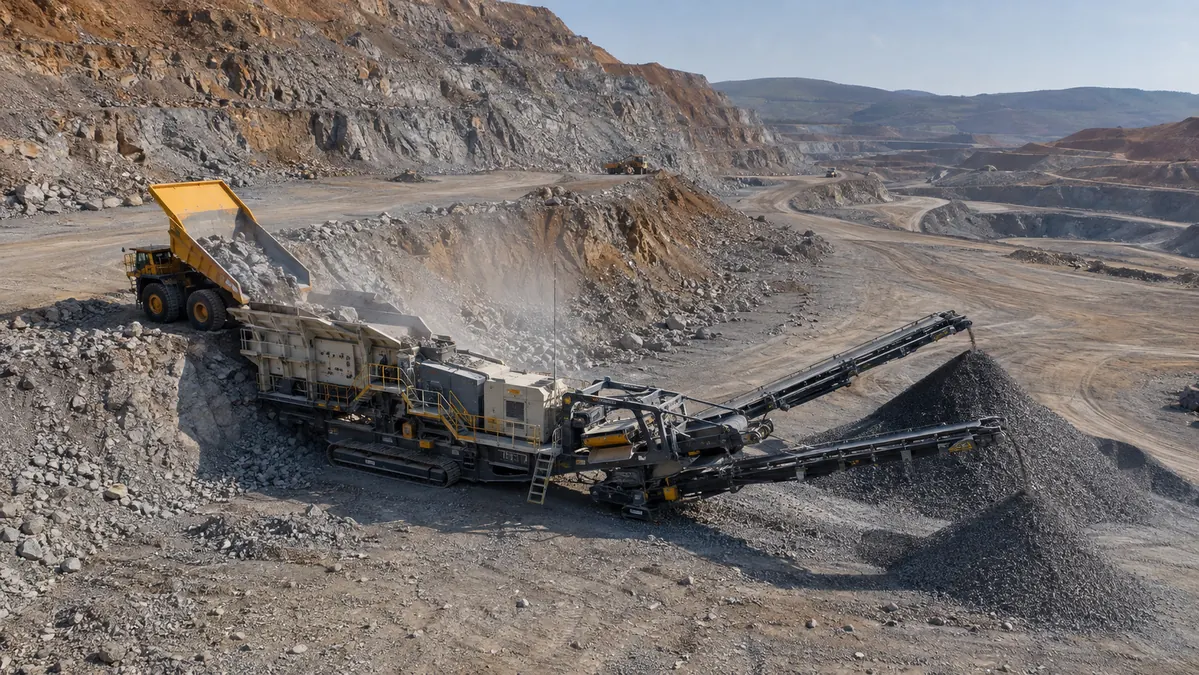
A mobile crusher can make sense in open-pit mining when moving blasted ore by truck to a distant fixed plant is becoming expensive, slow, or inflexible. A tracked jaw crusher, cone crusher, screen, and conveyors can be placed near the working face, reducing haul distance before the material goes to a stockpile, mill, heap-leach pad, or downstream plant. It is not automatically the right answer for every mine. The decision depends on ore hardness, largest rock size, required product size, hourly capacity, bench plan, pit access, mine life, haulage cost, power or fuel availability, maintenance support, and budget. The best choice is a mine-to-plant system, not a single machine.
The Short Answer: Use Mobile Crushing When It Cuts the Right Truck Work
Open-pit mines move large volumes of rock. When run-of-mine material must travel a long distance from the active bench to a fixed primary crusher, haulage can consume fuel, tires, drivers, road maintenance, and operating hours. A mobile crusher can shorten that first haul by accepting material close to the face, then transferring crushed ore by conveyor, short-haul truck, or a relocatable stockpile system.
This approach is especially useful when the pit advances regularly, benches are far from the existing plant, production must start before a permanent crusher building is ready, or a satellite pit needs temporary treatment. It can also help contractors or smaller mine operators who need capacity without committing immediately to a large fixed civil structure.
A mobile crusher is not a substitute for mine planning. It needs a stable working pad, safe traffic routes, enough loading space, controlled feed, dust management, maintenance access, and a clear destination for crushed ore. For broader equipment-chain planning, see our feeder, crusher, screen, and conveyor guide for quarries.
Where a Mobile Crusher Fits in an Open-Pit Mine
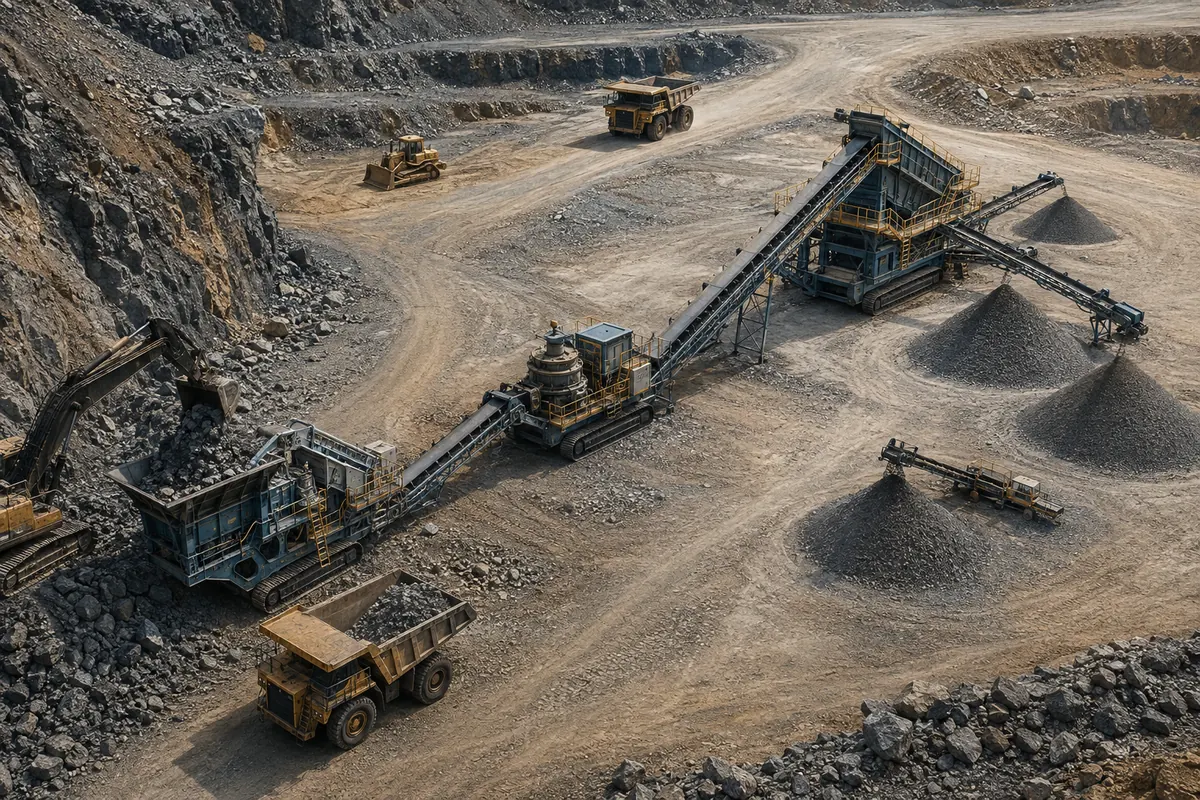
The most common location is near the mining face or on a prepared intermediate bench. An excavator or loader feeds blasted ore into a hopper, while a grizzly, apron feeder, or vibrating feeder controls the flow into a mobile jaw crusher. The crushed product can then go directly to a conveyor, a mobile secondary crusher, a screen, a stockpile, or trucks for the next transport stage.
The exact point in the mine changes with the material and process target:
- Primary crushing near the face: best when large blasted rock must be reduced before long-distance conveying or secondary crushing.
- Satellite-pit crushing: useful when a temporary or remote ore body cannot justify a fixed crusher installation.
- Pre-crushing for a concentrator or heap-leach circuit: used to create a steadier, smaller feed for further crushing, agglomeration, grinding, or screening.
- Waste-rock or construction-aggregate production: suitable when the mine also needs road base, drainage aggregate, or saleable stone from non-ore rock.
- Early project phase: helps start production while a permanent plant, utility line, or civil works are still being completed.
The mine should leave adequate bench width for trucks, loading equipment, fuel and service vehicles, product discharge, and emergency access. A crusher that is technically mobile still requires a well-prepared and safely managed working area.
Typical Mobile Crushing Configurations
The simplest system is a tracked mobile jaw crusher. It accepts run-of-mine rock, reduces it to a controlled size, and discharges onto a belt or stockpile. If the product only needs to feed a fixed secondary plant, this may be enough.
Harder ore, tighter mill feed, or multiple product sizes often require a train of machines. The jaw crusher handles primary reduction; a cone crusher performs secondary or tertiary crushing; and a mobile screen separates qualified material from oversize. Oversize returns to the cone crusher in a closed circuit. A scalper before the jaw can bypass natural fines and protect the primary crusher from unnecessary wear.
| Mine objective | Practical mobile configuration | Main selection focus |
|---|---|---|
| Reduce large blasted ore before conveying | feeder or grizzly + mobile jaw crusher | largest rock size, feed opening, jaw wear, discharge setting |
| Prepare a stable secondary-crushing feed | mobile jaw crusher + transfer conveyor + stockpile | surge capacity, belt width, stockpile management |
| Produce a controlled mill feed | mobile jaw crusher + cone crusher + screen | ore hardness, closed-circuit load, target P80 or mill feed size |
| Treat clayey or high-fines material | grizzly/scalper + jaw crusher + screen | blinding risk, moisture, chute design, bypass fines |
| Make road aggregate from mine rock | jaw + cone or impact crusher + screen | required gradations, particle shape, dust and product separation |
For a comparison of plant mobility concepts, our track-mounted versus tire-mounted mobile crusher guide explains the practical transport and setup trade-offs. For an ore-focused stationary front end, compare our iron ore crushing plant guide.
What Determines Whether the System Pays Back
1. Haul Distance and Truck Availability
Hauling uncrushed rock is usually less efficient than moving smaller material on a suitable conveyor, especially as the active bench moves farther from a fixed plant. The potential gain is not simply liters of fuel saved. It can also include fewer truck hours, less tire wear, less road grading, lower congestion, and more trucks available for ore or waste movement elsewhere in the mine.
However, the calculation must include feeder loading, crusher operating hours, mobile-unit relocation, power or diesel, belt and liner wear, service labor, and any additional conveyor or stockpile equipment. A mine should compare cost per tonne for the whole material route before deciding.
2. Rock Size, Hardness, and Abrasiveness
The jaw crusher must be sized for the largest expected blasted rock, not the average. Oversize can cause bridging, choke feeding, uneven jaw wear, and downtime. Very hard or abrasive ore can require heavier jaw plates, conservative capacity selection, a grizzly to remove fines, and a practical on-site spares plan.
The secondary stage also needs to match the ore. A cone crusher is commonly selected for hard, abrasive material and controlled reduction. An impact crusher can be appropriate for softer rock or aggregate work where shape matters, but it may not be the most economical primary choice for highly abrasive ore. Use jaw, cone, impact, or VSI crusher selection to compare the roles before building a full train.
3. Product Size and Downstream Requirement
The correct discharge depends on what happens after crushing. A leach pad may need a different gradation from a ball mill feed, railway ballast, or road base. Designing only for “smaller rock” can lead to an underperforming circuit.
For a grinding plant, the mine should define the maximum feed size and the desired size distribution to the mill. For screening or aggregate, it should define all saleable fractions, allowable fines, and shape requirements. This information drives crusher setting, screen area, conveyor capacity, stockpile layout, and recirculating load.
4. Mine Life and Relocation Frequency
Mobile equipment is strongest where the crushing point needs to move. A short mine life, staged pit development, frequent bench changes, or satellite deposits can favor a relocatable plant. A deep, long-life mine with a stable ore route and very high sustained throughput may instead justify a fixed in-pit or surface crushing station with larger conveyors and more permanent infrastructure.
Relocation is not instant. A mine plan should state how often the unit will move, how far, whether it travels under its own tracks or by transport, what foundations or pads are needed, and how much production interruption is acceptable.
Capacity Planning: Avoid Nameplate-Only Decisions
Rated capacity is a starting point, not a guaranteed output. Real hourly throughput changes with feed grading, moisture, closed-side setting, crusher type, rock strength, fines content, operator practice, and availability. A mobile plant intended for 120 TPH must be checked against the mine’s annual tonnage and actual operating hours; a nominally correct machine can still be too small when production runs only one shift or loses time to relocations.
Build the capacity plan from these inputs:
- Annual ore or rock target and required operating days.
- Planned shifts, crusher availability, and maintenance allowance.
- Largest blasted rock size and percentage of oversize.
- Feed-size distribution, fines, clay, moisture, hardness, and abrasiveness.
- Required product size, permitted fines, and downstream surge capacity.
- Mine advance schedule, relocation frequency, and haul-road constraints.
Include a surge buffer before or after the crusher where possible. It lets loading and downstream processing continue through short interruptions instead of making every part of the mine depend on one direct feed point.
Operating Conditions That Need Attention
Open-pit environments are demanding. Dust, rain, heat, elevation, irregular feed, rockfall risk, uneven pads, and remote locations all affect equipment selection. The mobile plant should include appropriate guards, emergency stops, belt scales or level controls when needed, dust suppression, lighting, access platforms, and safe maintenance clearance.
Fuel supply and electrical supply deserve early attention. Diesel-hydraulic units can be flexible where grid power is unavailable, but fuel logistics and operating cost must be evaluated. Electric-drive units can reduce operating emissions and may lower energy cost where reliable site power is available. Hybrid arrangements can offer a practical middle ground, but they still need cable management, protection, and a clear power plan.
Maintenance must be planned around the mine, not left to a distant workshop. Confirm who will change jaw plates or cone liners, how a screen deck will be accessed, where spare belts and filters will be stored, how a crane or service truck reaches the plant, and how long critical parts take to arrive.
Common Buyer Mistakes
- Selecting the crusher from average feed size and ignoring the largest blasted rock.
- Asking for a mobile unit without a defined destination for crushed ore or product.
- Comparing a bare crusher price with a complete system that includes feeder, screen, conveyors, power, dust control, and commissioning.
- Treating a tracked plant as if it can move safely without a prepared pad, traffic plan, or relocation procedure.
- Omitting clay, moisture, altitude, ambient temperature, and water availability from the specification.
- Choosing capacity from a catalog figure without allowing for maintenance, moving time, or ore variability.
- Forgetting wear parts, service access, commissioning support, and local operator training.
What to Send Before Asking for a Quote
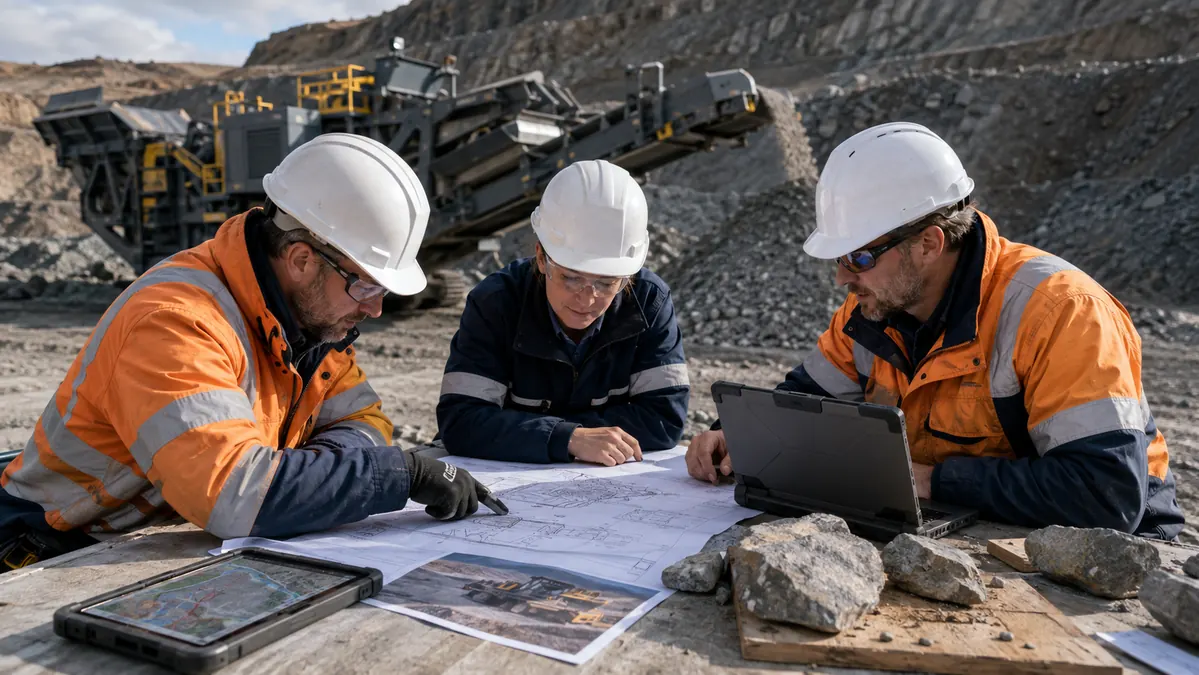
Send the following information so a supplier can propose a mobile crusher that fits the mine instead of only naming a model:
- Raw material or ore name, hardness, abrasiveness, moisture, clay content, and bulk density if known.
- Maximum feed size, typical feed-size distribution, and photos of blasted material.
- Required output size, downstream process, and any limits on fines or product shape.
- Target capacity in TPH, annual tonnage, shifts, and operating days.
- Site photos, pit bench width, haul-road gradients, working-pad conditions, and relocation plan.
- Available power, fuel, water, altitude, climate, and dust-control requirement.
- Desired scope: feeder, jaw crusher, cone crusher, screen, conveyors, stockpile, control system, spares, and commissioning.
- Delivery country, schedule, installation support required, and budget range.
With your raw material, feed size, output size, capacity, site photos, and budget range, MVSI can help compare a single mobile jaw crusher with a complete jaw-cone-screen configuration and define the supporting feeders, conveyors, and service scope.
Conclusion
A mobile crusher is a strong open-pit mining option when it reduces the right haulage work and stays aligned with the mine plan. It is most valuable where the face moves, a satellite deposit needs treatment, early production must begin quickly, or a temporary crushing point can shorten a costly truck route. The correct system starts with rock data, feed size, product target, capacity, bench layout, downstream process, relocation plan, and operating-cost comparison—not a catalog model number.
FAQ
Can a mobile crusher be used in an open-pit mine?
Yes. Tracked mobile jaw crushers, cone crushers, screens, and conveyors are commonly used for primary, secondary, or temporary crushing in open-pit mines when the site layout, capacity, and mine plan support mobile operation.
What type of mobile crusher is best for hard ore?
A mobile jaw crusher is usually the first choice for large hard run-of-mine rock. A mobile cone crusher is commonly added when hard ore needs further reduction or controlled mill feed. Final selection depends on feed size, hardness, abrasiveness, capacity, and product target.
Does a mobile crusher reduce mining haulage cost?
It can. Crushing near the face can shorten the initial truck haul and transfer smaller material by conveyor or a shorter-haul system. The decision should compare the complete cost per tonne, including loading, crushing, energy, relocation, maintenance, and conveying.
How much capacity can a mobile crusher plant provide?
Capacity depends on crusher type, feed opening, material properties, feed grading, required discharge, screen circuit, and availability. A supplier should size the plant from annual tonnage, shifts, real feed data, and target output rather than a nameplate figure alone.
Is a tracked mobile crusher better than a tire-mounted crusher for mining?
Tracked equipment is often better for rough mine roads, working pads, and frequent short relocations. Tire-mounted equipment can be advantageous where road transport and longer moves are more important. Ground conditions, relocation frequency, and permit limits decide the best option.
What information is needed for a mobile crusher quotation?
Provide raw material, maximum feed size, required output size, capacity, hardness, moisture, clay content, site photos, pit layout, power or fuel availability, delivery country, scope requirement, schedule, and budget range.