Table of Contents
- The Short Answer: Select the Circuit Before Selecting the Cell
- Start With Ore Characterization and Metallurgical Testing
- What the Main Flotation Stages Do
- Rougher cells recover value quickly
- Scavenger cells protect recovery
- Cleaner cells improve concentrate quality
- Column, mechanical, and special-purpose cells have different roles
- Match the Equipment to the Ore and Product Objective
- Size the System From Residence Time and Mass Balance
- A Typical Flotation Plant Configuration
- Air, Agitation, Froth, and Control Need a Design Basis
- Cost and ROI: Compare Complete Scope, Not Bare Cell Price
- Common Buyer Mistakes
- What to Send Before Requesting a Flotation Proposal
- Conclusion
- FAQ
- What flotation machine is best for copper ore?
- Can gold ore be processed with a flotation machine?
- How are flotation cells sized?
- What is the difference between rougher, scavenger, and cleaner flotation?
- Do lead and zinc need separate flotation circuits?
- What feed size is needed for flotation?
- What equipment is needed around a flotation cell?
- What information is needed for a flotation-machine quotation?
The best flotation machine is the one that fits the ore test results and the complete circuit—not simply the largest cell or the lowest quoted price. For copper, lead-zinc, and many gold-bearing sulphide ores, buyers normally select rougher, scavenger, and cleaner flotation capacity after crushing and grinding have produced the required liberation size. The decision depends on mineralogy, recovery target, feed grade, tonnage, slurry density, particle-size distribution, reagent scheme, available water and power, maintenance support, and concentrate specification. Start with representative samples and a flowsheet; then size the cells, blowers, pumps, launders, and control points as one operating system.
The Short Answer: Select the Circuit Before Selecting the Cell
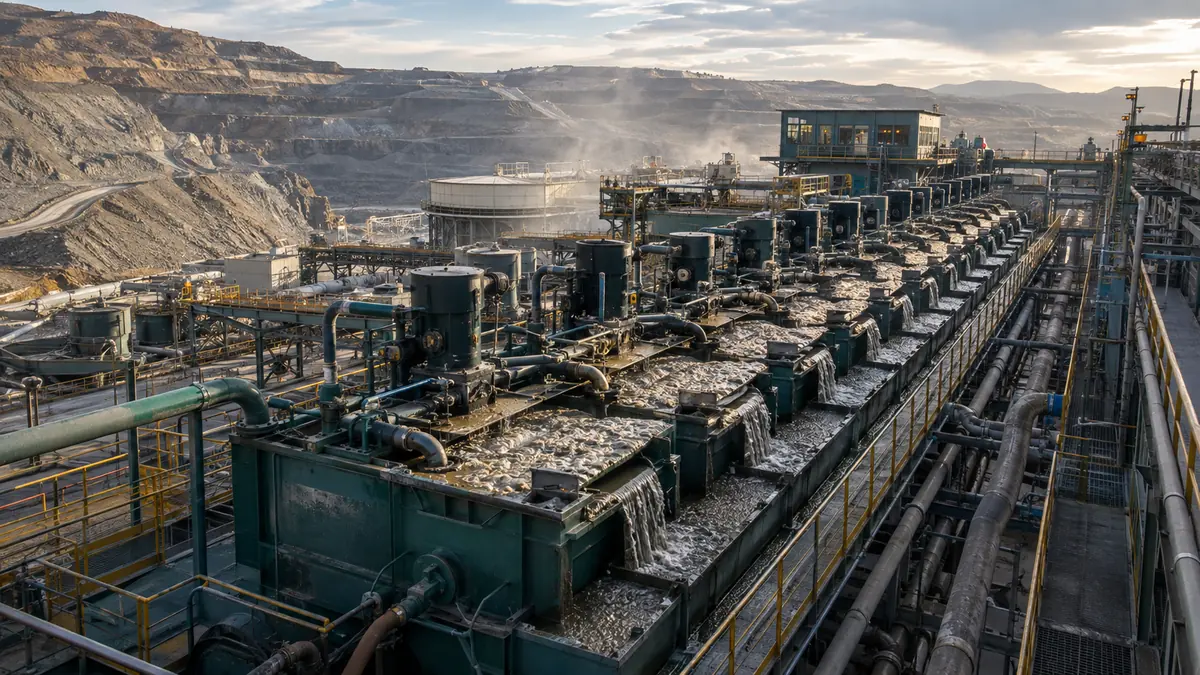
A flotation cell mixes ground ore slurry with air and selected reagents so particles with suitable surface properties attach to bubbles and report to a froth concentrate. The tailings or intermediate products move to later stages. In a practical plant, the cell is only one component of a chain that includes crushing, grinding, classification, conditioning, pumps, flotation banks, reagent preparation, concentrate handling, tailings handling, water recovery, instrumentation, and maintenance access.
There is no single “gold flotation machine” or “copper flotation machine” that is correct for every deposit. Gold may be free-milling, associated with sulphides, or require another recovery route altogether. Copper may float as sulphides or carry clay and oxidation issues. Lead-zinc projects may need separate rougher and cleaning strategies to make saleable concentrates. Metallurgical testing and an experienced process engineer should set the target recovery and concentrate quality before equipment size is fixed.
For the crushing front end, see our hard ore and abrasive rock crusher guide and iron ore crushing plant guide. If grinding is still being defined, our ball mill versus Raymond mill guide explains why the mill choice must match the downstream separation route.
Start With Ore Characterization and Metallurgical Testing
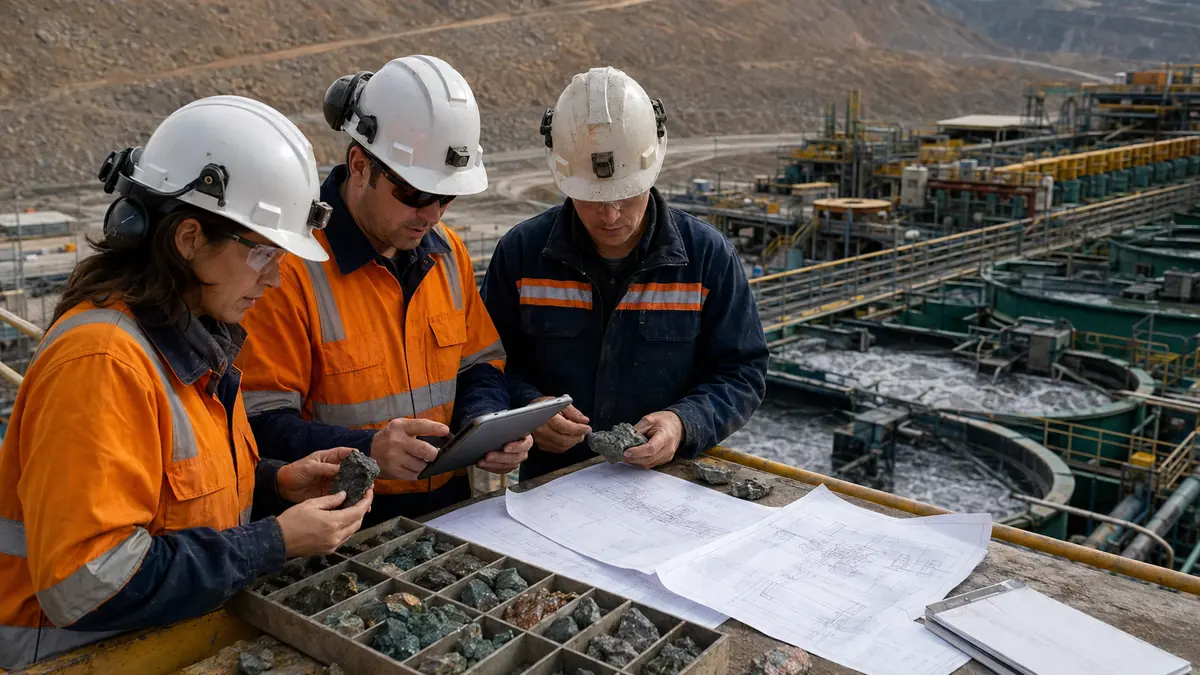
Cell volume does not solve an ore problem that has not been identified. Before requesting a proposal, assemble representative samples from the expected mining areas and document feed variation. Laboratory and pilot work can indicate whether flotation is suitable, the approximate liberation size, achievable recovery, concentrate grade, reagent response, residence-time range, and the penalties caused by fines, oxidation, clays, or unwanted sulphides.
Useful project inputs include:
- Ore type, mineralogy, head grade, oxidation condition, and any known deleterious minerals.
- Grinding information where available, plus hardness, abrasiveness, bulk density, moisture, and clay content.
- Maximum and typical crusher product size, planned grinding target, and a particle-size distribution for flotation feed.
- Required throughput in TPH, annual tonnes, operating hours, availability target, and planned mine life.
- Recovery target, concentrate-grade target, intended concentrate market, and whether products must be separated or can be bulk concentrates.
- Water quality and availability, site power, climate, elevation, reagent storage limits, and tailings or water-recovery plan.
Testing gives the design team a defensible starting point. Selecting equipment from an ore name alone is risky because two copper ores or two gold ores can have very different liberation and flotation behavior.
What the Main Flotation Stages Do
Rougher cells recover value quickly
Rougher flotation is usually the first recovery step after conditioning. It is designed to capture most floatable valuable minerals at a practical mass pull. The rougher concentrate may contain valuable minerals plus gangue and therefore commonly requires cleaning. Rougher tails may be final tails or pass to scavenger cells depending on the test work and recovery objective.
Scavenger cells protect recovery
Scavenger flotation treats rougher tailings or another intermediate stream to recover remaining value that did not float in the first bank. Scavenger concentrate is often recycled to rougher feed or combined with another stream. The correct size is based on the recovery benefit and residence time indicated by test work.
Cleaner cells improve concentrate quality
Cleaner stages upgrade rougher concentrate by reducing unwanted gangue and separating valuable minerals when possible. A cleaner circuit may include regrinding, multiple cleaning steps, and recirculating middlings. This stage is central when a buyer needs a concentrate that meets smelter or customer specifications rather than a high-volume, low-grade bulk concentrate.
Column, mechanical, and special-purpose cells have different roles
Mechanical agitated cells are widely used because they handle high throughput and fit rougher, scavenger, and cleaner duties. Column cells can be attractive for some cleaning applications where wash water and counter-current operation help control grade, but they are not automatically the right replacement for every mechanical-cell bank. The choice depends on test data, required froth depth, air dispersion, cleaning duty, operating flexibility, and the plant’s service capability.
Match the Equipment to the Ore and Product Objective
| Ore or project condition | Practical starting point | Selection questions |
|---|---|---|
| Copper sulphide ore | Mechanical rougher/scavenger bank with cleaning capacity | Liberation size, clay, pyrite depression, concentrate grade, concentrate transport |
| Gold associated with sulphides | Test flotation before selecting cells; consider rougher and cleaner route where appropriate | Gold association, sulphide recovery, gravity or leach integration, recovery target |
| Lead-zinc ore | Separate or bulk flotation circuit based on mineralogy and market requirements | Selectivity, regrind need, concentrate separation, penalty elements |
| Fine or clay-rich feed | Test carefully; allow for slurry, froth, and entrainment control | Desliming, water quality, froth stability, residence time, thickening needs |
| Oxidized or mixed ore | Do not assume a standard sulphide flotation route | Surface chemistry, test work, alternative recovery routes, reagent complexity |
| Expansion of an operating circuit | Start with a mass balance and bottleneck study | Existing residence time, pumps, blowers, launders, control system, building space |
The table is a selection framework, not a substitute for testing. A proposal should state its feed assumptions and identify which process results must be confirmed before final cell count, volume, and duty are committed.
Size the System From Residence Time and Mass Balance
Suppliers often discuss nominal cell volume or a maximum capacity range. Those figures are useful only after the design basis is clear. The relevant calculation begins with planned tonnes per hour, slurry density, grinding size, flotation kinetics, number of stages, expected recovery, and required operating availability. It also includes the material streams that circulate between roughers, scavengers, cleaners, regrind, thickeners, and filters.
A credible proposal should show a mass balance and a clear equipment list for the full route. Ask how the supplier has allowed for:
- feed-rate variation, scheduled maintenance, start-up, and operating availability;
- slurry density, pulp level, froth depth, air rate, and airflow distribution;
- conditioner volume, surge capacity, launder capacity, and interstage pumping;
- regrinding or classification where cleaning needs finer liberation;
- concentrate and tailings handling, water recovery, and emergency overflow paths; and
- local power conditions, instrumentation, automation, and safe access for inspection.
Do not size a plant from a single “TPH per cell” value. Two circuits with the same tonnage can need different total volume and stage layout when their feed size, mineralogy, recovery target, or concentrate specification changes.
A Typical Flotation Plant Configuration
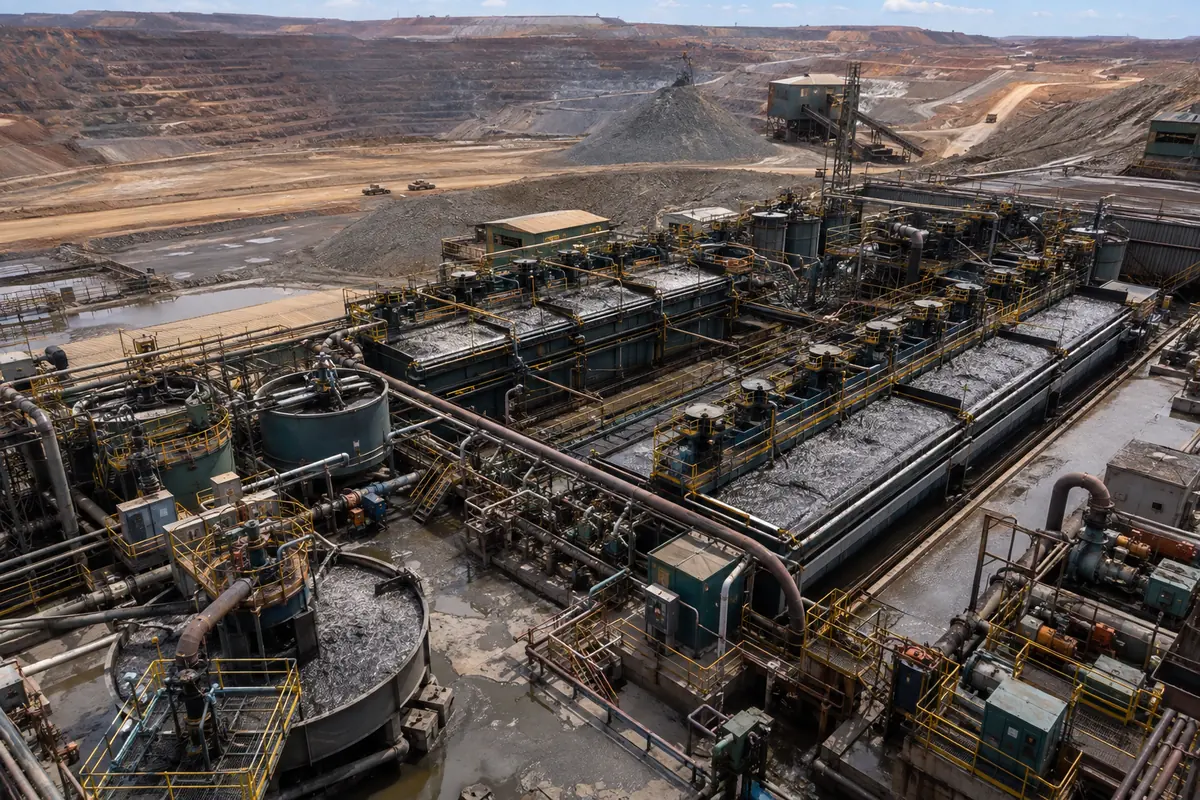
- Primary, secondary, and possibly tertiary crushing to establish a controlled mill feed. Our gold ore crushing and grinding guide explains why feed consistency matters.
- Fine-ore storage, feeder, grinding mill, pump box, and hydrocyclone classification to reach the planned flotation feed size.
- Conditioning tanks for slurry and reagent addition, with suitable mixing and residence time.
- Rougher cells, rougher concentrate transfer, and scavenger cells where recovery testing supports them.
- Cleaner cells, optional regrind, cleaner-scavenger return streams, and froth launders sized for the actual mass pull.
- Concentrate thickening, filtration, storage, and loadout; plus tailings handling and process-water recovery.
Operators need safe, practical access to blower connections, air-control devices, drive units, impellers, stators, pumps, valves, launders, sampling points, reagent areas, and instruments. A tight layout may reduce initial steel cost but can make maintenance slower and less safe for the life of the plant.
Air, Agitation, Froth, and Control Need a Design Basis
Flotation works through an interaction of ore surface properties, reagents, bubble generation, mixing, and froth transport. Equipment selection should identify the required duty without implying that one operating setting will work for all ore types. In an operating plant, air rate, agitation, pulp level, froth depth, reagent addition, and pH are controlled and adjusted within the process strategy established by metallurgical testing.
Ask whether the quoted scope includes blowers or compressors, distribution headers, isolation valves, flow measurement, level control, density measurement, sampling points, process control integration, and alarms. Also clarify how the design deals with power interruptions, froth overflow, blocked launders, and a planned maintenance shutdown.
Cost and ROI: Compare Complete Scope, Not Bare Cell Price
A low price for the flotation cells alone is not a complete plant price. Compare the scope line by line: cells, agitators, blowers, air pipes, slurry pumps, valves, launders, platforms, electrical motors, MCC or control system, instruments, reagent preparation, thickeners, filters, conveyors, water systems, structural steel, civil works, spares, commissioning, and training.
Operating costs can include energy, reagents, blower and pump power, wear parts, impellers, stators, liners, valves, instrument maintenance, water treatment, labor, filter consumables, and downtime. The most economical solution is usually the route that provides the required recovery and concentrate quality with realistic availability—not the one with the lowest standalone cell price.
Common Buyer Mistakes
- Selecting a cell from ore name or maximum TPH without representative test work and a mass balance.
- Treating rougher, scavenger, and cleaner flotation as interchangeable duties.
- Ignoring feed-size variation, clay, oxidation, water quality, and circulating loads.
- Comparing a bare cell quote with a complete system quote that includes pumps, blowers, controls, and walkways.
- Focusing on recovery without confirming concentrate grade, smelter penalties, filtration, and transport constraints.
- Leaving out service space, lifting plans, critical spares, site power, and operator training.
- Assuming a new machine will cure problems caused by unstable crushing, grinding, classification, or reagent preparation.
What to Send Before Requesting a Flotation Proposal
- Raw material: ore description, representative samples, mineralogy, head grades, oxidation condition, hardness, abrasiveness, bulk density, moisture, and clay information.
- Feed size: maximum and typical crusher product, target grind size, and flotation-feed particle-size distribution.
- Output: required recovery, concentrate grade, expected concentrate products, and downstream thickening, filtration, or transport requirement.
- Capacity: TPH, annual tonnes, operating hours, shifts, availability target, and planned expansion.
- Test work, flowsheets, mass balances, water analysis, reagent constraints, and any existing plant performance data.
- Site photos, layout drawing, elevation, climate, power supply, water source, delivery location, and access limits.
- Required scope for grinding interface, conditioners, cells, blowers, pumps, automation, reagent preparation, concentrate dewatering, spares, and commissioning.
- Your budget range and desired delivery schedule.
Send MVSI your raw material, feed size, output targets, capacity, site photos, and budget range. We can help define the upstream crushing and grinding interface, the flotation-equipment scope, and the practical project information needed for a quotation.
Conclusion
Choose flotation equipment from the ore’s measured behavior and the complete recovery route. Mechanical cells, columns, and supporting equipment can all be useful when they are assigned to the right rougher, scavenger, or cleaner duty. A dependable project starts with representative samples, a mass balance, a realistic layout, and a scope that includes the equipment around the cells. That approach makes it easier to compare recovery, concentrate quality, operating cost, maintenance needs, and total project risk before purchase.
FAQ
What flotation machine is best for copper ore?
Mechanical flotation cells are a common starting point for copper sulphide ore, often arranged in rougher, scavenger, and cleaner stages. The right cell size and circuit depend on mineralogy, liberation size, clay, recovery target, concentrate specification, and test work.
Can gold ore be processed with a flotation machine?
Some gold ores, especially gold associated with sulphide minerals, can use flotation as part of the recovery route. The right approach depends on how gold occurs in the ore, the test results, and whether flotation connects with gravity recovery, leaching, or another downstream process.
How are flotation cells sized?
Cells are sized from a process mass balance, residence-time requirement, slurry density, feed size, flotation kinetics, recovery target, stage duties, and required operating availability. A single nominal TPH number is not enough for final sizing.
What is the difference between rougher, scavenger, and cleaner flotation?
Rougher cells capture most floatable value first, scavenger cells recover value remaining in rougher tails, and cleaner cells upgrade concentrate quality. The streams can be recycled or reprocessed according to test work and the final product target.
Do lead and zinc need separate flotation circuits?
They may need separate stages when the project must make individual lead and zinc concentrates, but the correct route depends on mineralogy, selectivity, test work, and sales requirements. Some projects begin with bulk flotation before further separation.
What feed size is needed for flotation?
Flotation feed is usually ground to a controlled particle-size distribution that supports mineral liberation. The required size comes from test work, not from a generic machine rule. Stable crushing, grinding, and classification are essential before the flotation bank.
What equipment is needed around a flotation cell?
Typical supporting equipment includes conditioning tanks, pumps, blowers or air headers, valves, launders, level control, reagent preparation, sampling points, platforms, concentrate thickening and filtration, tailings handling, and process-water recovery.
What information is needed for a flotation-machine quotation?
Provide raw material and mineralogy, feed size, grind target, recovery and concentrate targets, capacity, test work, water and power data, site photos, layout constraints, desired equipment scope, delivery location, and budget range.