Table of Contents
- Why Crushing and Grinding Matter in Gold Ore Processing
- Typical Gold Ore Crushing and Grinding Flow
- 1. Feeding and Primary Crushing
- 2. Secondary Crushing and Screening
- 3. Fine Ore Storage
- 4. Grinding by Ball Mill
- 5. Classification by Spiral Classifier or Hydrocyclone
- Equipment Selection for Each Stage
- Jaw Crusher Selection for Gold Ore
- Cone Crusher or Fine Jaw Crusher?
- Ball Mill Selection for Gold Ore Grinding
- Grinding Fineness and Gold Recovery
- Wet or Dry Grinding?
- Cost Factors in a Gold Ore Crushing and Grinding Plant
- Common Design Mistakes
- What Information Should You Send for Equipment Selection?
- Conclusion
- FAQ
- What equipment is used for gold ore crushing?
- What equipment is used for gold ore grinding?
- Why is grinding important in gold processing?
- Is a jaw crusher suitable for gold ore?
- Ball mill or rod mill for gold ore?
- What grinding fineness is needed for gold ore?
- How much does a gold ore crushing and grinding plant cost?
- What information should I provide before asking for a quotation?
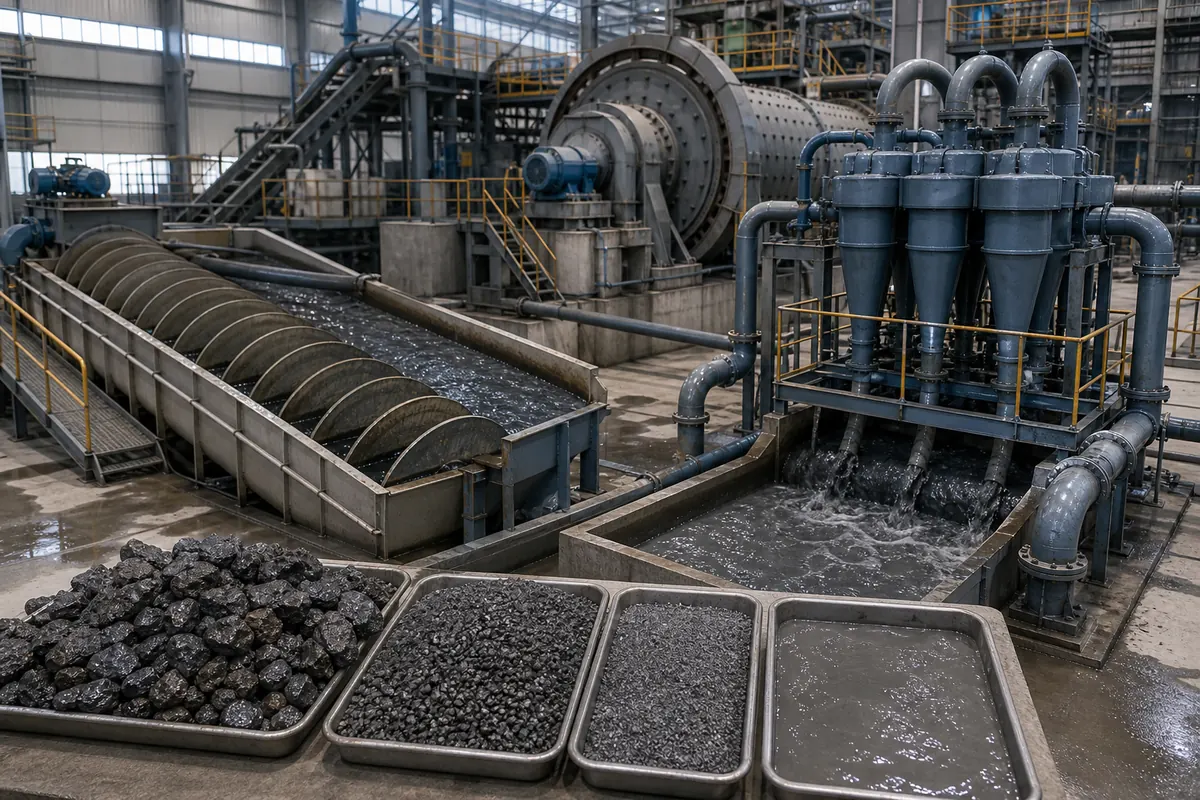
Gold ore crushing and grinding is the size reduction process that prepares mined ore for gravity separation, flotation, cyanide leaching, or other beneficiation methods. A typical gold ore plant may use a vibrating feeder, jaw crusher, cone crusher, vibrating screen, fine ore bin, ball mill, classifier or hydrocyclone, and slurry pump before the beneficiation stage. The correct equipment depends on ore hardness, gold liberation size, feed size, required grinding fineness, capacity, moisture, clay content, and downstream recovery process. Choosing the wrong crusher or mill can reduce recovery, increase wear cost, and create bottlenecks in the whole plant.
Why Crushing and Grinding Matter in Gold Ore Processing
Gold is usually locked inside quartz, sulfide minerals, oxide ore, or other host rock. Before gold can be recovered, the ore must be reduced to a size where gold particles or gold-bearing minerals can be exposed to the chosen beneficiation method.
Crushing handles coarse size reduction, while grinding handles fine size reduction. Crushing may reduce run-of-mine ore from hundreds of millimeters to 10-30 mm. Grinding may reduce crushed ore to a powder or slurry suitable for gravity concentration, flotation, leaching, or combined processes.
If the ore is not crushed and ground enough, gold recovery may be low. If it is over-ground, power cost rises, slime increases, and some recovery processes become less efficient. This is why equipment selection should be based on test results and target liberation size, not only plant capacity.
Typical Gold Ore Crushing and Grinding Flow
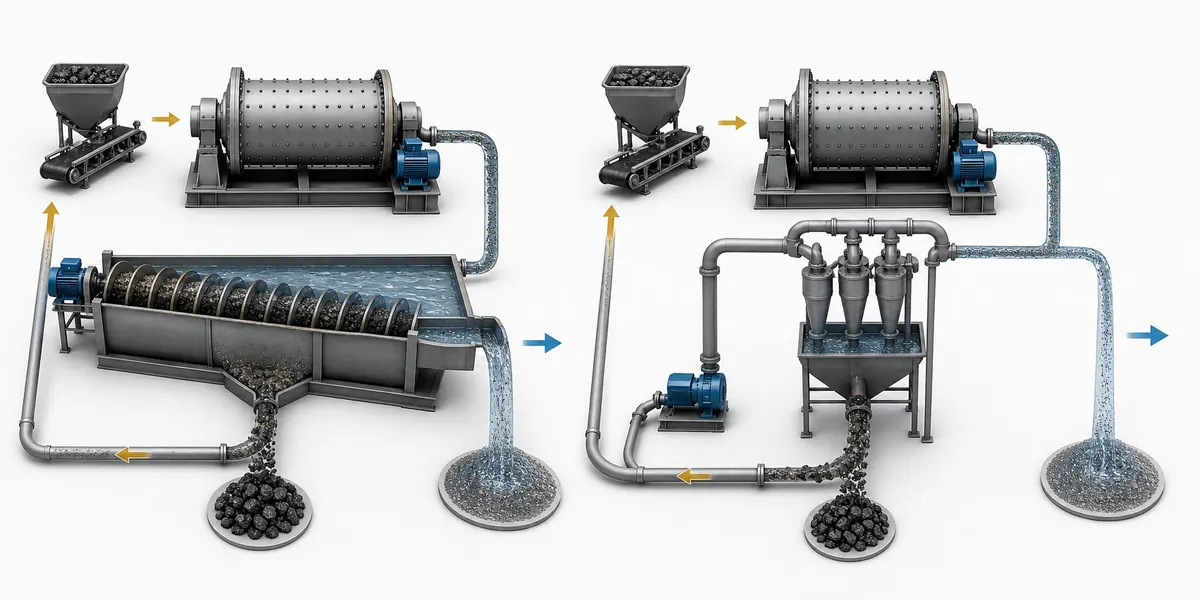
A practical gold ore process is usually designed around ore characteristics and recovery method. The following flow is common for many small and medium gold projects.
1. Feeding and Primary Crushing
Run-of-mine ore is loaded into a hopper and sent by vibrating feeder to the primary crusher. A jaw crusher is the most common choice because it can accept large feed size and handle hard ore.
The feeder can include a grizzly section to remove fine material before crushing. This reduces unnecessary crusher load and improves capacity.
2. Secondary Crushing and Screening
After primary crushing, the ore may go to a cone crusher or fine jaw crusher for secondary crushing. A vibrating screen separates qualified material from oversize. Oversize returns to the crusher, while qualified material goes to the fine ore bin.
For hard and abrasive gold ore, jaw crusher plus cone crusher is usually more stable than impact crushing. Impact crushers are used less often in hard ore circuits because wear can be high.
3. Fine Ore Storage
A fine ore bin or stockpile helps stabilize mill feed. Without enough buffer capacity, the grinding section may stop whenever the crusher section has a short interruption.
Stable mill feed improves grinding efficiency, classification, and downstream recovery.
4. Grinding by Ball Mill
The ball mill is widely used for gold ore grinding. It uses steel balls to grind crushed ore into slurry. The required grinding fineness depends on gold liberation size and recovery process.
Some free-milling gold ores may only need moderate grinding. Refractory or finely disseminated ore may need finer grinding, which increases power consumption and liner wear.
5. Classification by Spiral Classifier or Hydrocyclone
After grinding, slurry is classified. Coarse particles return to the ball mill, while fine slurry goes to gravity separation, flotation, leaching, or thickening.
Spiral classifiers are simple and suitable for some small plants. Hydrocyclones are compact and common in modern grinding circuits, especially when capacity is higher.
Equipment Selection for Each Stage
The equipment list should be selected according to raw ore, capacity, and final process requirements.
| Process Stage | Common Equipment | Selection Notes |
|---|---|---|
| Feeding | Hopper, vibrating feeder, grizzly feeder | Match feeder size to loader, ore size, and crusher opening. |
| Primary crushing | Jaw crusher | Suitable for large feed and hard gold ore. |
| Secondary crushing | Cone crusher, fine jaw crusher | Cone crusher is common for hard abrasive ore and stable closed-circuit crushing. |
| Screening | Vibrating screen | Controls mill feed size and returns oversize to crusher. |
| Fine ore storage | Fine ore bin, belt conveyor | Stabilizes grinding feed and reduces mill downtime. |
| Grinding | Ball mill, sometimes rod mill | Selected by capacity, hardness, and required grinding fineness. |
| Classification | Spiral classifier, hydrocyclone | Controls particle size before beneficiation. |
| Slurry handling | Slurry pump, pipes, sump | Must match flow rate, density, and abrasion conditions. |
For general crushing plant planning, you may also read Complete Stone Crusher Plant Setup: Equipment, Layout, and Cost and Stone Crusher Plant Cost: What Determines the Final Price?.
Jaw Crusher Selection for Gold Ore
A jaw crusher is usually the first crusher in a gold ore plant. The main selection factors are maximum feed size, ore hardness, capacity, discharge size, and wear resistance.
- Feed opening must accept the largest practical ore size.
- Crusher capacity should match the grinding section, not only peak mining output.
- Jaw plates should be selected for abrasive ore.
- Discharge setting should produce suitable feed for secondary crushing or grinding.
- A grizzly feeder can reduce fines entering the jaw crusher.
For small gold projects, one jaw crusher may be enough before grinding if the ore is not too hard and the feed size is controlled. For higher capacity or harder ore, secondary crushing is usually needed.
Cone Crusher or Fine Jaw Crusher?
After primary crushing, many gold ore plants use cone crusher in closed circuit with a vibrating screen. Cone crushers are strong for hard and abrasive ore, and they can produce a more controlled mill feed size.
A fine jaw crusher may be used in smaller plants, but it may have lower efficiency for some closed-circuit duties. The final choice depends on capacity, budget, ore hardness, and maintenance preference.
If the plant also needs shaped aggregate from hard rock, cone and VSI options can be compared in VSI Crusher Capacity Guide: 50 TPH to 500 TPH Sand Production, although gold ore circuits usually focus on mineral liberation rather than aggregate shape.
Ball Mill Selection for Gold Ore Grinding
Ball mill selection is one of the most important decisions in a gold processing plant. The mill must match ore hardness, feed size, grinding fineness, capacity, and classification system.
- Ore hardness and grindability.
- Required final particle size, such as 60%, 75%, or 80% passing a target mesh.
- Wet grinding or dry grinding requirement.
- Mill diameter and length.
- Motor power and energy consumption.
- Liner material and ball charge.
- Closed-circuit classification with spiral classifier or hydrocyclone.
Under-sized mills create capacity bottlenecks. Over-sized mills increase investment and power cost. The best approach is to use ore test data when available.
Grinding Fineness and Gold Recovery
Grinding fineness should be selected according to gold liberation. If gold is coarse and free, gravity recovery may work after moderate grinding. If gold is finely disseminated in sulfide minerals, finer grinding and flotation may be needed.
- Gravity separation for coarse free gold.
- Flotation for gold-bearing sulfide ore.
- Cyanide leaching for suitable oxide or free-milling ore.
- Combined gravity + flotation or gravity + leaching circuits.
More grinding is not always better. Over-grinding can create slime, reduce flotation performance, increase reagent consumption, and raise power cost.
Wet or Dry Grinding?
Most gold ore grinding circuits use wet grinding because downstream beneficiation often handles slurry. Wet grinding also helps classification and dust control.
Dry crushing before wet grinding is common. The ore is crushed and screened dry, then mixed with water in the grinding circuit. If the ore has high clay or moisture, the crushing section may need special feeder, screen, and chute design to prevent blockage.
Cost Factors in a Gold Ore Crushing and Grinding Plant
Cost depends on both equipment and process requirements. A simple small plant with jaw crusher and ball mill is very different from a larger plant with closed-circuit crushing, hydrocyclone classification, flotation, thickening, and tailings equipment.
- Capacity in tons per hour or tons per day.
- Ore hardness and abrasiveness.
- Maximum feed size and required crushed product size.
- Required grinding fineness and mill power.
- Number of crushing stages.
- Screen size, classifier type, and slurry pump duty.
- Steel structure, foundation, electrical control, and water system.
- Spare parts, liners, grinding balls, installation, and commissioning.
For buyers, it is better to compare the whole process cost and expected recovery benefit, not only the price of one crusher or mill.
Common Design Mistakes
One common mistake is designing the crushing section without considering the ball mill feed size. If crushed ore is too coarse, the mill works harder and capacity drops.
Another mistake is choosing a ball mill only by capacity without checking ore hardness and target fineness. The same mill may perform very differently on soft oxide ore and hard quartz vein ore.
Buyers also sometimes ignore classification. Poor classification sends too much coarse material forward or too much fine material back to the mill, reducing efficiency and increasing energy cost.
What Information Should You Send for Equipment Selection?
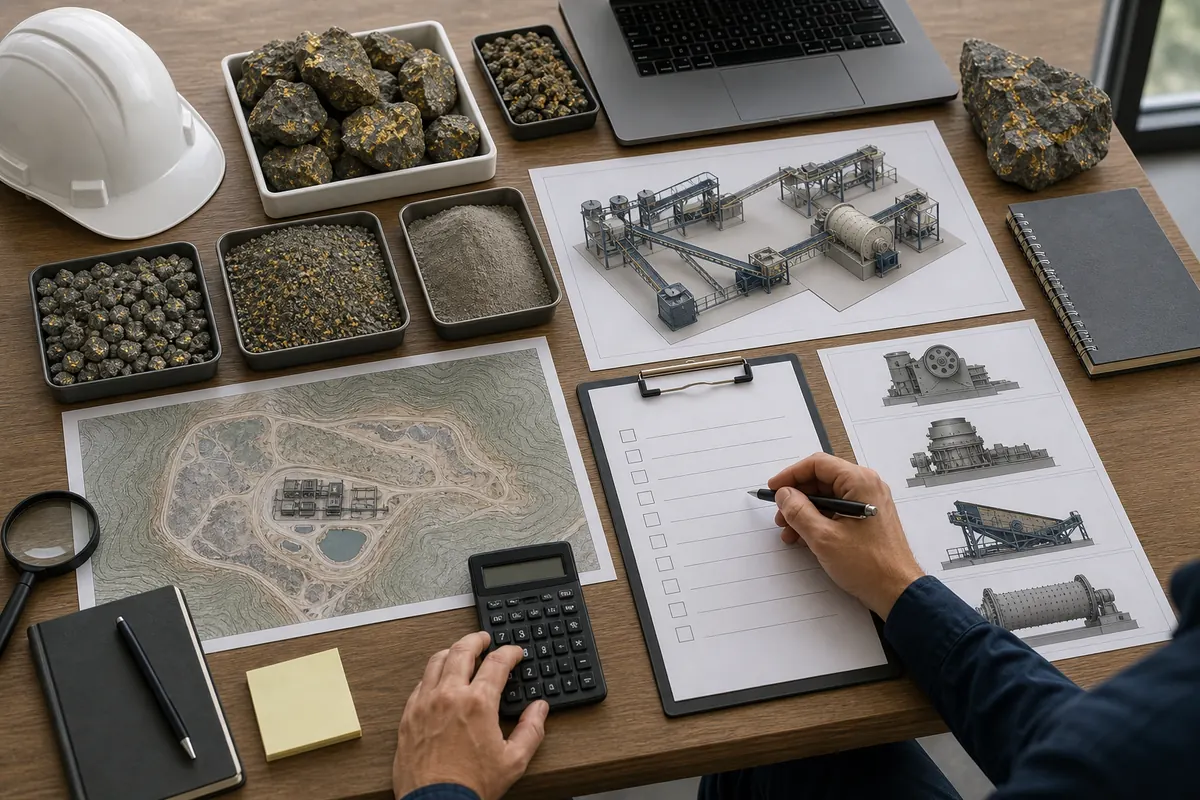
A good quotation requires more than the words “gold ore plant.” Send enough project information so the equipment supplier can design a realistic process.
- Raw ore type, such as oxide gold ore, sulfide gold ore, quartz vein ore, or placer-related hard rock ore.
- Maximum feed size and mining method.
- Ore hardness, moisture, clay content, and abrasiveness if known.
- Target capacity in tons per hour or tons per day.
- Required grinding fineness or available test report.
- Planned recovery method: gravity, flotation, leaching, or combined process.
- Site photos, power supply, water source, and layout limits.
- Budget range, delivery country, project schedule, and spare parts needs.
With this information, MVSI can recommend a suitable crushing and grinding configuration before the beneficiation stage.
Conclusion
Gold ore crushing and grinding is the foundation of gold recovery. The crushing section must produce stable mill feed, and the grinding section must reach the right liberation size without wasting power. A typical plant may use jaw crusher, cone crusher, vibrating screen, fine ore bin, ball mill, classifier or hydrocyclone, and slurry pump. The best equipment selection depends on ore hardness, feed size, capacity, grinding fineness, recovery method, site conditions, and budget.
FAQ
What equipment is used for gold ore crushing?
Gold ore crushing commonly uses a vibrating feeder, jaw crusher, cone crusher or fine jaw crusher, vibrating screen, belt conveyor, and fine ore bin. The exact configuration depends on ore hardness, feed size, and capacity.
What equipment is used for gold ore grinding?
Gold ore grinding commonly uses a ball mill in closed circuit with a spiral classifier or hydrocyclone. Slurry pumps, pipes, and sumps are also needed for wet grinding circuits.
Why is grinding important in gold processing?
Grinding exposes gold particles or gold-bearing minerals so gravity separation, flotation, or leaching can recover them. Poor grinding can reduce recovery, while over-grinding can increase cost and create slime.
Is a jaw crusher suitable for gold ore?
Yes. A jaw crusher is widely used as the primary crusher for gold ore because it can handle large feed size and hard rock. Secondary crushing may be needed before grinding.
Ball mill or rod mill for gold ore?
Ball mills are more common in gold ore grinding, especially when fine grinding is required. Rod mills may be used in some circuits where coarser grinding and less over-grinding are desired.
What grinding fineness is needed for gold ore?
The required fineness depends on gold liberation size and recovery method. It should be determined by ore testing when possible, because different ores may need very different grinding targets.
How much does a gold ore crushing and grinding plant cost?
Cost depends on capacity, ore hardness, feed size, grinding fineness, number of crushing stages, mill size, classification system, civil work, power system, installation, and spare parts.
What information should I provide before asking for a quotation?
Send raw material, feed size, ore hardness, target capacity, required grinding fineness, recovery method, site photos, power and water conditions, budget range, and delivery country.