Table of Contents
- When is a separate conveyor worth comparing?
- Calculate the clearing interval for every product stream
- Illustrative comparison, not a machine rating
- Match the transfer and controls before comparing belt length
- Compare useful storage and handling cost together
- Frequently asked questions
- Does every mobile screen need a separate stockpiler?
- Can catalogue stockpile capacity determine how long the screen will run?
- Should a stockpiling conveyor match the total screen feed rate?
- Will adding a stacker remove the need for a wheel loader?
- Does a radial or telescopic conveyor automatically prevent segregation?
- What must be confirmed before adding a conveyor to an existing mobile screen?
- Select the arrangement that covers the shortest clearing interval
- Sources and technical references
Does a Mobile Screen Need a Separate Stockpiling Conveyor?
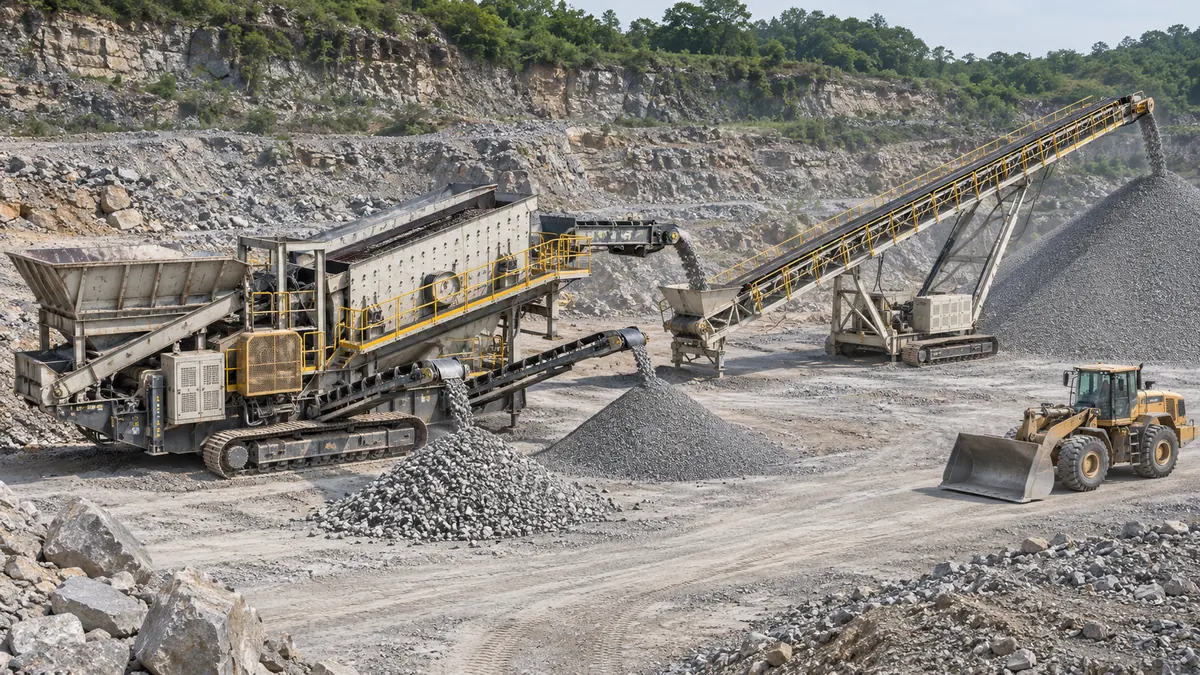
A mobile screen needs a separate stockpiling conveyor when its onboard discharge arrangement cannot provide enough usable pile space between planned clearing visits, or when the yard layout requires a different product destination. Keep the onboard arrangement if every stream has adequate clearance, a workable loading route and dependable removal capacity. A longer conveyor alone does not prove that the plant can run unattended. Before buying, compare each product stream, the time until its pile reaches the agreed operating limit, and the transfer, power and stop-control responsibilities of the complete package.
By MVSI Company. Published 2026-11-25.
When is a separate conveyor worth comparing?
Compare a separate stacker when product removal or pile space interrupts otherwise acceptable screening. Retain the onboard conveyors in the comparison when the yard can already receive and clear every fraction reliably.
| Decision fact | Evidence to request | Implication for the purchase |
|---|---|---|
| Product flow | Mass rate for each saleable fraction and any reject or return stream | Do not size every outlet from total screen feed |
| Usable pile headroom | Remaining room within the approved layout, clearances and product separation | Catalogue maximum stockpile volume is not automatically available storage |
| Clearing interval | Longest period each pile may receive material without reclaim | Check the stream that reaches its limit first |
| Transfer fit | Screen discharge position and receiving-boot envelope in working configuration | A conveyor of adequate throughput may still need an engineered transfer |
| Handling objective | Less rehandling, a different pile location or a different stacking method | Compare the specific benefit against added equipment and site work |
The MVSI mobile screen family describes dual-deck screening for aggregate and multistage applications, with crusher or excavator feeding. Use it as the relevant equipment starting point. A separate stacker, its supply responsibility and compatibility with a proposed screen must be confirmed in the quotation; the family page does not establish those options.
Calculate the clearing interval for every product stream
Available pile room and the rate entering that pile determine an initial no-reclaim interval. This planning estimate does not establish a safe operating limit or replace site measurements and the equipment instructions.
For a constant stream during a period with no material removal, estimated interval in hours = available additional pile mass in tonnes / incoming product rate in tonnes per hour. Start from the pile as it actually stands, not an empty-yard assumption. Define the stopping point before the pile compromises discharge clearance, product separation, access or another site constraint.
If headroom is supplied as volume in cubic metres, use an appropriate measured bulk density in tonnes per cubic metre to obtain mass. Do not use solid-rock density for a loose aggregate pile. A survey or agreed layout must establish the usable space; a cone-volume calculation alone cannot account for neighbouring piles, slopes, roads and equipment clearance.
Use the longest credible gap in loader service, including its other duties, and allow for response time and variation. Average reclaim over a full shift can hide a short period when nobody is available to clear a pile. Review changing product splits and pre-existing inventory as well. The screen capacity verification guide addresses feed and product measurement; this decision adds the receiving yard after that measurement boundary.
Illustrative comparison, not a machine rating
Assume one product pile has 30 tonnes of approved additional room and receives 60 t/h with no reclaim. Its arithmetic interval is 0.5 hours, or 30 minutes. A second pile with 12 tonnes of room receiving 36 t/h reaches its planning limit in one-third of an hour, or 20 minutes. All figures are hypothetical inputs, not MVSI ratings, measured results or recommended pile dimensions.
If the loader may be unavailable for 45 minutes, neither assumed arrangement covers that gap. Adding a stacker only to the first stream leaves the second stream limiting operation. Compare a different pile layout, assured clearing service, planned production pauses or additional conveying for the affected streams. Recalculate with the proposed configuration and an operating margin; the arithmetic itself is not permission for unattended running.
Match the transfer and controls before comparing belt length
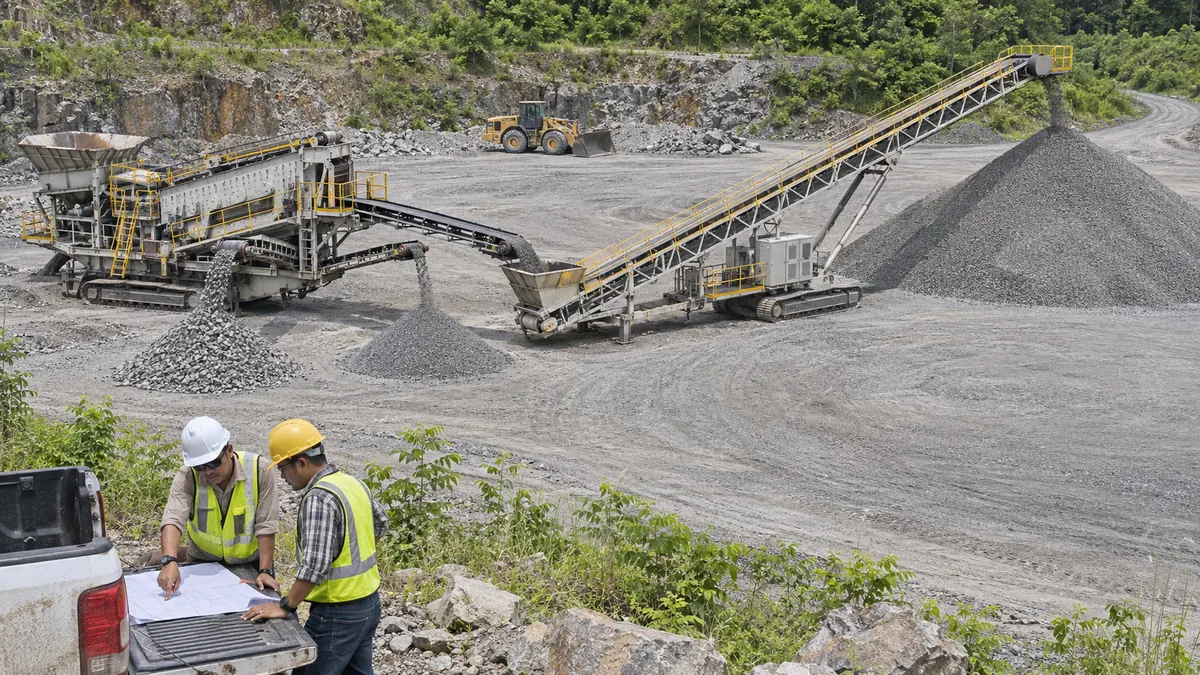
A separate conveyor must receive the actual discharge stream and stop safely as part of the proposed system. Request one working arrangement drawing and an interface schedule covering both machines.
| Quotation item | Common basis for every bidder |
|---|---|
| Material and belt duty | Product grading, maximum lump, moisture, bulk density and stream rate; proposed angle, belt and drive basis |
| Receiving transfer | Discharge trajectory, drop, boot position, spill containment, wear surfaces and access |
| Stockpile envelope | Working discharge position, required clearances, footprint and any radial or telescopic travel |
| Power and controls | Supply source, connections, starting/stopping logic and response to downstream unavailability |
| Site and mobility | Ground preparation, drainage, transport configuration, deployment and loader routes |
| Acceptance and responsibility | Who designs each interface, supplies missing items and verifies the agreed operating arrangement |
Finlay describes tracked conveyors, radial stockpilers and telescopic stockpilers for free-flowing bulk materials. These are different arrangements to evaluate, not proof that one style fits every yard. Metso describes mobile stacking conveyors for stockpile capacity and material transfer, including reduced wheel-loader running. Those OEM examples establish the alternatives; they do not prove a saving, an MVSI option or compatibility between brands.
A machine purchase based only on total feed capacity can miss the product split, receiving geometry and yard restrictions. Keep screen area and deck selection in the mobile screen sizing guide separate from this downstream interface check. Do not extend an onboard belt or alter its supports without a supported engineering review.
Compare useful storage and handling cost together
A stacker is attractive when its usable extra storage or changed placement method solves a documented yard constraint. It can be unnecessary when the existing piles and loader schedule already support the required production.
- For a constrained yard, check the complete working footprint and movement envelope before favouring a longer or radial conveyor.
- For wet, cohesive or variable material, obtain an application-specific review of the receiving boot, belt duty and reclaim behaviour; free-flowing-material examples are insufficient proof.
- For multiple products, preserve separate destinations and evaluate every stream rather than improving only the largest pile.
- For short campaigns, include transport, setup, power connections, maintenance and teardown in the comparison alongside any reduced loader rehandling.
Compare the additional conveyor package and site work with the loader hours, extra handling and production interruptions it could actually avoid. A loader may still be needed for loadout and other quarry work. Use the same saleable-tonnage and operating-time basis described in the mobile plant operating-cost guide; no universal payback period or fuel-saving percentage can be established from conveyor length.
More storage also does not guarantee unchanged grading at loadout. The Pete Lien & Sons stockpile-management presentation identifies segregation, contamination and degradation risks, and discusses discharge drop, material characteristics and reclaim. Ask how the proposed pile-building and loading method will preserve the specified product; a taller cone is not by itself a quality-control plan.
Frequently asked questions
These answers use the same purchase boundary: each stream, its receiving pile and the complete transfer arrangement.
Does every mobile screen need a separate stockpiler?
No. Onboard conveyors may be sufficient when every product pile has usable room, suitable clearance and reliable removal. Compare a separate stacker when those conditions cannot support the planned operation.
Can catalogue stockpile capacity determine how long the screen will run?
Not alone. Establish the remaining usable room in the actual layout and the incoming rate for that product. Existing inventory, clearance limits, changing product splits and the removal schedule affect the interval.
Should a stockpiling conveyor match the total screen feed rate?
Define the stream it will receive. One product conveyor normally handles its assigned fraction, while a conveyor receiving combined streams needs the combined duty. Obtain a capacity basis for the actual material, inclination and transfer arrangement.
Will adding a stacker remove the need for a wheel loader?
Not necessarily. It may reduce particular rehandling duties while loadout, cleanup and other piles still need service. Compare the tasks and hours actually avoided rather than assuming the loader disappears from the site.
Does a radial or telescopic conveyor automatically prevent segregation?
No. Movement and placement options must be used within a suitable pile-building and reclaim plan. Material grading, shape, moisture and discharge drop still need consideration, and product quality must be checked.
What must be confirmed before adding a conveyor to an existing mobile screen?
Confirm the actual screen discharge geometry, receiving boot, material duty, power source, controls, safe clearances and working footprint. Assign interface design, supply and acceptance responsibilities before ordering; do not assume an aftermarket unit is compatible.
Select the arrangement that covers the shortest clearing interval
Keep the onboard arrangement when all product streams fit the approved yard and clearing schedule. Compare a separate stacker where a specific stream fails that test, then verify that the revised transfer and pile arrangement resolves the constraint without leaving another outlet as the bottleneck.
Send MVSI your project information: raw material, maximum and typical feed size, output size, capacity in t/h, project country, site photos and budget range. Add the proposed screen model or existing layout, product split, pile dimensions and current inventory, bulk density, longest loader-service gap, power availability and the required stockpiling route. Use the listed WhatsApp or email contact to request a scope review.
Sources and technical references
The sources below support equipment-family fit, conveyor alternatives and stockpile-quality considerations. The interval calculation and quotation schedule are buyer planning methods; they are not published machine ratings.
- MVSI Mobile screens: offered screening-family context; exact stacker scope requires confirmation.
- Metso Nordtrack CT Series: mobile stacking and material-transfer applications.
- Finlay conveyors: tracked, radial and telescopic conveyor categories.
- Pete Lien & Sons, Managing Aggregate Stockpiles, 2023: stockpile handling and segregation considerations, hosted by UGPTI.