Table of Contents
- Which facts decide between an onboard and separate screen?
- What does the onboard screen actually separate?
- When is each arrangement suitable or unsuitable?
- Will a separate screen operate independently and an onboard screen travel in one load?
- How should two competing offers be compared?
- Frequently asked questions
- Is an onboard screen the same as a prescreen?
- Can an onboard screen make more than one finished product?
- When should a buyer compare a separate screening plant?
- Does a separate screen always have its own power supply?
- Does an onboard screen mean the plant moves in one load?
- What should the acceptance comparison measure?
- Choose the screen arrangement from the product and move plan
- Sources and technical references
Should You Buy an Impact Crusher With an Onboard Screen?
Buy a mobile impact crusher with an onboard post-screen when the offered screen can deliver your required products and handle the full discharge and return duty within the site and transport limits. Compare a separate screen when more product cuts, additional screening duty or independent deployment matter. Neither arrangement wins from machine count alone. A separate screen may still depend on the crusher for power, while an onboard module may require detached transport. Before ordering, trace every product and return stream, then compare the operating dependencies and complete move between jobs on the same material basis.
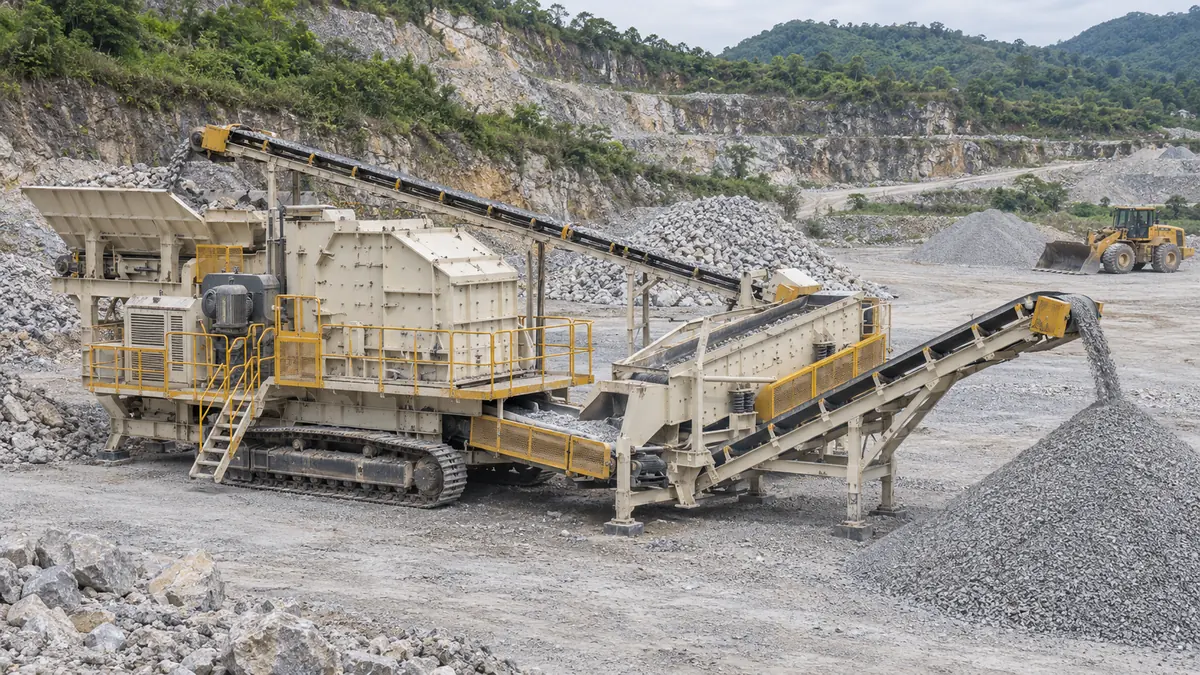
Which facts decide between an onboard and separate screen?
Choose the arrangement that can deliver the required product streams with acceptable material flow and relocation scope. Screen location alone does not establish separation quality, independent operation or a lower installed cost.
| Decision fact | Onboard post-screen | Separate screening package |
|---|---|---|
| Product outlets | Confirm the offered decks, discharge belts and oversize destination | Confirm each product outlet and how crusher discharge reaches the screen |
| Screen duty | Assess the actual crusher discharge, including circulating material | Assess the proposed feed point and return route; separation remains material-dependent |
| Operating dependency | Screening and crushing form a connected package | Verify its own feed, power and controls before calling it independent |
| Move between jobs | Confirm which modules remain attached and which travel separately | Include screen, transfer/return conveyors and any extra power package |
| Evidence still required | Current configuration drawing, material basis and acceptance method | The same evidence plus all interfaces and site layout |
For a relevant first-party starting point, the MVSI mobile secondary crushing plant page describes an impact route with return screening. Request the current offered arrangement. Its historical table does not establish your achievable output, the number of accepted products, retrofit fit or a one-load transport plan.
What does the onboard screen actually separate?
A post-screen classifies material after crushing; a prescreen separates material before the crushing chamber. Identify the screen position and destination of every stream before comparing quotations that simply say screen included.
RUBBLE MASTER’s aggregate processing guidance describes onboard final screens with model-dependent deck arrangements and a choice of returning or stockpiling oversize. Kleemann’s MR 130 EVO2 documentation likewise lists specific post-screen and return-conveyor alternatives. These examples demonstrate why the exact drawing matters; their options are not MVSI specifications.
An oversize outlet is a physical stream, not automatically an accepted saleable product. A deck opening also does not prove compliance with the complete project grading or contamination limits. Ask where samples will be taken and which product specification they must meet. Use the screen size and deck selection guide for the separate screen-sizing decision.
If a proposal includes upstream fines bypass, evaluate it separately from final sizing. The impact-crusher prescreen routing guide explains when bypass material should rejoin the main flow or leave separately. Adding that bypass to the wrong product can change the comparison.
When is each arrangement suitable or unsuitable?
An onboard unit is a reasonable candidate for a repeatable product duty that the offered screen and conveyors can handle. A separate screen deserves comparison when the required cuts or screening load exceed that arrangement, or when the buyer needs the screen elsewhere.
- Consider onboard screening when the accepted products and return route are stable, the site layout fits, and the supplier can substantiate the complete duty on the specified material.
- Compare a separate screen when additional classified products, a different screening duty or use with another feed source is a real requirement. Confirm the proposed screen actually supplies that flexibility.
- Do not add a separate machine merely because a catalogue capacity looks larger. Compare the same feed gradation, moisture, fines, target cuts and complete output basis.
- Do not select an integrated package solely for a narrow site until deployed conveyors, stockpile separation, loader movement and maintenance access fit the layout.
- Neither layout alone remedies unsuitable impact-crusher feed, sticky screening conditions or unacceptable contamination. Those constraints need their own material and equipment assessment.
These are selection boundaries, not universal capacity thresholds. Keep fresh feed, internal return, rejected material and accepted products separate in the proposal. A return stream may revisit the crusher and screen; it cannot be counted again as new production.
Will a separate screen operate independently and an onboard screen travel in one load?
Neither statement follows from screen location. Confirm the exact power, feed and control dependencies and the packed transport arrangement for each offer.
RUBBLE MASTER’s compact screen documentation describes specific separate screens powered by the crusher. That is a useful counterexample to assumed independence, not a claim about every separate screen. Ask whether the proposed screen can receive material and run when the crusher is unavailable, and what additional equipment is required if it cannot.
The Kleemann documentation linked above also describes detaching its post-screen for individual transport. Consequently, count actual loads, attachments and setup tasks in the current supplier transport drawing. Request configured weights and dimensions, transport frames, lifting provisions and the responsible party for disassembly and reconnection. Have the project logistics provider assess the proposed route; do not infer permit eligibility from the word mobile.
How should two competing offers be compared?
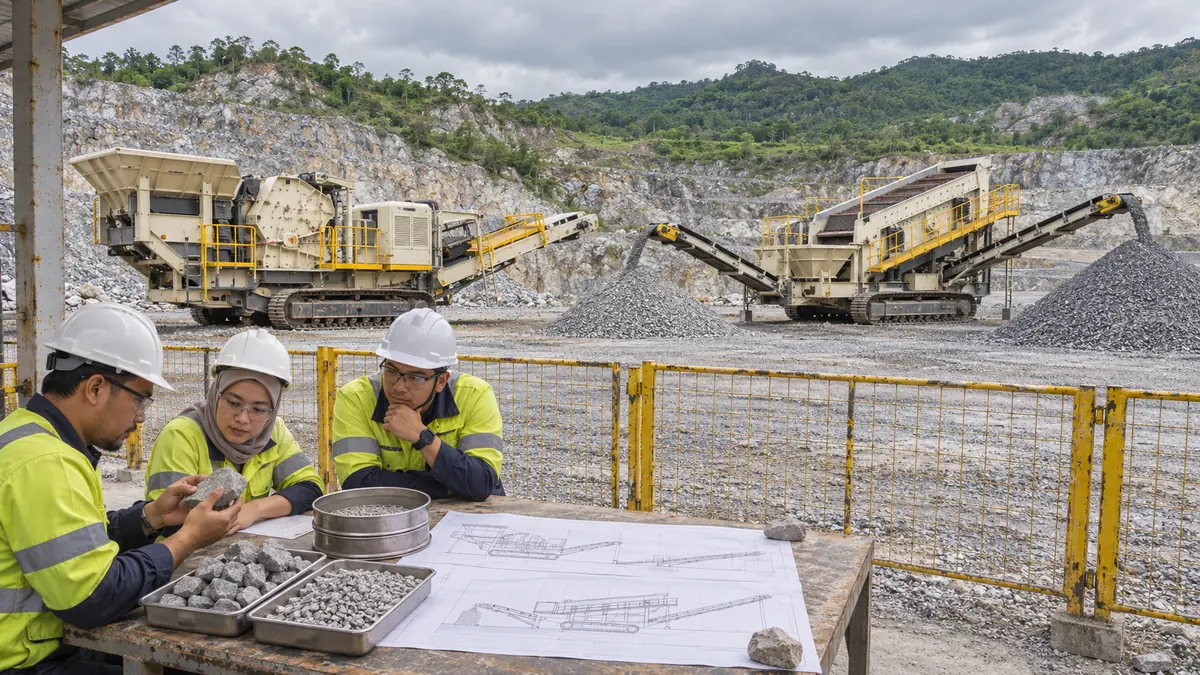
Issue one material and product brief, then require both suppliers to expose their stream routes and dependencies. Compare complete installed and relocated scope per accepted product basis rather than bare crusher price.
Hypothetical comparison, not an MVSI offer or customer case: Offer A includes an onboard single-deck post-screen with oversize return. Offer B includes a separate two-deck screen. Assume the buyer needs two separately accepted product fractions and wants occasional screening from another stockpile. No capacity, price or performance is assumed.
| Check in the hypothetical comparison | Evidence required before choosing |
|---|---|
| Can Offer A deliver both products? | Map its undersize and oversize destinations. If oversize must return, a second accepted product outlet has not yet been demonstrated. |
| Does Offer B deliver useful independence? | Confirm its feed arrangement, available power, controls and stockpile access when the crusher is stopped or relocated. |
| What actually moves? | List packed modules and loads, transfers, cables, return belts, loading and reassembly tasks for both offers. |
| What proves the product duty? | Agree representative material, sampling points, grading/quality checks, accepted output measurement and treatment of rejects and stoppages. |
In this example, the extra deck is relevant because of the required product split. It does not prove that Offer B meets the specification, has adequate screening capacity or costs less. Conversely, another onboard configuration could satisfy the brief. Obtain the revised drawing and a comparable material-based assessment before deciding.
Include screen media, support and transfer equipment, power supply, controls, installation and relocation in both scope schedules. The quarry equipment interface guide helps identify transfers and conveyors that otherwise fall between quotations. Distinguish a proposed assessment from a witnessed trial or a written contractual performance commitment.
Frequently asked questions
These answers apply to final screening after a mobile impact crusher. Prescreen fines separation is a different duty.
Is an onboard screen the same as a prescreen?
No. A prescreen separates material before the crushing chamber. A post-screen classifies crusher discharge. Confirm the equipment position and whether each separated stream bypasses crushing, returns for crushing or leaves as product.
Can an onboard screen make more than one finished product?
Some offered configurations can. Check the number of decks, separate discharge outlets and oversize routing. An outlet counts as a finished product only if that stream meets the required specification.
When should a buyer compare a separate screening plant?
Compare one when the required product cuts or screening duty exceed the proposed onboard arrangement, or when separate deployment has value. Its capacity and operating independence still require evidence on the specified material and configuration.
Does a separate screen always have its own power supply?
No. Some documented compact screening systems use crusher-supplied power. Confirm the exact power source, controls and feed arrangement, including what is needed to screen while the crusher is unavailable.
Does an onboard screen mean the plant moves in one load?
No. A post-screen may be detached for transport on a particular configuration. Request packed dimensions, configured weights, a module and load list, and the complete loading and reassembly scope.
What should the acceptance comparison measure?
Use the same agreed feed and product requirements. Record accepted product streams, grading and other required quality checks, fresh feed, return and rejects, stoppages and operating conditions. Do not equate gross internal tonnes with accepted output.
Choose the screen arrangement from the product and move plan
Choose onboard screening when the documented configuration meets the product duty and its complete transport arrangement suits the work. Compare a separate screen when added screening or deployment flexibility is required and can be substantiated. Release the order only when every product outlet, return stream, power dependency and relocation responsibility is clear.
For an impact-crusher and screening assessment, contact MVSI through its listed WhatsApp or email route. Send raw material, maximum and typical feed size, required output size, capacity in t/h, project country, site photos and budget range. Add the number of accepted products and their grading specifications, feed moisture/fines, oversize destination, available power, site layout and move frequency. State whether the screen must work from another feed source while the crusher is unavailable.
Sources and technical references
By MVSI Company. Published 2026-11-14. Sources retrieved 2026-11-14. Other OEM documentation supports the general distinctions; it does not establish MVSI option availability, compatibility, output or service commitments.
- MVSI Mobile Secondary Crushing Plant, linked above: impact and return-screen family scope; confirm the current supplied configuration.
- RUBBLE MASTER, How to Produce Quality Aggregates for Construction?, linked above: post-screen classification, model-dependent products and separate screening considerations.
- RUBBLE MASTER, Compact Screens, linked above: examples of separate compact screens powered by a crusher.
- Kleemann, MR 130 EVO2, linked above: specific post-screen, return/side-discharge and detached-transport arrangements.