Table of Contents
- Quick decision facts for an impact-crusher quotation
- What is the difference between bypassing and removing fines?
- When should undersize rejoin the crushed aggregate?
- When is separate discharge the better starting point?
- What should the supplier commit to in the quotation?
- Illustrative comparison: diverted tonnes are not sold tonnes
- Frequently asked questions
- Does crusher bypass mean fines are discarded?
- Are all prescreen fines waste?
- Can a prescreen guarantee clay removal?
- Is a return screen the same as a prescreen?
- How should two bypass configurations be compared?
- What data is needed to specify the fines route?
- Choose the route from the product acceptance boundary
- Sources and technical references
Should You Bypass or Remove Fines Before Impact Crushing?
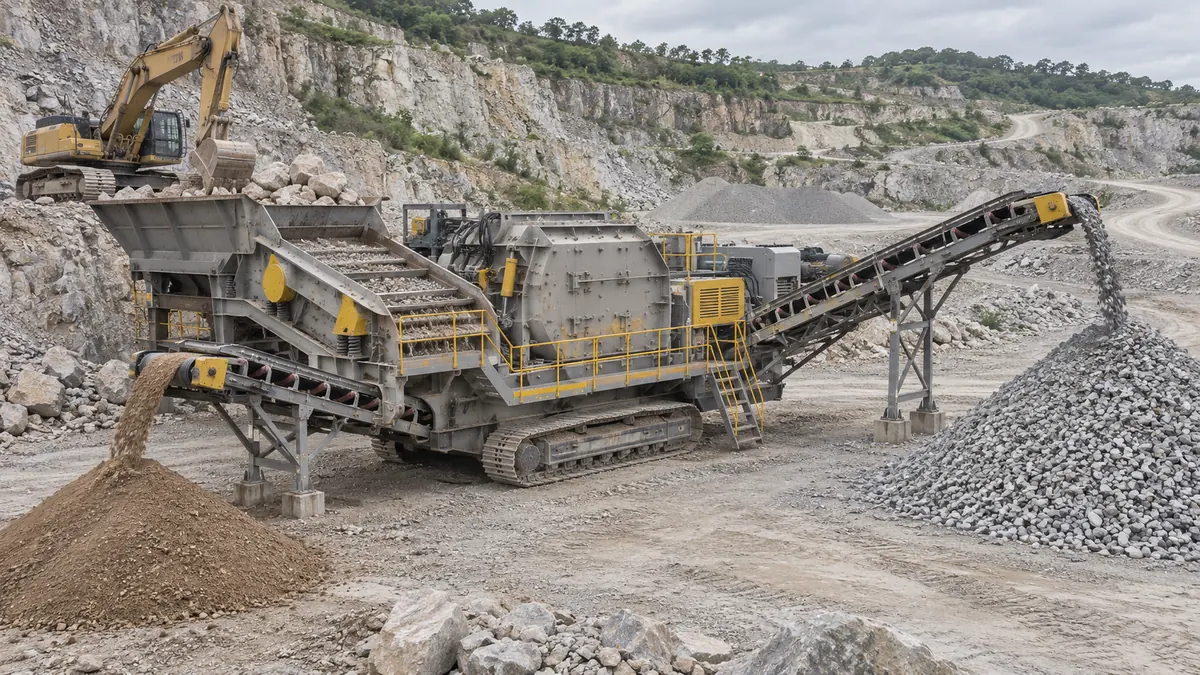
Bypass prescreen undersize around an impact crusher and recombine it only when that stream meets the intended product requirements. Keep it separate when its grading, clay content or other quality limits would make the combined aggregate unacceptable. The purchase decision is therefore about the destination of each stream, as well as reducing unnecessary crushing. Ask suppliers to show the separation cuts, bypass discharge point, separate stockpile route and product acceptance method on one layout. A machine described as having a prescreen does not, by itself, establish which material will leave the site as saleable aggregate.
By MVSI Company. Published 2026-11-09.
Quick decision facts for an impact-crusher quotation
Specify where prescreen undersize goes before comparing equipment prices. In this article, fines means material below the selected prescreen cut; it is not a universal particle-size definition or an automatic waste classification.
| Decision input | Bypass and recombine | Keep undersize separate |
|---|---|---|
| Product acceptance | Evaluate when the bypass stream and resulting blend satisfy the specified product tests | Evaluate when blending would fail grading or cleanliness limits, or a separate product is required |
| Material route | Show the point where material rejoins the circuit and any subsequent sizing | Show a dedicated discharge, stockpile and subsequent use, treatment or rejection route |
| Feed evidence | Representative size distribution, moisture and quality results for the separated stream | The same evidence, plus the expected mass and handling needs of the separated stream |
| Capacity comparison | Distinguish incoming feed, crusher-chamber feed and accepted final product in t/h | Distinguish material diverted from material actually sold; define the common moisture basis |
| Equipment availability | Confirm the exact proposed bypass arrangement in writing | Confirm the exact proposed separation and discharge arrangement in writing |
What is the difference between bypassing and removing fines?
Bypassing avoids the crushing chamber; removal keeps material out of a specified downstream stream. Those actions can occur together, but a bypass is not proof that undesirable material has been removed from the final product.
Kleemann’s prescreening guidance distinguishes medium-grain diversion past the crusher from fine-material discharge by a side conveyor. That is a useful process distinction, not evidence that the same hardware is fitted to another supplier’s machine.
Ask for a marked material-route drawing rather than the single word “bypass.” Trace the undersize outlet to its final destination. If it joins the main discharge, check what can separate it again before the finished stockpile. If it leaves on a side belt, identify whether that pile is a product, material awaiting further processing, or reject. Do not treat all three as the same commercial outcome.
When should undersize rejoin the crushed aggregate?
Recombination is a candidate when the undersize is suitable for the intended product and the combined grading meets the buyer’s specification. Confirm that with representative stream and blend results before ordering a layout that depends on it.
Start with the actual purchase specification: the required size distribution, permitted fine content and relevant cleanliness tests. A product allowing a broad grading may justify a different routing decision from a narrowly sized aggregate. Passing a screen opening answers a size question; it does not demonstrate every required material property.
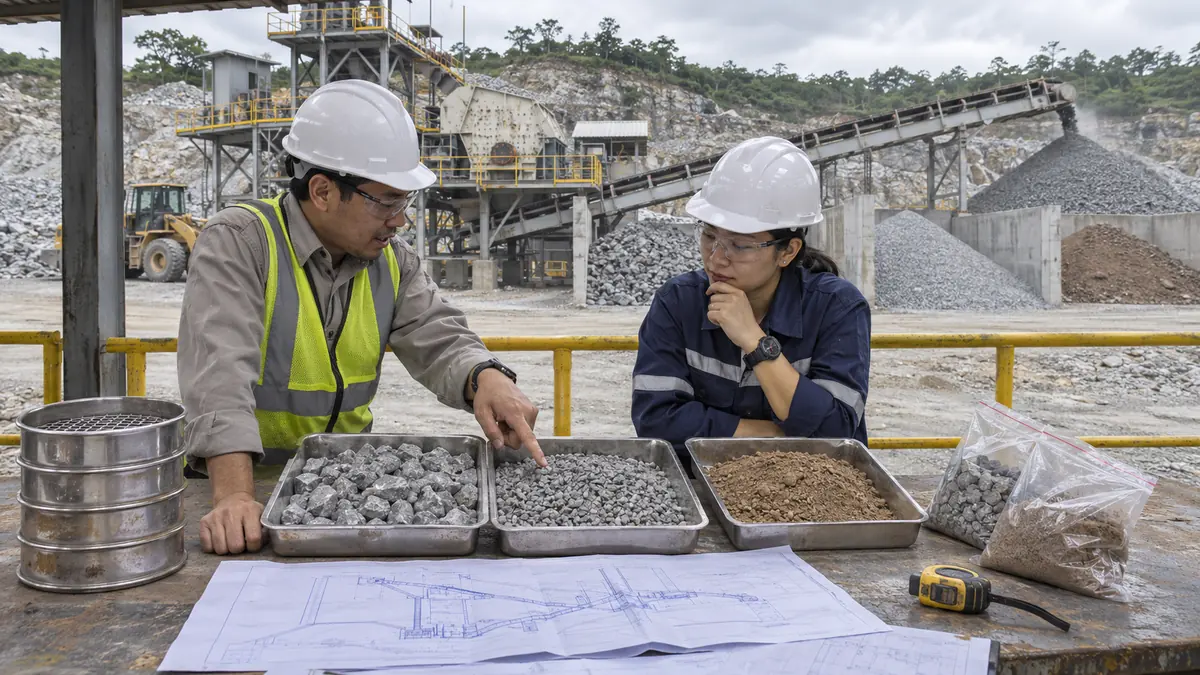
Request size analyses for the incoming feed, prescreen undersize and crushed stream, with sample dates, locations and moisture conditions. McLanahan’s screening guidance identifies particle characteristics, screen openings, already-sized material and harmful constituents among selection inputs. Use those inputs to define a trial or documented assessment of the proposed combined product, rather than assuming the bypass fraction is saleable.
First confirm that the impact-crushing route itself suits the rock. The limestone impact-crusher selection guide discusses that wider choice; this routing decision cannot resolve an unsuitable crushing application.
When is separate discharge the better starting point?
Start with segregation when undersize quality is unknown or would make the blended product fail its specified tests. Separate discharge preserves a decision about that stream; it does not make the stream clean or guarantee a market for it.
For clay-bearing feed, establish whether the issue is loose fine material or clay adhering to larger particles. McLanahan’s washing and classifying guidance explains that some feeds need more vigorous processing to liberate clay. A dry size cut should not be specified as a complete washing solution. Any cleaning stage, utilities and water-management scope would need its own assessment and confirmed supply boundary.
Do not approve bypass-and-blend for uncharacterized material, or rely on dry prescreening alone when samples still fail cleanliness requirements. For wet or sticky feed, compare the proposed separation using representative conditions; the wet, clay-bearing mobile-screen comparison gives the relevant sampling and quotation questions.
What should the supplier commit to in the quotation?
Require a stream-by-stream scope and an agreed product assessment, with every unconfirmed option identified. The quotation must explain how the chosen material route will be achieved by the specific offered equipment.
MVSI’s Mobile Secondary Crushing Plant page describes a mobile impact route for aggregate and recycling applications. It is a relevant family starting point. It does not confirm that every prescreen, selectable bypass, separate conveyor or layout discussed here is included or currently available. Obtain a written configuration and inclusion list for the proposed impact unit; a return screen after crushing is not the same duty as a prescreen ahead of it.
| Quotation item | Evidence or definition to request |
|---|---|
| Separation and routing | Screen arrangement and proposed cut, each outlet, recombination point, separate-pile access and any changeover arrangement |
| Operating basis | Feed grading and quality, moisture conditions, material suitability, target products and operating hours |
| Comparable output | Incoming t/h, diverted t/h, chamber-feed basis and accepted-product t/h over the same elapsed test period |
| Acceptance record | Sampling locations, tests, responsibility for analysis, permitted blending and treatment of off-specification material |
| Commercial boundary | Included equipment, wear items, stockpile handling, extra processing, transport/setup and any agreed trial or commissioning scope |
Compare cost per accepted tonne using the same included cost items and measurement period. Separate discharge may add handling and stockpile work; recombination may require blend control and product testing. Keep those project costs in the comparison. If a bidder claims a wear saving, request the feed and measurement basis described in the blow-bar wear-life comparison. No universal saving follows from the routing label.
Illustrative comparison: diverted tonnes are not sold tonnes
A mass balance distinguishes removal from product recovery. The following example is hypothetical bookkeeping, not a customer case, machine rating or forecast.
Assume a 100-tonne incoming batch on one consistent moisture basis and a measured 20 tonnes diverted by the prescreen, with no handling losses for this simplified calculation. The remaining 80 tonnes enter the crushing route. If the 20 tonnes are recombined, they still belong in the final product assessment. If kept separate, the 80 tonnes are not automatically accepted output, and the 20 tonnes are not automatically waste or a separate sale.
Record which streams meet which product specification, what needs further processing and what remains unsold. Compare accepted quantities and elapsed processing time after those checks. The arithmetic supports no capacity increase, wear-life claim or additional sales without measurements.
Frequently asked questions
The route depends on stream quality and the product specification. These answers define the main boundaries to settle before the equipment order.
Does crusher bypass mean fines are discarded?
No. Bypassed material avoids the crushing chamber but may rejoin the main discharge. Ask the supplier to identify its final destination and whether it is a product, a further-processing stream or reject.
Are all prescreen fines waste?
No. Fines here means the selected prescreen undersize. Its grading, material quality and intended use determine whether it can be blended, sold separately, processed further or rejected.
Can a prescreen guarantee clay removal?
No. A size cut is not proof of cleanliness. Check representative samples; clay adhering to larger particles may require a separate cleaning process and a different equipment scope.
Is a return screen the same as a prescreen?
No. A prescreen separates material before it enters the crushing chamber. A return screen classifies material after crushing and can send oversize back for further reduction. Confirm which duty the quotation includes.
How should two bypass configurations be compared?
Use the same feed, moisture basis, product specification and elapsed measurement period. Compare stream destinations, accepted product, handling requirements and included equipment, rather than incoming tonnage alone.
What data is needed to specify the fines route?
Provide feed and separated-stream size analyses, moisture and cleanliness information, intended product tests, target output, site layout and stockpile constraints. Identify unknown data and agree how it will be obtained.
Choose the route from the product acceptance boundary
Specify bypass-and-recombine only with evidence that the stream and blend meet the intended product requirements. Otherwise request segregation and a defined next destination, while confirming the available hardware and whole-circuit suitability.
For a configuration review, contact MVSI through the listed WhatsApp or email route. Send raw material, maximum and typical feed size, required output size, capacity in t/h, project country, site photos and budget range. Add prescreen undersize grading, moisture and cleanliness results, the product specification, proposed blending rules and a layout showing separate stockpile space. Mark any inputs still unknown.
Sources and technical references
These sources support the stated product-family scope and general process distinctions. Other manufacturers’ guidance does not establish MVSI equipment options, performance or service commitments. Retrieved 2026-11-09.
- MVSI Mobile Secondary Crushing Plant, linked above: published mobile impact-family scope; exact offered configuration requires confirmation.
- Kleemann Prescreening, linked above: distinction between crusher bypass and fine-material side discharge.
- McLanahan Screening/Sizing, linked above: size separation and material inputs for screen selection.
- McLanahan Washing & Classifying, linked above: the need to assess clay liberation and cleaning separately.