Table of Contents
- Information Gain: Compare the Released RAP Brief, Not the Crusher Label
- Start With One RAP Acceptance Record
- Check What Happens Before and After the Impact Crusher
- Compare Offers With One Scope-and-Evidence Matrix
- Treat Stockpile and Moisture Management as Equipment Interfaces
- Make Access, Wear, and Energy Isolation Auditable
- Buyer Checklist Before Requesting Final RAP Impact-Crusher Offers
- Send a Controlled RAP Brief Before Asking for a Proposal
- Frequently Asked Questions
- Can an impact crusher process reclaimed asphalt pavement?
- What information should be in a RAP crusher enquiry?
- Why should RAP sources be separated before comparing crusher offers?
- Does an impact-crusher quotation include a screen and stockpile conveyors?
- How should a buyer compare RAP capacity claims?
- What stockpile details should be agreed before equipment is ordered?
- What should be settled before commissioning a RAP processing circuit?
How Should a Buyer Compare Impact Crusher Proposals for Reclaimed Asphalt Pavement?
Buyers should compare impact-crusher proposals for reclaimed asphalt pavement (RAP) by issuing one material-and-product brief, then checking whether every bidder states the same feed condition, contamination policy, pre-screening, reduction duty, screen cuts, stockpile controls, access, wear package, and commissioning boundary. An impact-crusher route may suit a project only when those assumptions protect the required RAP gradation and downstream use; it is not confirmed by the words “asphalt recycling” or by a headline capacity. FHWA describes RAP processing and stockpiling as part of producing a consistent material. Compare complete circuits and evidence, not bare machines or nominal output.
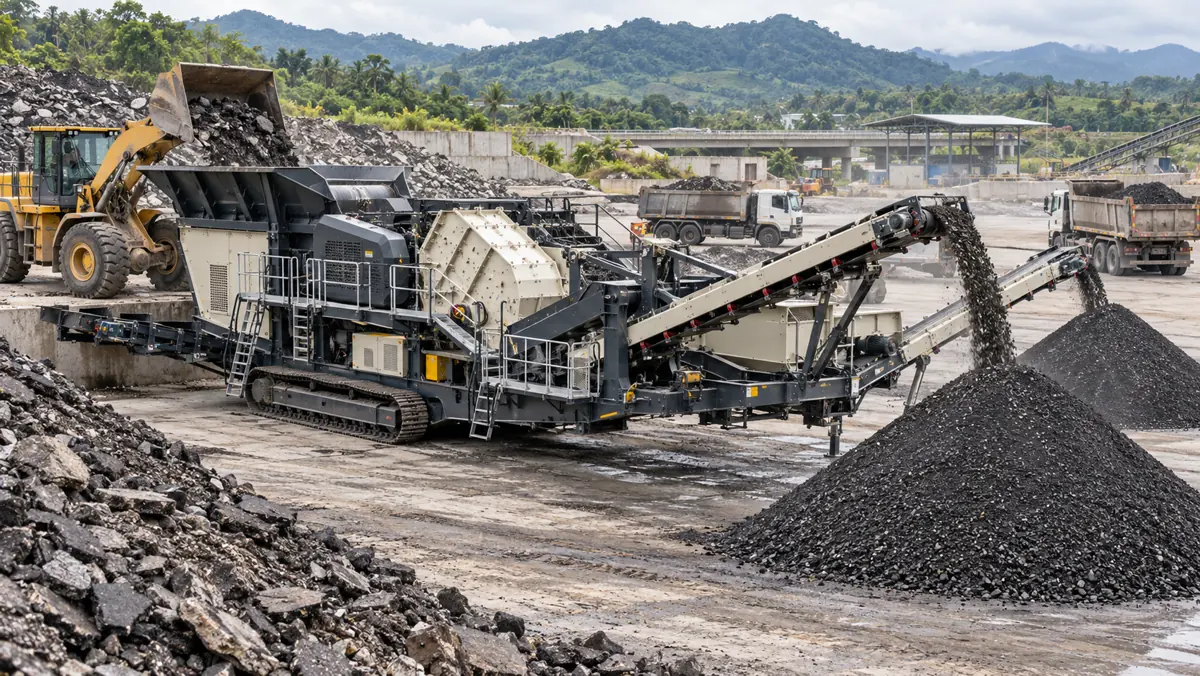
Information Gain: Compare the Released RAP Brief, Not the Crusher Label
Many asphalt-recycling pages jump directly from a stockpile photo to a recommended machine. That leaves the commercial decision unresolved: one bidder may assume clean millings and a separate screen, while another assumes mixed demolition material, a different feed size, or no protected product storage.
The useful comparison boundary is a shared RAP acceptance-and-handover brief. It gives every bidder the same incoming material record, requested product route, operating basis, site constraints, and responsibility map. Only then can a buyer identify whether an impact crusher, screen, scalper, conveyor, stockpile arrangement, wear plan, and support scope answer the same duty.
This is related to the mobile impact crusher buyer checks for concrete recycling, but it focuses on RAP consistency and downstream asphalt-use interfaces rather than concrete contamination and rebar removal.
Start With One RAP Acceptance Record
A road-recycling yard should not send a supplier only the phrase “old asphalt.” FHWA’s RAP user guideline describes RAP as material that can be processed through crushing and screening and calls attention to incoming-load inspection, source separation, and stockpile handling. That is a practical reason to describe the actual stream before asking for an equipment proposal.
| Item to define | What to record | Why it belongs in every enquiry |
|---|---|---|
| Material origin | Milling source or demolition source, known pavement layers, source separation plan, and whether streams will be combined | Prevents an offer from treating mixed incoming material as one uniform feed |
| Feed condition | Typical and maximum feed size, clumps, fines, moisture observations, oversized pieces, soil, concrete, metal, membrane, or other visible contamination | Establishes the assumed hopper, scalping, protection, and feed-control duty |
| Product purpose | Required output sizes, permitted variability, downstream asphalt-plant or aggregate-use interface, and responsible quality process | Connects crushing and screening decisions to the intended use instead of a generic product name |
| Operating basis | Target capacity, operating hours, seasonal or rainfall constraints, available loader, and expected stockpile turnover | Keeps a catalogue figure from becoming an unstated site promise |
| Site conditions | Yard layout, paved or unpaved areas, drainage, traffic route, power or fuel arrangement, dust-control interface, and site photos | Identifies work that a crusher-only quotation may omit |
| Acceptance boundary | Incoming-load inspection, rejected-material handling, sampling or records, test material, and the party who accepts each process stage | Makes quality and handover responsibilities visible before commissioning |
The FHWA RAP best-practices report notes that processing may include crushing and screening to obtain a more uniform stream, while the needed method depends on the material and specification. It does not select a model for a particular yard. Use it as a reason to request a written process basis, not as a shortcut around representative material data.
Check What Happens Before and After the Impact Crusher
An impact crusher is only one process stage. A proposal is comparable only if it shows the physical route from the accepted RAP pile to each protected product pile, including every transfer and return stream. Ask suppliers to draw what is included, optional, site-supplied, or excluded.
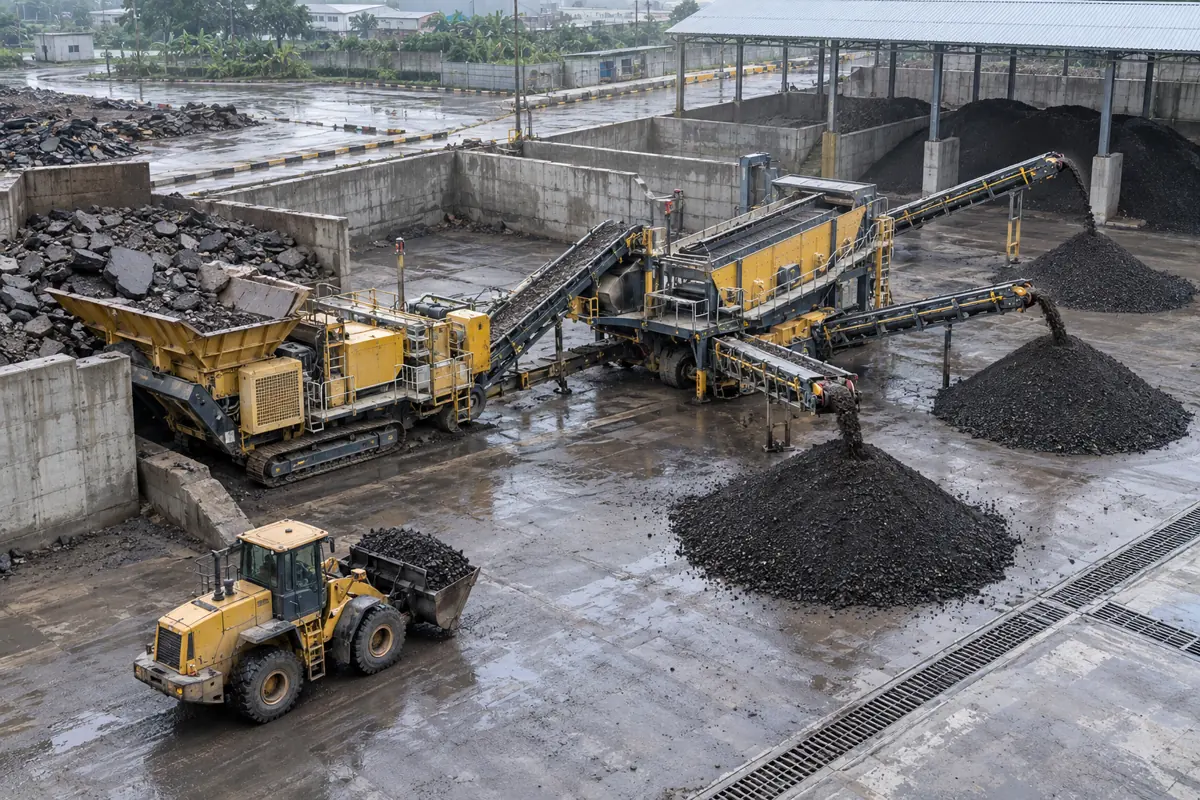
| Process boundary | Buyer question | Evidence to request |
|---|---|---|
| Receiving and feeding | What top size, clump condition, contamination level, hopper arrangement, and loader practice does the offer assume? | Process description that repeats the submitted material record and marks any excluded feed preparation |
| Pre-screening or scalping | Is a scalper, screen, or manual/loader sorting step required before reduction, and who supplies it? | Layout and inclusion list showing every stream, bypass, and disposal route |
| Impact reduction | What chamber, rotor, feed opening, setting range, protection devices, and operating limits are proposed for the written duty? | Equipment data that identifies assumptions and restrictions without converting them into an unconditional outcome |
| Screening and recirculation | Which decks, apertures, conveyors, return paths, and stockpile conveyors form the proposed products? | General arrangement that traces the material path and separates usable output from oversize or rejected material |
| Product storage | How are processed streams kept separate, accessible, drained, and protected from mixing with new incoming loads? | Stockpile and traffic plan with site responsibilities clearly assigned |
| Controls and utilities | Which motors, panels, emergency stops, interlocks, cables, fuel or power boundary, and dust or water interfaces are included? | Electrical/control scope matrix plus a list of site-provided connections |
The crushing-plant flow-sheet guide is useful for tracing connected equipment, even though its aggregate examples do not define a RAP process. For a mobile purchase, the mobile jaw crusher versus mobile impact crusher comparison helps separate reduction-stage questions from mobility questions.
Compare Offers With One Scope-and-Evidence Matrix
Prices cannot be compared until the technical boundary is aligned. A low initial number may exclude a screen, product conveyor, wear set, access platform, dust interface, transport preparation, field wiring, training, or commissioning tasks that a more complete offer includes.
| Offer line | Align before comparing price | Evidence that reduces ambiguity |
|---|---|---|
| Material and product basis | Same RAP record, feed limits, product schedule, operating basis, and stated exclusions | Signed or dated technical offer that repeats the enquiry assumptions |
| Equipment scope | Crusher, feeder, scalper, screen, conveyors, magnet if proposed, generator or power package, guards, and access | Itemized inclusion/exclusion schedule and a process layout |
| Wear and spares | Initial blow bars, liners, screens, fasteners, recommended critical spares, special tools, and storage requirements | Part list with the assumptions behind the recommendation and each exclusion |
| Installation interfaces | Transport, unloading, site assembly, connection points, field cables, drainage, civil or pads, and site work | Responsibility matrix naming supplier, buyer, and third-party work |
| Documentation and training | Drawings, manuals, parts identification, control information, operator training, and revision control | Deliverables register with issue timing and document owner |
| Commissioning and acceptance | Preconditions, test material, witnesses, operator availability, measurements, punch-list ownership, and the acceptance process | Written start-up/hand-over plan, not a broad word such as “support” |
Use the common mistakes when buying a mobile crusher from China guide for commercial comparison discipline. It is not evidence of local service, delivery timing, or a particular supplier’s scope. Those commitments must appear in the actual proposal and contract.
Treat Stockpile and Moisture Management as Equipment Interfaces
RAP is not simply a black version of crushed stone. The FHWA guidance notes that RAP may be kept separate by source and that stockpile handling affects consistency and moisture. The buyer does not need to prescribe a universal stockpile design, but the proposal review should show where process responsibility ends and yard responsibility begins.
- Which incoming materials are accepted, held for review, rejected, or processed separately?
- Does the equipment layout allow a loader to keep unprocessed RAP, oversize, and each finished stream separate?
- Which party provides pads, drainage, traffic controls, shelter where chosen, stockpile signs, and housekeeping?
- How will the operating team prevent a newly delivered or contaminated load from mixing with a processed product pile?
- Which sampling, inspection, or quality records are the buyer’s responsibility, and which process assumptions must be confirmed before a test?
These questions turn a nominal “RAP plant” into a defined operating boundary. They also prevent an equipment supplier from being blamed for a yard-management input that was never included, while ensuring that an incomplete equipment offer is not mistaken for a complete process route.
Make Access, Wear, and Energy Isolation Auditable
Maintenance access is a purchase decision, not a field detail. A proposal should state how the team reaches inspection points, changes wear components, cleans transfers, stores parts, and isolates equipment under the site’s procedures. OSHA’s recycling safety guidance is a United States reference, not global legal advice; its general lesson is that moving machinery needs appropriate guarding and service needs a controlled hazardous-energy approach.
| Topic | What to make explicit before order release |
|---|---|
| Wear change | Proposed blow bars, liners, screens, lifting points, tools, access clearances, and the initial-spares boundary |
| Cleaning and blockages | Guard arrangement, permitted access method, isolation boundary, cleaning tools, and ownership of local work procedures |
| Conveyor and screen access | Walkways, stairs, handrails, inspection locations, working clearances, and any site-supplied platforms |
| Controls | Emergency stops, interlocks, local isolators, panel boundary, cable scope, and who checks system integration before testing |
| Handover | Current manuals, parts records, training scope, open-item register, test prerequisites, and escalation route after delivery |
The daily stone crusher plant maintenance checklist can help a buyer plan routine records after handover. It does not replace machine-specific instructions or a site safety system.
Buyer Checklist Before Requesting Final RAP Impact-Crusher Offers

- Identify the RAP sources, incoming-material acceptance rule, typical and maximum feed size, moisture observations, and known contamination risks.
- Give every bidder the same output sizes, downstream-use interface, capacity basis, operating hours, site photos, traffic pattern, utilities, and budget range.
- Ask every bidder to show the full route for receiving, pre-screening, impact reduction, screening, return flow, rejected material, and each product stockpile.
- Separate included equipment from optional items, site-provided work, and exclusions for access, drainage, dust, electrical, civil, and material handling.
- Request an itemized initial wear-and-spares plan, access and lifting assumptions, guards, controls, documentation, and training scope.
- Write down the transport, unloading, installation, commissioning, test-material, operator, acceptance, and punch-list responsibilities.
- Check that the commercial comparison uses the same material record and scope revision rather than a bare machine price.
Send a Controlled RAP Brief Before Asking for a Proposal
MVSI can review the information needed to compare impact-crusher routes on a like-for-like basis. Send the raw material and RAP source description, maximum and typical feed size, required output sizes and downstream use, target capacity and operating hours, site photos and yard layout, known contamination or moisture observations, available power or fuel arrangement, delivery and commissioning boundary, and budget range. Those inputs expose the assumptions that must be settled before a proposal is evaluated.
Frequently Asked Questions
Can an impact crusher process reclaimed asphalt pavement?
An impact-crusher route can be evaluated for RAP only after the actual feed, contamination, top size, clump condition, product schedule, screen circuit, access, and site constraints are defined. “RAP” alone does not confirm a particular crusher, layout, capacity, or product result.
What information should be in a RAP crusher enquiry?
Include the RAP source and acceptance rule, typical and maximum feed size, moisture and contamination observations, required output sizes and downstream use, capacity and operating basis, site photos, yard layout, utilities, delivery boundary, commissioning scope, and budget range.
Why should RAP sources be separated before comparing crusher offers?
Different sources can vary in particle size, binder, aggregate, moisture, and contamination. A source record helps the buyer give every bidder the same defined feed basis instead of comparing offers built on incompatible assumptions.
Does an impact-crusher quotation include a screen and stockpile conveyors?
Not necessarily. Some offers cover a crusher only, while others include feed preparation, screens, conveyors, and stockpiling equipment. Require a layout and inclusion/exclusion matrix that shows every material stream and interface.
How should a buyer compare RAP capacity claims?
Compare only proposals using the same incoming-material record, feed limits, pre-screening arrangement, reduction duty, screen cuts, recirculation, product schedule, operating hours, and site constraints. A nominal capacity without those conditions is not a like-for-like comparison.
What stockpile details should be agreed before equipment is ordered?
Agree how incoming and processed RAP streams will be separated, where loaders and trucks move, who provides pads and drainage, how moisture and contamination are controlled, which product piles exist, and which party owns the yard-management tasks.
What should be settled before commissioning a RAP processing circuit?
Settle the released layout, completed interfaces, guards and access, controls and isolation provisions under site rules, test material, operators, documents, training, measurement or acceptance method, open items, and the responsibility for resolving a deviation.