Table of Contents
- The Quick Answer: Choose the Circuit From the Product Specification
- How the Material Route Changes
- Open circuit: fewer machines, less final control
- Closed circuit: a measurable product split
- When a Closed Circuit Is Usually Worth the Extra Scope
- Size the Screen and Return Path Together With the VSI
- Protect Product Quality Without Creating Uncontrolled Return Load
- RFQ Checklist for a Closed-Circuit VSI Sand Plant
- Common Buying Mistakes
- Adding a screen without defining the product cuts
- Ignoring the return conveyor and transfer chute
- Comparing throughput without comparing saleable output
- Treating a quotation as a guaranteed gradation result
- FAQ
- What is a closed-circuit VSI crusher plant?
- Does every VSI crusher need a final screen?
- Is a closed-circuit VSI plant always higher capacity?
- How do I choose screen decks after a VSI crusher?
- What causes high return load in a VSI sand plant?
- Can a closed circuit improve manufactured-sand consistency?
- What information is needed for a closed-circuit VSI quotation?
- Should I measure circulation load before buying?
- Get a Circuit Recommendation Built Around Your Product
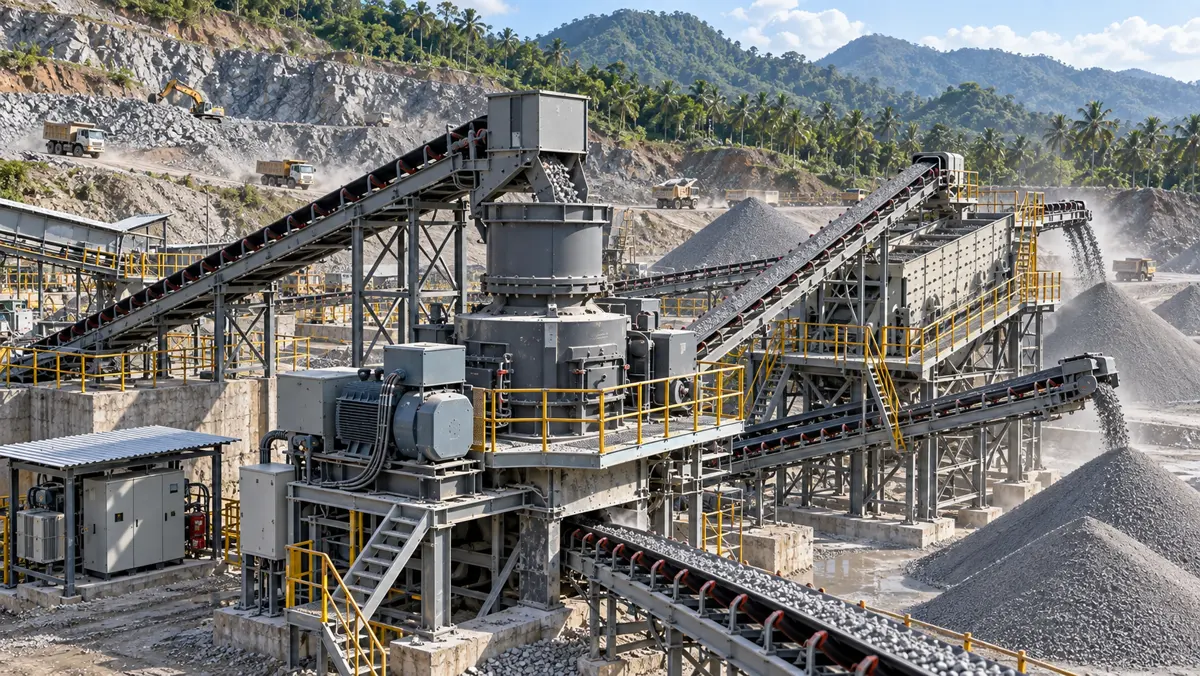
A VSI crusher can operate in an open circuit when the feed is already controlled and the project can accept the natural discharge grading. A closed circuit adds a screen and a return conveyor so only on-spec material leaves as product while oversize or selected intermediate fractions return for another pass. That extra equipment is usually justified when a concrete sand, asphalt aggregate, or tightly graded product must be supplied consistently—not simply because a VSI is installed. The right choice depends on feed size and fines, rock response, target grading, tolerance for recirculation, stockpile arrangement, and the cost of off-spec material. Start by defining the saleable products and their test method, then size the circuit around those requirements.
The Quick Answer: Choose the Circuit From the Product Specification
An open-circuit VSI line sends material from the crusher directly to a stockpile or to downstream handling with no final screen controlling the finished fraction. It is simpler and can be appropriate where the product is broadly specified, the feed is stable, and downstream classification or blending is already available.
A closed-circuit line places a final screen after the VSI. Material meeting the selected cut goes to product conveyors; material outside the selected size range returns through a controlled conveyor path. The screen protects the product specification and exposes the actual return load that the crusher, conveyors, and screen must carry.
| Question | Open-circuit VSI | Closed-circuit VSI |
|---|---|---|
| Is final grading actively separated? | No; it follows crusher discharge and downstream handling. | Yes; the final screen separates agreed product and return fractions. |
| Equipment scope | VSI, controlled feed, discharge conveyor, and stockpile handling. | The open-circuit scope plus final screen, return conveyor, transfer chutes, and extra controls. |
| Best fit | Broadly specified shaping duty or a plant with separate downstream classification. | Manufactured sand or aggregate products with defined grading and oversize control. |
| Main risk | A feed or wear change can move stockpile grading without being detected quickly. | Excess return load can limit output if screen area, conveyor capacity, or feed control is poor. |
Do not treat closed circuit as an automatic capacity upgrade. It is a product-control decision, and the circuit needs enough screen area, transfer capacity, and approved VSI duty for its anticipated return load.
How the Material Route Changes
Open circuit: fewer machines, less final control
In an open circuit, prepared feed enters the VSI and the discharge proceeds to product handling. The arrangement has fewer transfer points and can be easier to install or relocate. However, output reflects incoming grading, moisture, crusher setting or speed within the approved range, wear condition, and rock characteristics. A change in any of those variables can shift the final product even if tonnes per hour appear steady.
Open circuit can make sense if a downstream wash plant, classifier, or existing screen owns the final grading decision. It can also suit a broad crushed-sand blend after site trials show that discharge stays within the agreed acceptance range. The buyer still needs a sampling plan; a visual check of the pile is not a grading specification.
Closed circuit: a measurable product split
In a closed circuit, the final screen receives the VSI discharge. Each deck is selected around an agreed product split, and the return path is designed for material that must be processed again. This gives the operator a visible control point: screen samples show whether product is on specification, and belt scale or loader data can distinguish new feed from circulating load.
For the upstream screening discipline that keeps the rotor within its intended feed envelope, read our VSI feed-size and screening guide.
When a Closed Circuit Is Usually Worth the Extra Scope
| Project condition | Why it points to closed circuit | What to verify |
|---|---|---|
| Concrete or asphalt sand has a stated grading window | Product must be separated and sampled as a defined fraction. | Screen cuts, sampling points, stockpile separation, and permitted fines. |
| Feed rock or moisture changes through the quarry | Crusher discharge can change even when the machine setting does not. | Seasonal samples, moisture/clay condition, and likely feed-size distribution. |
| More than one saleable fraction is required | Each product needs a physical separation route. | Deck layout, product conveyors, and contamination risk at the pile. |
| Oversize must be controlled before dispatch | Returning oversize is more defensible than relying on visual sorting. | Return-conveyor capacity, chute access, and approved recirculating duty. |
| The buyer needs accountable process data | A final screen provides a practical point to measure product and return load. | Belt-scale location, sample method, and plant-boundary definition. |
Closed circuit may be unnecessary where the final product is intentionally broad, an existing downstream process already classifies material, or the added screen and return system cannot be operated and maintained properly. A simpler route with honest output assumptions is better than a nominal closed circuit that blinds, plugs, or recirculates uncontrollably.
Size the Screen and Return Path Together With the VSI
The screen is not an accessory added after crusher selection. Its effective capacity changes with aperture, open area, number of decks, material shape, moisture, fines, and the fraction of material repeatedly passing through the circuit. A screen that looks adequate on nameplate capacity can become the plant bottleneck when feed is wet or return fraction is higher than planned.
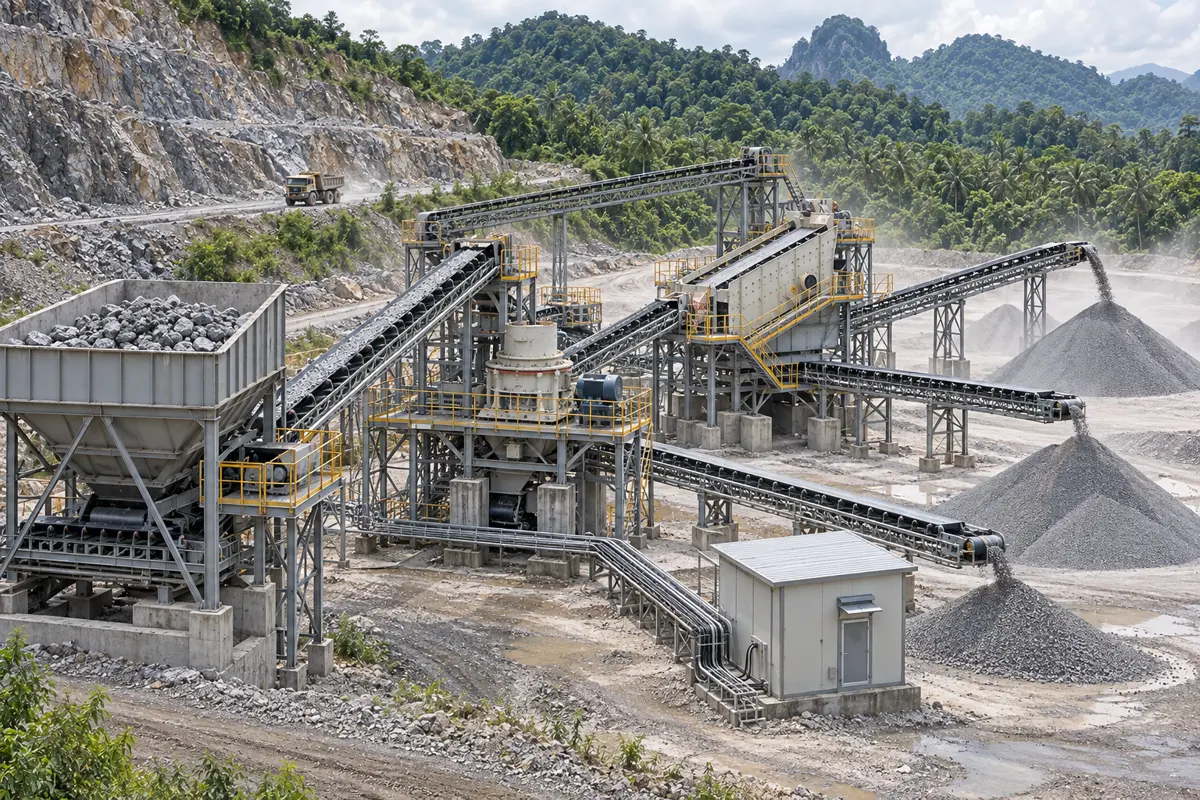
Ask the supplier to show a simple material-flow basis, not only a machine list:
- New feed: material entering the circuit after any scalping or pre-screening.
- VSI feed: the fraction reaching the rotor, including return material where applicable.
- Final-screen feed: total material presented to the final screen.
- Saleable products: each product fraction and its specified grading basis.
- Return load: each fraction routed back for another pass and the assumed condition that causes it.
Ask for rock type, feed-size distribution, moisture condition, target product gradation, screen-media proposal, and the approved operating condition of the selected VSI. Our VSI capacity guide explains why a capacity range must be tied to feed and product conditions.
Protect Product Quality Without Creating Uncontrolled Return Load
Every tonne that returns to the VSI consumes conveyor, screen, and crusher duty again. Some return load is intentional; excessive return load is a signal to inspect the whole line rather than simply increase rotor speed or feed rate.
- Feed preparation: oversize, excess fines, and uneven feed can reduce stable crushing and make the screen work harder.
- Screen selection and condition: aperture, media wear, blinding, deck slope, and vibration settings influence classification.
- Transfer points: a poor chute can segregate, plug, or overload one part of the screen.
- VSI operating basis: rotor configuration and approved speed range affect shape, fines, power draw, and wear as a system.
- Stockpile practice: keep products separate and take representative samples, not a single surface scoop.
See our rotor-speed guide and cone crusher versus VSI crusher for final-stage crushing for related final-product decisions.
RFQ Checklist for a Closed-Circuit VSI Sand Plant
| Send to the supplier | Why it matters |
|---|---|
| Raw material name, representative sample, and rock hardness/abrasiveness information | Determines the credibility of crushing and wear assumptions. |
| Maximum feed size and normal feed-size analysis | Establishes whether scalping, pre-crushing, or feed control is needed. |
| Required output sizes, target sand grading, and allowable oversize/fines | Defines screen cuts and product/return routing. |
| Target capacity and operating hours | Lets the proposal state a duty point rather than a detached range. |
| Moisture, clay, water availability, and dust-control constraints | Identifies screen-blinding and material-handling risks early. |
| Site photos, layout constraints, power supply, and maintenance access | Determines conveyor geometry, panel scope, and service access. |
| Budget range and quotation boundary | Clarifies whether civil works, steelwork, electrical control, and commissioning support are included. |

Common Buying Mistakes
Adding a screen without defining the product cuts
“Add a screen” is not a technical specification. State saleable fractions, test sieves or equivalent acceptance method, permitted fines, and how piles will be separated. Otherwise a screen layout can be quoted without solving the product problem.
Ignoring the return conveyor and transfer chute
The return path must carry the actual recirculating fraction, not an optimistic fraction. It also needs proper access, guards, and chute geometry. A restricted return route can turn the screen or conveyor into the plant bottleneck.
Comparing throughput without comparing saleable output
Gross feed rate does not equal saleable sand. Compare new feed, return load, product split, and energy boundary under the same material condition. Our VSI power-consumption guide explains why these definitions matter in a commercial comparison.
Treating a quotation as a guaranteed gradation result
Rock properties, moisture, feed distribution, and wear influence the outcome. Ask suppliers to state assumptions and propose a representative sample or trial path where appropriate. That gives the buyer an engineering basis without inventing a universal production guarantee.
FAQ
What is a closed-circuit VSI crusher plant?
It is a VSI crushing line in which crusher discharge passes over a final screen. On-spec material goes to product stockpiles and selected fractions return to the circuit.
Does every VSI crusher need a final screen?
No. A final screen is most valuable where the project needs controlled grading, separate saleable fractions, or measurable oversize control.
Is a closed-circuit VSI plant always higher capacity?
No. Recirculation adds duty to the screen, conveyors, and VSI. Capacity must be assessed from the actual material, screen layout, return load, and approved crusher operating condition.
How do I choose screen decks after a VSI crusher?
Start with product sizes and grading acceptance method, then review screen feed, moisture, fines, material shape, desired product splits, and return route.
What causes high return load in a VSI sand plant?
Feed changes, excessive oversize, changed product targets, worn or blinded screen media, poor feed distribution, and an unsuitable crusher duty point can all increase return load.
Can a closed circuit improve manufactured-sand consistency?
It can improve control because the screen separates product and return material, but stable feed, sampling, stockpile management, and correct operation remain necessary.
What information is needed for a closed-circuit VSI quotation?
Provide raw material details, feed-size analysis, desired outputs and grading, capacity, moisture condition, site photos, power information, layout constraints, and budget range.
Should I measure circulation load before buying?
For an upgrade, measure the current product split and return path under documented feed conditions. For a new plant, ask the supplier to state the assumed flow balance and its conditions.
Get a Circuit Recommendation Built Around Your Product
Send MVSI your raw material and representative sample details, feed size analysis, required output size and sand grading, target capacity, site photos, site power and layout constraints, operating hours, and budget range. We can help define a preliminary VSI, screen, and return-conveyor arrangement with a clear product/return basis. Final equipment selection should be confirmed against the actual material, acceptance specification, and approved equipment duty.