Table of Contents
- Start With the Energy Figure That Answers Your Buying Question
- Why Nameplate Motor Size Does Not Equal Power Consumption
- A Practical Measurement Method for kWh per Ton
- Choose the Motor and Drive Package From the Duty, Not a Marketing Shortcut
- Confirm the crusher duty point
- Check the starting and control arrangement
- Keep a duty margin, but do not buy capacity you cannot use
- Compare Whole-Circuit Energy Before You Compare Machine Quotes
- Cost Questions to Put Into the RFQ
- Common Mistakes That Inflate the Energy Figure
- Treating gross throughput as saleable tonnes
- Increasing rotor speed before checking feed and screen
- Ignoring auxiliaries and local power conditions
- Comparing test data with mismatched material
- FAQ
- What is the right kWh-per-ton figure for a VSI crusher?
- Does a larger VSI crusher motor reduce electricity use?
- Should energy be measured at the VSI motor or at the main plant meter?
- How do I calculate VSI crusher kWh per tonne?
- Can a variable-speed drive improve VSI operating cost?
- What data should I send before asking for a VSI motor recommendation?
- Why can plant energy rise when VSI capacity looks unchanged?
- Should wear cost be reviewed with electricity cost?
- Plan a Verifiable Power Comparison Before You Buy
VSI crusher power consumption should be compared as measured kilowatt-hours per tonne under a stated feed, circuit, and product condition—not from motor size alone. A larger motor can provide the duty margin a hard-rock sand plant needs, but it does not prove that the machine will use less energy or make more saleable sand. For a meaningful comparison, separate the VSI drive energy from the full plant energy, measure tonnes and power over the same stable operating period, and identify what fraction is actually saleable after screening. Then choose the motor and drive package from the supplier’s approved duty curve, the rock, feed grading, rotor arrangement, ambient conditions, and starting method.
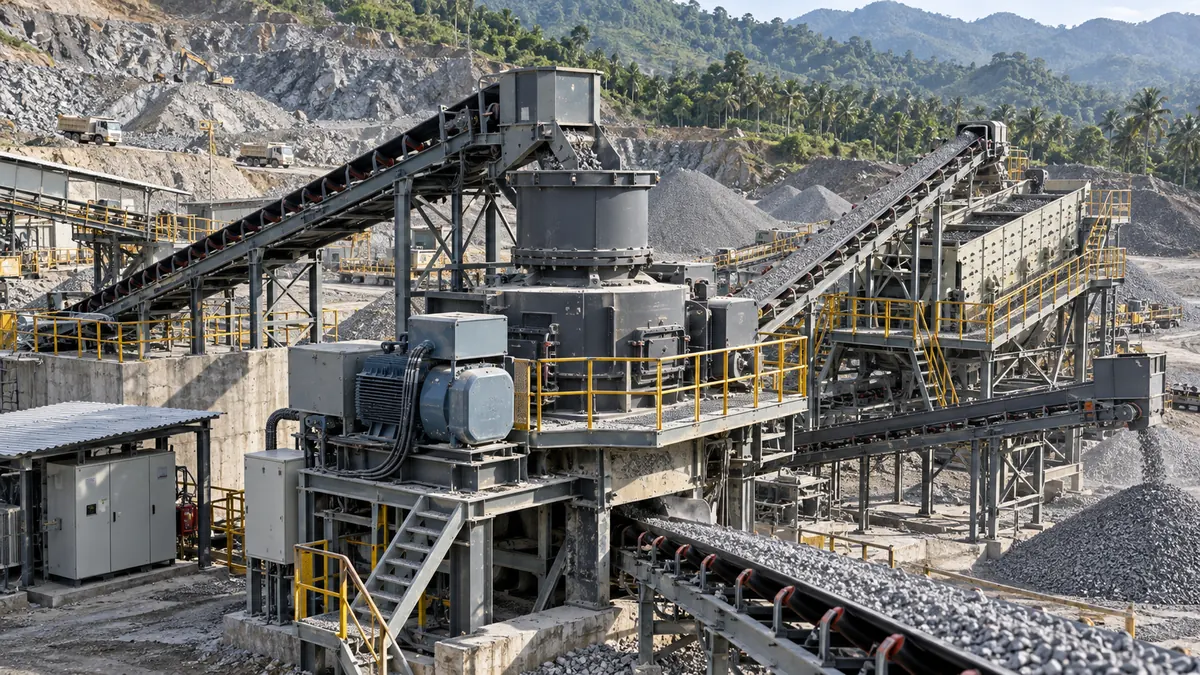
Start With the Energy Figure That Answers Your Buying Question
Buyers often receive a motor rating, a capacity range, and a general statement about energy use. None of those is enough on its own. The useful comparison depends on what the project is trying to sell and where the electrical meter is located.
There are two different calculations to request:
| Measure | Simple calculation | Best use |
|---|---|---|
| VSI drive energy per tonne of feed | VSI-drive kWh during a stable interval ÷ tonnes entering the VSI in that same interval | Comparing the shaping machine under a controlled, like-for-like feed condition |
| Plant energy per tonne of saleable product | Energy for the agreed plant boundary ÷ tonnes of saleable product from that interval | Estimating the operating cost of the actual sand or aggregate business |
The first number isolates the machine. The second is usually more important for a commercial decision because screens, conveyors, pumps, dust control, classifiers, return loads, and washing can change the energy used per tonne that can actually be sold. A low crusher-drive figure is not a complete answer if the circuit creates high recirculation or produces an off-spec sand fraction.
Define the boundary in writing before comparing two offers. State whether the figure includes only the VSI motor, the closed circuit through the final screen, or the whole plant through stockpile conveyors. Also state whether tonnes mean wet feed, dry feed, crusher feed, or final saleable material. For the circuit variables that must be controlled before the rotor, see our VSI feed-size and screening guide.
Why Nameplate Motor Size Does Not Equal Power Consumption
A motor rating is the approved maximum continuous-duty capability selected for a machine and its service conditions. Actual electrical demand changes continually with the duty applied. It is influenced by material, feed control, rotor speed, the crushing arrangement, and the rest of the plant.
- Rock competence and abrasiveness: hard, abrasive feed can require more impact work and can increase wear-related changes in performance.
- Feed-size distribution: a controlled, within-specification feed behaves differently from a stream containing oversize, excessive fines, or intermittent surges.
- Feed rate and distribution: uneven feed can reduce stable utilisation and make a short power sample misleading.
- Rotor speed and crushing arrangement: speed and rock-on-rock or rock-on-iron configuration can alter impact duty, product shape, fines, and current draw together.
- Closed-circuit load: material returning from the screen can make the VSI process the same tonnes more than once.
- Moisture, clay, and screen performance: wet fines and blinding can restrict a screen or chute and raise return load.
Read the capacity claim and motor rating with their material assumptions. Our VSI rotor-speed guide explains why changing RPM should be evaluated with feed, screen results, and wear—not in isolation.
A Practical Measurement Method for kWh per Ton
Do not base a buying decision on a single instantaneous amp reading. Plan a representative measurement interval after the plant has reached stable operation.
- Set the operating condition. Record material source, moisture, feed-size analysis, rotor arrangement, target product, screen configuration, and selected speed or control setting.
- Use matching time windows. Read an energy meter or logged kWh while a belt scale, loader records, or another defensible method records tonnes for that same interval.
- Record feed and saleable output. Identify each stockpile or product fraction rather than treating all screen discharge as one result.
- Log return load and downtime. A stoppage, blocked chute, screen clean-out, or high recirculation can distort a short sample.
- Repeat when feed changes. Keep the conditions next to every energy result, including wet-season differences.
The calculation is simple, but the conditions make it useful. If data is incomplete, label the result as a preliminary operating observation rather than an equipment guarantee.
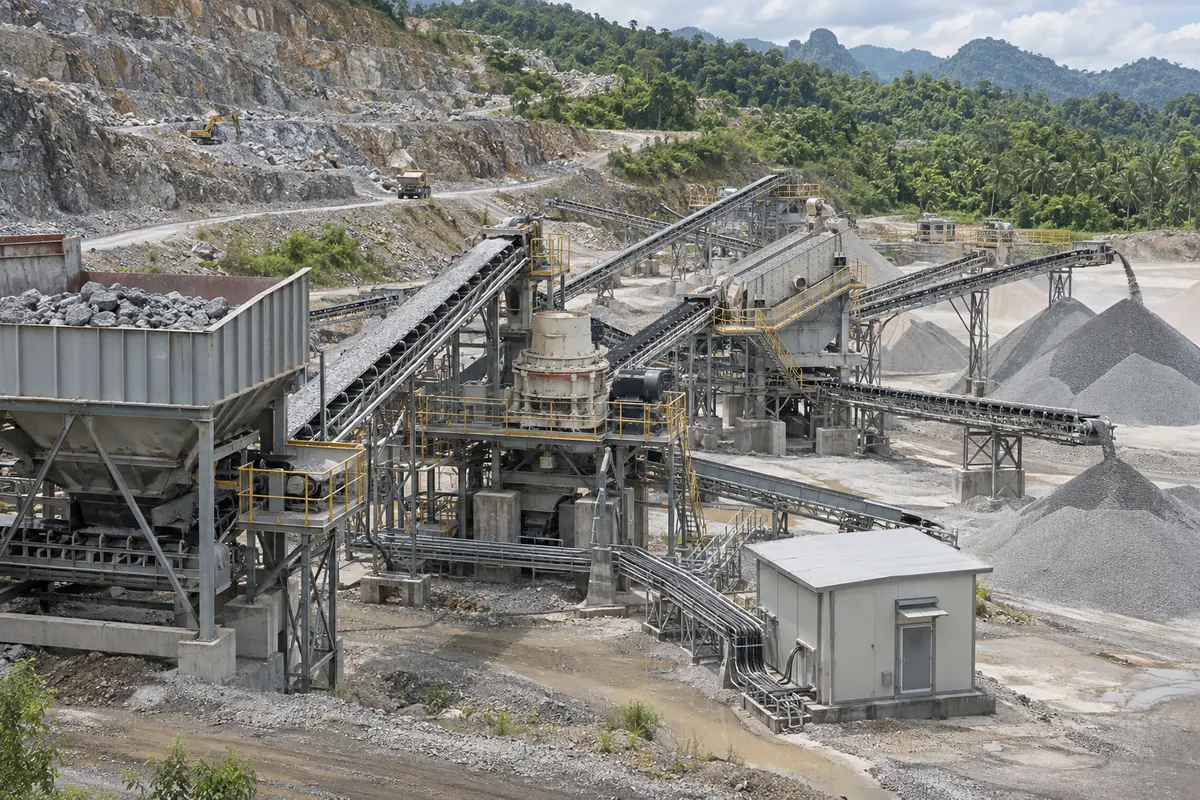
Choose the Motor and Drive Package From the Duty, Not a Marketing Shortcut
The correct motor selection starts with the particular VSI model and the supplier’s approved operating envelope. Ask the supplier to connect the motor recommendation to the actual duty, rather than simply naming a large installed kW value.
Confirm the crusher duty point
Provide the maximum feed size, normal feed-size distribution, rock type, abrasiveness, moisture, target tonnes per hour, target final grading, and selected rotor configuration. The supplier should identify the operating range on which its capacity and drive recommendation are based. If the proposed duty lies close to an upper limit, ask what happens when feed gets harder or wetter.
Check the starting and control arrangement
The drive package should be reviewed with the site electrical system. Ask whether the proposal uses the recommended starting method and whether any speed control is approved for the selected machine. Cover supply voltage and frequency, available starting capacity, generator duty where relevant, protection, cable route, panel ventilation, and local ambient temperature.
Keep a duty margin, but do not buy capacity you cannot use
Margin is needed for expected material variation. It is not a substitute for feed preparation, screen capacity, or a correct circuit. An over-large drive does not fix a restricted chute, a screen blinded by wet fines, or a rotor fed outside its approved range. The defensible request is to state the selected motor, starting/control package, approved operating condition, power basis, and exclusions.
Compare Whole-Circuit Energy Before You Compare Machine Quotes
VSI energy is strongly linked to how much material is sent to the rotor and how often it returns. During a technical comparison, request a simple material-flow basis that identifies:
- Feed entering the plant and the fraction entering the VSI.
- Material bypassing the VSI because it is already within the desired product size.
- Oversize and intermediate fractions returned after final screening.
- Expected saleable products, their target grading, and how each product will be sampled.
- Equipment included in the energy boundary: feeder, crushers, screens, conveyors, pumps, dust collector, classifier, and auxiliaries.
The design must balance cubic shape, sand grading, capacity, wear, and electricity use. Read cone crusher versus VSI crusher for final-stage crushing and our VSI capacity guide for the linked production decisions.
Cost Questions to Put Into the RFQ
| RFQ item | Ask for | Why it helps |
|---|---|---|
| Material basis | Rock type, grading, moisture, and abrasive characteristics assumed | Shows whether the quoted duty resembles your feed |
| Product basis | Required sizes, sand grading, shape objective, and permitted fines | Links energy to saleable output rather than raw throughput |
| Power basis | Motor size, expected operating range, included equipment, and measurement boundary | Prevents a VSI-only figure from being presented as whole-plant energy |
| Electrical package | Starting method, panel scope, protection, cable assumptions, and generator/grid requirements | Exposes site integration cost and risk early |
| Wear basis | Rotor arrangement, principal wear parts, inspection approach, and assumptions | Lets you compare energy and wear as one operating decision |
| Test plan | Sample requirement, trial acceptance criteria, instrumentation, and reporting method | Converts a general estimate into a verifiable technical path |
Avoid asking a supplier to promise a universal kWh-per-tonne result without a material and circuit basis. Ask for a transparent calculation, a trial method where appropriate, and the conditions under which the number can be checked after commissioning.
Common Mistakes That Inflate the Energy Figure
Treating gross throughput as saleable tonnes
A high feed rate is not the same as saleable output. If a large fraction recirculates, the VSI, conveyors, and screen can consume energy repeatedly. Record the product split after the final screen.
Increasing rotor speed before checking feed and screen
Rotor speed may be a valid optimisation variable inside the manufacturer-approved range, but it cannot correct feed that is too large, too wet, badly distributed, or poorly screened. Our cubical-shape guide explains the same whole-circuit principle from the product-quality side.
Ignoring auxiliaries and local power conditions
Plant energy and reliability include screens, feeders, conveyors, dust control, pumps, and the actual supply. Check quotation scope for remote sites using generators and for locations where voltage stability or ambient temperature affects electrical design.
Comparing test data with mismatched material
A trial on one rock type cannot automatically predict another. Keep the source, feed analysis, moisture condition, rotor configuration, and final-screen setup in the test report.

FAQ
What is the right kWh-per-ton figure for a VSI crusher?
There is no reliable universal figure. Measure or compare kWh per tonne only with stated rock, feed grading, moisture, rotor arrangement, speed, product target, and energy boundary. Plant kWh per tonne of saleable output is often more useful than VSI-drive kWh per tonne of feed.
Does a larger VSI crusher motor reduce electricity use?
Not by itself. The selected motor must suit the approved crusher duty and site electrical conditions, but actual electricity use is driven by material, rotor duty, feed control, circuit recirculation, and product target.
Should energy be measured at the VSI motor or at the main plant meter?
Use both when possible. The VSI meter isolates the shaping machine; the agreed plant meter shows the energy required to make saleable product. Record the equipment included in each boundary.
How do I calculate VSI crusher kWh per tonne?
Divide energy recorded in kilowatt-hours over a stable time interval by tonnes processed during the same interval. Then attach the feed, product, moisture, screen, rotor, and recirculation conditions to that result.
Can a variable-speed drive improve VSI operating cost?
Only where the crusher supplier approves that control arrangement and the site electrical system supports it. Evaluate speed changes against product quality, feed, power, return load, vibration, and wear.
What data should I send before asking for a VSI motor recommendation?
Send raw material details, a feed-size analysis, moisture and clay condition, required output sizes and sand grading, capacity target, site photos, site power information, operating hours, and budget range.
Why can plant energy rise when VSI capacity looks unchanged?
The return load may have increased, the screen may be limiting, feed may be wetter or finer, or auxiliaries may be operating differently. Track saleable output and recirculation, not only tonnes entering the VSI.
Should wear cost be reviewed with electricity cost?
Yes. Rotor configuration and operating settings can influence product shape, power demand, and wear together. Compare the operating basis, inspection plan, and principal wear parts with the energy calculation.
Plan a Verifiable Power Comparison Before You Buy
Send MVSI your raw material and representative sample details, feed size analysis, required output size and sand grading, target capacity, site photos, local power or generator information, expected operating hours, and budget range. We can help define a preliminary VSI circuit and a quotation checklist that separates machine-drive demand from full-plant energy. The final selection should then be confirmed against the actual material, product specification, and approved equipment duty.