Table of Contents
- Why the Equipment Chain Matters
- Quick Selection Table
- Step 1: Define Raw Material Before Choosing Machines
- Step 2: Choose the Feeder
- Vibrating Feeder
- Apron Feeder
- Belt Feeder
- Step 3: Choose the Primary Crusher
- Step 4: Choose the Secondary or Tertiary Crusher
- Cone Crusher
- Impact Crusher
- VSI Crusher
- Step 5: Choose the Screen
- Step 6: Choose Conveyors and Transfer Points
- Example Quarry Equipment Configurations
- Hard Rock Aggregate Plant
- Limestone Road Aggregate Plant
- Mobile Quarry Crushing Plant
- Cost Factors in Quarry Crushing Equipment
- Common Buyer Mistakes
- What to Send Before Asking for a Quote
- Conclusion
- FAQ
- What equipment does a quarry crushing plant need?
- How do I choose a feeder for a quarry crusher?
- Is a jaw crusher enough for a quarry plant?
- Should I choose a cone crusher or impact crusher after the jaw crusher?
- How many screen decks does a quarry plant need?
- What conveyor size is needed for a crusher plant?
- What is the biggest bottleneck in quarry crushing equipment?
- What information should I provide before requesting a quotation?
How to Choose a Feeder, Crusher, Screen, and Conveyor for a Quarry
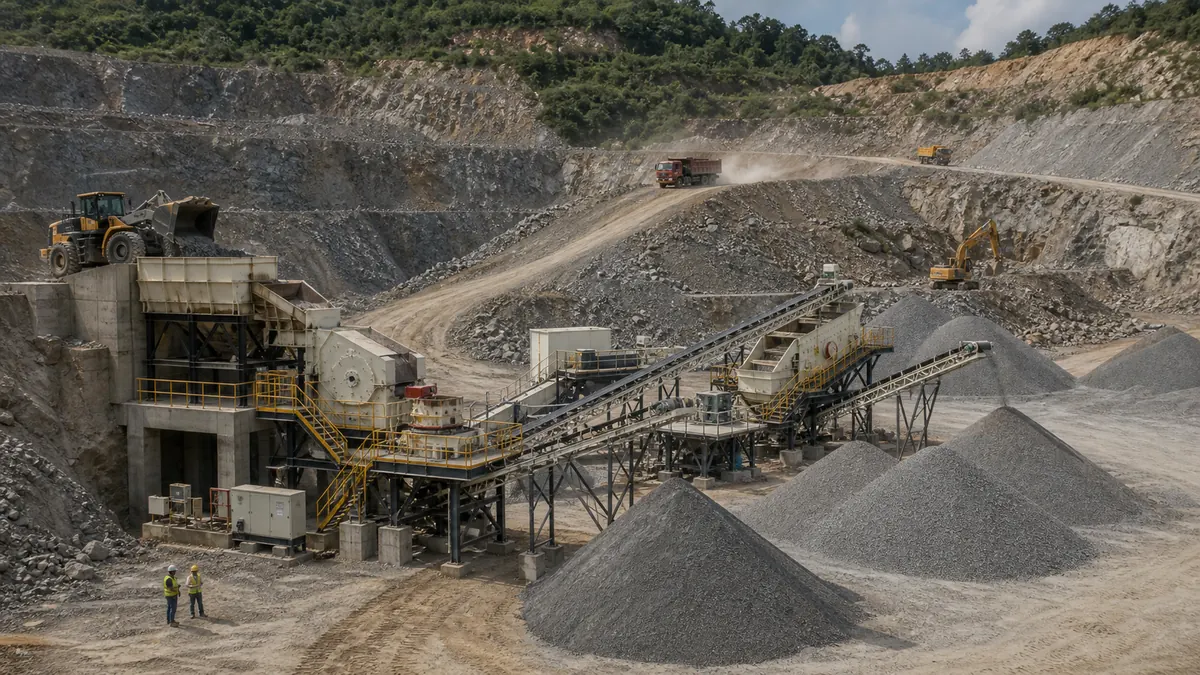
Choosing quarry crushing equipment starts with the material and ends with the required products, not with a single crusher model. A practical quarry plant normally needs a vibrating feeder to control feed, a primary crusher to reduce run-of-mine stone, a secondary or tertiary crusher to reach the target size and shape, a vibrating screen to separate finished products, and belt conveyors to connect the whole line. The right combination depends on maximum feed size, hardness, abrasiveness, moisture, clay content, hourly capacity, final output sizes, site layout, power supply, maintenance access, and budget range.
Why the Equipment Chain Matters
A quarry crushing plant is a system. If one machine is undersized or selected for the wrong material, the whole line loses capacity. A strong jaw crusher cannot deliver target output if the feeder surges, the screen blinds, or the conveyor belt is too narrow for the real tonnage. In the same way, a good screen cannot fix poor crusher selection if the crusher produces too much flat, elongated, or oversized material.
For quarry owners, the best equipment chain should answer four questions:
- What raw material must be crushed?
- What feed size enters the plant?
- What output sizes must be sold?
- What capacity must the plant produce in real working hours?
After these questions are clear, the supplier can match the feeder, crusher, screen, and conveyor as one process. If you are still defining the full site scope, compare this guide with our article on complete stone crusher plant setup and the crushing plant flow sheet guide.
Quick Selection Table
| Equipment | Main Job | Key Selection Points | Common Mistake |
|---|---|---|---|
| Vibrating feeder | Controls raw material into the primary crusher | Hopper volume, max feed size, moisture, clay, grizzly gap, feeder width | Choosing a feeder that cannot handle real rock size |
| Primary crusher | First size reduction | Material hardness, max feed size, reduction ratio, capacity, opening size | Selecting by motor power only |
| Secondary crusher | Produces smaller aggregate or prepares for screening | Hardness, abrasiveness, target size, wear cost, product shape | Using impact crushing on highly abrasive rock without checking wear cost |
| Vibrating screen | Separates final products and return material | Screen area, deck count, mesh size, moisture, fines content, angle | Undersizing the screen behind a large crusher |
| Belt conveyor | Moves material between machines and stockpiles | Belt width, speed, angle, transfer height, dust sealing, walkway access | Forgetting transfer points and stockpile height |
This table is only a starting point. The final design must also consider loader access, truck roads, foundation condition, electrical layout, dust control, future expansion, and spare parts planning.
Step 1: Define Raw Material Before Choosing Machines
Raw material decides most of the equipment selection. Granite, basalt, river stone, iron ore, and other hard abrasive materials normally require stronger crushers and better wear-part planning. Limestone, dolomite, and medium-hard stone may allow more economical impact crushing, but moisture and clay can still reduce screening efficiency.
Important material details include:
- Rock name and source, such as granite, basalt, limestone, river stone, andesite, or recycled concrete.
- Maximum feed size after blasting or excavation.
- Compressive strength if available.
- Abrasiveness and silica content if known.
- Moisture, clay, soil, and sticky fines.
- Required final products, such as 0-5 mm, 5-10 mm, 10-20 mm, and 20-30 mm.
If the material is hard and abrasive, a jaw crusher plus cone crusher plus screen is often more stable for long-term quarry work. If the material is limestone or medium-hard stone, jaw crusher plus impact crusher plus screen can be practical when product shape matters and wear cost is acceptable. If manufactured sand or better cubical shape is required, a VSI crusher may be added after secondary crushing.
For crusher type selection, see our comparison guide: Jaw Crusher, Cone Crusher, Impact Crusher, or VSI: Which Crusher Do You Need?.
Step 2: Choose the Feeder
The feeder is often treated as a simple accessory, but it controls the stability of the whole quarry plant. A good feeder supplies the crusher evenly, prevents large surges, removes some fine material before crushing, and protects the crusher from impact shock.
Vibrating Feeder
A vibrating feeder is common before a jaw crusher. It can handle large stone, regulate flow, and use a grizzly section to bypass fines. This is useful when blasted quarry rock contains a mixture of large blocks, smaller stone, and soil. The feeder should be wider than the crusher inlet and strong enough for the maximum feed size.
Apron Feeder
An apron feeder may be considered when the feed is very heavy, sharp, large, or difficult to control. It is often more expensive than a vibrating feeder, but it can be stronger for demanding mining or large quarry applications.
Belt Feeder
A belt feeder can work for smaller, controlled material under a bin, but it is usually not the first choice for large blasted rock before primary crushing.
When choosing a feeder, check hopper volume, feeder width, motor power, grizzly opening, liner protection, installation height, and how the loader or truck will feed the hopper. A low-cost feeder can become expensive if it causes crusher choking, uneven wear, or frequent shutdowns.
Step 3: Choose the Primary Crusher
The primary crusher accepts the largest feed and sets the practical capacity of the front end. In most quarry aggregate plants, the primary crusher is a jaw crusher because it handles large feed, hard rock, and variable material better than many alternatives.
A primary jaw crusher should be selected by:
- Maximum feed size.
- Required capacity in tons per hour.
- Discharge setting range.
- Rock hardness and abrasiveness.
- Crusher inlet size.
- Flywheel, frame, bearing, and jaw plate design.
- Maintenance access and spare jaw plate availability.
For small and medium quarry projects, the jaw crusher may feed directly to a screen or secondary crusher. For larger plants, a surge bin or intermediate stockpile may be added to stabilize downstream equipment.
The common mistake is choosing the primary crusher only by theoretical capacity. Real capacity depends on feed size distribution, rock shape, moisture, clay, crusher setting, feeder control, and downstream bottlenecks.
Step 4: Choose the Secondary or Tertiary Crusher
After primary crushing, the secondary crusher reduces stone to the target range for screening or final shaping. The main choices are cone crusher, impact crusher, and VSI crusher.
Cone Crusher
A cone crusher is widely used for hard and abrasive rock such as granite, basalt, river stone, and iron ore. It gives stable capacity and controlled wear cost when properly selected. Cone crushing is often preferred for long-term quarry production where liner life and product consistency matter.
Impact Crusher
An impact crusher can produce a good cubical shape and may simplify the process for limestone and medium-hard materials. It is often useful for road aggregate, concrete aggregate, and recycling. However, blow bar and impact plate wear can be high when the material is very abrasive.
VSI Crusher
A VSI crusher is usually used for final shaping or manufactured sand production. It is not normally the first crusher after blasting, but it can improve particle shape, reduce flaky aggregate, and produce more 0-5 mm sand after cone or impact crushing. For details, read What Is a VSI Crusher and How Does It Work? and our guide on improving cubical shape with a VSI crusher.
Step 5: Choose the Screen
The vibrating screen decides whether the plant can sell the right products. Crusher capacity is important, but the screen must separate the required sizes at the same real production rate. If the screen is too small, the plant will recirculate too much material, produce poor gradation, or overload conveyors.
Screen selection depends on:
- Required number of final products.
- Mesh openings for each product size.
- Feed tonnage and particle size distribution.
- Moisture and sticky fines.
- Deck count and screen area.
- Screen angle, amplitude, and vibration frequency.
- Return conveyor load.
- Maintenance access for changing screen media.
For example, a plant producing 0-5 mm, 5-10 mm, 10-20 mm, and 20-30 mm aggregate normally needs a multi-deck screen or more than one screen, depending on tonnage. If the feed contains wet fines or clay, larger screen area, pre-screening, washing, or better material handling may be needed.
For output-size planning, review our guide on designing a crushing plant for 0-5 mm, 5-10 mm, and 10-20 mm aggregates.
Step 6: Choose Conveyors and Transfer Points
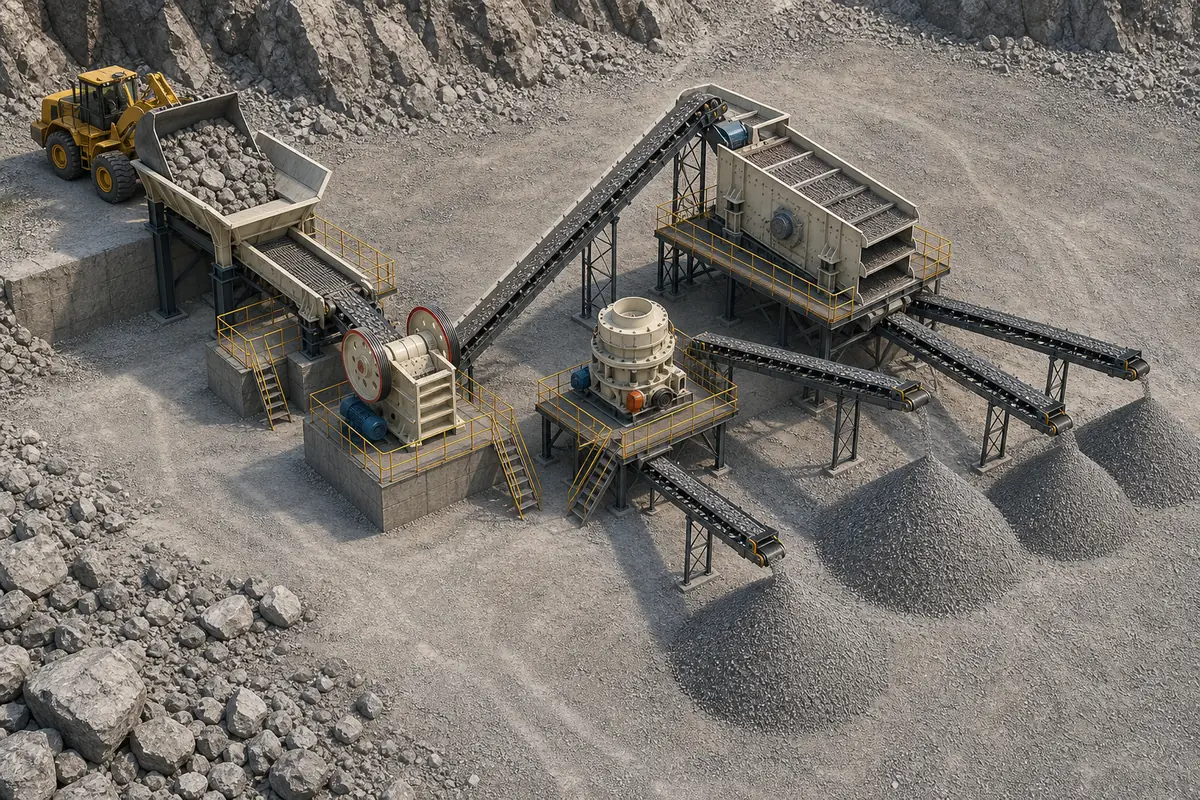
Conveyors make the plant work as one line. They move raw material, intermediate product, return material, and finished aggregate. Poor conveyor design causes spillage, dust, belt damage, stockpile problems, and unsafe maintenance.
Key conveyor points include:
- Belt width and speed matched to tonnage.
- Conveyor angle suitable for the material.
- Transfer height and chute design.
- Belt cleaner and skirt sealing.
- Dust control at transfer points.
- Walkways, guards, pull cords, and maintenance access.
- Stockpile height and loader working space.
- Return conveyor capacity for oversized material.
The conveyor layout should avoid unnecessary transfer points because each transfer point can create dust, wear, spillage, and maintenance work. At the same time, conveyors must leave enough access around crushers, screens, motors, lubricating points, and belt take-up systems.
If dust is a major site issue, read How to Reduce Dust in a Stone Crusher Plant before finalizing conveyor covers, spray points, chute sealing, and stockpile layout.
Example Quarry Equipment Configurations
Different quarry jobs need different equipment chains. The following examples show how the feeder, crusher, screen, and conveyor choices work together.
Hard Rock Aggregate Plant
For granite, basalt, and river stone, a practical stationary plant may use:
- Vibrating feeder with grizzly section.
- Primary jaw crusher.
- Secondary cone crusher.
- Multi-deck vibrating screen.
- Return conveyor for oversized material.
- Product conveyors for 0-5 mm, 5-10 mm, 10-20 mm, and 20-30 mm.
- Optional VSI crusher for manufactured sand or better particle shape.
This configuration is suitable for long-term quarry production where wear cost, uptime, and aggregate quality matter.
Limestone Road Aggregate Plant
For limestone or medium-hard stone, the plant may use:
- Vibrating feeder.
- Primary jaw crusher.
- Secondary impact crusher.
- Vibrating screen.
- Product conveyors and stockpiles.
- Dust control at crusher discharge and transfer points.
This can be cost-effective when the material is not highly abrasive and the buyer wants a cubical product for road base or concrete aggregate.
Mobile Quarry Crushing Plant
For temporary quarry supply, road projects, or contract crushing, the chain may be mobile:
- Mobile jaw crusher for primary crushing.
- Mobile cone or impact crusher for secondary crushing.
- Mobile screen plant for final sizing.
- Stockpile conveyors and optional return conveyor.
Mobile equipment can reduce foundation work and start production faster, but the buyer still needs to match feeder capacity, crusher chamber, screen size, and conveyor layout. See our mobile crushing plant buying guide for more detail.
Cost Factors in Quarry Crushing Equipment
The lowest machine price is not always the lowest cost per ton. A quarry equipment quotation should be compared by complete scope and long-term operating cost.
Important cost factors include:
- Crusher model, motor power, chamber type, and wear parts.
- Feeder size, hopper structure, grizzly section, and liners.
- Screen size, deck count, mesh type, and support structure.
- Conveyor length, width, steel truss, belt quality, and transfer chutes.
- Electrical control cabinet, cables, sensors, and safety devices.
- Dust suppression, chute sealing, and environmental controls.
- Installation, commissioning, operator training, and spare parts.
- Freight, container loading, inland transport, and site lifting plan.
Two quotations may both say “200 TPH quarry plant,” but one may include only the main crusher and screen while the other includes feeder, conveyors, return system, platforms, control system, and spare parts. Always compare the process drawing and scope of supply line by line.
Common Buyer Mistakes
The first mistake is asking for a crusher price before defining feed size and output sizes. A supplier cannot choose the right crusher chamber, screen decks, and conveyors without these details.
The second mistake is undersizing the screen. A large crusher with a small screen creates recirculation, unstable gradation, and lower sellable output.
The third mistake is ignoring the feeder. Uneven feeding can cause crusher choking, high wear, vibration, and poor product shape.
The fourth mistake is forgetting conveyors. Belt width, angle, transfer chute design, and stockpile position affect capacity, dust, loader cost, and maintenance access.
The fifth mistake is choosing impact crushing for abrasive hard rock only because the initial price looks attractive. Wear parts must be included in the cost-per-ton calculation.
The sixth mistake is designing the plant without future expansion. If quarry demand may grow, leave space for a larger screen, longer stockpile conveyors, or an added VSI crusher.
What to Send Before Asking for a Quote
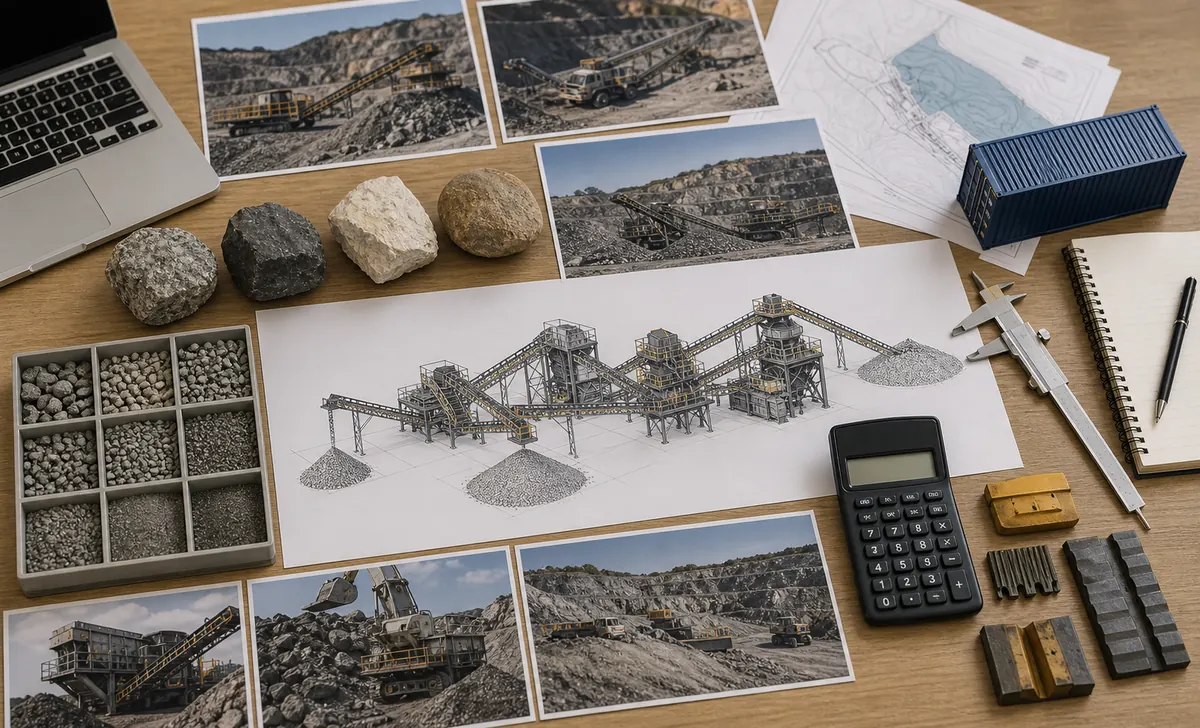
To receive a practical quarry crushing equipment proposal, send more than a general capacity target. The supplier needs enough information to size the feeder, crusher, screen, conveyor, and control system together.
Prepare the following:
- Raw material name, hardness, abrasiveness, moisture, and clay content if known.
- Maximum feed size before the primary crusher.
- Required output size ranges, such as 0-5 mm, 5-10 mm, 10-20 mm, and 20-30 mm.
- Target capacity in tons per hour and expected working hours per day.
- Site photos, land size, bench condition, access roads, and stockpile area.
- Preferred stationary or mobile plant layout.
- Local power condition, diesel preference, and generator plan.
- Budget range, delivery schedule, and required spare parts.
With these details, MVSI can compare the practical equipment chain, check possible bottlenecks, and recommend a feeder, crusher, screen, and conveyor layout for the quarry.
Conclusion
A quarry crushing plant should be selected as one connected system. The feeder stabilizes the flow, the primary crusher handles the largest stone, the secondary or tertiary crusher controls reduction and shape, the screen separates sellable products, and conveyors move material safely between each stage.
The best quarry crushing equipment depends on raw material, feed size, output size, capacity, site photos, and budget range. If you are planning a new quarry plant or upgrading an existing line, send MVSI your material details, target products, hourly capacity, site layout, and project constraints. We can help review the process and recommend a practical equipment configuration.
FAQ
What equipment does a quarry crushing plant need?
A typical quarry crushing plant needs a vibrating feeder, primary crusher, secondary crusher, vibrating screen, belt conveyors, electrical control system, dust control, and stockpile area. Some plants also need a VSI crusher for manufactured sand or final shaping.
How do I choose a feeder for a quarry crusher?
Choose the feeder based on maximum feed size, hopper volume, raw material weight, moisture, clay content, crusher inlet width, and required capacity. A vibrating feeder with a grizzly section is common before a jaw crusher.
Is a jaw crusher enough for a quarry plant?
A jaw crusher can handle primary crushing, but most quarry plants also need a secondary crusher and screen to produce sellable aggregate sizes. Jaw-only crushing may be enough for coarse road base, but not for strict multi-size aggregate production.
Should I choose a cone crusher or impact crusher after the jaw crusher?
Choose a cone crusher for hard and abrasive rock such as granite, basalt, and river stone. Choose an impact crusher for limestone and medium-hard stone when cubical shape is important and wear cost is acceptable.
How many screen decks does a quarry plant need?
The deck count depends on the number of final products. Two or three decks may be enough for common aggregate sizes, but higher tonnage or more products may require a larger screen or more than one screen.
What conveyor size is needed for a crusher plant?
Conveyor size depends on tonnage, material density, belt speed, conveyor angle, transfer height, and stockpile plan. The belt must handle peak load, not only average crusher output.
What is the biggest bottleneck in quarry crushing equipment?
Common bottlenecks include uneven feeding, undersized screens, narrow conveyors, poor transfer chutes, excessive return load, and crusher chambers that do not match the feed size or target product.
What information should I provide before requesting a quotation?
Provide raw material, maximum feed size, final output sizes, target capacity, working hours, site photos, power condition, stationary or mobile preference, and budget range. These details make the equipment selection and price more accurate.