Table of Contents
- Why Granite Needs a Strong Mobile Crushing Setup
- What Makes Granite Different From Softer Stone
- Recommended Mobile Crusher Plant Flow for Granite
- Stage 1: Mobile Jaw Crusher for Primary Crushing
- Stage 2: Mobile Cone Crusher for Secondary Crushing
- Stage 3: Mobile VSI Crusher for Shaping or Sand Making
- Stage 4: Mobile Screen for Final Sizing and Closed Circuit
- Common Granite Mobile Plant Configurations
- Capacity Planning for Granite
- Output Sizes and Aggregate Quality
- Track-Mounted vs Tire-Mounted Granite Crusher Plant
- Power, Dust, and Site Layout
- Cost Factors Buyers Should Compare
- Common Buyer Mistakes
- What to Send Before Asking for a Quote
- Conclusion
- FAQ
- What is the best mobile crusher plant for granite?
- Is cone crusher better than impact crusher for granite?
- Do I need a VSI crusher in a granite mobile plant?
- What capacity mobile granite crusher plant should I choose?
- Can a mobile crusher plant produce several granite aggregate sizes?
- Track-mounted or tire-mounted mobile crusher: which is better for granite?
- How much does a mobile crusher plant for granite cost?
- What information should I provide before requesting a quotation?
Mobile Crusher Plant for Granite: Jaw, Cone, VSI, and Screen Combination
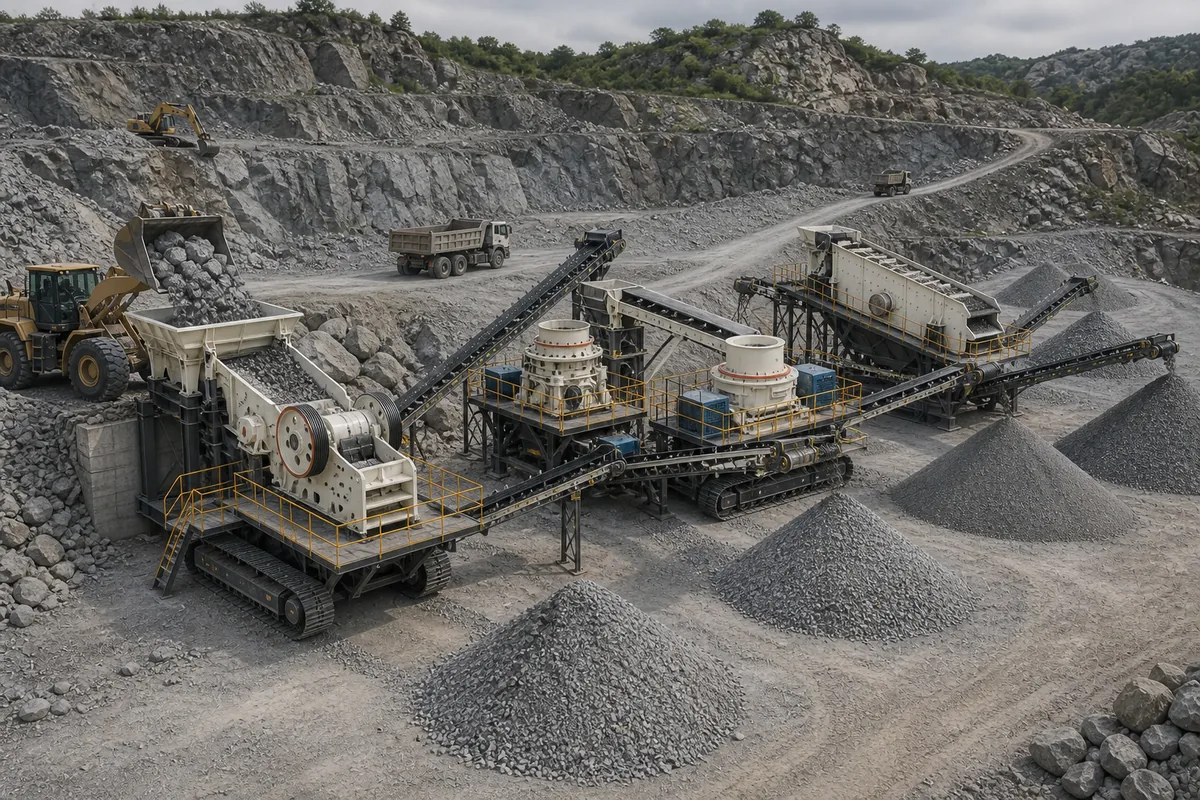
A mobile crusher plant for granite usually needs a mobile jaw crusher for primary crushing, a mobile cone crusher for secondary or tertiary reduction, a mobile screen for product sizing, and an optional mobile VSI crusher when the project requires better cubical shape or 0-5 mm manufactured sand. Granite is hard and abrasive, so the plant should be designed for wear control, stable feed, enough screening area, and realistic capacity instead of only a low purchase price. The best configuration depends on maximum feed size, required output sizes, target tons per hour, relocation frequency, power supply, and site space.
Why Granite Needs a Strong Mobile Crushing Setup
Granite is widely used for road base, asphalt aggregate, concrete aggregate, railway ballast, drainage stone, and commercial quarry products. It can make high-value aggregate, but it also places heavy load on crushers, screens, conveyors, and wear parts. A plant that works well for limestone may not survive the same operating schedule on granite.
For quarry owners and road contractors, the main goal is not simply to break granite. The plant must keep a stable feed rate, protect downstream machines from oversize, control recirculating load, produce clean final sizes, and avoid unnecessary wear. That is why granite mobile crushing is usually built around compression crushing, with VSI shaping added only when the final product specification justifies it.
If you are still comparing mobile plant types, read our Mobile Crushing Plant Buying Guide for Quarry and Mining Projects. For a broader hard-rock selection view, see How to Choose a VSI Sand Making Machine for Granite, Basalt, and Limestone.
What Makes Granite Different From Softer Stone
Granite is generally harder and more abrasive than limestone. It often contains quartz, feldspar, and other minerals that increase wear on liners, mantles, rotor parts, and screens. This affects the crusher choice and the operating cost per ton.
Important granite characteristics include:
- High compressive strength, which requires heavy-duty primary crushing.
- Abrasive mineral content, which increases wear-part consumption.
- Large blasted feed, which needs proper grizzly feeding and jaw opening.
- Strong demand for cubical aggregate in road and concrete projects.
- Possible need for manufactured sand when natural sand supply is limited.
Because of these factors, granite crushing plants usually use jaw crusher plus cone crusher as the core process. Impact crushers can crush granite, but for long-term hard-rock production the wear cost is often less attractive than cone crushing.
Recommended Mobile Crusher Plant Flow for Granite
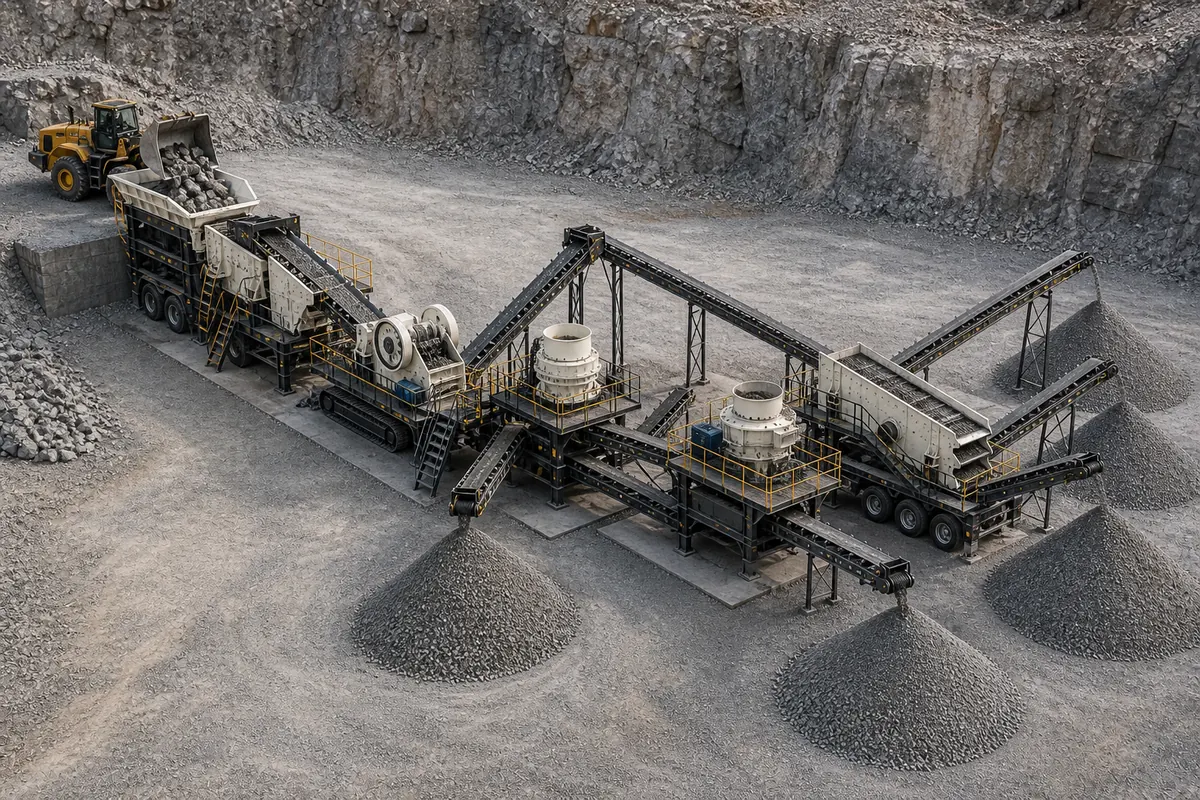
A practical granite mobile crusher plant should be designed from the final products backward. Start with the required output sizes and capacity, then match the crushing stages, screen decks, return conveyors, and stockpile layout.
Stage 1: Mobile Jaw Crusher for Primary Crushing
The mobile jaw crusher receives blasted granite or large quarry rock and reduces it to a size that the cone crusher can accept. It should have a feed opening large enough for the actual maximum stone size, not only the average size.
For granite, the feeder and jaw crusher should be selected together. A grizzly feeder can remove smaller material before the jaw chamber, reduce unnecessary crushing load, and improve plant efficiency. If oversize boulders appear often, the site may also need a hydraulic breaker or pre-splitting plan.
Stage 2: Mobile Cone Crusher for Secondary Crushing
The mobile cone crusher is the main reduction machine for hard granite after primary crushing. It provides controlled product size and better wear economy than impact crushing in abrasive material. The correct chamber type, closed-side setting, liner material, and feed control all matter.
A cone crusher works best with stable, evenly distributed feed. Poor feeding can cause uneven liner wear, unstable product size, and lower capacity. For a mobile granite plant, conveyor height, transfer points, surge capacity, and return load should be planned carefully.
Stage 3: Mobile VSI Crusher for Shaping or Sand Making
A mobile VSI crusher is not always required, but it is useful when the buyer needs cubical aggregate, asphalt-friendly shape, or 0-5 mm manufactured sand. In a granite circuit, the VSI usually works after jaw and cone crushing, using smaller feed that is already controlled by the screen.
The VSI stage can improve particle shape and increase sand output, but it also adds power demand, wear parts, and screening requirements. Buyers should add VSI only when the final specification or market demand supports the extra operating cost. For shape improvement details, read How to Improve Cubical Shape in Manufactured Sand with a VSI Crusher.
Stage 4: Mobile Screen for Final Sizing and Closed Circuit
The mobile screen separates final granite aggregate sizes and returns oversized material to the cone or VSI stage. Screen area is often the bottleneck in mobile plants. If the screen is too small, the crusher may have rated capacity on paper while saleable output remains low.
For granite, screening should consider moisture, dust, target gradation, deck angle, mesh opening, and number of finished products. A plant making one road base product is much simpler than a plant making clean 0-5 mm, 5-10 mm, 10-20 mm, and 20-31.5 mm products at the same time.
Common Granite Mobile Plant Configurations
There is no single standard layout for every granite site. These configurations cover most buyer scenarios.
| Project Requirement | Recommended Configuration | Best Fit |
|---|---|---|
| Simple hard-rock aggregate | mobile jaw crusher + mobile cone crusher + mobile screen | quarry aggregate, road base, concrete stone |
| Better cubical aggregate | mobile jaw + mobile cone + mobile VSI + mobile screen | asphalt aggregate, high-quality concrete aggregate |
| Manufactured sand | mobile jaw or cone feed + mobile VSI + fine screen | 0-5 mm sand and shaped chips |
| Temporary road project | mobile jaw + mobile cone or screen | faster setup and relocation |
| Large commercial quarry | multiple mobile modules with extra screen and conveyors | higher uptime and multiple product sizes |
For many buyers, the safest starting point is jaw + cone + screen. Add VSI when you need final shaping or sand making. Add extra screening when you need several clean final products.
Capacity Planning for Granite
Granite mobile plant capacity depends on feed size, hardness, crusher setting, screen efficiency, return load, power, and site logistics. Nameplate capacity should always be checked against real operating conditions.
| Target Capacity | Typical Granite Setup | Planning Notes |
|---|---|---|
| 50-100 TPH | mobile jaw + small cone or screen | suitable for startup quarry, small road work, limited stockpile space |
| 100-200 TPH | mobile jaw + mobile cone + screen | common range for contractors and medium aggregate supply |
| 200-300 TPH | heavy mobile jaw + cone + multi-deck screen | needs strong feeding, return circuit, loaders, trucks, and power |
| 300+ TPH | staged mobile train or semi-mobile plant | usually needs extra screening and careful stockpile planning |
Do not define capacity only as feed tons per hour. A granite plant may receive 200 TPH but produce different saleable tonnages in each final size. If the buyer needs a high share of 0-5 mm manufactured sand, the VSI and fine screen may set the real capacity. For VSI sizing reference, see our VSI Crusher Capacity Guide: 50 TPH to 500 TPH Sand Production.
Output Sizes and Aggregate Quality
Granite aggregate projects commonly request the following final sizes:
- 0-5 mm manufactured sand or crusher fines.
- 5-10 mm chips for concrete and asphalt.
- 10-20 mm concrete and asphalt aggregate.
- 20-31.5 mm or 20-40 mm road base and drainage stone.
- 0-31.5 mm blended base course when local road specifications allow it.
If the plant must produce several clean products, the screen deck arrangement becomes as important as the crushers. If the project needs better cubical shape, the cone crusher setting and VSI feed grading should be reviewed together. A VSI cannot fix every upstream problem if the feed is too coarse, unstable, or contaminated with clay.
Track-Mounted vs Tire-Mounted Granite Crusher Plant
Both track-mounted and tire-mounted mobile plants can work for granite. The choice depends on site movement, road transport, terrain, and how often the plant will relocate.
Track-mounted plants are usually better when the equipment moves inside a quarry, follows the working face, or works on rough ground. Tire-mounted plants can be attractive for contractors who move between road-accessible sites and want simpler highway transport.
| Factor | Track-Mounted Mobile Plant | Tire-Mounted Mobile Plant |
|---|---|---|
| Movement inside quarry | Strong | Moderate |
| Road transport between sites | Usually trailer-based | Often easier |
| Rough terrain | Better | Depends on access road |
| Setup time | Short | Short to medium |
| Typical use | quarry face, mining, hard-rock production | road projects, contract crushing |
Before choosing chassis type, check transport width, weight, road permits, lifting plan, access road condition, and whether the plant will mostly move inside one site or between several sites.
Power, Dust, and Site Layout
Granite crushing requires strong power and stable site logistics. Mobile plants may use diesel-hydraulic, diesel-electric, generator, or external grid power. The best option depends on local fuel cost, grid stability, operating hours, and maintenance skills.
Dust control also matters because granite crushing can create fine dust, especially when producing sand. Water spray points, covered conveyors, proper transfer design, and stockpile management can improve site conditions. If the site has clay or high moisture, screening efficiency and chute design should be reviewed before finalizing the plant.
Site layout should leave enough space for loader feeding, truck movement, finished stockpiles, maintenance access, spare parts storage, and safe walkways. A mobile plant still needs a practical working area; mobility does not remove the need for good site planning.
Cost Factors Buyers Should Compare
The price of a mobile crusher plant for granite depends on much more than the crusher model. Buyers should compare complete scope and long-term operating cost.
Important cost factors include:
- Feed size and whether a heavy-duty jaw crusher is required.
- Cone crusher model, chamber type, liner material, and motor power.
- Whether VSI shaping or sand making is included.
- Screen size, deck number, mesh type, and return conveyor design.
- Track-mounted or tire-mounted chassis.
- Diesel, electric, or hybrid power arrangement.
- Dust suppression, automation, electrical control, and safety guards.
- Wear parts package, spare parts availability, and service support.
- Shipping, inland transport, installation guidance, and commissioning.
Two quotations can both say “mobile granite crusher plant” while having very different scope. One may include only a jaw crusher and screen. Another may include jaw, cone, VSI, screen, return conveyors, dust control, spare parts, and commissioning support. Compare the process flow and supply list line by line.
Common Buyer Mistakes
The first mistake is asking only for a mobile crusher price without sharing feed size, output size, capacity, and granite hardness. Without this information, the supplier can only send a rough model suggestion.
The second mistake is ignoring wear cost. Granite is abrasive, so liner life, rotor parts, screen mesh, and conveyor wear should be part of the cost discussion. A cheaper plant can become expensive if it stops often or consumes wear parts too quickly.
The third mistake is undersizing the screen. Buyers sometimes focus on the jaw and cone crusher while the screen becomes the real bottleneck. This is especially common when the plant must make several products or a high sand percentage.
What to Send Before Asking for a Quote
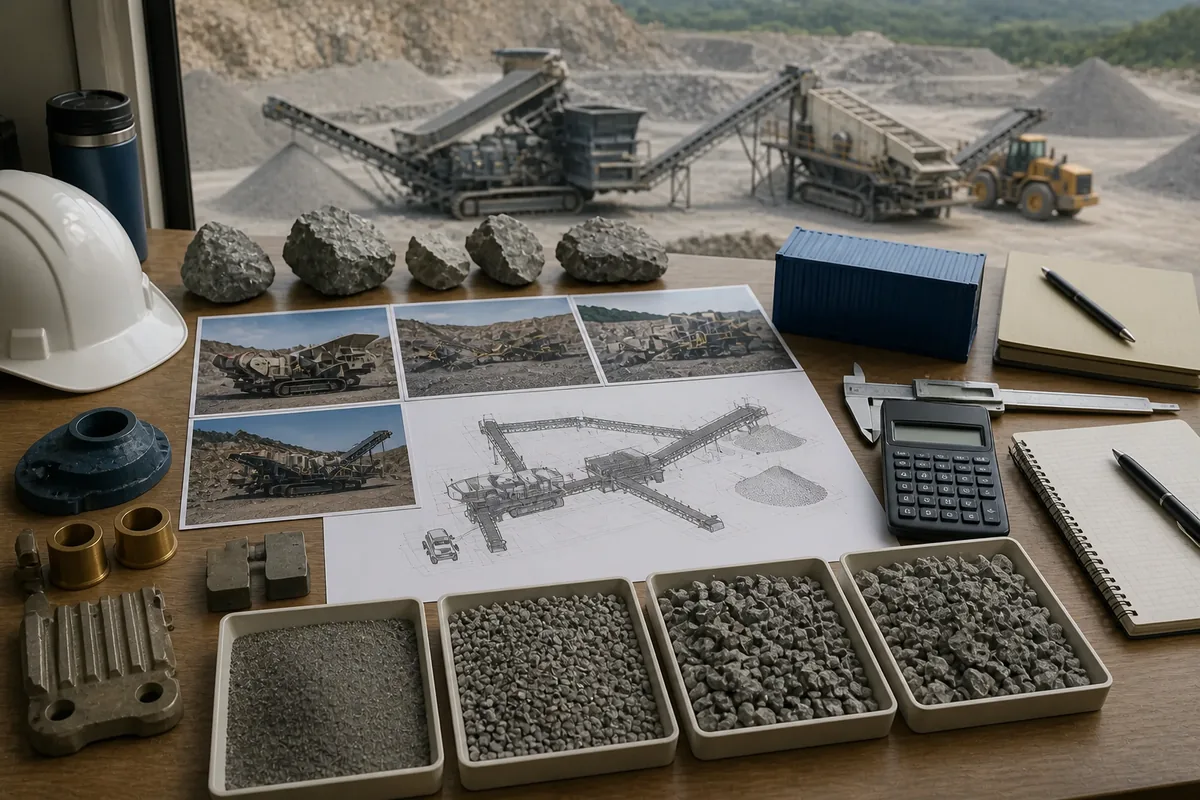
To get a practical mobile crusher plant quotation for granite, prepare the following information:
- Raw material name and photos, including whether it is granite, basalt-like granite, or mixed hard rock.
- Maximum feed size before primary crushing.
- Required output sizes, such as 0-5 mm, 5-10 mm, 10-20 mm, or 20-31.5 mm.
- Target capacity in tons per hour and working hours per day.
- Whether you need VSI shaping, manufactured sand, or only coarse aggregate.
- Site photos, working area, road access, stockpile space, and relocation frequency.
- Power condition, diesel plan, generator plan, or grid electricity details.
- Budget range, delivery schedule, spare parts needs, and installation support requirement.
With these details, MVSI can recommend a more accurate mobile jaw, cone, VSI, screen, conveyor, and power configuration instead of a generic machine price.
Conclusion
For granite, the most reliable mobile crusher plant usually starts with mobile jaw crusher + mobile cone crusher + mobile screen. A mobile VSI crusher should be added when the project needs better particle shape, asphalt aggregate, high-quality concrete aggregate, or manufactured sand. The final choice should be based on feed size, output size, capacity, hardness, abrasiveness, screen demand, power supply, mobility, and total cost per ton.
If you are planning a mobile crusher plant for granite, send us your raw material, feed size, output size, capacity, site photos, and budget range. MVSI can review the application and suggest a practical jaw, cone, VSI, and screen combination for your quarry, road, or aggregate project.
FAQ
What is the best mobile crusher plant for granite?
For most granite aggregate projects, a mobile jaw crusher plus mobile cone crusher plus mobile screen is the best starting configuration. Add a mobile VSI crusher when the project needs manufactured sand or better cubical shape.
Is cone crusher better than impact crusher for granite?
For long-term granite production, cone crusher is usually more economical because granite is hard and abrasive. Impact crusher can work in some cases, but wear parts may be costly when crushing abrasive granite continuously.
Do I need a VSI crusher in a granite mobile plant?
Not always. A VSI crusher is useful when you need 0-5 mm manufactured sand, better particle shape, or stricter asphalt and concrete aggregate quality. If you only need coarse road base, jaw + cone + screen may be enough.
What capacity mobile granite crusher plant should I choose?
Choose capacity based on saleable output demand, feed size, final sizes, working hours, screen area, and site logistics. Many contractors use 100-200 TPH, while larger quarries may need 200-300 TPH or more.
Can a mobile crusher plant produce several granite aggregate sizes?
Yes. With a properly sized mobile screen and return conveyor, the plant can produce products such as 0-5 mm, 5-10 mm, 10-20 mm, and 20-31.5 mm. The exact output depends on screen decks and circuit design.
Track-mounted or tire-mounted mobile crusher: which is better for granite?
Track-mounted plants are often better for movement inside rough quarry sites. Tire-mounted plants can be better for contractors moving between road-accessible projects. The decision should include transport limits and relocation frequency.
How much does a mobile crusher plant for granite cost?
The cost depends on jaw crusher size, cone crusher model, whether VSI shaping is included, screen size, chassis type, power system, conveyors, dust control, wear parts, shipping, and service scope.
What information should I provide before requesting a quotation?
Provide raw material, maximum feed size, final output sizes, capacity, site photos, mobility requirement, power condition, whether VSI shaping is needed, and budget range. These details make the configuration and price more accurate.