Table of Contents
- Why Crusher Plant Selection Matters in Tanzania
- Common Materials for Tanzania Quarry and Gold Projects
- Recommended Stone Crusher Plant Configurations for Tanzania
- Configuration 1: Jaw Crusher + Cone Crusher + Vibrating Screen
- Configuration 2: Jaw Crusher + Impact Crusher + Vibrating Screen
- Configuration 3: Mining Feed Preparation Line Before Grinding
- Capacity Planning for Tanzania Projects
- Output Sizes for Aggregate and Gold-Mine Feed
- Stationary vs Mobile Crusher Plant in Tanzania
- Cost Factors Buyers Should Compare
- Common Buyer Mistakes in Tanzania Projects
- What to Send Before Requesting a Quote
- Conclusion
- FAQ
- What is the best crusher plant for gold-bearing hard rock in Tanzania?
- Can one crusher plant serve both aggregate production and gold-mine feed preparation?
- What capacity crusher plant should I choose in Tanzania?
- Is a mobile crusher plant suitable for remote Tanzania mining projects?
- Is impact crusher a good choice for gold ore in Tanzania?
- What output sizes are common for Tanzania aggregate projects?
- How much does a stone crusher plant for Tanzania cost?
- What information should I provide before requesting a quotation?
Stone Crusher Plant for Tanzania Gold Mining and Aggregate Production
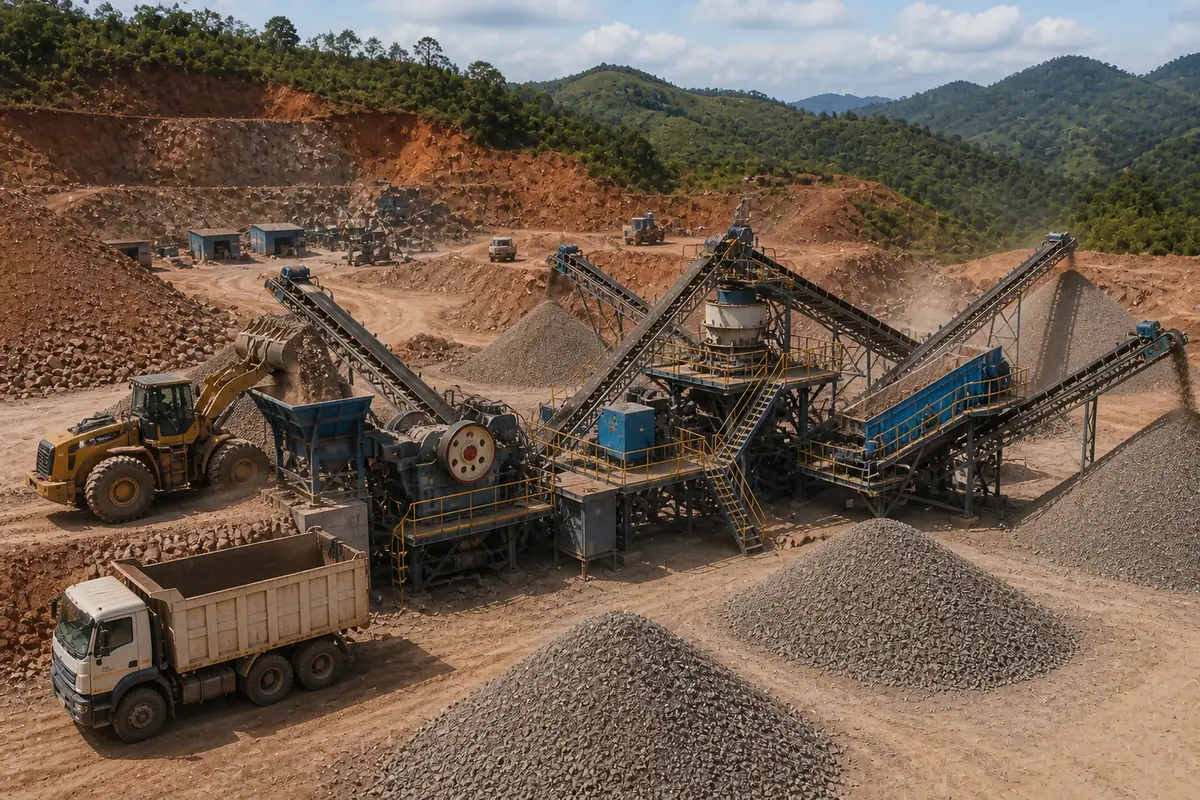
A stone crusher plant for Tanzania should be selected according to whether the project is mainly for gold ore feed preparation, quarry aggregate production, or both. In Tanzania, operators may process granite, basalt, river stone, quartz-rich ore, limestone, and oxidized or hard gold-bearing rock, so the right layout depends on material hardness, feed size, output size, capacity, site mobility, and downstream process. For hard rock and most long-term quarry work, a jaw crusher plus cone crusher plus vibrating screen is usually the safest solution. Buyers should compare the full plant scope, wear-part plan, and installation support, not only the main crusher price.
Why Crusher Plant Selection Matters in Tanzania
Tanzania has demand from both infrastructure and mining projects. Road building, housing, concrete supply, and local quarry businesses all need stable aggregate. At the same time, many gold projects need reliable crushing before stockpiling, grinding, or further beneficiation. That makes plant selection more practical than theoretical: the best line is the one that fits the rock, the site, the production target, and the buyer’s operating budget.
For quarry owners, the main issue is producing several saleable aggregate sizes at stable cost per ton. For gold mining operators, the main issue is preparing consistent feed for downstream milling or concentration. For EPC and procurement teams, the real question is whether the full line can run reliably after shipping, installation, and commissioning.
If you are comparing full plant planning first, read our guide to complete stone crusher plant setup and our article on stone crusher plant cost factors.
Common Materials for Tanzania Quarry and Gold Projects
The correct plant starts with the material. In Tanzania, buyers often ask for equipment to process:
- Gold-bearing hard rock that needs primary and secondary crushing before grinding or stockpiling.
- Quartz-vein ore where stable feed size matters for downstream recovery.
- Granite for concrete aggregate and commercial crushed stone.
- Basalt for road base, railway support, and high-strength aggregate.
- River stone that often needs strong primary crushing and reliable recirculation.
- Limestone or softer stone for lower-abrasion aggregate production.
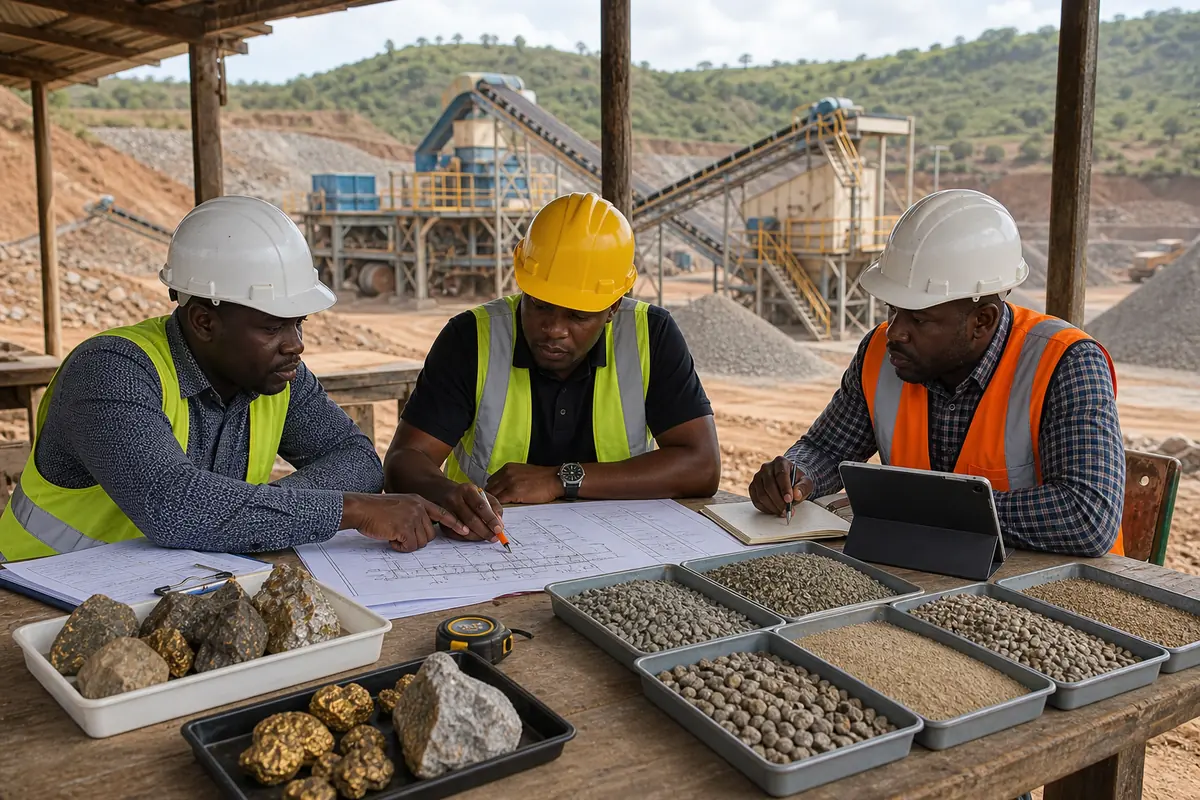
Before asking for a quotation, send rock or ore photos, the maximum feed size, moisture condition, clay content if any, and the required final product sizes. These details help avoid the common mistake of choosing a crusher chamber, screen deck, or return conveyor that does not match the real site material.
Recommended Stone Crusher Plant Configurations for Tanzania
There is no single layout that fits every Tanzania project. The best configuration depends on whether the line serves aggregate sales, gold-mine feed preparation, or a dual-use operation.
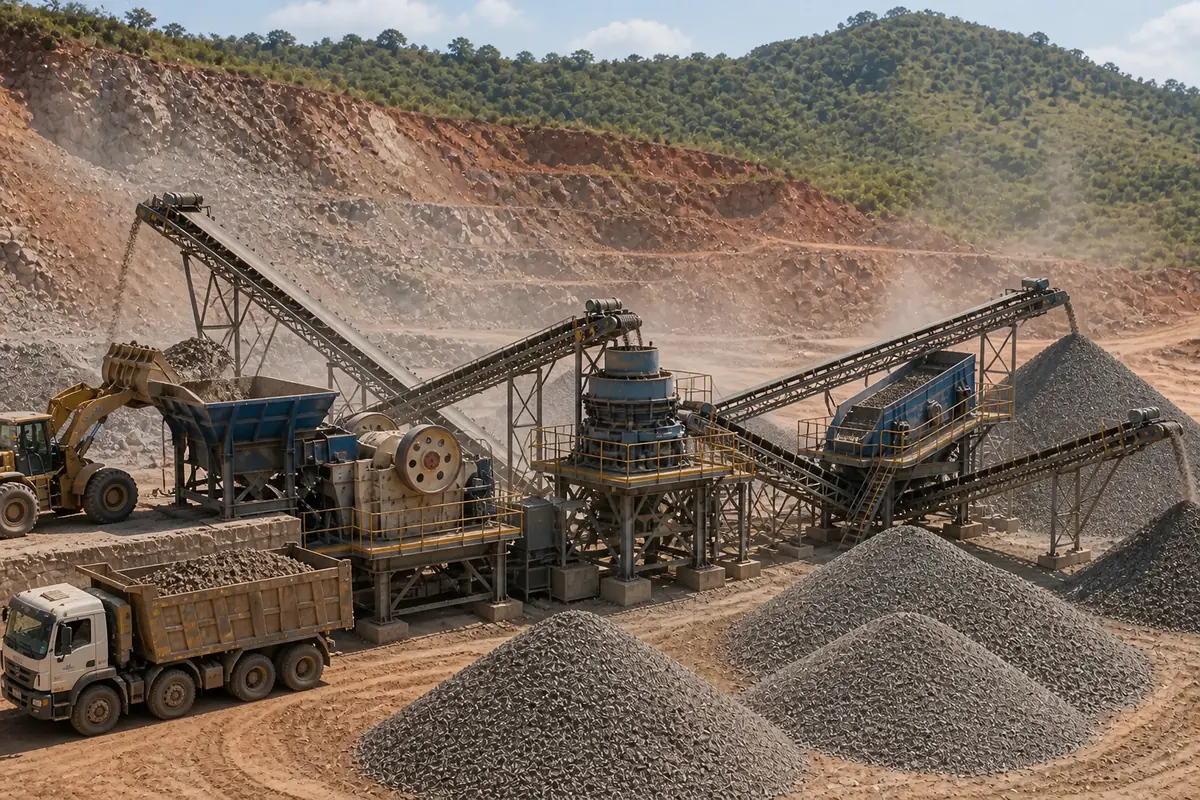
Configuration 1: Jaw Crusher + Cone Crusher + Vibrating Screen
This is the standard choice for hard and abrasive material such as granite, basalt, river stone, and many gold-bearing hard-rock ores. The jaw crusher handles large feed. The cone crusher provides efficient secondary reduction. The screen separates finished sizes and returns oversize material for recirculation.
This layout is suitable for long-term quarry production, road aggregate supply, and mining projects that need controlled crushing before stockpiling or grinding. It usually gives better wear economy than impact crushing on abrasive rock.
Configuration 2: Jaw Crusher + Impact Crusher + Vibrating Screen
For limestone and some medium-hard stone, a jaw plus impact setup can be more economical. The impact crusher can improve particle shape and keep the line relatively compact. However, if the material is highly abrasive, the wear cost may rise too quickly.
This option is usually better for softer aggregate material than for gold-ore applications. If the project includes abrasive ore, cone crushing is normally the safer secondary stage.
Configuration 3: Mining Feed Preparation Line Before Grinding
Some Tanzania projects need a crushing line that does not stop at aggregate production. In those cases, the crusher plant should be sized around the feed requirement of the stockpile, mill, or beneficiation section. A jaw crusher can handle ROM ore first, followed by cone crushing and screening to produce a controlled feed size for the next stage.
If the project also includes grinding or recovery equipment, see our article on gold ore crushing and grinding process. If mobility matters, compare our mobile crushing plant buying guide.
Capacity Planning for Tanzania Projects
Plant capacity should be based on real demand, shift hours, haulage plan, and downstream process stability. Oversizing the line can tie up capital. Undersizing it can reduce ore feed consistency, delay aggregate delivery, and increase overtime pressure.
| Capacity Range | Typical Tanzania Application | Common Configuration |
|---|---|---|
| 50-100 TPH | pilot mine, startup quarry, local contractor | feeder, jaw crusher, impact or cone crusher, screen |
| 100-200 TPH | commercial aggregate line, medium gold project feed prep | feeder, jaw crusher, cone crusher, multi-deck screen |
| 200-300 TPH | larger quarry, infrastructure supply, expanded mine crushing | heavy feeder, jaw crusher, cone crusher, screen, return conveyor |
| 300+ TPH | long-term aggregate production or large mining operation | multi-stage crushing, multiple screens, stockpile conveyors |
For many Tanzania projects, 100-200 TPH is a practical starting range. Larger operations may justify 200-300 TPH or more, but only if the site has enough material reserve, truck movement space, power support, and downstream capacity.
Output Sizes for Aggregate and Gold-Mine Feed
Most buyers do not need only one product. The same line may need to supply aggregate for sale while also preparing crushed material for mining use. Common targets include:
- 0-5 mm crusher dust or manufactured sand.
- 5-10 mm fine aggregate.
- 10-20 mm concrete aggregate.
- 20-30 mm road base or drainage stone.
- Controlled crushed ore size before stockpiling, grinding, or concentration.
If the project needs better aggregate shape for concrete or manufactured sand, a VSI stage can be added after cone crushing. For more detail, read our article on how to improve cubical shape in manufactured sand with a VSI crusher.
Stationary vs Mobile Crusher Plant in Tanzania
A stationary crusher plant is usually better for a long-term quarry, a permanent mine, or a site with enough land for foundations, stockpiles, and maintenance access. It generally offers lower cost per ton over time and stronger expansion potential.
A mobile crusher plant is better when the project moves, civil work must stay limited, or access is difficult. This can be useful for remote gold projects, short-term road contracts, and early-stage site development.
The practical choice is simple: choose stationary when the deposit and project life are stable; choose mobile when relocation speed and lower civil work matter more.
Cost Factors Buyers Should Compare
The final plant price depends on much more than the crusher model. Buyers should compare the full scope of supply and the expected operating cost.
- Material hardness and abrasiveness.
- Required tons per hour.
- Number of final products or required ore-feed sizes.
- Stationary or mobile structure.
- Crusher type, screen area, conveyor length, and motor power.
- Steel structure, control cabinet, dust suppression, and safety guards.
- Shipping route, inland transport, installation support, and commissioning plan.
- Spare parts package, operator training, and after-sales service.
Two quotations may look similar, but one may include only the main crusher while the other includes feeder, screen, conveyors, structure, electrics, and startup support. Always compare the scope line by line.
Common Buyer Mistakes in Tanzania Projects
One common mistake is asking for “crusher plant price in Tanzania” without sharing whether the project is for quarry aggregate, gold ore, or both. That usually leads to a rough quotation that changes later.
Another mistake is focusing only on the crusher while ignoring screen sizing, return conveyor layout, ore moisture, and truck loading flow. A plant with the wrong screening section can lose capacity even if the main crusher looks large enough.
Buyers also sometimes overlook practical site issues such as seasonal rain, clay contamination, generator planning, remote access roads, and future plant expansion. These factors can change the recommended layout significantly.
What to Send Before Requesting a Quote
To get a useful crusher plant quotation for Tanzania, prepare the following:
- Raw material or ore type and clear site photos.
- Maximum feed size before crushing.
- Required output size or ore-feed size range.
- Target capacity in tons per hour.
- Working hours per day and expected annual production.
- Site photos, available land, and whether the plant should be stationary or mobile.
- Power condition, diesel-generator plan, and downstream process if any.
- Budget range and target delivery schedule.
With this information, MVSI can recommend a more accurate flow sheet, crusher model, screen size, power requirement, spare parts package, and shipping plan.
Conclusion
For Tanzania gold mining and aggregate production, the right stone crusher plant depends on raw material, feed size, output size, capacity, site layout, mobility, and long-term wear cost. Hard rock and most gold-bearing ore usually need jaw plus cone crushing, while softer stone may allow a jaw plus impact layout. Mobile plants are useful for remote or temporary work, while stationary plants are stronger for long-term quarry and mine operation.
If you are planning a crusher plant in Tanzania, send us your raw material, feed size, output size, capacity, site photos, and budget range. MVSI can review the project and suggest a practical crushing and screening solution.
FAQ
What is the best crusher plant for gold-bearing hard rock in Tanzania?
For hard and abrasive gold-bearing rock, a jaw crusher plus cone crusher plus vibrating screen is usually the safest choice. It provides controlled reduction and better wear economy than impact crushing on abrasive feed.
Can one crusher plant serve both aggregate production and gold-mine feed preparation?
Yes. A properly designed line can produce saleable aggregate sizes and also prepare controlled crushed ore for stockpiling or grinding. The exact layout depends on the final product targets and downstream process.
What capacity crusher plant should I choose in Tanzania?
Choose capacity according to material reserve, working hours, truck movement, and downstream demand. Many projects start in the 100-200 TPH range, while larger quarry or mine operations may require 200-300 TPH or more.
Is a mobile crusher plant suitable for remote Tanzania mining projects?
Yes. A mobile plant can be useful for remote mining sites, early-stage development, and shorter project cycles where fast relocation and reduced civil work are important.
Is impact crusher a good choice for gold ore in Tanzania?
Impact crusher can work on some softer material, but for abrasive ore it is usually not the first choice. Cone crushing is normally safer for hard-rock gold applications because wear cost is easier to control.
What output sizes are common for Tanzania aggregate projects?
Typical products include 0-5 mm, 5-10 mm, 10-20 mm, and 20-30 mm aggregates. Mining projects may also require a controlled ore-feed size before stockpiling, grinding, or concentration.
How much does a stone crusher plant for Tanzania cost?
The cost depends on capacity, material hardness, number of products, plant structure, electrics, shipping, installation, and spare parts scope. A serious quotation should cover the full line, not only the main crusher.
What information should I provide before requesting a quotation?
Send raw material details, feed size, output size, capacity, site photos, power condition, stationary or mobile preference, and budget range. These details make the configuration and price more accurate.