Table of Contents
- The Decision Boundary Is the Responsibility Gap
- Define the Concrete Recycling Duty First
- Compare the Complete Mobile Circuit
- Normalize Delivery and Commissioning Before Comparing Price
- Check Support Evidence and Acceptance
- Common Mistakes When Comparing Routes
- Frequently Asked Questions
- Is a local dealer always better for a Qatar recycling project?
- Can a buyer purchase directly from a manufacturer?
- What equipment should both bidders quote?
- Who should arrange delivery and unloading?
- Does commissioning prove recycled aggregate meets the project specification?
- How should a buyer compare spare parts support?
- What information is needed for a quotation?
- Request a Comparable Proposal
Local Dealer or Direct Manufacturer for a Mobile Crusher in Qatar?
For a Qatar concrete-recycling project, choose a local dealer when its written contract and verifiable resources cover the delivery, commissioning, parts and support work your site needs. A direct manufacturer can also be suitable when the buyer can manage the transport and site interfaces, or has separately contracted those tasks. Compare both routes against the same representative rubble, product specification, mobile circuit and responsibility schedule before comparing prices. Ask each bidder to identify the contracting party, equipment actually included, delivery point, commissioning prerequisites, parts process and acceptance method. A local address or a direct factory quotation alone does not establish that any of those obligations are covered.
The Decision Boundary Is the Responsibility Gap
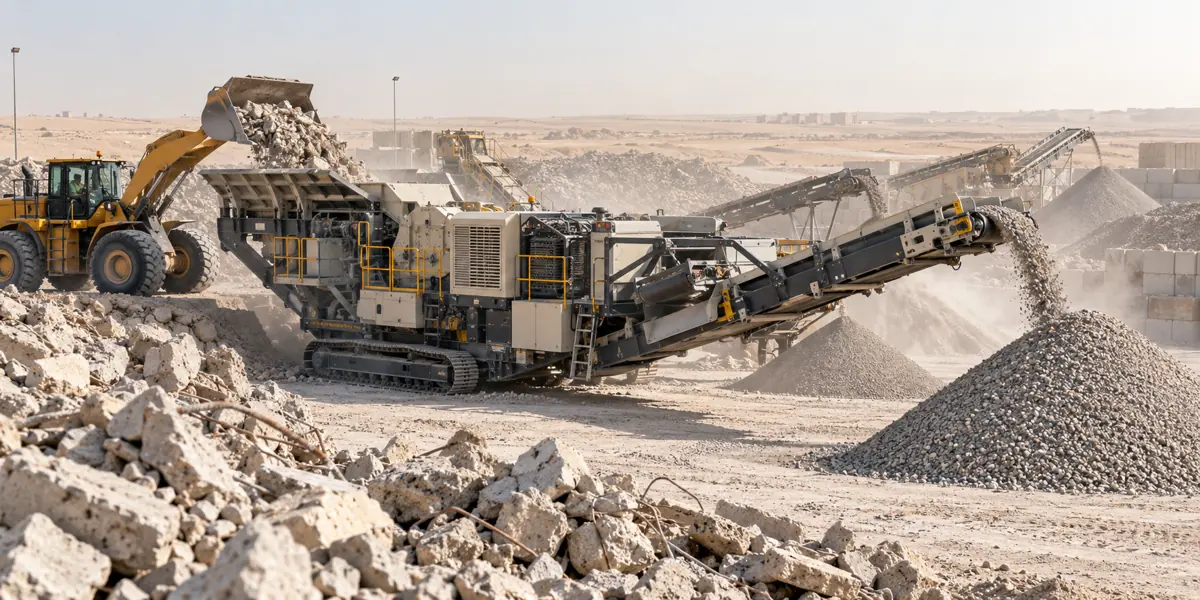
A useful comparison follows the work from equipment selection through acceptance and later parts ordering. A lower quotation can leave a buyer with more work or a larger unresolved interface.
Ask both bidders to mark every task as included, excluded or assigned to a named third party, and attach the same equipment schedule and assumptions. Confirm a proposed dealer’s legal identity, supply relationship and actual obligations; confirm a direct seller’s manufacturer role with suitable factory and product evidence. Neither label proves support capacity.
| Decision point | Dealer route: evidence to seek | Direct route: evidence to seek |
|---|---|---|
| Contract and machine | Named contracting party, equipment origin and documented supply relationship | Named manufacturing and contracting entities; equipment list and factory evidence |
| Delivery | Named delivery point, unloading and onward transport | Incoterm and named point; packing, freight, customs and unloading allocation |
| Commissioning | Who attends, tasks, prerequisites and escalation | Named site or remote support tasks and separately assigned local work |
| Spares and warranty | Included stock or ordering process, warranty procedure and exclusions | Parts identification, ordering and shipping process, warranty and escalation |
Define the Concrete Recycling Duty First
Both suppliers need the same representative feed and target product record. Concrete rubble may contain reinforcement, soil, masonry, asphalt, timber or other contamination; sorting and pre-processing responsibilities must be explicit.
Record maximum and typical feed size, sample variability, reinforcement and contaminants, moisture and fines, intended product sizes, target capacity and operating hours. Identify the acceptance specification and testing party for the intended application. Ashghal describes sorting, storage, quality control and testing in its recycling manual; its public announcement is context, not proof that a proposed product meets a particular project specification.
| Input | Buyer provides | Bidder explains |
|---|---|---|
| Feed | Representative samples, photos, size and contaminants | Feed preparation, oversize handling and restrictions |
| Product | End use, grading and test specification | Proposed screening, stockpiles, test and acceptance boundaries |
| Site | Access, pad, power or fuel, water, dust and relocation plan | Transport, setup, interfaces and exclusions |
| Duty | Capacity target, operating hours and variation | Operating assumptions and conditions of any proposed performance commitment |
Compare the Complete Mobile Circuit
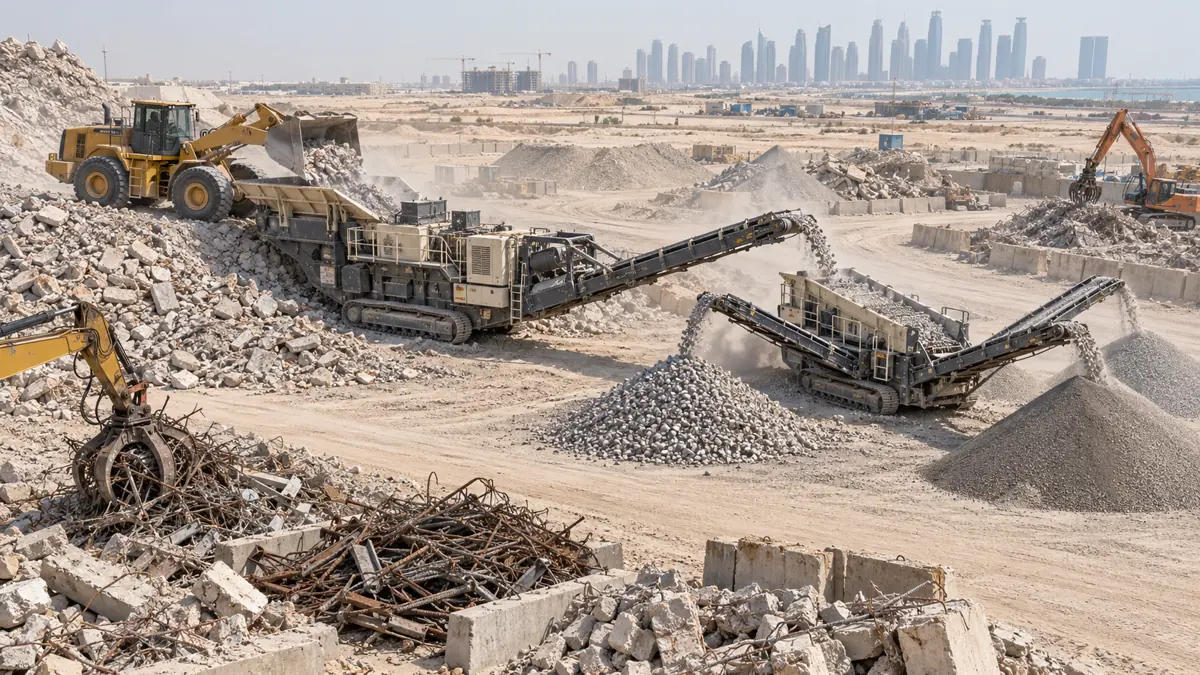
A mobile crusher is only one part of a recycling process. Depending on the material and required products, a proposal may need feed sorting, a crusher, metal separation, a screen, conveyors and separate stockpiles.
Request a material-path drawing and equipment schedule showing included and optional items, transfer points, guards and controls. The proposed crusher type, screen arrangement and any recirculation depend on feed and product requirements; a nominal throughput alone does not establish saleable output. Compare the same boundaries in the mobile crushing plant buying guide and the feeder, crusher, screen and conveyor guide.
| Circuit item | Questions for both routes |
|---|---|
| Preparation and feed | Who sorts contaminants, removes oversized reinforcement and prepares material? |
| Crusher and protection | Which machine, feed limits, guards and protection are included? |
| Metal and screening | What metal removal, screen decks, apertures and product paths are specified? |
| Mobility and utilities | What transport dimensions, pad, power, fuel, dust and water interfaces are assumed? |
Normalize Delivery and Commissioning Before Comparing Price
Compare quotations at one named delivery and handover boundary, then add separately priced buyer obligations. Do not assume that a port delivery includes customs, inland transport, lifting, site preparation or installation.
Specify the Incoterm and named place, documents, insurance boundary, unloading and shortage reporting. For commissioning, define personnel, travel, safe access, utilities, representative test feed, operator training, test records and an agreed acceptance procedure. The track-mounted versus tire-mounted guide helps identify transport and setup differences.
| Cost or responsibility | What to align |
|---|---|
| Supply | Equipment, screens, magnets, conveyors, controls, wear parts and exclusions |
| To site | Delivery point, freight, insurance, customs, inland haulage and unloading |
| Ready to run | Pad, lifting equipment, utilities, assembly, commissioning and training |
| After handover | Initial spares, ordering route, warranty terms, support and response assumptions |
Check Support Evidence and Acceptance
A support promise is useful only when the contract says who performs each task and how a buyer initiates it. Request named contacts or a documented escalation process, parts identification, warranty start and exclusions, and evidence for any claimed local capability.
Agree a test procedure before ordering: representative feed, safe operating prerequisites, measurement period, product tests, responsibility for samples, and how deviations will be resolved. Product compliance is a project-specific test outcome, not an automatic result of purchasing a crusher. Use the mobile crusher operating-cost guide to compare fuel, wear, labour, transport and downtime assumptions on the same basis.

Common Mistakes When Comparing Routes
Avoid comparing a machine-only price with a delivered and commissioned circuit. Other frequent gaps are undocumented dealer authority, assumed local stock, no named importer or unloading party, undefined test material, and an expectation of onsite service that is absent from the contract.
Ask each bidder to resolve every open interface in a single responsibility matrix before signing. If a part of the scope is unknown, obtain a written clarification or a separate qualified quotation instead of assigning it a zero cost.
Frequently Asked Questions
Is a local dealer always better for a Qatar recycling project?
No. A dealer is useful when its documented contract and resources cover the project’s actual needs. Compare evidence and assigned responsibilities with the direct route.
Can a buyer purchase directly from a manufacturer?
A direct contract can be viable if the manufacturer role is verified and freight, import, site work and support responsibilities are clearly assigned.
What equipment should both bidders quote?
Ask for the same material path, including feed preparation, crusher, metal removal, screening, conveyors, controls and optional items as applicable to the duty.
Who should arrange delivery and unloading?
The contract should name the delivery point and assign shipping, customs, inland transport, lifting and unloading to specific parties.
Does commissioning prove recycled aggregate meets the project specification?
Not by itself. Agree representative feed, sampling, laboratory tests and acceptance criteria with the responsible project parties.
How should a buyer compare spare parts support?
Request a parts list, ordering and delivery process, warranty and escalation terms, and evidence for any claimed local availability.
What information is needed for a quotation?
Provide raw material, feed size, output size, capacity, site photos and budget range, plus contamination, site access and intended end use.
Request a Comparable Proposal
Send your raw material description, feed size, output size, target capacity, site photos and budget range, together with the intended recycled product use and any available test results. Request a written equipment and responsibility schedule for comparison.