Table of Contents
- Information Gain: Compare Control of the Job, Not Just the Machine
- Release a Concrete-and-Product Record Before Comparing Routes
- Define the Mobile Package as a Material Path
- When Owning the Package Can Be the Better Fit
- When Hiring or Contract Crushing Reduces Commitment Risk
- Use One Scope-and-Cost Matrix, Not a Headline Rate
- Put Commissioning and Acceptance in Writing
- Buyer Checklist Before Choosing Buy or Hire
- Frequently Asked Questions
- Is it better to buy or hire a mobile concrete crusher?
- Can one mobile machine make recycled concrete aggregate ready for every use?
- Why is a mobile screen important after concrete crushing?
- Should rebar removal be included in a concrete-recycling quote?
- What should a contractor include in a mobile crushing hire scope?
- Does a capacity figure tell me whether I should own the equipment?
- What information should I send before requesting a comparison?
- Request a Like-for-Like Buy-or-Hire Comparison
Buy or Hire a Mobile Crusher and Screen Package for Concrete Recycling?
A road contractor should buy a mobile crusher and screen package for concrete recycling when a repeatable pipeline of suitable material, enough site control and a trained operating plan justify keeping the equipment productive between jobs. Hiring or contract crushing is usually the safer route when the concrete stream, programme, site access, permits, product acceptance or follow-on work is still uncertain. Do not make the choice from a headline daily rate or machine capacity. First define the material, the required recycled products, the work sequence, the responsibilities at each site and the point where product is accepted. Then compare an owned package and a contractor scope on that same record.
Information Gain: Compare Control of the Job, Not Just the Machine
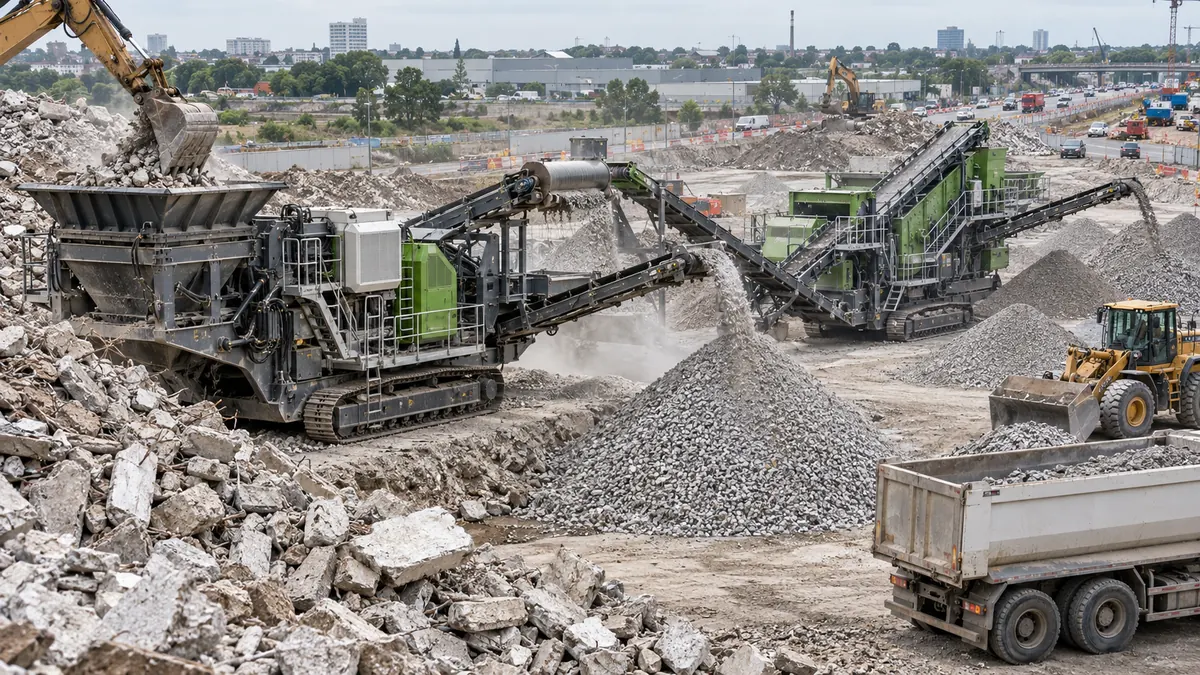
Most mobile-recycling articles answer whether concrete can be crushed or list a jaw crusher, magnet, screen and conveyors. That is useful, but it does not decide whether a contractor should own the package or buy a crushing service.
The decision boundary is who can control the complete material-to-product job. That includes the demolition sequence, concrete segregation, rebar and debris removal, loader support, access, utilities, water or dust interface, stockpiles, test or acceptance method, redeployment, and downtime response. A machine price and a contract rate are not comparable if those responsibilities are hidden in different places.
Release a Concrete-and-Product Record Before Comparing Routes
Concrete is not a uniform feed merely because it came from one demolition site. The U.S. EPA notes that construction and demolition debris can include concrete, metal, wood and other materials, and describes crushing concrete to remove metals before it is reused for pavement applications. Federal Highway Administration guidance similarly notes that reclaimed concrete can vary with its source and should be processed to remove foreign debris and reinforcing steel before aggregate use. Those sources do not select a crusher or prove a local end use; they explain why the feed and separation duty must be visible before a commercial decision is made.
| Record to release | What the project team should define | Why it affects buy versus hire |
|---|---|---|
| Concrete source | Pavement, slab, structural demolition, mixed stockpile, or separated stream; photos and known embedded steel | A stable, segregated source makes an operating plan easier to repeat; mixed material can shift the risk into sorting and rejection scope |
| Feed condition | Typical and maximum piece size, fines, soil, asphalt, wood, rebar, moisture and known unknowns | It determines pre-processing, magnet, scalping, crusher-feed and screen assumptions rather than a catalogue headline |
| Product plan | Required size fractions, intended use, stockpile separation, applicable project specification and acceptance party | The need for a screen, return flow, cleaning or extra quality control belongs in both ownership and service comparisons |
| Work programme | Demolition sequence, expected working windows, traffic or access restrictions, move dates and likely follow-on sites | It shows whether a package can stay useful between tasks or whether a defined contractor mobilisation is more practical |
| Site interface | Loader, operator crew, fuel or power, water, dust, drainage, pads, work zone and local approvals | These costs and responsibilities can sit outside a machine or service headline |
| Evidence status | Which facts are measured, sampled, tested, estimated or still pending | It prevents a preliminary budget from being treated as an accepted production result |
If the product is intended for roadwork or another engineered use, obtain the actual project specification and acceptance method from the responsible designer, owner or authority. The mobile crushing and screening guide for concrete recycling explains the equipment relationship; this page uses the same physical route to make a purchase-route comparison.
Define the Mobile Package as a Material Path
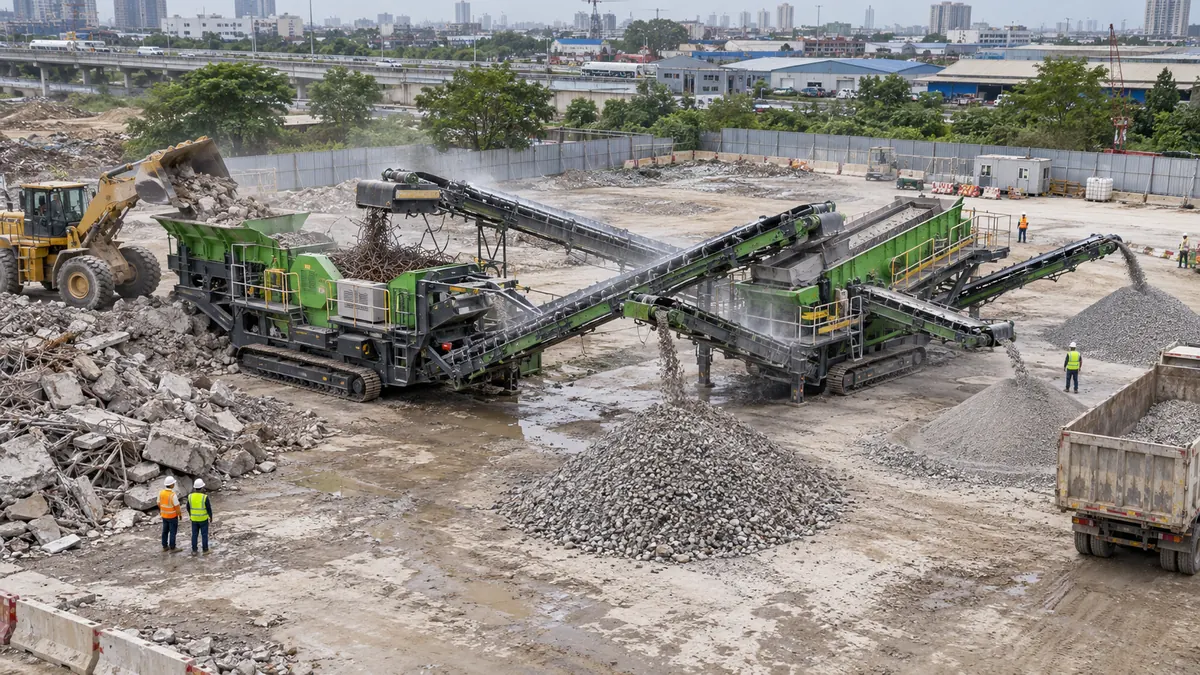
A mobile package is more than a tracked crusher. For a concrete-recycling job, the buyer or hiring party should map how material reaches the crusher, how metal and contaminants are separated, how products are screened, and where every stream goes. The exact equipment depends on the released record and required product, so the following is a scope checklist—not a universal configuration.
| Physical stage | Scope question to put in both comparisons |
|---|---|
| Receiving and feed | Who sizes or breaks oversize, removes prohibited material, supplies the loader, and controls the feed rate? |
| Primary crushing | What feed condition, product setting, access, guards and wear basis does the proposed jaw or impact crusher assume? |
| Metal and debris separation | Is an overband magnet, manual sorting, picking area or a separate contamination-control step included, and who owns the rejected material? |
| Screening and return | Which fractions are saleable, re-crushed, screened again, stockpiled separately or sent elsewhere? |
| Dust, water and housekeeping | Who supplies water, suppression, cleaning, drainage and any required environmental controls at the site? |
| Product loading and handover | Who manages stockpile space, loading, transport, sampling, records and the acceptance point? |
Where the released material has substantial embedded steel or mixed demolition debris, do not assume that a crusher alone creates a usable product. The buyer checks for a mobile impact crusher in concrete recycling are useful for separating feed preparation, safety and product handling from the purchase of one machine.
When Owning the Package Can Be the Better Fit
Buying can be a reasonable route when the contractor can document repeatable work, has control of the material and site interfaces, and can keep the package productively deployed across a credible programme. The key benefit is operational control, not an assumed saving per tonne.
| Ownership condition | What to verify before buying |
|---|---|
| Repeatable material stream | Identify the current and prospective sites, expected material types and the confidence level of each forecast; do not count unawarded work as guaranteed utilisation |
| Controlled work sequence | Show when demolition, loading, crushing, screening, stockpiling and product removal can occur without conflict |
| In-house operating capability | Name the operators, maintenance owner, loader support, safe isolation procedure and escalation route for a stoppage |
| Redeployment plan | Confirm transport route, setup area, ground condition, access, permits and responsibilities for every likely move |
| Product outlet | Define who accepts each recycled fraction, how it will be sampled or inspected, and what happens to off-spec or contaminated material |
| Lifecycle scope | Include wear parts, screen media, belts, lubrication, lifting, training, service response, fuel or power and downtime planning in the budget |
An owned package still needs a complete scope. The mobile crushing plant buying guide can help organise feed, capacity, mobility and service questions, while the mobile jaw versus mobile impact crusher comparison helps frame the conditional equipment choice. Neither link establishes that a particular machine will meet a specific recycled-product requirement.
When Hiring or Contract Crushing Reduces Commitment Risk
Hiring or contracting can be a better fit when the project is short, the concrete condition is uncertain, the buyer needs a defined result rather than a long-term operating asset, or the team cannot yet commit to operating and redeploying equipment. It should not be treated as a vague request for a daily rate. The provider should price and document the complete job basis.
| Contract-crushing condition | Evidence to request from the provider |
|---|---|
| One-off or irregular work | A defined mobilisation, commissioning, production and demobilisation scope, plus the conditions that change the plan |
| Variable demolition feed | The proposed inspection, segregation, oversize, metal, soil, wood and reject-material responsibilities |
| Programme-sensitive site | Required access windows, coordination points, loader and stockpile interfaces, and the site party who can release work areas |
| Product acceptance requirement | Named product sizes, stockpile routes, sampling or inspection method, and the party that accepts or rejects material |
| Site compliance interfaces | Responsibilities for permits, traffic control, water, dust, noise, drainage, safety induction and local requirements |
| Downtime and change control | Who owns maintenance stoppages, weather interruptions, unexpected contamination, equipment substitution and a revised work plan |
Do not compare a contractor’s all-in job scope with a purchase option that excludes site labour, handling, maintenance and product control. Conversely, do not assume a contractor accepts every feed condition or product requirement without a written record. The service route is stronger when it assigns responsibility at the same physical points as the ownership option.
Use One Scope-and-Cost Matrix, Not a Headline Rate
No generic article can determine whether ownership or hiring is cheaper for a specific project. Costs depend on actual duration, material, equipment availability, logistics, labour, maintenance, product outlet and site constraints. The practical comparison is to put both options into one matrix and identify what is confirmed, provisional or excluded.
| Comparison line | Buy / own package | Hire / contract-crush package |
|---|---|---|
| Equipment availability | Purchase specification, delivery and readiness assumptions; what is supplied with the machine | Mobilisation date, substitute-equipment rule, working hours and availability definition |
| Operating people and loader | Operator, maintenance, loader, supervision and relief responsibilities | Provider crew versus buyer crew and loader support; site induction and supervision boundary |
| Material preparation | Demolition sequencing, breaking, segregation, magnet/sorting and reject handling | Same feed record plus the party responsible for preparing it before the provider arrives |
| Products and stockpiles | Screen configuration, product route, loading, sampling and acceptance ownership | Named product schedule, measurement/acceptance method, stockpile and loading responsibilities |
| Site interfaces | Pad, access, transport, fuel or power, water, dust, drainage, safety and approvals | Same interfaces allocated to named parties; do not assume they are included in a day rate |
| Maintenance and downtime | Initial spares, service, inspections, wear basis, lifting and downtime response | Planned maintenance windows, breakdown responsibility, standby assumptions and change-control route |
| Exit or redeployment | Future move, resale or redeployment scenario, plus unused-capacity risk | Demobilisation, residual material, site reinstatement and close-out documentation |
Use the mobile crusher operating-cost guide to identify inputs such as fuel or power, wear, labour, maintenance and logistics. It is not a cost estimate for either route; the actual comparison must use project records and supplier or contractor documentation.
Put Commissioning and Acceptance in Writing
The decision often fails at the handover between equipment and site. Before committing to purchase or hire, make the first operating period an agreed control point rather than an informal promise of support.
| Start-up item | Buyer question |
|---|---|
| Site readiness | Is the pad, access, loader route, stockpile space, water or dust interface and safe work area ready before equipment or crew arrives? |
| Test material | Which concrete stream is used first, who confirms it matches the released record, and what happens if it does not? |
| Product check | Which sizes, cleanliness observations and sampling or inspection method define the initial product review? |
| Training and handover | Who receives operating, isolation, maintenance, safety and emergency documentation, and is it part of the quoted scope? |
| Early changes | Who can authorise a setting, screen, flow, schedule or commercial change when the actual material differs from the released record? |
| Completion record | What documents show the scope supplied, outstanding items, product handover, accepted exclusions and post-start support route? |
This does not create a performance guarantee. It creates a transparent way to test the assumptions that made one route appear suitable.
Buyer Checklist Before Choosing Buy or Hire
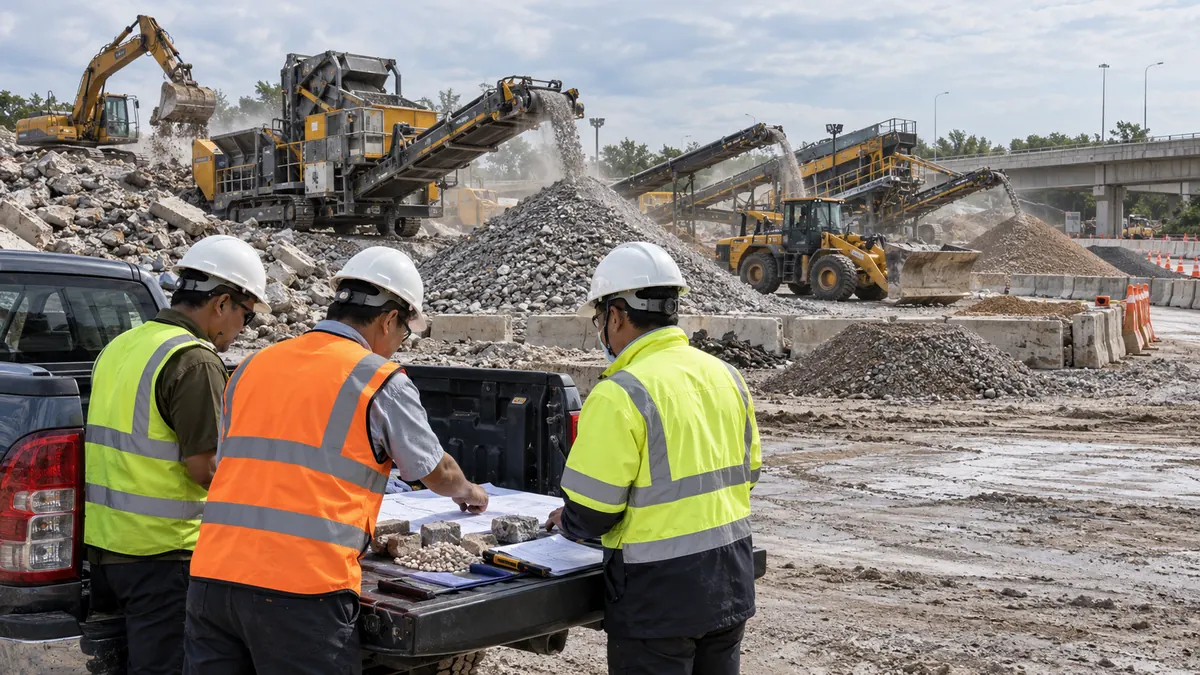
- Identify the concrete source, material variability, typical and maximum feed size, rebar, soil, asphalt, wood, other contaminants and available site photos.
- State the required output sizes, proposed end use, stockpile routes, applicable specification or acceptance method, and the party that accepts the product.
- Map the physical path from demolition through loading, feed preparation, crushing, metal separation, screening, stockpiling and product loading.
- Issue the same capacity basis, working hours, site constraints, access conditions, utility or water availability, safety requirements and budget range to each bidder or provider.
- Separate equipment supply or hire from operators, loader support, fuel or power, transport, water, dust control, maintenance, wear, lifting, permits, drainage, traffic management and site work.
- Ask each option to state the assumptions that are measured, provisional or excluded, and the process for changing scope if the material or programme changes.
- Define the commissioning material, inspection or sampling plan, handover record and support responsibility before equipment is moved or an order is released.
Frequently Asked Questions
Is it better to buy or hire a mobile concrete crusher?
Neither route is automatically better. Buying fits a credible repeat-work plan with controlled material, operators and redeployment; hiring fits a defined or uncertain job when a provider can document the complete material, site and acceptance scope.
Can one mobile machine make recycled concrete aggregate ready for every use?
No. Product suitability depends on the concrete source, contaminants, feed preparation, separation, crushing, screening, target sizes and applicable project requirements. Confirm the product route and acceptance method before choosing equipment or a service provider.
Why is a mobile screen important after concrete crushing?
A screen separates the intended product fractions and can return oversize or divert unwanted material. Whether it is needed, how it is configured and who operates it should be defined against the required products rather than assumed from a crusher headline.
Should rebar removal be included in a concrete-recycling quote?
It should be explicitly allocated. Ask how embedded steel is identified and removed, whether a magnet and sorting step are included, who handles recovered metal and rejects, and what feed condition the crusher proposal assumes.
What should a contractor include in a mobile crushing hire scope?
The scope should identify mobilisation, equipment, crew, working hours, material assumptions, loader and site interfaces, product sizes, stockpiles, dust or water responsibilities, maintenance, downtime, demobilisation and the acceptance record.
Does a capacity figure tell me whether I should own the equipment?
No. Capacity is meaningful only with its material condition, product schedule, feed control, working basis and availability assumptions. Ownership also depends on work continuity, redeployment, operating capability and the allocated site responsibilities.
What information should I send before requesting a comparison?
Send raw material details, feed size, output size, target capacity, site photos, budget range, expected work sequence, equipment access constraints and the product acceptance requirement. Mark which information is measured and which remains provisional.
Request a Like-for-Like Buy-or-Hire Comparison
Send your raw material details, feed size, output size, target capacity, site photos and budget range, together with the demolition sequence, expected job duration, product-use requirement and known site constraints. Ask for a physical material-path layout, an inclusion/exclusion schedule, stated feed assumptions, commissioning scope and a change-control method so an owned package and a contract-crushing offer can be compared on the same basis.