Table of Contents
- Why Australian Quarry Operators Need a Practical Plant Design
- Common Quarry Materials in Australia
- Recommended Aggregate Crushing Plant Configurations
- Configuration 1: Jaw Crusher + Cone Crusher + Screen
- Configuration 2: Jaw Crusher + Impact Crusher + Screen
- Configuration 3: Jaw Crusher + Cone Crusher + VSI + Screen
- Configuration 4: Mobile Crushing and Screening Plant
- Capacity Planning for Australian Quarry Plants
- Output Sizes and Aggregate Quality
- Stationary vs Mobile Crushing Plant
- Cost and ROI Factors
- Operating Conditions to Check Before Ordering
- Common Buyer Mistakes
- What to Send Before Asking for a Quotation
- Spare Parts and Maintenance Planning
- Conclusion
- FAQ
- What is the best aggregate crushing plant for hard rock in Australia?
- Is a mobile crusher suitable for Australian quarry projects?
- What capacity should an aggregate crushing plant have?
- Can one plant produce road base, concrete aggregate, and manufactured sand?
- Is cone crusher or impact crusher better for Australia hard rock?
- What information should I provide before asking for a quotation?
- How can quarry operators reduce cost per ton?
- Does an Australian quarry need a VSI crusher?
Aggregate Crushing Plant for Australia Quarry Operators
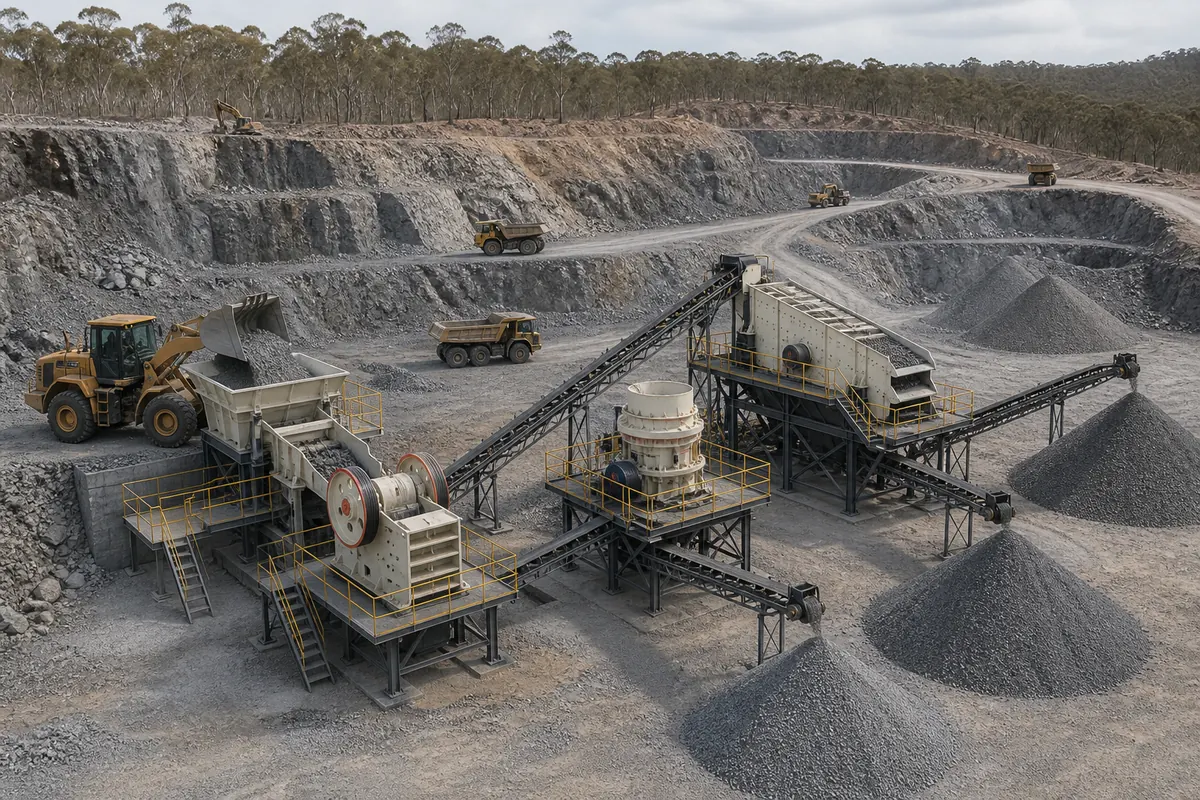
An aggregate crushing plant for Australia quarry operators should be selected around rock hardness, feed size, product grading, capacity, haul distance, power supply, and long-term wear cost. For hard granite, basalt, dolerite, and river stone, a jaw crusher plus cone crusher plus vibrating screen is usually the stable base configuration. When concrete aggregate or manufactured sand needs better particle shape, a VSI crusher or shaping stage can be added after secondary crushing. The best proposal should compare the full plant: feeder, crusher stages, screens, conveyors, stockpile method, dust control, automation, spare parts, shipping, installation support, and the expected cost per ton.
Why Australian Quarry Operators Need a Practical Plant Design
Australia has a broad range of quarry applications: road base, asphalt aggregate, concrete aggregate, rail ballast, drainage stone, riprap, manufactured sand, and mine-site construction material. A quarry plant in New South Wales, Queensland, Victoria, Western Australia, or South Australia may face very different rock types, transport distances, water availability, and operating schedules.
That is why a good aggregate crushing plant should be designed from the actual crushing duty instead of a single crusher model. A long-term hard rock quarry needs a different solution from a temporary contractor plant supplying road base near a remote project. The useful question is not only “Which crusher is cheapest?” but “Which complete plant can make the required sizes reliably at the lowest practical cost per ton?”
If you are still comparing overall plant planning, read our guide to complete stone crusher plant setup. For buyers who need a mobile solution, the mobile crushing plant buying guide explains when track or tire-mounted crushing equipment makes sense.
Common Quarry Materials in Australia
The raw material controls the crusher type, chamber design, liner material, screen area, dust control, and spare parts plan. Australian quarry operators commonly ask for crushing plants for:
- Granite: hard and abrasive, often suitable for jaw crusher primary crushing and cone crusher secondary or tertiary crushing.
- Basalt: hard volcanic rock, good for high-strength aggregate but demanding on liners and wear parts.
- Dolerite and diorite: strong hard rock materials where crushing chamber selection and closed-side setting matter.
- Limestone: easier to crush than granite or basalt and often suitable for impact crushing when abrasiveness is low.
- River stone: rounded and hard, usually needs a jaw crusher followed by cone crushing for stable reduction.
- Recycled concrete and demolition waste: useful for road base and urban recycling when metal removal and feed control are planned.
Before selecting equipment, send the supplier rock photos, maximum feed size, moisture condition, clay content, and target products. If possible, include abrasion information, Los Angeles abrasion value, or local test data. A small amount of material information can prevent oversized fines, weak cubical shape, high liner consumption, or an undersized screen.
Recommended Aggregate Crushing Plant Configurations
There is no single Australia quarry crusher configuration for every site. The best layout depends on feed size, hardness, capacity, final grading, space, power, and whether the plant must move.
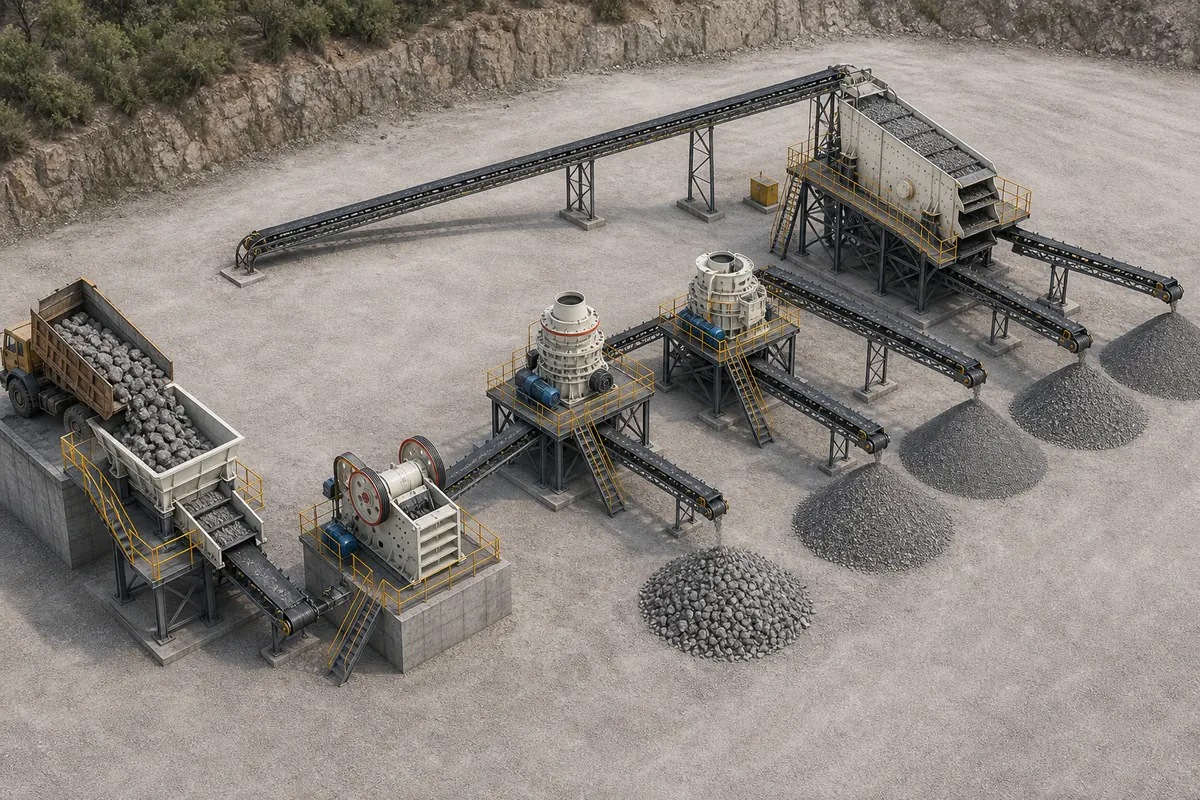
Configuration 1: Jaw Crusher + Cone Crusher + Screen
For hard rock such as granite, basalt, dolerite, and river stone, a jaw crusher plus cone crusher plus vibrating screen is often the safest starting point. The jaw crusher accepts large blasted rock. The cone crusher provides controlled secondary crushing, and the screen separates finished products while oversized material returns for further reduction.
This configuration is suitable for quarry operators who need 10-20 mm aggregate, 20-40 mm aggregate, road base, and ballast-type products. It can also be expanded with a tertiary cone or VSI crusher if the quarry later needs more fine aggregate or better particle shape.
Configuration 2: Jaw Crusher + Impact Crusher + Screen
For limestone and medium-hard rock with lower abrasiveness, a jaw crusher plus impact crusher can be economical. The impact crusher can create good cubic shape and simplify the process flow, especially where the finished products are road base, concrete aggregate, or general construction stone.
The limitation is wear. If the material is very abrasive, impact crusher blow bars and liners may raise the operating cost. For hard Australian quarry rock, cone crushing is often more reliable for the main reduction stage.
Configuration 3: Jaw Crusher + Cone Crusher + VSI + Screen
When the quarry needs manufactured sand or stricter shape control for concrete and asphalt aggregate, a VSI crusher can be added after cone crushing. The VSI stage improves cubical shape, reduces flaky particles, and can produce 0-5 mm manufactured sand when the feed grading and moisture are suitable.
This layout is useful when the quarry sells into concrete batching, asphalt plants, precast production, or high-spec road projects. For more detail on shaping, see our article on improving cubical aggregate with a VSI crusher.
Configuration 4: Mobile Crushing and Screening Plant
Mobile crushing equipment is useful for contract crushing, temporary road projects, remote quarry faces, mine-site construction, and jobs where civil foundations would delay production. A mobile jaw crusher can handle primary crushing, while a mobile cone, impact, VSI, or screen plant can complete the final sizing.
Mobile plants can reduce installation time and relocation cost, but the buyer should compare fuel or power demand, transport rules, onboard conveyor limits, service access, and the expected working hours. For road aggregate production, see the example guide for a 200 TPH mobile crusher plant.
Capacity Planning for Australian Quarry Plants
Capacity should be calculated from real quarry demand, not only from the nameplate capacity of one crusher. The bottleneck may be the feeder, jaw opening, cone chamber, screen area, return conveyor, truck loading point, or stockpile capacity.
| Capacity Range | Typical Application | Common Configuration | Planning Notes |
|---|---|---|---|
| 50-100 TPH | small quarry, farm track material, local contractor supply | feeder, jaw crusher, impact or cone crusher, screen | simple layout, lower capital cost, limited product range |
| 100-200 TPH | regional road base, concrete aggregate, commercial quarry startup | jaw crusher, cone or impact crusher, multi-deck screen | practical range for many medium-duty projects |
| 200-300 TPH | hard rock quarry, highway aggregate, asphalt and concrete supply | heavy feeder, jaw crusher, cone crusher, screen, return conveyor | needs strong screen capacity and stockpile planning |
| 300+ TPH | large long-term quarry, rail ballast, major infrastructure supply | multi-stage crushing, multiple screens, automated conveyors | requires detailed site layout, power, maintenance, and loading plan |
If the quarry runs one shift per day, a smaller plant may satisfy demand. If it supplies continuous commercial aggregate, the plant must maintain capacity across several product sizes without constant recirculation overload. Oversizing can waste capital, but undersizing can cause overtime, truck delays, and unstable product delivery.
Output Sizes and Aggregate Quality
Australian quarry buyers may request several finished products from the same plant. Common target sizes include:
- 0-5 mm manufactured sand or crusher dust.
- 5-10 mm fine aggregate.
- 10-20 mm concrete and asphalt aggregate.
- 20-40 mm drainage stone, road base, or coarse aggregate.
- Larger ballast, armor stone, or mine construction material when required.
The screen deck arrangement should match the final products. If the quarry needs clean 10-20 mm aggregate, the screen must have enough area and proper media selection. If the plant must produce manufactured sand, the process needs controlled feed to the VSI crusher, suitable moisture management, and enough fines handling capacity.
For a broader production planning framework, our VSI crusher capacity guide explains how feed grading, rotor speed, and recirculation affect sand output.
Stationary vs Mobile Crushing Plant
A stationary aggregate crushing plant is usually better for a long-term quarry with stable reserves, fixed power supply, enough land, and regular truck access. It can use larger crushers, longer conveyors, bigger stockpiles, and easier maintenance platforms. The civil foundation work takes more time, but the operating cost per ton can be attractive for continuous production.
A mobile crushing plant is better when the project moves, the quarry face changes quickly, or the operator needs fast commissioning. It is also useful for contractors serving several jobs in one year. However, the buyer should not choose mobile only because it looks convenient. Transport width, axle load, track wear, fuel cost, onboard conveyor reach, and service access all affect the real cost.
The practical decision is simple: choose stationary for stable long-term quarry production, and choose mobile when relocation speed and project flexibility are worth the higher machine integration cost.
Cost and ROI Factors
The price of an aggregate crushing plant in Australia depends on much more than the crusher model. A reliable quotation should separate the machine scope, electrical scope, steel structure, conveyors, screens, wear parts, shipping, installation guidance, commissioning support, and optional automation.
Main cost drivers include:
- Raw material hardness, abrasiveness, moisture, and clay content.
- Maximum feed size from blasting, ripping, or excavation.
- Required capacity in tons per hour.
- Number of finished product sizes.
- Stationary structure, skid-mounted plant, tire-mounted plant, or track-mounted plant.
- Crusher chamber selection, screen deck size, and conveyor length.
- Dust suppression, guarding, walkways, magnets, and metal detection.
- Control system, remote monitoring, and safety interlocks.
- Spare parts package for liners, jaws, belts, screen media, and bearings.
- Shipping route, inland transport, lifting plan, and site installation support.
Two quotations can look similar while covering very different scopes. One may include only the crusher body. Another may include feeder, screen, conveyors, control cabinet, wear parts, layout drawings, and commissioning support. Always compare the line item scope before comparing the final number. For general plant pricing logic, see our guide to stone crusher plant cost factors.
Operating Conditions to Check Before Ordering
Australia quarry sites can be dry, remote, dusty, hot, or far from service centers. These conditions should influence the plant design. Dust suppression may need water sprays, covered transfer points, enclosed chutes, or dry dust collection depending on the site and local requirements. The final decision should be checked against local environmental and safety obligations.
Power supply also matters. A fixed quarry may use grid power, while a remote mobile site may need diesel-hydraulic drives or generator support. The supplier should confirm total installed power, starting method, cable lengths, control cabinet location, and whether the plant needs soft starters or variable frequency drives.
Maintenance access should be planned before the plant arrives. Operators need safe access to jaw plates, cone liners, screen media, belt scrapers, lubrication points, and transfer chutes. A compact layout may save steel, but if it makes maintenance slow or unsafe, the downtime cost can become larger than the initial saving.
Common Buyer Mistakes
The first mistake is asking for a generic “aggregate crusher price” without sending material and output details. A supplier cannot size the crusher chamber, screen decks, conveyors, and motor power from the country name alone.
The second mistake is ignoring the screen. Many plants lose capacity because the screen area is too small, the media is wrong, or the return conveyor is overloaded. A crusher may be large enough, but the plant still fails to produce clean sizes.
The third mistake is using impact crushing on highly abrasive hard rock only because the initial price is lower. For granite, basalt, and dolerite, liner cost and downtime must be considered. Cone crushing often gives better wear control for the main reduction stage.
The fourth mistake is forgetting stockpile and truck movement. Finished products need enough space, clean separation, loader access, and safe traffic flow. If conveyors discharge into small piles or truck routes cross maintenance zones, the plant will feel crowded from the first week.
What to Send Before Asking for a Quotation
A useful quotation starts with practical project information. Before requesting a proposal, prepare a short buyer file with the material, target products, capacity, and site conditions.
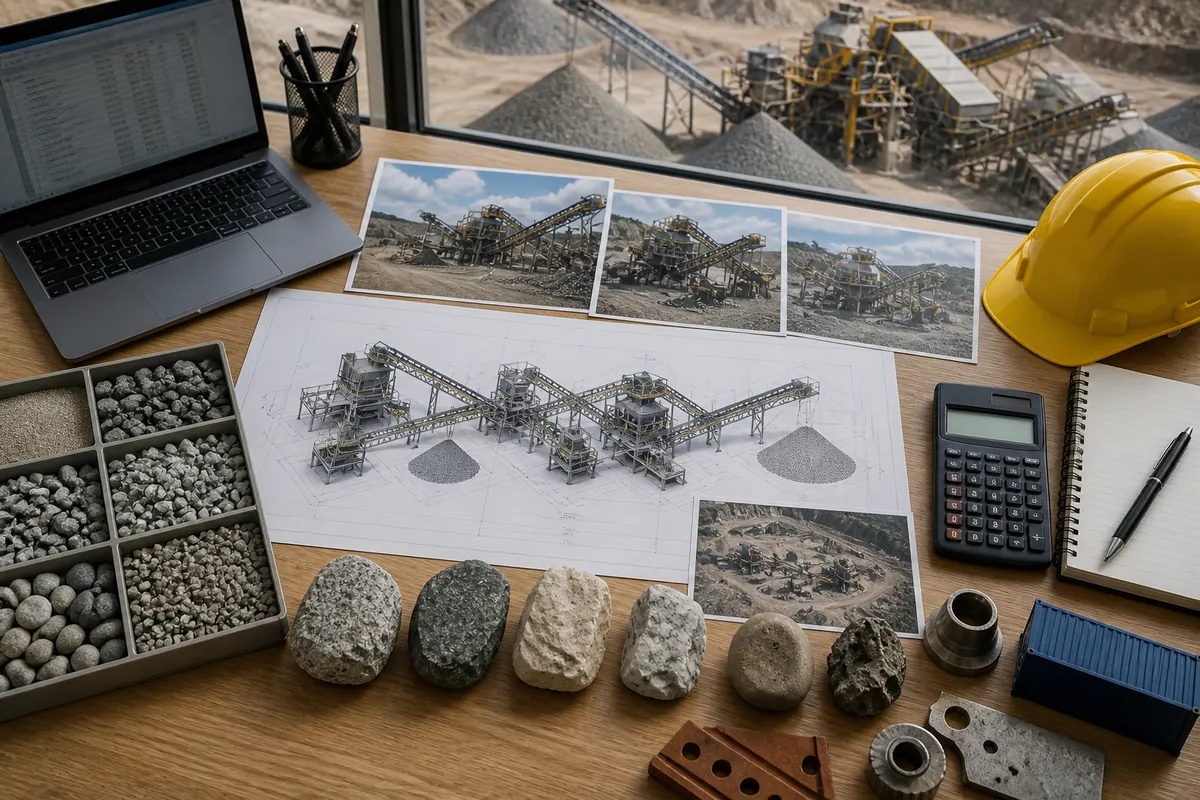
Send the supplier:
- Raw material name, such as granite, basalt, dolerite, limestone, river stone, or recycled concrete.
- Maximum feed size before primary crushing.
- Required output sizes, such as 0-5 mm, 5-10 mm, 10-20 mm, 20-40 mm, or road base.
- Target capacity in tons per hour and daily working hours.
- Stationary, skid-mounted, tire-mounted, or track-mounted preference.
- Site photos, quarry face photos, available land size, and truck loading plan.
- Power condition, generator plan, dust control requirement, and water availability.
- Budget range, delivery destination, and expected commissioning schedule.
With these details, MVSI can recommend a plant flow, machine models, screen decks, conveyor layout, motor power, spare parts plan, and shipping approach that fits the real quarry duty.
Spare Parts and Maintenance Planning
For Australian quarry operators, spare parts planning should be part of the purchase decision. Jaw plates, cone liners, VSI wear parts, screen media, conveyor belts, rollers, bearings, and lubrication parts should be specified before shipment. Waiting until a breakdown occurs can stop production for longer than the wear part cost itself.
Ask the supplier for a commissioning spare parts list and a recommended annual wear parts list. The list should match the rock type and working hours. For abrasive hard rock, liner material and replacement interval guidance are especially important.
Operator training is also important. Stable feed, correct closed-side setting, screen inspection, belt alignment, lubrication checks, and regular wear measurement can reduce downtime. A well-selected plant still needs disciplined operation to reach the expected cost per ton.
Conclusion
An aggregate crushing plant for Australia quarry operators should be designed from the actual material, feed size, output grading, capacity target, site layout, mobility requirement, and maintenance plan. Hard rock quarries usually benefit from jaw plus cone crushing, while limestone or medium-hard stone may use impact crushing when wear cost is acceptable. A VSI crusher can be added when manufactured sand or cubical shape is important.
If you are planning an aggregate crushing plant in Australia, send MVSI Crusher your raw material, feed size, required output sizes, capacity, site photos, power condition, mobility preference, and budget range. We can review the application and suggest a practical crushing, screening, conveying, and spare parts configuration for your quarry.
FAQ
What is the best aggregate crushing plant for hard rock in Australia?
For hard and abrasive rock such as granite, basalt, dolerite, and river stone, a jaw crusher plus cone crusher plus vibrating screen is usually a reliable base configuration. A VSI crusher can be added when better particle shape or manufactured sand is required.
Is a mobile crusher suitable for Australian quarry projects?
Yes. A mobile crusher is suitable for contract crushing, road projects, remote sites, and quarry faces that move often. A stationary plant is usually better for long-term fixed quarry production with stable reserves and enough land.
What capacity should an aggregate crushing plant have?
Capacity should match real product demand, working hours, truck loading, and screen capacity. Small projects may use 50-100 TPH, while medium commercial quarries often choose 100-300 TPH. Large infrastructure supply may need 300 TPH or higher.
Can one plant produce road base, concrete aggregate, and manufactured sand?
Yes, but the plant needs the right crushing stages and screen decks. Road base and concrete aggregate may be produced with jaw, cone, and screen stages. Manufactured sand usually needs a VSI crusher or shaping stage plus proper fines handling.
Is cone crusher or impact crusher better for Australia hard rock?
For hard and abrasive rock, cone crusher is often better for the main secondary crushing stage because it can control wear cost. Impact crusher may be economical for limestone or medium-hard material with lower abrasiveness.
What information should I provide before asking for a quotation?
Provide raw material, maximum feed size, output sizes, target capacity, working hours, site photos, available power, mobility preference, dust control needs, delivery destination, and budget range. These details make the quotation more accurate.
How can quarry operators reduce cost per ton?
Choose the correct crusher for the rock, size the screen properly, avoid conveyor bottlenecks, maintain stable feed, keep key spare parts on site, train operators, and compare the full plant scope instead of only the main crusher price.
Does an Australian quarry need a VSI crusher?
Not always. A VSI crusher is useful when the quarry needs manufactured sand, better cubical aggregate, or reduced flaky particles for concrete and asphalt. If the main products are coarse road base and drainage stone, the VSI stage may be optional.