Table of Contents
- Separate three functions before comparing quotations
- Why the drive label cannot settle the purchase
- Define the condition the recovery claim actually covers
- Use a function-and-condition schedule in the purchase order
- Illustrative bid comparison, not a supplied package
- When is an additional recovery function worth specifying?
- Frequently asked questions
- Does hydraulic CSS adjustment prove that a jaw crusher can reverse?
- Can a direct-drive jaw crusher have an unblock function?
- Does an unblock feature guarantee restart with a full chamber?
- Can remote control establish safe blockage recovery?
- Should a buyer deliberately jam the crusher during acceptance?
- Does the MVSI mobile jaw page confirm an unblock option?
- Release the order against the documented functions
- Sources and technical references
Does Hydraulic Jaw Adjustment Include Unblocking?
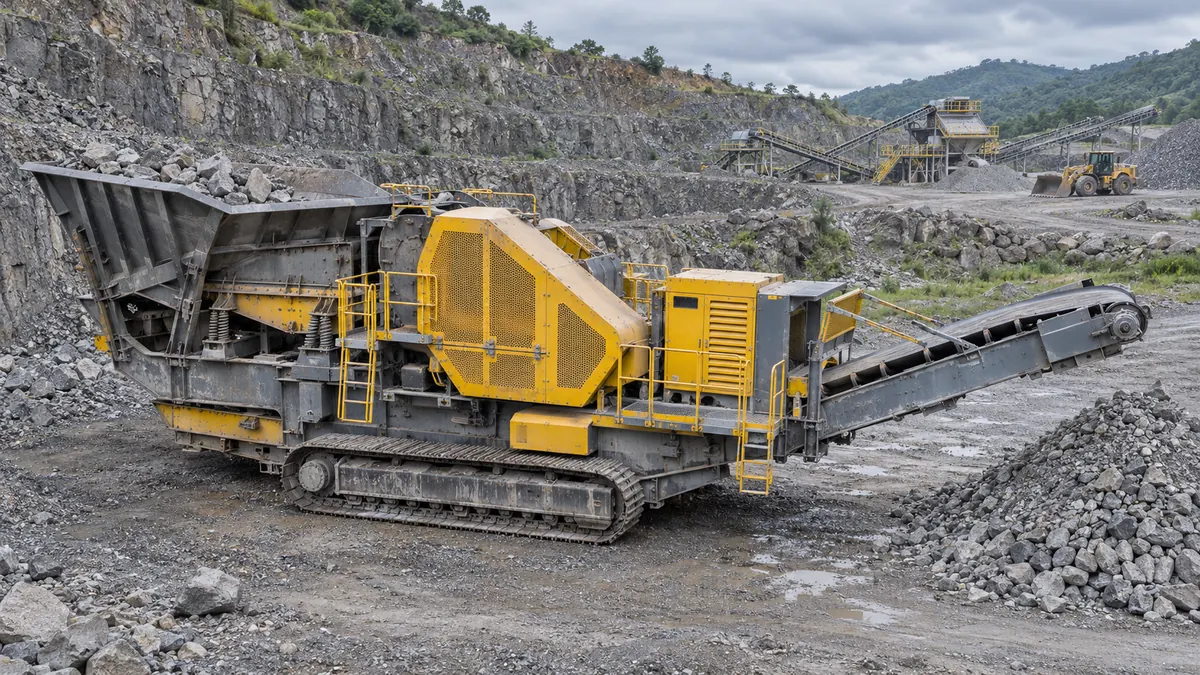
Hydraulic jaw adjustment does not, by itself, establish that a mobile jaw crusher can reverse, clear a blockage or restart with material in its chamber. Buy those capabilities only when the exact offered machine has a documented function and permitted operating conditions for each. Hydraulic adjustment may describe how the discharge setting is changed; it is not a complete recovery specification. Before comparing prices, require separate quotation rows for setting adjustment, unblock or reverse capability, and loaded restart, including exclusions, controls, instructions and the evidence used to accept each function.
By MVSI Company. Published 2026-11-26.
Separate three functions before comparing quotations
Specify setting adjustment, blockage recovery and loaded restart independently. Evidence for one function leaves the others unconfirmed unless the supplier expressly documents their relationship.
| Decision fact | What the wording can establish | Evidence still needed |
|---|---|---|
| Hydraulic setting adjustment | A stated means of changing the closed-side setting (CSS), the minimum discharge gap during the jaw cycle | Exact mechanism, adjustment range and permitted machine/material state |
| Reverse or unblock function | A separately described recovery capability on the specified machine | Authorized applications, exclusions, control mode and instructions |
| Restart with material present | A distinct starting duty, if expressly supported | Permitted chamber condition, drive/control limits and restart authorization |
| Remote control | A control location for the functions actually supplied | Which functions are enabled and what conditions restrict their use |
| Unspecified feature | No comparable confirmed capability | Written clarification or an explicit exclusion before order release |
The MVSI mobile primary jaw crusher family is the relevant product starting point for quarry primary crushing. Its public page does not establish the exact hydraulic adjustment, reverse, unblock or loaded-restart scope for a current offer. Request the proposed jaw and drive identification with those functions confirmed individually; do not infer them from a family description.
Product sizing remains a separate acceptance question. The jaw setting and product top-size guide explains why a CSS value alone cannot establish the discharged grading.
Why the drive label cannot settle the purchase
Compare documented functions rather than classifying every machine from the words hydraulic or direct drive. Published OEM examples show that different drive arrangements can include separately described recovery features.
Finlay lists hydraulic CSS adjustment and hydrostatic-drive reverse functionality separately on its J-1160 page. Its J-960 page describes a direct-drive jaw with an unblock feature, alongside hydraulic wedge adjustment. These examples show why the adjustment system and recovery function need separate questions. They do not establish the operating limits of another model or prove that an MVSI machine includes either arrangement.
Ask the bidder to identify what moves during adjustment, what supplies the crushing drive, and what additional mechanism or control mode provides the claimed unblock function. Require a model-specific description; a photograph of a hydraulic cylinder, a reversible conveyor or a remote handset does not answer all three questions.
Define the condition the recovery claim actually covers
A useful recovery claim identifies the condition it addresses and the conditions it excludes. A bridge above the inlet, a jammed chamber and material trapped at the discharge need not have the same remedy.
UK HSE mobile-jaw guidance distinguishes blockage causes and warns that a stalled crusher may be jammed with tramp metal. It also identifies stored-energy and ejection hazards and the need for written instructions and competent supervision. These are reasons to obtain a machine-specific recovery plan, not permission to improvise a clearing method.
- Ask whether the stated function covers a feed bridge, material packed in the chamber, an overload stop or another specifically defined condition.
- Ask which conditions require specialist support rather than an operator-controlled function, and which are excluded from any recovery commitment.
- Ask whether the function is permitted only with an empty chamber, with limited retained material, or in another expressly defined state. Do not translate an unspecified condition into permission to restart under load.
- Identify the required feeder and discharge-conveyor status, observation arrangements and supplied control interfaces in the documentation. The supplier must define the authorized sequence and safeguards.
This article is a purchase-scope checklist, not an operating procedure. Recovery work must follow the exact machine instructions and the site assessment, including isolation and stored-energy controls where required. Do not create a blockage to test a sales claim.
Repeated oversize is also a feed-preparation decision. The larger-jaw versus pre-breaking comparison addresses that upstream choice; buying a recovery feature does not establish acceptance of unsuitable feed.
Use a function-and-condition schedule in the purchase order
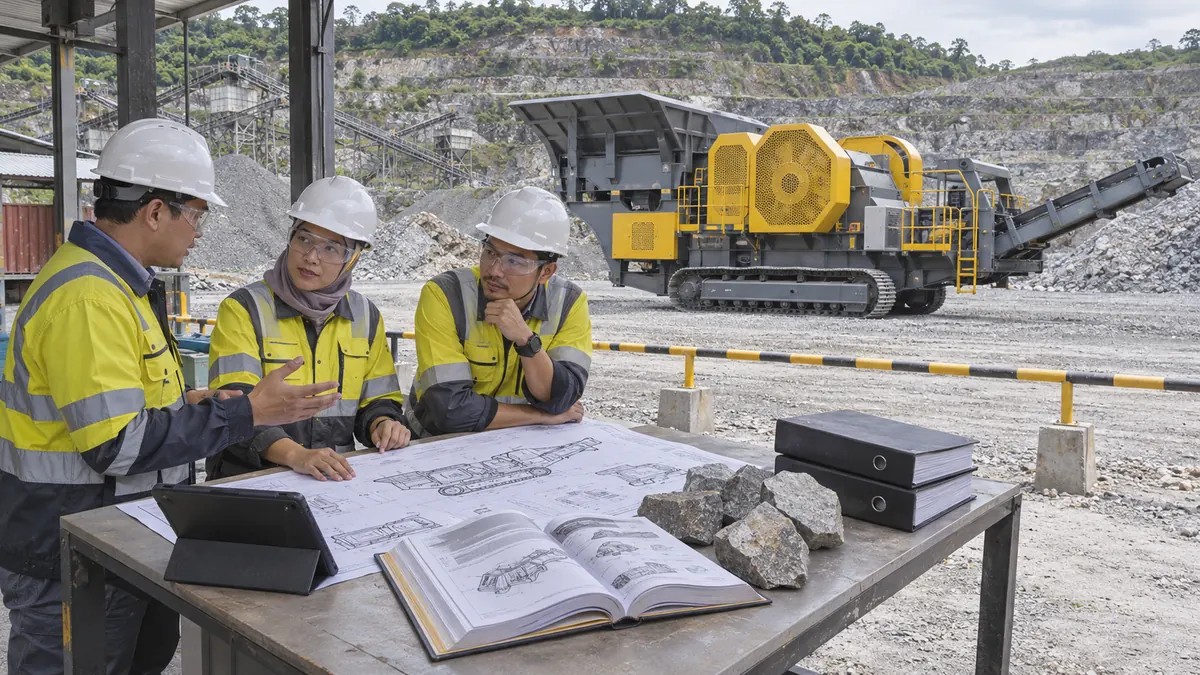
Give every bidder the same schedule and require an answer against every row. Keep an unresolved capability outside the confirmed scope until the supporting documents arrive.
| Scope item | Written answer to request |
|---|---|
| Machine identity | Jaw model, drive arrangement, relevant options and document revision supplied with this offer |
| Adjustment | Mechanism and CSS range; conditions for use; how the setting is confirmed after adjustment |
| Unblock or reverse | Named function, permitted conditions, exclusions and control equipment included |
| Loaded restart | Explicitly supported or excluded; defined material/chamber state and applicable instructions |
| Controls and interfaces | Feeder/discharge dependencies, control locations and responsibilities for interconnection |
| Handover and acceptance | Manuals, training scope, documentary review and any supplier-approved demonstration; responsible parties and deliverables |
| Support and cost | Included equipment and assistance, exclusions, relevant spare parts and separately quoted services |
For the wider commercial boundary, use the jaw quotation comparison checklist. Here the additional release condition is narrower: the claimed adjustment, recovery and restart capabilities must each have a documented operating envelope.
Illustrative bid comparison, not a supplied package
Assume Bid A says only hydraulic jaw adjustment. Bid B separately identifies an adjustment system and an unblock function, with an approved description of its permitted use, but excludes loaded restart. These are hypothetical bid descriptions, not MVSI offers or customer records.
Bid A leaves recovery and restart unconfirmed. Bid B gives a clearer recovery scope but still does not meet a project requirement for loaded restart. Request clarification, reconsider that requirement with the supplier, or compare another documented configuration. Neither a lower price nor a longer feature list resolves the missing acceptance condition.
When is an additional recovery function worth specifying?
An additional function is worth evaluating when a documented operating interruption matches its authorized scope and the site can support its required controls and competence. It is unsuitable as a substitute for correcting recurring unacceptable feed, blocked discharge or an undefined jam condition.
Compare the complete quoted package, required support and the interruptions it could address using actual site records. Keep unsupported recovery-time, uptime and payback promises out of the comparison. An empty-chamber adjustment demonstration verifies only that demonstrated function; any further acceptance demonstration needs the supplier-approved method and agreed conditions.
Frequently asked questions
Use these questions to resolve feature wording before accepting the equipment scope.
Does hydraulic CSS adjustment prove that a jaw crusher can reverse?
No. Setting adjustment and drive reversal are separate functions. Require the exact offered model to document any reverse or unblock capability and its permitted conditions.
Can a direct-drive jaw crusher have an unblock function?
Yes, some published OEM designs describe a direct-drive jaw with an unblock feature. This does not establish that every direct-drive machine includes it; verify the exact offered configuration.
Does an unblock feature guarantee restart with a full chamber?
No. Obtain an explicit statement of the permitted chamber condition and starting duty. A recovery feature or reverse function is not, by itself, approval for loaded restart.
Can remote control establish safe blockage recovery?
A remote handset alone does not establish the recovery scope. Confirm which functions it controls, their permitted conditions and the machine-specific safeguards and instructions.
Should a buyer deliberately jam the crusher during acceptance?
No. Do not create a blockage to test a feature. Agree documentary checks and only an appropriate supplier-approved demonstration, with its conditions and responsibilities established in advance.
Does the MVSI mobile jaw page confirm an unblock option?
The linked page identifies the relevant mobile primary jaw family, but it does not establish a current exact-model unblock, reverse or loaded-restart option. Obtain written confirmation or an explicit exclusion in the quotation.
Release the order against the documented functions
Accept hydraulic adjustment as adjustment scope. Add recovery or loaded-restart requirements only where the proposed machine documentation supports the required condition, and resolve exclusions before ordering.
Send MVSI your project information: raw material, maximum and typical feed size, output size, capacity in t/h, project country, site photos and budget range. Add the proposed or existing jaw model, drive arrangement, representative interruption records, contamination and moisture conditions, required adjustment method, and any unblock or loaded-restart requirement. Use the listed WhatsApp or email route to request a written scope review.
Sources and technical references
The following sources support the equipment-family context and function distinctions. The quotation schedule and bid comparison are editorial procurement tools; they are not an operating manual or a performance guarantee.
- MVSI Mobile Primary Jaw Crusher: relevant offered equipment family; exact functions require confirmation.
- Finlay J-1160: separately described hydraulic setting adjustment and hydrostatic reverse capability.
- Finlay J-960: published direct-drive, unblock and hydraulic-adjustment example.
- UK HSE, Safe operation and use of mobile jaw crushers: blockage/stall hazards and written-instruction context. Project-country requirements need separate assessment.